Is George Osborne the greatest economist of the 21st century

20140321-180538.jpg

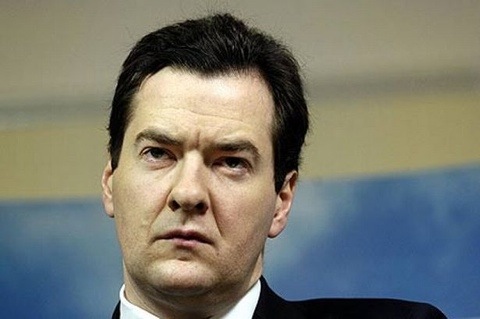
Describing George Osborne as this century’s greatest economist, is to choose a deliberately provocative title. While it is intended to be a title that catches the eye, I do have a more serious purpose in drafting this essay. There from the perspective of this writer a certain admiration for George, he is the supreme Machiavellian politician. He can persuade others to accept that black is white, even if they know he is wrong. As Chancellor he has set the agenda for the political debate. Labour politicians have responded to his agenda, rather than trying to set out their alternative approach. There are differences but these are intended magnify the difference in the eyes of the beholder (electorate), for an economist they are but trifling differences. Last week’s political debate illustrates this all too clearly. George Osborne announced that because of budgeting restraints that all NHS staff other than receiving annual increments would not get an increase in their pay. In his eagerness to appear responsible he said that if he became Chancellor he would follow George’s lead and implement a pay freeze.

20140321-181211.jpg

20140321-181255.jpg

There are two types of great economist, the first are economists such as John Maynard Keynes or Milton Friedman who revolutionise economic thinking and change the way governments approach economic policy. Secondly there are those such as Mao Tse Tung who set the economic agenda and policy making through sheer force of personality. (Often accompanied by the threat or use of violence.) Both are great in the sense that they revolutionise the practice of economic decision making and policy implementation. Communist China experienced several changes in the direction of economic policy under Chairman Mao. He tend to favour a razing to the ground of the economy and to be followed by a remaking of the economy in a purer communist mode. By doing so in the Great Leap Forward in 1958 he intended to take the control of the economy out of the hands of the bureaucrats and return control of the the economy to the workers and the peasants. The policy was disastrous which according to one source caused 60 millions deaths through starvation caused by reducing agriculture to a state of chaos. This use of greatness has no moral dimension, but views greatness as the power to revolutionise and change economic policy making for decades.

George Osborne is one of the Chairman Mao type economists. While knowing little about economic policy making he has through sheer force of personality changed the way economic policy making is viewed and discharged. He has made deficit reduction the central plank,of his economic policy. Unlike previous Chancellors he has made this the priority, other targets such as reducing and ending child poverty have been scrapped as being incompatible with this end. He has sold to the nation the belief that a continued and possibly constant programme of national austerity is necessary for national well being. Ed Balls I initially opposed this policy (as having a better understanding of economics he should have known that the policy was flawed from the start), yet after a few more squeals of protest he fell into line. He has promised that he will continue the programme of national austerity if Labour is elected. Quite an achievement for a ‘no nothing’ economist to dictate the direction of economic policy for at least 10 years and possibly more.
Having called George Osborne’s thinking flawed it is necessary to demonstrate these flaws. In 2009 Paul Tucker, Deputy Governor of the Bank of England produced a highly significant but little read report. He expressed concern not about the size of the government deficit but the size of the deficit in the banking sector. Then as now the deficit in the banking sector was just over 500% of GDP, while even today the government budget deficit will peak at 80% of GDP. George has closed his eyes to the potential crisis in the banking sector, where a ‘run on the pound’ will cause a catastrophic economic crisis that has the potential to reduce the incomes of British citizens to less than that of the impoverished Greeks. Is George hoping along with the entire Parliamentary community that nobody will notice this omission in his deficit reduction programme?

There other great flaw is his belief in ‘expansionary fiscal contraction’, one of the most nonsensical phrases coined in the debate on economic policy. His argument is that if the government to fund its deficit has to borrow large sums from the banks, it deprives industry of the money it needs for investment. Therefore if government borrowing is cut it will free funds for investment and the economy will grow and all will benefit. There has been no evidence of this ever happening (except in wartime), what has reduced the flow of money for investments, is the banks preference for speculative financial activities over long term investment. Banks prefer to lend money for speculation in the commodities, financial, equities and property markets. It this speculation that reduced the money for investment in industry. In fact 80% of all bank loans are to the property market, that is why they have no money to lend to industry for investment. A problem ignored by George Osborne who has preferred to give the banks £200 bn. A programme in quantitive easing, while announcing just £1 bn. for investment in the national infra structure.
20140321-181636.jpg

20140321-181709.jpg
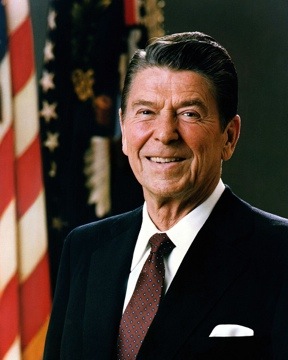
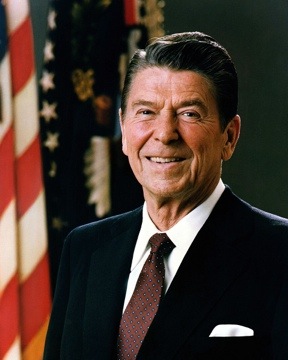
George Osborne’s success recalls to mind that other great non economist who rewrote the economics agenda and that was Ronald Regan. His rival George Bush Snr. denounced his economics as ‘voodoo’ economics, only to eagerly embrace it as Regan’s Vice President. Despite all the evidence to the contrary Ronald Regan’s economic policy was hailed as a success by politicians. He as with George Osborne preached the virtues of small government and he cut taxes and claimed to cut government expenditure. While he cut domestic spending on welfare he exponentially increased defence spending. Billions were wasted on his Star Wars programme. He funded this excessive expenditure through government borrowing and when he finally left office, the USA had its greatest budget deficit ever. George by comparison will by the time of the next election leave Britain with an ever spiralling banking deficit, leaving Britain at the mercy of predatory financiers.

However this essay is written in praise of George Osborne, so I must remain to central theme of why he is a great economist. While I could write about his Machiavellian skills in manipulating political friends and foes, there is a more interesting approach.

Economics is a subject that lends itself to charlatanry, because politicians are desperate for that one policy that will deliver success. When in conversation with economists their normal degree of scepticism is abandoned, they are so willing to believe that the proposed policy is the one that will deliver success. George Osborne must have realised early in his career that any well packaged and presented economic nonsense would sell. He would have had as a prominent politician have seen close up how the Treasury manipulated economic statistics and how whatever sleight of hand the Treasury used there would always be a coterie of economists praising the Chancellor’s policies. The reason economic charlatanry is so widespread is that economists only have the vaguest understanding of how the economy really works. To admit this as an economist would be to invite ridicule and so everybody pretends black is white even if they suspect that black really is black. Modesty is never a characteristic of any economist, bluster is the more usual characteristic. I am not suggesting that economists are ignorant of the working of the economy, so much as that they vastly overstate their understanding of the economy. If I can use an analogy into this pool of preening fish a predatory shark arrived, who realised how easy it would be to manipulate the consensus of views to suit his ambitions.

He would have found that politicians such as Ed Balls who play by the rules of the economic game were easy to manipulate. What any economist knows is that the future is uncertain, so predictions for the future have to be hedged around by ‘maybes’ and ‘perhaps’. Yet George Osborne has torn up the rule book, he knows what the future holds. He has set limits to future spending, including a welfare cap all of which Ed Balls as shadow chancellor has signed up to. If events turn out differently, George Osborne will happily abandon all his pledges giving some plausible explanation. While if Ed Balls becomes Chancellor he will be the hapless acolyte following the master, whatever happens he will stick to George Osborne’s targets.

At it’s worse economics as practiced in the UK is an invented game and those who stick to the rules in this imaginary game will always be at a disadvantage compared to those who have a complete disregard for the rules.

The Lawless Economy, more reflections from the Bad Economist

20140317-162450.jpg

Economics has been called mockingly the ‘dismal science’ because economists are always predicting a dire future for humanity. It remains a dismal subject; but I take exception to the use of the word science. In trying to establish it as a science economists have created an abstract world of economics distant from reality. The language in which economics is written often hides through its over complex technical jargon insights that are lacking in originality and often of little value. A bad economist such as myself eschews the use of the technical language of economics and uses a simpler language to arrive at different insights to my contemporaries.

One of the objectives desired by economists is the a attainment of a free market. A market that is free from any artificial constraints imposed on it by government (e.g. laws regulating the labour market or price controls) will maximise human welfare by maximising the output of goods and services at the lowest possible price. The market knows best and the government should not try to second guess it. Rather than go into a more detailed explanation, I shall assume that everybody is familiar with government propaganda extolling the benefits of a free and competitive market. Can I as an economist point out one unique feature of the free market; it is unlike any other part of society in that it is practically free of rules and regulations. As a civilised society we recognise that our community is best governed by regulations (laws), which ensure that society is run to the benefit of us all. Recent governments have produced a proliferation of laws regulating our conduct, except in the market where on the contrary it is trying to reduce them to a minimum. The government would never reduce criminal law to a minimum as it knows there are certain individuals who would exploit a law free society by using that freedom to harm others. Yet naively the government assumes that people who would behave badly in any other context, will behave well when working in the economy.

20140317-162733.jpg

What I am suggesting is that from a common sense point of view, the free market should be called the law free market or more appropriately the ‘lawless market’. Viewing the market from this perspective gives a completely different understanding of the free market. I would suggest that the free market is more akin to those lawless states governed by criminal mafias, such as Mexico or Russia. What I shall attempt to demonstrate is that by applying the concepts used to explain the mafia states, it is possible to develop a new and more valid understanding of the free market.

In lawless societies it is the strongest and best organised gangs that predominate. In Mexico they are the drug cartels and in Russia it is the Bratva (the organised collective of crime elements). These criminal elements rob and despoil their host communities, using both violence and bribery to attain their ends. It is no coincidence that the richest people in both these countries are linked to these mafias. Also in both countries they have corrupted the political process and the forces of law and order so successfully that they now work to protect the interests of the various mafias. Russia has been called the ‘mafia state’ as the criminal elements in that society are reputed to be closely allied with the government of President Putin.

A similar analysis can be applied to the relatively law free economies within British society. The difference being one of degree rather than kind. Bankers and the City of London have long argued for a ending of any legal restraints on the trade in money and savings. With the so called ‘Big Bang’ in 1986 (that is the deregulation of financial services) they have achieved their aim. Now gangs of bankers and financial traders as the strongest and best organised gangs are the best placed to exploit the lawless money markets.

With the introduction of large bonuses, City traders were encouraged to use clients money not to benefit them, but in a way best suited to maximise the traders’ bonuses. It could mean ‘naked short trading’, whereby traders borrow shares to sell, so as to force down their price. A practice which enables them to now buy shares at the new lower price, having already contracted to sell the same shares at the old higher price in a previous deal. The difference in the buying and selling price represents the trader’s profit but a loss to those funds who now find their holdings of shares have been reduced in value. Their are many types of financial scams (charges) that City traders, fund managers use to divert their clients money to their own accounts.

20140317-163141.jpg

This is the reason that an individual who invests in a private pension is likely (once inflation has been taken into account) only get back what they have invested. The profit earned from investing those funds as gone to others. In the more regulated financial market in the Netherlands, the average return on private pensions is 50% higher.

The City of London has as with the Russian mafia captured the government to such an extent that it can change policies to suit its interests. One example occurred at the start of the reign of ‘New Labour’. The Corporation of the City of London wanted to do something unique in a democracy, it wanted to enfranchise city businesses, so they could have a vote (size of vote determined by their number of employees) enabling them to outvote the residents of the City of London. Thereby there would be a Corporation that worked exclusively in the interests of the financiers. The government duly obliged. Obviously Gordon Brown’s infamous ‘light touch’ regulation maintained the relatively law free zone in the financial market brought about by the deregulation of the 1980’s. The result no restarting on the irresponsible behaviour of the financial community that brought about the crash of 2008/9. After the crash the government turned to the very people who caused the crash for a solution. The solution was to throw billions at the financial markets so no financiers suffered a real loss and the only losers were the non financier majority who provided the bail out money.

The corruption of the government and the law and order agencies is almost complete. The HMRC that is supposed to be a tax collecting agency, now actively works with large financial and industrial conglomerates to help them find ways of easing their tax burdens. The most infamous was the Vodaphone case when a tax bill of £6 billion was reduced through negotiation to a much smaller sum that only made a minimal dent in Vodaphone’s profits.

One of the most effective ways of bending governments to the City’s will is to fund them. The majority of the Conservative parties funds come from this source. With the successful media campaign to deny the Labour Party finance from the trade unions, it will become more dependent on friendly city financiers for cash.

While having focused on the financial sector I must not neglect the industrial and commercial sectors. Company law has been revised little, other than to favour business interests, since it was introduced in the 19th century. It is hopelessly out of date and is unfit for purpose, it provides no effective restraints on irresponsible company directors. There no no sanction that prevents gangs of company directors from raiding their company’s funds to pay themselves exorbitant salaries. Shareholder democracy is a myth. The thousands of individual shareholders have no means holding the directors to account. There is no way they can prevent irresponsible directors rewarding themselves handsomely, while running their company into the ground.

There are some governmental bodies intended to regulate business for the benefit of the wider community, but as with the old Department of Trade and Industry they have been shrunk into insignificance. Or as with the Serious Fraud Office so seriously under funded or so hampered by fraudster friendly laws that they are relatively ineffective.

Politicians such as Keith Joseph, Margaret Thatcher, Nigel Lawson, Tony Blair and Gordon Brown did not initiate a new era of prosperity through their free market market reforms, but instead introduced a new law free economy in which criminal like behaviours could thrive. Sharp or fraudulent practice is more widespread then ever in the ‘new economy’. Only if we stop regarding the economy as somehow distinct from the rest of society in that it must be ‘law free’ or ‘lawless’, can the economy be set of the path to sustainable recovery.

While I am bitterly critical of the new City of London, my criticisms are laced with regret. I worked in the old City of London in the 1960’s. A city in which different standards of conduct prevailed, a City in which the financial sector was well regulated and policed by government. Nostalgia may prompt me to over state the probity of conduct of the financiers of that time; but there has been a marked decline in the standards of conduct since then.

Finally I must state that I am reviving in this essay an old way of thinking about the economy, political economy. However I prefer to call it bad economics as it suggests an economics completely out of line with current thinking.

The Musings of a Bad Economist

20140311-163343.jpg

While studying economics in the 1960’s, I always had the feeling that something was missing from the subject I studied. It was not just the absence of left thinkers amongst economists, I had the nagging feeling that there was a lack of a fundamental something. In a subject that is essentially about people there seemed to be a complete absence of the people factor. I was a bad economist who failed to grasp that in essence people were just another unit of production and their humanity did not entitle them to any special privileges. Only a ‘good economist’ (of which I am not one) could understand that the free market represents the epitome of human organisation in the economic affairs. Alternative such as the mixed economy, the planned economy have all failed and it is only the free market that can maximise wealth and human happiness.

20140311-163805.jpg

Bad economists such as myself always fail to see the bigger picture, we focus on the misery suffered by individuals as a result of economic change, failing to realise that this misery is the necessary price to be paid for changes that benefit society as a whole. We focus on the suffering caused to people by the changes that have accompanied the introduction of the deregulated and flexible labour market; ignoring the benefit to employers who now have the power to adjust the hours their staff work to fit in with the needs of business. All supermarkets now benefit from the split shift system. Formerly they had to employ staff for fixed hour shifts, so they could end up with having too many shop floor staff in slack periods. Now they can send staff home during the slack periods and recall them for a second shift during a busier part of the day. Then there is the beauty of zero hour contracts, where employers can call staff in when they need them and they can include an ‘exclusivity’ clause which means that the employee cannot take on any other work when not required by their employer, meaning they are always available for work. Being able to treat people as if they where just another resource such as a machine which can be switched on and off when needed, enables employers to maximise their profits. Good economists see the necessity of relieving the workforce of their humanity, as sick and maternity leave do little more than disrupt the productive process.

There was recently a Question Time programme on radio where an employer and ‘good economist’ lauded workers in an American factory where the workers had agreed to incremental increases in the hours they worked (without compensatory wage increases), so that in the end all staff were working ten hours a day for six days a week. They had the good sense to realise that trivialities such as the right to a family life, were merely impediments that prevented the achievement of the greater good, that is the increased profitability of the business. That in turn meant that the owners would not feel compelled to relocate their business to a country where wages were lower, accepting inhuman working conditions were a price worth paying for keeping your job.

20140311-164119.jpg

Income inequality is a subject that I constantly fail to understood. The ‘good economist’ sees widening income inequality as an unqualified good. Today company directors pay is about 128 times greater than the average wage of their employees, whereas in the 1980’s it was a ratio of 1 to 35. An economist would explain to an ‘economic dimwit’ such as myself, that the high pay for company executives was a necessary reward for talent. They could point to the recent example of the Co-op, where business consultants decided that the going market rate for a CEO was £3.5 million per annum. If the boss of the lowly Co-op supermarket chain can command that salary, obviously the boss of a giant bank such as HBSC deserves a much higher salary. By paying astronomically high salaries we would attract the best people to run our companies. We would all gain from the high growth that these companies would experience. The fact that I as an individual don’t seem to have benefitted from this upsurge in prosperity is that I am one of the unskilled apathetic who don’t deserve a wage increase.

Perhaps the doyen of free market economists or ‘good economists’ was the Chicago economist Milton Friedman. He understood why President Pinochet’s government on seizing power had to lock up and kill many of their political opponents. It was necessary for attainment of a greater good the introduction of a free market economy. These opponents, many of whom were trade unionists, would have opposed the free market reforms that the government intended to introduce. He could see that in the greater scheme of things, the death of a few trade unionists meant little compared to the increase in wealth for all from that came the introduction of the free market economy. There are right greater than the right to life, if you are the wrong kind of person. Death was merely one way of marginalising opponents of the free market.

When the reforms failed to deliver the promised wealth for all, it was pointed out by economists that it was the fault of individuals not the system. The talented and hard working had become rich, while those lacking the true entrepreneurial spirit remained mired in poverty. It should not be expected that economy should provide for those lacking in skill or drive.

I confess to be an economic slower who would want to reserve all the changes in the labour market, that have led to Britain becoming the low wage capital of Europe. It was not so long ago that a Korean company opened a factory in Wales because wages were lower there than in Korea. To reverse these changes I would introduce tougher wage regulation imposing a minimum wage never the ‘living wage’ and ensure that it was enforced. At present it is left to the goodwill of employers to pay the minimum wage. Since its introduction there have been no prosecutions of employers who flout this law. Job insecurity which imposes untold misery on millions I would reduce by re-introducing the job protection measures removed by successive governments since 1979.

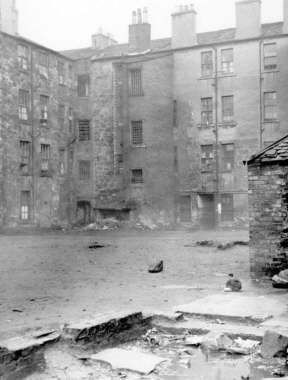
A ‘good economist’ would see this as folly, he would gently take me aside and tell me that my proposals would work to the detriment of the labour force. They would point out that Ian Duncan Smith’s reforms that have reduced many to living in poverty are in reality a good thing, it is misguided individuals such as myself that misunderstand their purpose. Before the advent of Ian Duncan Smith far too many individuals were mired in the dependency culture. They had become individuals with no purpose in life other than to collect state benefits on which to subsist. These apathetic, aimless creatures spread misery, neglecting their houses and letting them and their neighbourhoods deteriorate too such an extent that they resemble Victorian slum areas. Reducing their benefits to a level less than on which it is necessary to subsist means they will be forced to find work. Once in work they will learn the pleasures of a life independent of benefits and they will gain immeasurably in self respect. Pushing these people into a poverty enforced misery will make them change their ways, it will eventually create a race of sturdy self reliant individuals.

Such a person would tell me that I misunderstand the benefit of low wages, it gives the worker the incentive to work harder. They also would say that what is wrong with the low paid worker having to have two or three jobs to make ends meet. It teaches them that nothing comes to them unless they work for it. They are incentivised through poverty level wages to work for self improvement. We need to instil into the workforce the work ethic that would be the most effective driver for prosperity. A living wage would have the reverse effect, it would mean that the lazy and incompetent would get the same wage as hard working and clever. This would be self defeating as the costs of production would be pushed up through having to over pay poor workers, thereby increasing prices, reducing sales, followed by staff lay offs. The poor need to be motivated by fear, they are a different in nature from the talented company directors who need high pay to be incentivised to perform at their best. They are a totally different type of being that responds better to rewards than fear.

20140311-164321.jpg

As a bad economist I have this nagging feeling, I do not see after having thirty years of the free market that it has delivered on the promises made by its advocates. Certainly a small elite group have done excessively well out of the reforms, but what of the majority. Incomes for the majority have in real terms remained stagnant since 2003. House prices are spiralling out of control to such an extent the trend to home ownership has gone into reverse. Surveys suggest that the sense of national well being peaked in the mid 1970’s, not in the free market noughties. Is it possible that the benefits of the free market economy are merely illusory? In Stalin’s Russia of the 1930’s one five year plan after another was produced, always promising that at the end of each plan the communist nirvana would be achieved. All that happened was that nirvana seemed to recede further and further into the distance, somewhat like George Osborne’s plans. He promised remove the structural deficit by 2015, now its 2018, whereas in 2017 it will be put back to 2020 and so it will continue. Can I suggest that instead that a change of direction in government policy, one that takes account of the hesitations of bad economists such as myself. Bad economists prefer to look at the world as it is, not try to make it conform to some imaginary model.

Myths about the housing market corrected, it’s not the fault of the baby boomers.

Perhaps the fact that 18% of the population live in private rental accommodation is one of the most depressing statistics produced about contemporary UK society. Many of these in private rental accommodation are the young and anybody with adult children know how toxic for future hopes are the combination of high rents and insecure tenancies. We are a society that is turning its back on the less well off, be they the young, the working poor, the unemployed and the disabled. The seventh richest country in the world is content to see increasing numbers of its population condemned to housing misery.

The reasons usually given for this trend, that the older generations are buying houses to rent as pension substitute, the introduction of the Assured Shorthold Tenancy Scheme are merely symptoms of a wider societal change, that is the drift into a more unequal society, in which wealth holders are always at an advantage over income earners. Wages since 2003 have remained largely static, while property prices have resumed their upward trajectory, meaning any existing householder finds it easy to get a mortgage and has little difficulty in outbidding any first time buyer.

This problem is compounded by fact that a third of our MP’s are buy-to-let landlords, who rather than do anything to resolve the problem, choose to exploit it for personal gain.

Can I suggest the solution is the one suggested by that doyen of free marketeers Milton Friedman; that is control the money supply to stop house price inflation getting out of control. In a recent article Simon Jenkins stated that bank debts total five times the GDP and a large proportion of that excess money has gone into inflating house prices. All politicians need to do is look at the Bank of England rule book for the 1960’s to see how this excessive money supply can be controlled.

For those that have an interest in economics can I suggest quick glance at Milton Friedman, unfortunately I cannot remember the exact title but it was a Penguin book. There he demonstrates how excessive money supply can cause inflation. His example is the Virginia Tobacco farmers of the early American state. There due to a shortage of dollar coins, tobacco was used as a currency. Unfortunately farmers soon realised that it was more profitable to grow large quantities of poor quality tobacco, than smaller qualities of good tobacco, which buyers really wanted. Consequently the market was flooded with poor quality tobacco that nobody wanted and so prices in terms of units of tobacco went through the roof. Tobacco had then to be discarded as a unit of currency, as it was near to becoming worthless.

This is the copy of a letter I sent to a national newspaper, while I have had several letters published in the past, I have no guarantee that this will be published so I am blogging it in hope of getting a wider audience.

London’s dire housing situation, are the banks also to blame for this?

20140226-152654.jpg

Reading a blog by Holly and Rhiannon on the New Statesman’s website prompted this post. In their blog they described the appalling conditions in which many young people live in London. Conditions reminiscent of those prevailing in the poorest parts of Victorian London. While the obvious villains are the new breed of landlord exploiting a dysfunctional housing market, these people are merely the catspaw in a highly dysfunctional inegalitarian society. Who are the real villains. One group are the third of MP’s who are buy-to-let landlords, who put their chance to earn a profit above the needs of the poorly housed young. What really is happening is a structural change in the economy that disadvantages the young and the poor, who are often the same. There is at the heart of this change a familiar villain the bankers and the City of London.

20140226-153645.jpg

How the bankers can in large part be blamed for the poor living conditions of the young in private rental accommodation can be explained by the structural change in the British economy engineered by the banking community. This explanation starts with how a business makes a profit. There are two ways either that business develops and new product or service that people want or it acquires the right to sell an existing service or product and is able to increase the price at which it sells the product or service by exploiting the market. Apple with their successful IPhone would be an example of the first and Centrica and the other energy companies that make up the dominant cartel of energy companies would be the other. Bankers in part have made their money in part through the second route. The banking market is dominated by the big four who can exploit the market for money handling services by collaborating informally. Credit card charges are exorbitantly high and yet no bank undercuts the others by offering a low interest rate credit card. Any deals offered are merely incentives to change card companies. The £80 billion of bonus payments to be paid to the bankers this year is merely another example of increasing the charges for money transaction services made by the banks, its the exploitation of a captive market.

However there is a way of profit making unique to the banks. To understand this other way it is necessary to go back to Tudor times and Henry VIII. Henry was constantly overspending building and furnishing palaces fit for a Renaissance Prince. There were also the almost constant wars against France and the need to build a modern navy to defend the UK against aggressors. When faced with the inability to pay his bills Henry resorted to debasing the currency, that is reducing the quantity of precious metals in the currency. This enabled him to produce many more coins with his limited stock of gold and silver. The losers in this situation were Henry’s creditors who received payment in the new debased currency. The pound in their pocket was now worth much less. Debasing the currency was a common practice for insolvent monarchs who wished to reduce their debts to manageable proportions. Unfortunately this new debased coinage had the effect of impoverishing the less well off as it was inflationary and increased food prices. When the less well off were the majority it had a very negative impact on national well being. Contemporary bankers like Henry VIII have similarly debased the pound sterling to benefit themselves at the expense of the rest of the nation.

20140226-155328.jpg

What is little understood is that in contemporary Britain it is the banks that are responsible for the supply of money in the form of bank deposits. Only 2% of money in circulation is notes and coins. It is banks through the process of credit creation that create most of the money in circulation. Realising the significance of this power governments in the Social Democratic era, but since 1971 all limits on the power of banks to create money have been removed by successive governments. The only limit of the amount of money the bank create is what the bank decides its reasonable to create. Perhaps leaving the bankers to decide how much money to create is not the best of economic policies. When Lehman Brothers collapsed it shocked many observers to discover that the banks deposits (bank money) was 50 times greater than its reserves. Later it was discovered that this was general practice and in fact many banks exceeded that ratio.
EU regulations require that banks equity total 1.5% by value of a banks deposits, which means European Banks are entitled to create bank money (deposits) that are 66 times the size of their reserves. The UK banks are marginally sounder as the ratio for them is 1:50. However their opposition to this limit and pleas for delay in its implementation suggest that even that ratio is exceeded in practice by our banks.

The power to issue money gives the banks incredible power. In 2010 the UK’s GDP(National Income) was £1.46 trillion, while bank deposits I estimate as totalling £7.3 trillion. Anybody glancing at these figures will realise that it gives the banks the power to dictate the direction of the economy. It is a power the banks don’t hesitate to use, most notably in 2009/10 when they succeeding in persuading (!) the government to save the banks by adopting a policy of national austerity.

This control of the nation’s money supply gives the banks the ability to direct the nation’s spending policies. If these excessive bank funds had been directed into developing the nation’s infra structure or long term industrial development their effects would have been less pernicious. It is no coincidence that this period of exponential growth in bank money was the period in which the number of new build homes declined catastrophically. To build a new housing estate meant money would be tied up for a long time in a construction project, which was unattractive when quick returns where available in other sectors in the housing industry. With a febrile housing market money lent on mortgages offered a quick return as there was always a large turnover in housing stock. Money was always being repaid from the sale of houses by customers wanting to move up in the housing market. Not only that but mortgage loans could be bundled up and be sold on as as part of a Collaterized Debt Obligation to other banks providing yet another source of ready cash.

The superior purchasing power of the banks enabled them to redirect activity in the housing market away from new build houses to the sale and resale of ‘second hand’ houses. There was a collapse in effective demand for new build houses, as all the money was going elsewhere to more profitable forms of speculation. Simultaneously the rise in prices of traded houses pushed up the prices of starter homes, reducing the purchasing power of the incomes of the first time buyer. Now the average house price is 5 times the average income, whereas most of recent history it was 3 times. Banks had effectively debased the domestic currency by reducing its purchasing power in terms of what really mattered, securing a home.

This change was effectively masked by a decline in interest rates, which reduced the cost of mortgages. In an economy in which people increased derived an income from property speculation it did not seem to matter.

Speculation in the various financial markets further increased the incomes of bankers and traders in the City of London. Bonuses of £1 million were becoming common place for traders in the City of London. It comes as no surprise to discover that this year England has become the largest market for Ferrari. What must be understood that the vast profits derived from this trading was money profits not real profits. It did not add to national wealth so much as become a charge on national wealth. Given that the bankers etc. now had control of a disproportionate share of the nation’s money they could outbid the rest of the population for the most desirable goods and services. Chelsea and Knightsbridge became the home of bankers, poorer residents were pushed out into other areas. Even less expensive areas in London such as Islington have become no go areas for professionals other than those who work in the financial trades.

Inflation figures whether shown in the Consumer Price Index or the Retail Price Index fail to show the extent of the true devaluation of the domestic currency. Since housing is one of the most significant items purchased in an individual’s lifetime it should be shown in a separate index and that would indicate the true decline in the value of the domestic currency. Giving bankers control of the money supply has resulted in them debasing the domestic currency as effectively as Henry VIII. Instead of reducing the value of the content of the currency, they reduce the value of the currency by increasing its supply of money, making each domestic pound worth less. Further by gaining a stranglehold over government economic policy they have been able to limit the incomes (money held) by the majority through persuading the government to adopt supply side economics and domestic austerity, which have kept incomes for the majority in real terms at 2003 levels, which means the bankers and the super rich can through their spending increasingly determine what is produced in the UK. The shrunken purchasing power of the majority means they have less say over what is produced, therefore less affordable housing.

UK government through surrendering control of the money supply to the banks have been able to remake the economy so that increasingly not just bankers but increasingly large parts of the population to look too making income through speculative activities, rather from gainful employment. It is a population with little optimism for the future that is attracted to the gambling websites, as they see it as the only chance of making money. A speculative economy in which the financial elite make fortunes through speculation in currency, commodities and equities is an unfair society as most are denied that opportunity. One such speculative activity is the buy-to-let property market in London, with prices increasing at a rate of 11% a year, the buyer cannot fail to make money. Since all too often its a short term speculative investment there is no desire to make the purchased property habitable.

Bankers I believe share a disproportionate part of the blame for the housing crises in the UK. Only by taking control of the money supply away from the banks can a fair and equitable society be created. There are lots of policies that could achieve this, one of the best is increasing the banks to hold a larger ratio of share equity (reserves) to bank deposits. A gradual increase of the amount of equity to deposit ratio to 1:10 would end many of the evils of the current system.

The Dog’s Opinion or the Received Wisdom of Westminster

20140217-161044.jpg

Kierkegaard has a wonderful phrase which he uses when referring to public opinion, he calls it the ‘dog’s opinion’, in that it contributes as much to public debate and has as much truth value as the barking sounds made by his neighbour’s dog. It is worthless, I put a similar value on the consensus of opinion that passes for the received wisdom of the Palace of Westminster. This consensus of opinion at present has determined that the priority of any government is to reduce the public sector deficit. Only policies that contribute to reducing that deficit are judged to be worthwhile. Trying to make new policy commitments that don’t involve spending any extra money are next to impossible and lead to nonsensical policy statements by our leading politicians.

20140217-161319.jpg

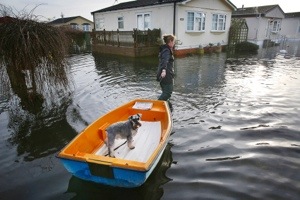
David Cameron was the first to make a meaningless sound bite on the flooding problem. He said money would be no object in tackling this problem. Afterwards it was quickly established what he really mean was not what he appeared to be saying. There was to be no extra government money, other than a few small sums to spent on diverting troops to flood control, he was addressing others. What I think he meant was that the insurance industry should not hold back on compensating homeowners for their losses. Not to be out done the leader of the opposition had to produce his own nonsensical policy pronouncement. Ed Milliband said he would commit much more money to resolving the problem than the current government. He then made the statement completely meaningless by saying that the money would not come from extra government spending but through reordering its priorities. However given that most government spending has already been committed to a variety of projects only a small sum of money is available to be redirected to compensating flood victims or spending on flood defences. What he is really trying not to say is that his policy is exactly the same as David Cameron’s.

20140217-161536.jpg

One really popular but nonsensical policy pronouncement that comes from all parties in parliament, is that they will improve public services not by spending more money on them, but by reforming them to make them more efficient. What these reforms are and how much each reform will save is never spelt out, neither is how it will really lead to an improvement in service. Fortunately it has never to be spelt out, it is ‘responsible politics’, that it is not wasting public money. Any such announcement of reforms in the public sector, will be met with a warm response in the house, as the received opinion is that this is the correct approach to public service. Any minister that announced extra spending to improve public services would be met with howls of derision in the House, as ALL MP’S know that is exactly how not to improve public services. It’s a waste of money, as only reform will improve services.

Never having considered in any but the vaguest terms what reform means, it always in practice means the following. Cuts in staff numbers, worsening of terms of employment and cutting wages of the remaining staff. The crudest cost cutting possible, which generally results in a poorer service provision. Since the quality of such service provision is impossible to measure, it’s always possible to produce statistics to prove that contrary to what service users experience, that the service has improved.

HMRC into which the Inland Revenue has been subsumed demonstrates this clearly. Prior to the era of the great civil service reforms, which started in 1979, it was possible to ring up and speak to a tax inspector to get valuable and informed advice on tax matters. Now after the great cost cutting years of Thatcher, Major, Blair and Wilson, the same quality of advice is no longer available. What the relatively unskilled, demotivated but cost efficient service offer is a much poorer service. Advice offered is often poor or incomplete, errors are made in tax collection. Tax avoidance has grown exponentially because an underpaid, unskilled inspectorate is no match for the army of well paid tax accountants advising on tax avoidance schemes. When Gordon Brown announced that he was cutting the tax inspectorate by 10,000, he was cheered to the rafters. Those MP’s did not need facts or figures, they knew he was right.

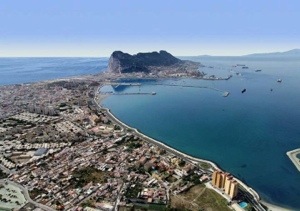
What really provoked my ire was the triumvirate of George Osborne, Danny Alexander and Ed Balls pronouncing on the impossibility of an independent Scotland keeping the pound sterling as their national currency. It was if that if these three great men agreed on something, any opposition is but folly. They claim that if Scotland wanted to keep the pound sterling it had to submit to a currency union with the UK. Ignoring any inconsistencies in their reasoning, they knew they were right. I would want to ask them why this reasoning did not apply to the ‘treasure islands’ of Jersey, Guernsey, The Isle of Man and Gibraltar. Although small in total population, the banks of these ‘countries’ handle many times the quantity of currency handled by Scottish banks, yet their tax policies are contrary to those of the UK. They are in contravention of them as tax havens, yet this does not stop these countries using the pound sterling as their national currency. In fact the inhabitants of the Westminster Palace encourage them to pursue such policies.

20140217-161748.jpg
What these politicians display is an ignorance anything outside the approved group think of Westminster. Any cursory knowledge of economic history would demonstrate to them that all kinds of currency unions are possible. The sterling area existed for over a hundred years and countries that wished to use sterling as a trading currency only had to deposit their reserves in the Bank of England. Their currencies were tied to the pound sterling in a fixed exchange rate and they were free to use sterling as they wished. There is no reason why a Scottish pound could not exist in parallel with sterling, but such options are closed off to Westminster consensus.

Another aspect of this group think is a commitment to the ‘purity’ of the pound sterling. The foolish notion disproved throughout history is that if the currency is right all will be right with the economy. While it is necessary for the national currency to have a certain degree of soundness, it is overdone in Westminster’s worship of the pound. Nobody in Westminster seems to know that in the 19th century when the USA experienced phenomenal rates of growth, the dollar was one of the weakest of international currencies. Some of the slowest growth in Britain occurred in the 1920’s when the government put a strong pound at the heart of its economic policy. This strong pound through overpricing British goods wreaked havoc on the export industries.

Words that I dread coming out of politicians mouths are reform and modernise as they always herald the introduction of some new and ill thought out policy measure.

‘Collective unwisdom’ is not a feature peculiar to this parliament, there have been several times in history when parliament has been equally poor. The British population in the 1930’s had a similarly low opinion of Parliament. This is the period in which the Boulton Paul Defiant was built, a fighter plane that I think embodies best the follies of our politicians. After 1938 the British government decided it had to build fighter planes quickly to counter the threat from Germany. One plane they choose was the Boulton Paul Defiant, whose only virtue was that it was cheap to build. This plane had two faults it was in terms of speed about 100 miles per hour slower than its German rival the Messerschmidt 109 and its guns were positioned in the rear of the plane. This slow moving plane was a death trap, as to get the best shot at its German rival it had to turn around so the gun turret faced the German fighter. In the process of turning around it was defenceless and this is when the German fighter shot it down. Hundreds of RAF pilots were killed in these planes without them shooting down one Messerschmidt. It is my wish that one of these planes should be positioned outside Westminster so as to constantly remind them of the limitations of the wisdom of conventional Parliamentary thinking.

Misconceptions about economics, how the obsessive search for profit can damage a nation’s well being

20140214-155827.jpg

Now that the end of the tax year is approaching it is the time for banker’s bonuses, that is the unbelievable large amounts of cash given to senior bankers at the end of the year. Barclays are to pay out £1.8 billion in bonuses and Lloyd’s £1.7 billion. The heads of these banks claim that it is necessary to pay out these bonuses as they need to retain the best staff in a highly competitive international market. They will point to the large profits earned by their investment bankers, often the most profitable division of the bank as justification for these large payments. However this reasoning is fallacious as these executives fail to understand the real nature of these profits.

What these bank traders in the investment banks earn is what economists describe as a transfer income. They don’t so much add to the stock of national wealth as transfer some of that stock of wealth from the wider society to themselves. These profits are best described as money or fantasy profits as they are of no gain to anybody but themselves. This they do by moving money around in such a way that they increase their stock of money by the end of the day. A trader will promise to sell to another euros at the end of the day at less than the going price, the other trader will accept expecting to make a profit as he is buying euros at less than their current price. The current exchange rate is £1=1.2205€, so the first trader may offer to sell at £1=1.2201, but he is hoping that others in the market share his opinion and that the price of the euro will fall to £1=1.2110. If that happens he can make a profit of 0.009€ on the deal, which does not sound much until you realise he is making a profit of €90,000 as he is buying and selling 10 million euros. Obviously it is a calculated gamble and it can go wrong and the bank will lose money instead of making a profit.

20140214-160013.jpg

Unfortunately they are losers in this scenario, many British companies that export to Europe price their goods in euros. If the price of the euro falls they will get less in return for the products they sell. Part of the money that they should have earned has been through sleight of hand been transferred to the bank trader. Its nothing more that a transfer of cash from an exporting company to the bank. (British exporters price their goods in terms of euros because it is an international currency and by using euros the companies reduce the expensive transaction charges the bank makes for transferring cash).

Even worse the banks may advance money to traders or companies for speculation in either equities or commodities. RBS financed the buyout of Cadbury’s by Kraft, the losers were the workers in Cadbury’s as the costs of the deal were financed in part through cutting the wages bill, that is lost jobs. There will be a time when Kraft’s needs to realise its assets further to finance the deal or to boost its profits. The best way of doing that is too sell off its British factories. Cadbury’s in Britain factories are relatively high cost compared to those in Eastern Europe. All Kraft has to do is to sell its British factories and transfer production to Eastern Europe. The losers are the British as they have lost jobs and potential investment in the economy, while the only winners are RBS and Kraft.

20140214-160204.jpg

Complacent government ministers who oversaw this deal failed to realise the implications. RBS and its traders have increased their money income but with no compensatory increase in national production. If the traders spent the money in Britain they could only purchase from amongst a limited supply of goods; which as they could outbid anybody else for houses, it could only result in house price inflation. Bankers love to own Ferrari’s, but in buying Italian cars they are adding to the import bill, while in return adding nothing to the UK National Income. The OECD estimates that proportionately Britain has the highest foreign trade deficit amongst all the developed nations.

Politicians are incapable of seeing the devastation the bankers have wrought on the British economy. They cannot see how this small minority of the country’s population commanding a disproportionate share of the nations wealth are spending it in a way that wreaks harm on the national economy.

It is no coincidence that the one country in Europe that has a huge foreign trade surplus is Germany, whose people have a very different understanding of the concept profit. Real profit as opposed to money profit is when a profit is earned in a way that increases national wealth,as the example of Germany demonstrates. German banks invest in long term industrial projects and consequently have a successful and growing industrial base (Volkswagen is now the world’s largest car manufacturer) unlike the shrinking British one. There is one depressing piece of evidence that illustrates this problem. Graphene a substance discovered by British scientists, a substance which has the potential to revolutionise the telecommunications industry is in research laboratory’s everywhere being put into commercial applications apart from the UK. (The government has advanced a small sum to the university to discover its commercial applications, but the sum is minuscule compared to other countries.)

20140214-160449.jpg

Charles Dickens’s was a far better economist than either Nick Clegg, George Osborne or Ed Balls

20140211-161851.jpg

If I wanted to understand the nature of our current economics problems I would be better turning to the novels of Charles Dickens’s than by reading articles on economics by the current generation of politicians. Rooted at the heart of the political consensus is a misunderstanding of the current economic crisis. Any politician if asked will say that its a crisis brought on by government overspending, which can only be resolved by a prolonged period of austerity which will reduce the deficit that is at the heart of the problem. This week this misunderstanding has been put into words by Ed Balls, George Osborne and Nick Clegg. They have all stated that the priority of government should be to reduce or eliminate the government deficit. All claim ‘responsibility’ as their guiding principle, all must suffer because of the foolishness of past governments. They all assume a highly principled stance of statesmen making the painful but necessary decisions to secure the nations future.

The cleverest of them must know that they are spouting nonsense, but go along with it as they it’s what everybody or so they believe, in the gilded circles of power believe. (The speculative frenzy that resulted in the crash that bought society to its knees in 2008/9 is never mentioned.) Lying was never a barrier to a successful political career. What we most need now is a Charles Dickens’s to expose the charlantry, hypocrisy and foolishness than passes as informed political debate.

Nick Clegg Deputy Prime Minister, a millionaire owner of luxurious homes on the continent preaches the need for self restraint on an impoverished people, as do the fellow members of a cabinet of millionaires. The country cannot afford to pay the living wage to workers on part time contracts but instead pays the minimum wage or less if agency workers; but it can afford to allow Barclay’s Bank to pay bonus’s of £1.8 billion to its staff. (most of which will go to top executives and highly paid traders). I read somewhere that City bonuses this year could top £80 billion. A word has been coined to characterise such behaviour ‘Pecksniffery’. Seth Pecksniff was a character in one of Dickens’s novels, an unpleasant hypocrite who affected benevolence and high moral principles. Best illustrated by the Conservative Minister who characterised the large numbers going to food banks as going there because the food was free. Those who would rather depend on charity than work for a living. Conveniently ignoring the fact that free food is only given to those in possession of vouchers given by a charity to certify real need, many of whom were the working poor.

20140211-162155.jpg

Self deception and hypocrisy should be regarded as two of the principles that inform economic policy making. These two attitudes are embodied it what is called supply side economics. It states that people are unemployed because of regulation and restrictive practices in the labour market. Trade unions, regulations on hours worked and on conditions in which people are employed only serve to push up the cost of labour, meaning that fewer workers are employed that might otherwise be the case. If trade unions are emasculated or abolished, labour protection laws removed the cost of employing labour will fall (wages) and many more people will be employed. All benefit because more are employed and the economy becomes more productive. This increased productivity will push down prices, so wages become worth in terms of what they can buy. Actually this has elements of a fairy tale in it. In the 1960’s when wages were relatively high compared to the other costs of production unemployment averaged 2%, today when wages are relatively low as a cost of production unemployment is 7%. If the unemployment measure used in the 1960’s was used, unemployment would probably be about 10%. Many of those now employed struggle to make ends meet.

There is one beneficiary from this change, the better off upper middle classes. Mark Harper the recently resigned immigration minister was able get as a cleaner for four hours a week at the cost of £22. This woman was an illegal immigrant who was probably desperate for the money. One consequence of the change in the labour market is that people are now cheap to buy. The Mark Harpers and Nick Clegg’s of this world can now benefit from a plethora of cheap services provided by people on poverty wages. I imagine there is much less concern about the servant problem today. In the sixties I lived on a country estate and my social betters were concerned about two things, the high cost of servants today and the insolence and less than respectful manner of those servants. Lack of respect deriving from the fact that servants would have no difficulty finding another job, so they were unwilling to adopt the demeaning behaviour expected of them. They as human beings had rights and exercised them to the perceived detriment of their betters.

Charles Dickens’s would have understood the behaviours of our governing classes and predicted that their economic policies would be designed to benefit the better off no matter in what guise they appear. Nick Clegg, George Osborne, Ed Balls etc. are all blinded by hypocrisy, unable to recognise that they govern in their own interests and that of their friends and not the nation. One image from ‘David Copperfield’ characterises today’s society for me. While David Copperfield and the other orphans sup on thin gruel, Bumble the Beadle and his friends enjoy sumptuous meals funded by money intended for the orphans. What better image to capture the nature of today’s society.

How an Economist would stop the trade in illegal drugs.

20140205-143740.jpg

Philosophers, sociologists, criminologists are asked to advice on crime, in fact everybody but economists. I want to right this imbalance, because as an economist I have a unique take on this problem not considered by others. Others may for instance study the effects of drugs legislation, but none of them will look at the gangs as business organisations, to whom the usual economic analysis applies.

20140205-144131.jpg

What I observe is the the drug laws have had the unintentional effect of creating large profitable monopolistic businesses making vast profits. It is these profits that are the key to their success, as these profits give them the resources to finance their trade and in particular the money to corrupt the law enforcement agencies that are supposed to stop the trade in illegal drugs. There are innumerable stories in the world’s media about police forces being corrupted by drugs money. In Mexico the phrase ‘mafia government’ has been used with some justification. As an economist my first effort would be directed to reducing these monopoly profits and which would reduce the significance of these gangs.

Anti-drug laws rather than stopping the trade in illegal drugs, have eliminated the unsuccessful players from the scene leaving the control of the supply in the hands of the most skilful and ruthless players in the game. The jails are full of minor drug dealers who lack the skill to evade capture, while the members of the largest and most successful gangs usually evade capture. Even if a major gang is broken up it is soon replaced by another. However they are rarely caught. If the money was taken away from these gangs they would lose their power. The most obvious way to do this is to legalise the sale of drugs. This would cause a flood of small time dealers into the market forcing the price of drugs to drop.

Obviously the major gangs would resort to violence to eliminate rivals and maintain their monopoly. However the flood of drugs onto the market would be impossible to stop and prices would inevitably fall. Those major gangs that remained in the drug trade would inevitably shrink in size and become minor players in the criminal world.

My favoured approach would be to return to the system that prevailed in Britain in the 1960’s. Then drugs were available to drug users from doctors licensed to prescribe drugs. Obviously there would still be a criminal trade in drugs, as a number of users would not want to register as users. However the criminal drugs trade would be much reduced.

This would also ensure the purity of the drugs taken and avoid the personal tragedies that result from the use of impure drugs. If drug usage was seen as a medical problem it would remove the glamour from drug taking and reduce the demand for them. It would also give the medical authorities to engage with users and educate them in the harmful effects of drugs such as ketamine and reduce their use.

I should explain that as a student in the sixties I was one of a large number who developed a distaste for drug use, but the genie is out of the bottle and cannot be put back in. The relevant question for me is how do we live with drug use and minimise its harmful effects.

20140205-144416.jpg

There is another player responsible for the success of the drug gangs and that is the bankers. Unfortunately wherever there is evil you will find a banker facilitating it. Governments have in the UK for the past thirty years favoured ‘light touch’ regulation and encouraged rich corporations and the super rich to use tax avoidance schemes. This they justify by claiming that these policies attract multinational companies to locate in Britain. One unfortunate consequence is that he schemes used by bankers to help the rich avoid tax, can also be used by criminals to hide their money from the law enforcement agencies. Several years ago the British government set up a special unit to recover money from the drug gangs. It has managed to recover practically nothing. It lacks the resources and wit to recover this money.

It was not so long ago that the London bankers successfully opposed plans by the EU to introduce stronger anti money laundering laws. While it is hard to judge the complicity of the banks in illegal money laundering, what is known that a British Bank, Standard Chartered (part of the HSBC group) was convicted of money laundering for the Mexican drug cartels. One suspects their crime as viewed in banking circles was to be so careless as to get caught. Without the banks being willing to move around large sums of money for these gangs, they would not be able to finance their large scale criminality.

Then there are the drug cartels in the countries that produce these drugs. If it was not for the international banking community, they would remain large fish in a small pool. There is a limit to how much farm land a drug baron can buy in Columbia, they want the personal jet, the yacht etc. items that are to be acquired from the rich countries of the developed world. It is impossible to be a cash buyer for such expensive items. There is the difficulty in carrying such large sums in cash and the law enforcement agencies etc. would make such a transaction impossible. Fortunately the drug baron in Columbia can take advantage of the tax havens in the West Indies. Their drug money can be deposited in one of the many offshore accounts in the banks which are effectively branches in all but names of the major US and British banks. This ‘clean’ money now deposited in banks in Miami or London can now be used for a variety of transactions, either purchasing luxury items or using the money to ‘oil the wheels’ to facilitate major drug trades.
What the law enforcement agencies fail to recognise is that these international drug gangs are more akin to international companies such as Shell or Ford, than the old criminal gangs. Their use of violence disguises their true nature. Just as multinational companies are embedded in the governance of countries so are the multi national drug gangs. Therefore a completely different approach is required to tackle these gangs. They just as with any other business depend on a constant cash flow to function and if this cash flow can be stopped, they will cease to exist.

The means in the form of computer technology exists to make this possible to interrupt this cash flow, but there is a reluctance of governments to go this far. Low level criminality is embedded within the banking system, banks have for many years worked with their clients to frustrate the government tax collectors. Tax avoidance and the concealment of the the origin of the money deposited with them has become standard practice within the banking community. Too tackle this culture of secrecy and it’s associated criminality will require a reversal in government policy towards the banks. Also tax avoidance has become the norm amongst the rich and multinational companies and there would be much opposition to such changes from these quarters. This is an opposition not to be under estimated, it would be organised by the City of London to whom the government is used to acquiescing to its desires.

A representative of the City of London sits behind the Speaker’s Chair when Parliament is in session and is able to represent the City’s interests to government ministers on issues that might affect the City. What is in effect a veto on government policy must be removed.

At present the City and the Banks are ‘self policing’ on matters of money laundering. It is up to them to ensure that they comply with the government’s legislation on this subject. Given that the handling of such money is very profitable the controls are very lax and most laundered money passes through the system unnoticed. The only real threat is the New York District Attorney’s Office or the American SEC. There is no real threat in the UK to such misbehaviour in the banking community. When prosecutions are made usually the initiative comes from the USA.

What I believe is essential to control the trade in drugs is proper regulation of the banking system. Government audits of the banks to check for money laundering are necessary and the sanctions must be effective when abuses are discovered, not just fines but jail sentences for offenders. It would be very easy to design the computer software to check on the origin of accounts above a certain value. If the US and Israeli government can develop computer viruses to infect the computers of a security conscious Iran and if the Chinese government is able almost at will to hack into the computers of British companies and government, designing software to check on the origin of accounts will pose no great problems. The only freedoms that would be infringed are those of wealthy tax evaders and avoiders and the large criminal organisations. The rest of us would never hold the amounts of cash likely to attract the attention of the financial police.

Obviously the banks would try to frustrate such government activity and they may well have some success, but the activities of the international drug cartels would seriously be impeded.

In Italy Pope Francis has pledged to clean up the Vatican Bank. A bank sometimes unkindly referred to as the ‘Mafia’s Bank’. The Mafia certainly recognise this as a serious threat to their activities. It was reported recently that the Mafia may make an attempt on the Pope’s life to preempt this threat to their very profitable activities. The attitude of the Italian mafia to their bank merely confirms my view of the relationship between banking and organised crime.

Economists such as myself can’t change human behaviour, but we can suggest means to mitigate the harmful effects of criminal behaviour.

There is however one caveat I must make. When a student I attended lectures given by Robert McKenzie. He told us of a conversation he had with a senior Italian politician. He was discussing the impact of US government policy on Italian politics. He said we know who are bribed by the CIA in Italy, who are they bribing in Britain? Robert McKenzie left it as an unanswered question. Similarly we know who the mafia have corrupted in Italy, the Christian Democrats and the Socialist Party, but we have no idea of who they have corrupted in the UK and it is these ‘hidden’ politicians who would try to frustrate any attempt to check the trade in illegal drugs.

Misplaced Scepticism – Public Choice Theory

20140122-145504.jpg

Today when reading my paper my eye was caught by the headline for an article on the ‘Benefit Culture’. The journalist is a self proclaimed sceptic and his articles exposing the follies of the great and powerful make good reading. Scepticism is the necessary tool of the journalist, only the journalist has the licence to speak the truth to the powerful. This scepticism has permeated upwards from the journalists to the politicians in contemporary Britain. Disappointingly the scepticism in its upward trajectory has morphed into a shallow scepticism, a scepticism of the type that ‘everyone knows’, known as ‘public choice theory’ it is one that sees public servants as only interested in feathering their own nests. A scepticism derived from the stories circulating amongst the great and good. They know for instance that NHS consultants don’t operate on Friday afternoons, as they want an early exit so they can get a round of golf in before tea. If they are making an early exit so it is more likely to being doing so to attend to their profitable private practice to service the needs of the great and the good.

Public choice theory states that it is mistaken to put more money into a public service to improve the quality of service, as that money will be spent on public servants on increasing their salaries, recruiting more staff so as to push the existing members up to higher levels of management to manage all the new staff, anything except improving the service. The solution is to introduce the free market into the public service, if public servants had to work for a private corporation they would be motivated to provide a better service. If service users become customers they will have a choice of service providers. Those that provide a poor service they won’t be used, so they will lose business and income putting so salaries and jobs will be put at risk. Only the discipline of the market can ensure a good quality service for users say its proponents. This is why the UK government has put most of its services out to tender. Security is no longer provided by the public services but is increasing replaced by private contractors, mercenaries instead of soldiers contractors provide security on dangerous overseas missions. Mercenaries instead of the army provide security on merchant vessels under threat from piracy.

Public choice theory is a foreign import, imported from the USA. Where it’s most vocal exponent is Charles Murray, a libertarian who has written ceaselessly on the evils of the state provision of public services. Know doubt his books are required reading for government ministers, along with Hayek and Friedman.

Kierkegaard devised a classic phrase to describe the thinking of the type ‘everyone knows …’ or what passes as public opinion. It is the ‘dog’s opinion’, that is equally meaningless as the noises that emanate from my dog’s mouth.

20140122-145809.jpg

Being imbued with the spirit of scepticism the government is paralysed by a crisis of indecision. If it wants to undertake a large scale infra structure project, such as the construction as the high speed rail link between London and Birmingham, it can’t trust the project to civil servants. Civil servants would spend a large proportion of the cash on themselves on either self promotion to higher grades or spending it on new departments to take on the responsibility for the project. All of which would make the project far more expensive than if undertaken by a private construction company. To avoid this problem, the government employs for-profit private consultants. At present a £1/4 billion has been spent on HS2 largely on consultant fees. To this outsider it does not seem to be the cheaper option.

Entrusting private sector companies to project manage and construct government infra structure projects can lead to all sorts of problems. When the Labour government decided to upgrade the London Underground system, they awarded most of the work to a consortium of construction companies, who would project manage the project and also undertake the construction work . They awarded the contracts to themselves at very generous prices, with the result that the money long ran out before the project was completed.

Public choice theorists in government believe that the civil servants can’t be trusted, as they are only interested in feathering their own nests. To reduce the scope for the abuse of public funds, as few as possible of them should employed. Conservative and Labour governments have made it a priority to get rid of as many state employees as they can. This can have unfortunate consequences, the HMRC has been slimmed down so much that it tax collecting powers have been severely diminished. Now as a consequence the UK comes increasingly to resemble Greece, where large numbers of individuals and businesses avoid paying tax. Three of the multi national giants (Google, Microsoft and Starbucks), while earning vast revenues in the UK pay little or no tax on their incomes.

There is a solution to the crisis in government and that is a return to the mixed economy or Social Democracy. In the Social Democratic state it is recognised that it is the role of the government to provide those services which the free market cannot provide effectively, such as universal health care and education. This however will not happen while the current generation are in power. Conservatives, Labour and the Liberal Democrats are all wedded to the ideas of Neo-Liberal and ardent practitioners of public choice theory. Only when the next financial crises comes is there any chance of change. Hopefully after that the three main Neo-Liberal parties will be decimated at the polls and replaced by a new generation of politicians with very different ideas.