Category Archives: Uncategorized

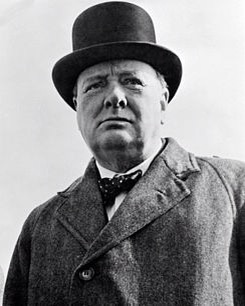
Why there will never be another British Winston Churchill, the theory of political dwarfism

IMG_0406.JPG

Political dwarfism explained

Politics in the UK is dominated by a set of mediocrities, not that this is new, if you read history there is frequently despair about the quality of political leadership. What is not new is the depths to which our current leadership has plunged. They seem to be indifferent to the problems besetting UK society, seeing it as not their concern. At the risk of using an over employed metaphor, they are the band playing on the deck of the Titanic, although unlike that band they are oblivious to the dangers that surround them.

There is one startling example that demonstrates this indifference. In London a housing estate has been taken over by an American property company; that will make the current tenants homeless through the simple expedient of tripling the rents on existing properties to bring them in line with current market rates. Fortunately the tenants have secured a stay on the rent rises which will enable them to stay in their homes over Christmas. Originally the estate was established to provide housing for people on low incomes, a good intent that matters little in a residential property market driven by speculative greed. Despite the publicity given to the plight of these people in the media, the political classes as a whole have remained indifferent to their plight. Even the Mayor of London a man ever eager to court publicity has remained aloof from the tenants campaign. The only public figure to have sided with the tenants is a comedian, Russell Brand. A man demonstrated the commitment that should be expected from the politicians. Instead they are all to keen to demonstrate their helplessness in the face of ‘market forces’. What is so puzzling is why even the publicity seeking mayor like his Westminster colleagues is so eager to embrace this culture of ‘political dwarfism’.

Politics should be about doing, however British politics is about not doing, postponing decision making to the distant and ever receding future or making ‘faux’ decisions. (A decision that turns out to be less than it appears, often nothing more than ‘soundbite’). If decisive action is ever taken its at the behest of some superior force, either the world’s superpower or more usually a large business corporation. So eager are our politicians to embrace insignificance that they are negotiating the Transatlantic Trade and Investment Partnership. This a treaty that will give business corporations a major voice in policy making and the power to veto decisions they dislike. When the treaty is in place, business corporations will be able to bid to run various public services and if denied the that opportunity they can sue the government for compensation for lost revenues. A good example of this is the private health care provider who is suing a local health care trust for turned down their bid. The bid was rejected because because the price was too high. They are asking for a judicial review of the decision because in making its decision the health care authority had not taken into account the private health care providers need to make a profit. Quite probably in the near future private corporations will be deciding what public services will and should be provided by them. The only role for the government will be to sign cheques promising tax payers money to these corporations.

Probably there any many reasons for the popularity of adopting ‘political dwarfism’ as a persona amongst our current generation of politicians. The one most normally cited is the popularity of Neo-Liberal ideology, which relegates politicians to the role of bit players on the world stage. However explanation that interests me is language and the culture that determines how politicians use that language.

Contemporary Political Language

Greek philosophers originally put their philosophy into verse believing that the language of poetry was the best means of explains the ultimate truths of existence. In contrast political language today has very different functions rather than being the language of challenging truths its that of complacency, one of non enquiry, the means for reciting pre-agreed truths and pre-agreed propaganda. A language that obscures and hides truth. The current Chancellor of the Exchequer is a master of rephrasing his language to hide the failure of his policies. We are living in the fastest growing economy in the developed world according to his speeches. What is hidden is that it’s a recovery of statistics, a sleight of hand to hide the emptiness of his political rhetoric. The recovery is a debt led property boom, inflating property values and the property trade, which generates an inflationary increase in national incomes, demonstrating what appears to be a rise in the average incomes of all. Yet the truth is that for the vast majority there has been no increase in incomes, either they are experiencing slow or no growth in their incomes, or working for poverty wages.

One would expect the opposition to make the most of this growing inequality and inequity in incomes, yet all they can offer is a ‘faux’ policy alternative. They will generate a faster growth in the economy, which will boost incomes for all. However it is a policy so light on detail that it is practically meaningless, more a hope than a policy. Politicians seem to have lost the ability to express meaningful truths in language, language for them is the language of non truths, the language of evasion and obscurantism.

Why this decline in the spoken language?
IMG_0407-0.JPG

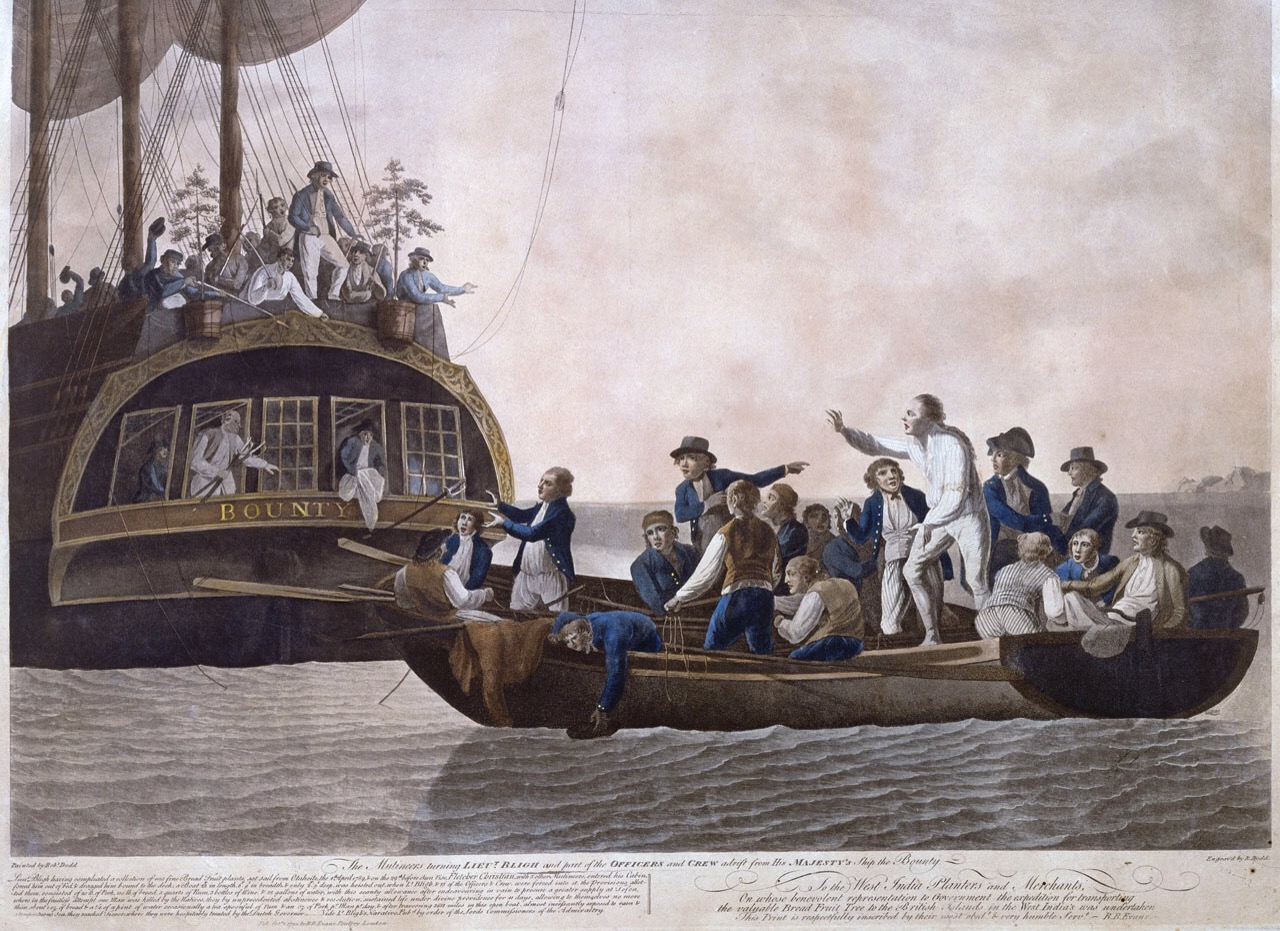
Politicians have always used language for propaganda purpose or evasion or what parliament calls dissembling (lying), but it was never in the past the predominate use of language. This example provides an interesting illustration of this. When a young man was asked by Lloyd George at house party what he hoped to do with his future, he answered that he was undecided between a career in the navy and politics. Lloyd George advised him to go into politics as he would experience more ‘boardings and mutinies’ than he would in the navy. This politician had a reputation for deviousness, he was the Welsh wizard, yet he introduced the beginnings of the welfare state and led Britain to victory in a world war. Today’s politicians could probably match him for deviousness, yet not for vision. His vision came from an upbringing in Welsh baptism, that imbued him with a sense of justice.

If I can go back to Churchill I can make the point more clearly. Churchill would have studied classics at Harrow and many of his contemporaries would have gone on to study classics at one of the Oxbridge colleges, whereas today contemporary politicians study PPE at an Oxbridge college. This is a significant factor as the education of today’s politicians and the past differs drastically. One classical writer studied on both classics and politics courses is the Roman philosopher Cicero, but who is treated very differently in each subject. Students of classics particularly of Churchill’s time would have seen Cicero as a heroic figure whose command of language was one to emulate. A man whose courage was matched by his oratory. The Cicero they studied was the Cicero who at risk to life and reputation defended in court a man who was the victim of a friend of the dictator Sulla. (Sulla was a dictator who had killed hundreds, when taking over the Roman Republic.) This was also the man who gave up his life to defend the restored Roman Republic. He was such a significant opponent of Mark Anthony (one of the triumvirate of politicians seeking to overthrow the Republic), that he had the murdered man’s hands nailed to the Senate door to demonstrate his command of Rome. In my politics course as is so of contemporary politics courses, Cicero was dismissed as a plagiarist, whose books were copies of better Greek originals. A man who rather than being a heroic defender of the Republic, was a man who took many ignoble actions to advance his career. In the space of 50 years Cicero had been diminished from being a man to aspire to to being to yet just another very ordinary politician motivated by the spirit of self advancement, all be it a good self propagandist. With an education devoid of heroes or heroic figures, an education that trashed the value driven figures of the past, future politicians educated in politics courses were lacking the language of value. A realist education that sees only human frailty and failure cannot but give a very downbeat view of the world.

An observer of the 19th century parliament would have noted that speeches were liberally sprinkled with Latin phrases, speakers tried to out do each other in their command of rhetoric. Observers could drop into parliament to be amused by the wit of Disraeli or the eloquence of Gladstone. The latter a man who on his campaign trails could speak to an audience of thousands for an hour or more and yet command their attention. Today’s politicians could not speak for ten minutes and hope the attention of an audience for that time span but instead they sprinkle their speeches with brief ‘sound bites’ (always of less than a minute’s duration) to capture their audiences attention.

Obviously the decline of the teaching of classics cannot be held responsible for the decline in the quality of parliamentary debates. It is just one factor but one that I think is a predominant factor. Now There is an intellectual culture that values mundanity and the accepted over creativity and originality of thought. A culture that equates any value system or ideology as a fantasy, at best useful for getting out the vote, but nothing more. This culture of mundanity goes by many names, the most popular are post modernism and Neo-Liberalism. While the first is a both a philosophy and a literary theory and the second is an economics, what they both have in common is a contempt for any value driven system, seeing instead a society of things in which values are an alien intrusion.

Why how language is used matters

Language is both a servant and a master, and it is the extent to which it is the latter that explains the mediocrity of the present political class. It is a servant when I use language to get something done, as when I order my cappuccino at my favourite coffee shop. Using it is this way has no impact on my behaviours, it’s nothing more than a request. However language is much more than a means of making requests, it is determines my perception of the society in which I live. Society is one of those strange objects that is both intangible and tangible. I know it’s there it is a given in my life, but it’s not something than I can readily comprehend. I just know it’s there, I know it’s an organised system of social relationships, whose meaning I understand through language. When I go into my coffee shop I am immediately aware that I’m entering a place of structured inter relationships. I know to order my coffee from the barista and not the manager or the chef. All have a identity disclosed in language, which tells me how I should interact with them or even not at all, as is the case with customers to whom I am a stranger. The coffee shop etiquette is something we all learn, and that etiquette is expressed in language. Anybody who fails to understand that etiquette will get bad or poor service.

Similarly the politician has come across a language which explains to them their role and that role within the greater network of social relationships that is the political system. If as at present it is the language of Neo-Liberalism, it is a language of can’t does. Neo-Liberals believe humankind has discovered the perfect social organisation, the free market and their only role is to remove any obstacles that prevent the free market operating. Consequently the voter that expects their MP to do something about the pitifully poor wage they receive is doomed to disappointment. The MP believes in the long term, in the long term the market will right itself and all will receive a living wage.

This stance of ‘doing nothing’ is reinforced by contemporary post modern philosophy that teaches that the higher moral order of which past philosophers such as Marx spoke are only the wishes of a particular age. Socialism was only had meaning in the Industrial Age of great factories, when labour protection and wage legislation made sense, because all did similar jobs in large industrial units. Now when all do very individual jobs in very different work environments, universal legislation covering all workers makes no sense and so it’s right to abolish all worker protections. Also there can in the post modern age there be no universal values as it is an age of extreme individualism. Values are relative to the individual and their unique social circumstances. Although it rarely said any notion of universal human rights is contrary to post modernism. All there can be is a democracy of rights, a competition of rights. Alistair McIntyre when speaking of a debate between two people debating the rights of their own ethical position, likens it to a shouting match. If they have different ethics, there can be no common ground between them which make any meaningful communication between them impossible. They might both be English speakers, but as for any chance of communication between them, they might as well be speaking different languages.

If the members of our political classes, particularly the leadership have been schooled at the elite colleges that teach post modernist philosophy and Neo-Liberal economics they will have been schooled in a culture that has little belief in the efficacy of human agency. Values have no place in the pseudo-science of Neo-Liberal economics and values for a post modernist are little more than an individual’s chosen life style, they have no universal validity. How can the product of such a culture, be value driven as was aWinston Churchill who had a belief not only in the rightness of British democracy, but in Britain’s unique role in the world. In an education system that excludes any education in values from its curriculum it is not surprising that it produce politicians that are only capable of having a mundane hum drum vision of the world. John Major the British PM summed up the current way of thinking, when he spoke of the need for a ‘vision thing’. He was unfairly characterised by cartoonists as a grey figure, when in fact it was a characteristic he shared with his generation of politicians.

How can such language of universal,dullness produce and thinkers of great thoughts? Whether the politician be David Cameron, Nick Clegg or Ed Miliband, all will be indistinguishable to the future historian, just a group of indistinguishable mediocrities that will fail to leave their mark on history.

The New Generation of ‘Wreckers’ (at Westminster)

IMG_0398.JPG

Originally the wreckers were inhabitants of the costal regions of Cornwall, who during stormy weather would lure ships on to rocks, where they would kill the surviving crew members and loot the wreck of its cargo. While today’s wreckers are very different, in that they are politicians that inhabit Westminster, their motives are very similar to those of the Cornish wreckers. They want to break up the public service organisations and sell off the most profitable parts to favoured buyers. Parts of the NHS are sold to Virgin Care, prison and probation services to Care4, the list is almost endless. These politicians would never view themselves as wreckers, they instead are the new Neo-Liberal thrusters, breaking up the old complacent society to remake it as a dynamic free market society.

IMG_0399.JPG

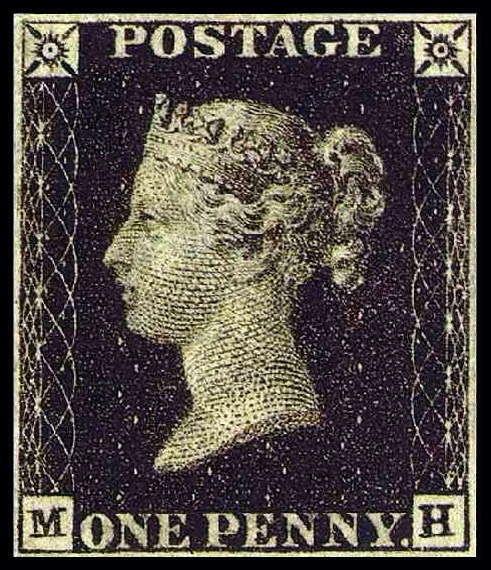
The recent privatisation of the Royal Mail provides a good example of this wrecking process. The Royal Mail was established in 1840 to provide a universal mail service at a fixed price to all customers. In Neo-Liberal Britain this in the words of one expert is an anachronism. The service could be broken up into its various parts and sold to for profit providers, who motivated by the need to make profits would provide a better service. What this means in real terms is that the customers of the most profitable parts of the mail delivery service would get a better service and the least profitable customers a worse one. Consequently the government first disposed on the profitable corporate mail shot business to private contractors, then permitted these same companies to cherry pick the profitable London mail delivery service, leaving the high cost universal mail delivery service to The Royal Mail. Now the now privatised Royal,Mail is requesting that it be relieved of the burden of providing a six day a week universal service. Inevitably its request will be granted as the universal service obligation is contrary to profit making. Soon Britain will,have an expensive fragmented mail delivery service similar to that in the Netherlands, where profit making rather than service delivery is the priority.

While a dysfunctional postal service may cause some problems it does not pose a major problem for British society. We can all learn how to manage with delays in post, however the wreckers in politics seem unaware of the damage that they are inflicting on the social fabric damage in their effort to create the perfect Neo-Liberal society. It is as if they have taken a ‘wrecking ball’ to the fabric of that society, they are on the same spectrum of political leadership as Chairman Mao. He was responsible for the death of millions, when he tried to impose a communist agenda on China with the ‘Great Leap Forward’. I guess we should be content that our current leaders are content with the remaking of society only involves the immiseration of the majority, and not their death in service the higher cause. Food banks, zero hour contracts, low wages, insecurity of tenure and homelessness are the price to be paid for the ‘Great British Leap Forward’. Our leaders as with Chairman Mao hope to recreate a new society out of the ruins of the old state. Any price paid is regarded as one well paid for the creation of the day new society.

The Real Price paid for the ‘Wrecking Ball’ of Westminster politics.

As with Chairman Mao’s ‘Great Leap Forward’ the real price paid by the people for this misguided reform is largely hidden from view. The losers are the poor, the underclass largely hidden from the view of the media, unless they are needed for examples for the purpose of scapegoating the feckless poor. Strangely enough for a political class that lauds the family as the cornerstone of society, it shows little concern about the destructive impact of its policies have on the family unit. It is recognised that financial stress in one of the main factors in family breakdown, yet successive governments have imposed more and more financial stress on the family unit.

Their Neo-Liberal or supply side side reforms require a labour force that is infinitely flexible, one that can and will move from one job to another, at a moment’s notice and one also that is so cheap to employ that high wages are no bar to employers wishing to take on extra staff. By removing employment protection laws, wage councils and emasculating the trade unions the government’s of the UK have achieved this flexible labour force so desired by businessmen and economists. Recently a think tank of Swiss millionaires lauded the UK for having the most flexible of labour markets.

The price paid for this free market in labour is high in terms of human suffering. A comparison is the family structure within the Victorian army, offers a useful parallel to today’s family. Then because of the high mortality rate amongst the soldiers a fluid family pattern developed. The loss of a male partner meant poverty for the family, so frequently the woman in the relationship had more than one partner so as to avoid the poverty that would be attendant on the death of the breadwinner. For the same reason serial monogamy was a necessity as women would need a succession of male partners, if the woman based family unit was to survive. Many middle class commentators saw army wives as little better than prostitutes, as they failed to recognise the financial stresses that made this a necessary way of life. Any reader of today’s papers will recognise this description of family life as that ascribed to the underclass. Stories abound in the tabloid press of the amoral underclass, not recognising that it’s the way the poor have of coping with the stresses of everyday life. Only a fluid weak family structure can survive in a situation of extreme financial stress.

IMG_0401.GIF

There is the impact on the men in low wage insecure occupations, which impacts negatively on family life. As demonstrated in Wilfred Foote Whyte’s book ‘Street Corner Society’, there the men he interviewed had numerous liaisons and partners. What is he discovered was that it was not so much amoral behaviour, but shame that drove these men into having numerous sexual relations. What forced them to move on from one relationship to another was the shame of being unable to support a family properly because of their low income. Running out on the relationship was the only way to avoid the humiliation of not being able to buy one’s children clothes. This explains the prevalence of so many one parent families in the UK.

Family breakdown is not unique to the underclass, it is spread throughout society. A society that regards people as resources of labour to be used when and as the employer pleases is bound to be destructive of social relationships. Social change has made once secure jobs, such as the professions insecure. One comment strikes me as typifying today’s destructive society, a neighbour said that if she became pregnant she would have to have an abortion, as her partner’s salary would be inadequate to pay the mortgage and support a stay-at-home wife. A society such as Britain which has bought wholeheartedly into the Neo-Liberal agenda is uncaring of damage inflicted on its members if it boosts the bottom line.

What prompted this essay was the evident damage shown in our society from just a few years of the Neo-Liberal experiment. In primary schools there are an increasing number of children starting who lack social skills or in some cases language skills. (There are children of five who can only only communicate, with sounds lacking any language skills.) There are even children attending school who have rickets, the illness of poverty, once thought to have been eradicated. Blame for this is put on inadequate parents, but with the destruction inflicted on the family, it can be no surprise that damaged families produce dysfunctional, inadequate adults. Are these the people that made up the mob so feared by Victorian society?

There has been another warning sign, it has been estimated that societies where average income is less than $7,500 social discontent is endemic. Just recently recently our major cities were subject to a spate of rioting in which the police temporarily lost control of the streets. It goes almost without comment that the riots were the young on disproportionately low wages. If current trends continue with average wages continuing to fall, inner city violence may become endemic.

The Return of the Old Fear of Revolution

Strangely the best educated generation of British politicians has an appalling ignorance of the past. When at university in the 1960’s it was an age of optimism. My teachers in common with the rest of society thought that the evils of the Victorian cities were a thing of the past. Society had been remade along social democratic lines, so as to eliminate the evils of that time. Too many politicians could remember the horrors of the ‘Great Depression’ and wanted to ensure that they would never return. Yet our current generation of politicians seem to want consciously or unconsciously to return to the divided society of Victorian times. The Victorian middle classes had a constant fear of revolution and the masses. When the Chartists marched through London in 1848 to demand universal suffrage, the fearful middle classes turned out in force as special constables to police the marchers, such was their fear of revolution. Such was their fear of the masses that a series of murders in the East End of London, became magnified into the ‘Jack the Ripper’ scare. For a fearful middle class it was all to easy for to imagine that the poor areas of the East End, were the breeding ground for monsters such as Jack the Ripper. This fearful middle class fled the city and the mobs for the green suburbs. I now live in one such suburb created by the mill owners of Leeds who wanted to distance themselves from the city poor.

Now having started to create an divided and unfair society, politicians and the middle class have rediscovered their fear of the poor. Such is the fear that the rioters of 2011 that judiciary under pressure from frightened politicians handed out draconian sentences to deter future rioters. A practice common in the 19th century when hard labour and hanging were the punishments for rioting and offences against social order; however in such a divided society such punishments had little impact on reducing violence.

Today the East End of London is an area of new city blocks and affluence, yet in the recent past it was a place in which the well off feared to venture. I remember a professor telling me that when he ventured there in the 1930’s he was driven out for being posh. He was subject to stone throwing from the local youths.

Although it might be disputed by some but the fear of revolution has returned in the guise of Muslim extremists. Only today the Home Secretary warned that the likelihood of a terrorist attack was at the greatest since 9/11. It is from those areas of the ‘Other’ in which the fearful rich and well to do never venture, that they fear attack. They have declared a war on terror, they fear Muslim minority, regardless of the fact this minority has integrated well into society. While there is a justified fear of Muslim extremism, extremists are a minority and it was largely complacent policing that allowed them to thrive.

There is however a disaffection amongst the young, they see a society that is indifferent to them. It is a society that cares little for its young people, denying them good wages and housing, it is a society in which disaffection will grow. At least in the majority it’s protests that are legal, but in minority groups that are feeling oppressed a small number while turn to more violent means. Even history teaches us that this minority can be contained through good policing. The Fenians in the late nineteenth century were as dangerous as any modern Islamic terrorist and yet the police successfully contained them. Unfortunately the return of the ‘great fear’ of the dispossessed ‘other’ means that our political leaders will inevitably overact to a small disaffected group. The best advocates for the extremist cause are the politicians who constantly over estimate the power and success of them. They cannot see that Islamic extremists are as much a creation of their making, as of their religion. If a people are impoverished and brutalised through political and social change, social order and peace will be undermined, but our current complacent political class never realise that. They will instead resort to more and more repressive measures to control the simmering discontent. The 1950’s and 1960’s were an unusual period in British history, one of social peace, achieved because the vast majority felt they had a stake in maintaining the well being of society.

Mass Men and Exceptional Women or Foxes and Lionesses

Jose Ortega y Gasset (The Revolt of the Masses) when writing in the 1920’s made some acute observations about society that are more relevant for today’s society than when he made them then. He bemoans the rise of what he calls mass man, a man of limited vision who because of the material wealth and plentitude in developed western societies has become self satisfied, sees no need for change. This vision less man he compares to primitive man who accepts the natural environment in which he lives as a given, one that he is incapable of changing. What mass man never sees is that society is not a permanent construct that will be there for ever yielding a plethora of material goods, but that it is a fragile human construct that needs to undergo a constant process of renewal and change if it is to deliver for its members. The danger of mass man society is that the complacency of vision will lead to an ossified society one that is incapable of change or adjusting to the challenges that it faces. Societies leaders now having discovered what believe is the perfect society in Neo-Liberalism see no change to the model, failing to recognise the dangers inherent in this very human fallible human construct.

If he lived today Ortega y Gasset would recognise in the political class the dominance of the mass man, a man incapable of seeing any threat to their current beneficent existence from either the natural or made made environment. Despite the obvious threat of climate change because the current society delivers in terms of material wealth and human comfort, they see no urgency to act. Last year the London barrage was raised so many times to prevent flooding that engineers were unable to conduct essential maintenance, so that if this year and following years continue in the same pattern the barrage will eventually fail and London will flood. No matter what the evidence politicians will never conceive of a situation in which the economy they manage never delivers for them. Their time frame is limited to the present, they cannot consider a time when the present parameters no longer apply and because of their inaction the circumstances which were benign will then turn malign. Climate change will not stop with producing warm winters and hot summers but will instead cause food shortages and with concomitant threat of mass starvation.

IMG_0395.JPG

One of the guiltiest groups of mass men are the economists. Ortega y Gasset claims that scientists are exemplars of mass men, they know just one thing, their science and for them it is sufficient. Scientists have succeeded by specialising in ever narrower and narrower fields disregarding the wider realm of human knowledge philosophy and history for instance. Having succeeded in one very limited field of human endeavour they assume they know all. Of all groups in contemporary society economists are the most guilty of this arrogance. They as with the medieval theologians see their’s as the queen of sciences, politics, ethics philosophy must all bend their knee to the greater realism that is economics. Bill Clinton’s aides comment that when asked what will determine the result of the election said ‘it’s the economy stupid’ has become the accepted political truth of our times. All politics has become as a consequence a branch of economics, particularly in the Neo-Liberal Anglo Saxon economies. Here politician’s have outsourced decision making to the free market. However this free market does not exist except in the imagination of economists and politicians, what does exist is the large business corporations that dominate the energy market and an are becoming increasingly dominant in the health care market. Blindness to reality, they see only the imagined world of beneficent free markets.

IMG_0396.JPG

Only a contemporary Jonathan Swift could describe the contemporary political leadership.in the country of Lilliput the chief ministers are chosen by their according to their ability to skip and dance on a rope, this being the primary qualification for managing the affairs of state. In the age of mass man the skills needed for high office in the UK are similarly irrelevant to the skills needed to manage the current troubled society. Just as with his sky city of Laputa floating above the earth, where the scientists try to capture moon beams in cucumbers, the debates are actions of our parliamentarians cocooned within the Westminster bubble are equally fruitless.

What Ortega y Gasset failed to see that mass man would predominate amongst the political classes, while outside that class there would be many who defied that category. Only in the Westminster/Whitehall village could the screening process be effective in only selecting mass men for positions of power and influence. There number of candidates are so small that it is easy to screen out exceptional men. Outside the privileged environs of power the influences on men are so diverse and the gene pool so wide that mass men don’t predominate to the same extent. Exceptional men and women rise to the top in institutions that are remote from Westminster or marginalised by the Westminster power bloc. In trade unions now marginalised and emasculated, exceptional men and women occupy leadership roles. People such as Francis O’ Grady (General Secretary of the TUC), the late Bob Crow of the railway union, Natalie Bennet leader of the Green Party. However such people are remote from the seats of real power and lack the influence and power of mass men.

However Ortega y Gasset does offer hope for society in the form of the exceptional men. These are a natural aristocracy, the men dissatisfied with society. Men such as Giuseppe Mazzini the Italian revolutionary thinker who spent his life largely in exile as he was thought to be a constant threat to socially conservative Italian governments. The exceptional men believe in a higher order, possibly a higher spiritual order, that of a God. These people are dissatisfied with the assumed natural order of things, they see the need for change and want to make it happen. Without them society ossifies into fixed model incapable of change. The USA demonstrates what happens when mass men dominate politics to the exclusion of exceptional men. In Washington there is legislative gridlock, a government that is unable to offer policies for change, only policies for a retreat into a safer imagined past.

IMG_0397.JPG

When trying to think of exceptional men in the field of politics it is exceptional women that spring to mind, Elizabeth Warren (US Senator) or Wendy Davies who successfully filibustered the Texas Senate on abortion law. The mould breakers tend to be women, probably because they have been so long excluded from the seats of power that they have an innate dissatisfaction with the system that marginalises them and a desire for change. In the UK the existing power structures effectively exclude women from power. The exception being Nicola Sturgeon leader of the Scots Nationalists, a former marginalised party. Theresa May the current Home Secretary who is spoken of as a possible leader of the Conservative party, is a women who has positioned herself squarely in the mass man camp. If she becomes leader she will be no challenge to the dominant political complacency.

There is another writer Pareto who tried to understand why politics was dominated for long periods by clever mediocrities, men good at playing the political game but incapable of initiating or managing change. Such men were good at winning elections but they would leave society untouched or unchanged after their period of office, if was as if they had never held office. Gross inequities were never challenged and society remained in the hands of its corrupt rulers. He called such men foxes, however these men were unable to resist the challenge of the men he called lions, men of character and bold vision. These men only came to power when circumstances permitted, in times of revolutionary upheaval. One such man was Garibaldi the military leader of the Italian revolutionary forces. However these men of vision only remained in power for a short while as the would inevitably be ousted by the machinations of the cunning foxes.

Whatever the complexion of government politics in the Anglo-Saxon countries is dominated by the clever mediocrities, who have cleverly manipulated the political system to exclude any possible lions entering government and disturbing the current political complacency. In the UK the leaders of the opposition party, the Labour Party have the power to exclude unsuitable candidates from the process for choosing MP’s. Only people that subscribe to the current political complacency will be accepted as candidates. Similarly the corrupting power of money is effective at excluding able candidates (the exceptional men) from the political process. The demands of the large party funders mean that nobody who challenges the current orthodoxy can be selected as a potential MP or leader. Since so many of the exceptional men are able women, there is a further barrier which keeps them distant from the seats of power and that is institutionalised sexism. Demonstrated when a conservative MP asked the newly elected female MP for Walthamstow to get out of the MP’s lift, as she should be in the one reserved for secretaries and admin staff. He could not conceive of a young woman being an MP. One key factor preventing women politicians reaching the top of British politics is the sexism of Westminster and the media. Any female politician that puts her head above the parapet risks being in receipt of a torrent of sexist abuse from the media. Only female politicians that are not tainted with feminism can hope to avoid the worst of this abuse. The only way of ending the destructive complacency of the mass men is to open up politics to those who they currently exclude, the exceptional men and women. However that would require an act of imagination and boldness generally lacking in the mass man.

What is the USA and the UK need desperately if not to be pushed into a long period of decline through the follies of mass men, is a more open society one that allows exceptional men and women access to power. Unfortunately what is happening is the reverse both the Anglo-Saxon societies are becoming more and more closed societies. Both Anglo Saxon democracies are turning to an imagined past. Although they would be unwilling to admit it our current political leaders have a mindset not too different to the religious fundamentalists of Islam, they both want a return to a past untroubled by modernity.

Fundamentalist Religion and the Economics of Fear

IMG_0393.JPG

A Rural Christian Childhood

When I remember when I was young and staying at an aunt’s house I picked up a copy of John Bunyan’s ‘Pilgrim’s Progress’ to read before going to bed. It was a old edition illustrated with what I imagine were wood cuts, which terrified me. Having tried scan the text for parts with interesting stories I gave up. What I read about Doubting Castle and Giant Despair and the numerous beatings that Christian and his companions suffered filled me with despair. I resolved that evening to live a virtuous life and not suffer the fates inflicted on Christian. However the fear that motivated me to adopt the strict lifestyle of my aunt disappeared on my return home. There days spent playing out in the sunlight summer countryside of Kent restored my childish optimism. Even when attending services at the village church, there was little to remind me of the horrors that that abounded in ‘The Pilgrim’s Progress’. Church services were happy affairs reaffirming the good life lived by the inhabitants of our rural community.

IMG_0390.JPG

What I learnt unconsciously as a child was that any religion or morality of fear was only effective as long as that fear was constantly reinforced by repetition. Sunlight and the beauty of the countryside removed the shadow of fear that clouded my mind. Once those influences that made fear so oppressive, that is the strangeness of the dark oppressive city bedroom, the terrible words and depressing images were removed my fears vanished. Instead there was my love of the Christianity of the countryside. Even through my periods of atheism at the big city university, my affection for the Anglican Church never diminished. Unknowingly I took with me to the city my love of the life affirming Christianity of my childhood.

This simple unreflecting religion of the countryside has remained with me. It was not a religion that was unaware of the unpleasantness of life, many from the village were all too familiar with such, having experienced the horrors of World War II. They did not want a religion that told them that they lived within the confines the ‘Vale of Tears’ and the ‘Slough of Despond’. The beauty of the surrounding countryside gave the lie to such perceptions. What they wanted was a religion that celebrated life they knew and experienced. The religion that enabled them to celebrate the seasonal rites of passage that gave meaning to their lives.

There were two vicars in my time in this village. Neither over intellectualised life and were very representative of that strain of bucolic Anglicanism that once characterised the English church. The one vicar I knew well had been a Cambridge Rowing Blue, a man who epitomised the muscular Anglican Christianity of Charles Kingsley, I suspect that as with Charles Kingsley he always slept in a bedroom with an open window, exposed to even the winter cold. Kingsley believed healthy living was an essential part of the Christian life a healthiness engendered by physical exercise and through a rejection of the soft effeminate lifestyle that avoided exposure to the elements. (It should be mentioned that his insistence on always having an open window led to him catching a chill which caused his death.) Our athletic vicar’s sermons were couched in a language that the unsophisticated country dweller could comprehend. There were no difficult intellectual frills, about the nature if the triune God for example. This God only mentioned The Lord’s Prayer a God whose existence was accepted and whose existence was never questioned or explained. Even this twelve year old choirboy as I was then could understand his sermons.

His predecessor commanded great respect in the village, even although I as a child found his manner gruff and intimidating. During the war he had been a padre and when his unit had been captured by the Germans, he refused repatriation which was his right as a non combatant and instead went into captivity with the rest of his unit. This man my father really liked as he would visit him when working in the fields and talk about their shared wartime experiences. I don’t think he once mentioned religion in his conversations with my father. On reflection I think what I mistook as gruffness was in reality the blunt manner of a countryman. A man with a simplicity of manner and directness of speech, who felt no need to add in the unnecessary courtesies of ‘townified’ speech making.

The Economics of Fear

Between the world of my Kentish childhood and that of England today, there is a yawning chasm, it as if the first never existed. All the certainties of my childhood, fair wages (sufficient income to support a family), good housing, security of tenure and employment have disappeared. One story illustrates this, there was on the estate a worker who was notoriously lazy. One day when he heard the church clock strike twelve for lunch, he stopped his hedge cutting mid stroke and left the half open shears on the hedge in the cutting position. Today such action would merit instant dismissal, then the estate management knew that he had a large family to support and they would be the losers if he lost his job. Now the manual work undertaken by my father and his friends is subject to low wages and insecurity of employment. Within the manual trades workers are either self employed or have zero hours contracts, both of which enable the employer to manage by fear, as the hours of work he gives his workers depends upon their good behaviour. Insecurity and the anxiety it brings are now seen as the best means of managing the workers.

Fear is even the most used management practice in the middle class professions. As a former public service professional I witnessed the introduction of the target based culture and the accompanying culture of institutionalised bullying. Neo-Liberalism the dominant political philosophy of our times is a belief system that states that any service or product can best be judged by the quantitative or monetary value it is given by its purchasers. Other than taxes no price is paid for public services such as policing, health care care and education, this meant that politicians had no means of judging the productivity of the public service sector. It did not matter that the service provided was qualitative and had no direct monetary measure. How could a life saved be valued or in my case how could the treatment that cured my infant daughter of meningitis be valued? Ignoring the impossibility of turning quality into quantity, the government decided that they would introduce quantitive measures of output into these services. This was the target culture, there would be a time limit for how long a patient should wait in the accident and emergency department before being treated. There are very valid reasons for reducing waiting times, but the problem is that this directive outweighs the qualitative judgement of doctors. One consequence was those with minor illnesses nearing the four hour deadline for treatment would get priority over those with more serious illnesses.

Global target setting has one major failing, it is a very crude measure of service and can give misleading results. Very soon the politicians realised that these initial global targets were too broad to measure the output of public service workers. If the state was paying a large salary to a doctor, teacher or policeman, how could they be sure that the service provided by that individual was equivalent in value to say, £30,000? To ensure that the state was getting value for money it had to introduce more and more directives to direct the working practices of the public service workers to achieve the desired ends. The consequence is that the activities of all public service workers are now micro managed from Whitehall by bureaucrats at the behest of their political masters, who have little knowledge of the service they manage. Given the mismatch between the civil servants knowledge of working practices and actual working practice, there had to be found a way to ensure a reluctant workforce complied with these centrally imposed directives. Particularly where the workers thought they contradicted good working practice. Coercion or management through fear is the only possible way of making these directives effective.

Managers in the public sector fear now losing those jobs if their targets are not met and they transmit their fears through the workplace. Managers desperate for their jobs will adopt bullying measures to ensure these targets are met, not caring whether such targets improve the effectiveness of the service they are providing, all that matters is that these targets are met. To strengthen their arm the government has introduced job insecurity into the public service sector to improve efficiency. Workers deemed ineffective can be summarily dismissed and quickly replaced with new more effective staff. Such managers are unaware of the evidence from business that high staff turnover reduces the overall effectiveness of the business rather than increasing it.

The system in the public services now resembles the management practices in the old Soviet Union. There the KGB was the inspectorate that ensured compliance with approved management practices and that targets were met. Targets were met but often by producing poor quality goods or services. The same naivety permeates the English public sector, where London rather than Moscow bureaucrats write the service manual by which the inspectorate judges public sector workers. Their belief is that is they draft a sufficiently detailed manual of what the good teacher, doctor or policeman should do, the government inspectorate will ensure compliance with that manual so taking service provision to a higher level. The fact that top civil servants have little knowledge of the practices in the classroom or hospital does not matter, as constant revision of work practices to eliminate error will result in the perfect instruction manual for public service workers which will deliver the highest level of service provision. What they fail to realise is that this practise engenders uncertainty in the workplace and often confusion as this year’s directives may contradict last year’s. Politicians, civil servants, economists and political servants never understand that one model does fit all. The practice of teaching and medicine is as much an art as a science, individual practice cannot be reduced to a pre agreed script. The agreed script cannot produce the great teacher or doctor, but they can both thrive in a very different culture that values individual creativity. Again the Soviet Union provides an insight into the fallibilities of this system. Centrally given directives drafted in ignorance of working practices are frequently unworkable and can work to frustrate their intended purpose. To persuade workers to adopt these practices it was necessary to use extreme measures, failure to comply meant exile to a labour camp and possibly death. The point I am trying to make is that the more and more directive working practices become, the more and more extreme measures have to be adopted to ensure compliance. Is it not possible when the threat of dismissal proves to be ineffective in ensuring the public sector workers achieve their targets, more extreme measures will be considered such as imprisonment?

Religious fundamentalism and the economics of fear

This essay is intended to demonstrate the similarities between religious fundamentalism and the new economics of fear. Fear is one of the main drivers in Baptist religious practice. One of the last services I attended was in small corrugated iron chapel in a remote country field. There the preacher spotting a large audience of young people on the threshold of adult life, resorted to a sermon on the dangers of hellfire, intending to set them on the right path for adulthood by warning them of the dangers of failing to do so. Similarly When I attended a service given by a well known American preacher he also tried to frighten his audience into becoming Christian by talking about the imminence of death and the likelihood of eternal torment for sinners. Hundreds went up to the front in a sign that they had received the message. One of these was my atheist friend, but by the next day he had recovered his composure and gave up the Christian religion, when the fear of hellfire had been lost. I don’t think he has been to a religious service since. Only by being repeatedly reminded of the perils of hellfire would he have continued in his newly discovered Christian practice and belief.

Management in the public sector is similarly premised on fear, the fear of dismissal rather than hellfire. Both the Baptist preacher and public sector manager lack faith in their congregation and workforce, and believe that only fear can deliver the right behaviours. While I disapprove of the use of fear as a means of controlling human behaviour, I do have some sympathy with the Baptist preacher who is using fear to for a good end, even if I don’t agree with the means used. I have none with the public sector manager who uses fear as a means of improving productivity, the ends don’t justify the means.

If I can compare myself with my atheist friend he was Christian for one night when the terrors of hellfire where present in his mind, while I have remained a Christian (with a few lapses) as a consequence of having been introduced to Christianity which was a celebration of life. Fear is only effective for the moment it is introduced and will only remain an effective motivator of human behaviour if it is constantly reinforced. The consequence for the public sector in Britain is that an ever growing workforce of managers and inspectors is required to ensure that the workforce complies with the ever growing list of centrally issued directives. However productivity is measured this ever growing non productive workforce can only diminish individual productivity, or to put it more simply a decline in the quality of service.

Thinking ourselves into poverty

If there were two words that I could use to describe the current state of economic thinking, they would be pessimism and helplessness. All economists can offer is an indefinite period of continuing misery, which they call austerity and that this misery is unavoidable and necessary given the conditions that prevail in the world economy. The Europeans in particular must suffer for indulging in a frivolous life style in which they squandered money on welfare, education and health services, money which would have been better spent on investing in industry. Now it’s payback time. What Europeans did not realise that there is an economic Darwinism, that governs the world economy. Those nations that are uncompetitive fall by the wayside and must suffer the consequences of which the main one is a dramatic fall in living standards. Europe having become uncompetitive through increasing its labour costs by taxing employers to pay for welfare spending etc. must now pay the price. The price is increased unemployment, poorer working conditions and lower pay and only then will Europe become competitive in the world economy.

What economists never say is that they are advocating for Europe a return to what used to be called the ‘second world’ standards. In the initial period after the Second World War there was a category of development status between first and third world, it was the second world. Second world economies were those of Eastern Europe where the standard of living was modest, people were poor but not in want, that is they were fed, housed and clothed but lived a life devoid of luxuries such as car ownership. Labour was cheap in these countries and businesses would never lose out to foreign rivals because of high costs.

The best way of understanding contemporary economics is by way of metaphor, contemporary economists can be compared to high priests in the blood stained Aztec, Mayan and Inca cultures. Then the people believed that the natural catastrophes that they suffered were the actions of malevolent Gods, who punished the people for offending them. Only the priests understood how to manage these supernatural malevolent forces which was through human sacrifice. The priests decided when sacrifice was necessary and how many should perish. The Mayan had one cruel ritual in which two teams of young men played a form of hand ball, in which the losing team were beheaded. This ritual blood letting would appease the Gods and stop them inflicting suffering on the Mayan people as a whole. Today rather than priests it is the economists who understand and manage the malevolent forces that threaten our well being. Only they have the knowledge necessary to appease the angry Gods of the free market and that is yet another form of human sacrifice. Fortunately the sacrifices to be made are of income not life. People must be prepared to accept drastic cuts in their standard of living for the betterment of all. In a world beyond human control the only way to control or assuage those violent forces that threaten human well being is to appease the Gods of nature or market through human sacrifice.

IMG_0386.JPG

There is a crude economic determinism that governs economic thinking. People are pawns in the game of competing market forces, if those forces turn against a people they must expect to suffer. Economists can read the runes and advise that sacrifices have to be made to avoid the direst of economic consequences. Any reading of an economics textbook demonstrates the view that the economy is a force outside or beyond human control, and that human life must be managed according to its dictates. There are the laws of supply which demonstrate that if prices are too high (incomes) demand will fall and products will remain unsold (unemployment). Only when prices (wages) are cut will demand rise (employment levels increase). This even has a name it’s called Say’s Law.

IMG_0387.JPG

One example is the economic austerity that is deemed necessary to reduce the out of control government deficit. It makes sense that if we reduce our spending our debts are reduced and as government debt total is about 80% of GDP, obviously we the British must cut our spending until the debt is back under control. Actually this is nonsense economists are lying. They are well aware of the much greater national debt and that is the one run up by the banks which totals about 400% of GDP. If the UK GDP was £1.5 trillion government debt would total £1.2 trillion while bank debt would total £6 trillion. Economists rarely mention the latter, it is deemed irrelevant relevant to their analysis. What matters is not the truth but what authoritative voices say is the truth. Economists as with the ruling caste of priests in Mayan culture could manipulate data to further their interests. If there was a bad harvest the solution was not to arrange a fairer distribution of food, but to appease the Gods by increasing the number of human sacrifices. Economists as with the Mayan priests practice a philosophy of non answers, ritual substitutes for action. Enforcing a policy of austerity on the majority benefits the economists and the financial elite of which they are members, as it is a ritualised substitute for taking sanction action against the real debt, bank debt. Cutting bank debt would mean reducing the cash balances of the banks and as the largest depositors are the rich they would suffer disproportionately.

Rather than seeing us as the victims of economic forces beyond our control, the economy should be seen as a human creation subject to human control. The economy is a organised set of human relationships designed by people to achieve particular ends. If it is a human creation, it is infinitely malleable and it can be designed to serve a variety of ends. Either the economy is designed to benefit a privileged elite or to benefit the majority. There are
There are other ways of understanding of economics other than accepted Neo-Liberal model. To outline the alternative I want to borrow from the writings of the 19th philosopher Hegel on phenomenology. He believes what we experience as reality, is reality as perceived through our conscious mind a reconstruction of reality, nothing more. We live in the world of our imagination. Hegel’s theory of phenomenology is fraught with difficulty when applied to the natural world, as our perceptions of cold and heat are not subjective. However it does offer insights into understanding society, something not visible but understood through our consciousness. Is it not true that we know the social world subjectively? It is a projection of our minds, yet it is also a imagining rooted in the common reality of our culture. If we admit that any individuals understanding of society is subjective, the apparent realism of free market economics with their laws of supply and demand disappears, it becomes just one of many understanding of social reality. Admittedly an understanding that one of the most authoritative groups in society that the interlocking elites of economists, financiers, traders and economists. There can therefore be other equally valid understandings of the economy. Why should the understanding of Andy Haldane (Senior Bank of England economist) be privileged over the understanding of a joiner, engineer or doctor. This economists understanding of the economy is but one of the valid views, there is no reason why the joiner should not have an equally valid of the economy. What I have in mind is the ends or purposes of an economy, rather than the techniques of economic management, in which Andy Haldane will be superior. Ends do inform technique so the separation is not complete. The joiner would see making people unemployed in large numbers as an invalid technique of economic management.

Rather than there being one authoritative understanding of economics there needs to be an acceptance of their being a number of equally valid interpretations. In a free society there would be representatives of different economic understandings participating in the political debate that decides economic policy making; instead of as in the UK where only representatives of the Neo-Liberal economic tendency are heard in the political debate. Holders of dissenting views are not usually imprisoned in the UK, the exception being is if their campaigning is perceived to be too,effective. Yesterday representatives of Occupy London and Jenny Jones London Green Party Assembly member were arrested for demonstrating in Parliament Square and intimidating the MP’s going about their business. Other ways are usually found to exclude or marginalise holders of dissenting views.

In a democracy the economic understanding of the economist or financier would be challenged by the holder of an alternative view. The financier would want freedom from regulation which which restrict their entrepreneurial activities arguing that by so doing the society as a whole would benefit from their wealth creating activities. This would be opposed by a trade unionist who would argue that the removal of restrictions on the entrepreneur would harm the community. They may want to use low cost methods of manufacture that are dangerous and pose a threat to the health of the workers. They may want freedom to employ labour as and when they need them, but the trade unionist would point out that this would be extremely harmful to the individual worker who would be denied a regular wage with which to support their family. The needs of people cannot be switched on and off to suit the whims of an employer. While neither side would ever accept the standpoint of the other a compromise could be achieved whereby the excesses of each could be curbed. A process not too similar Aristotle’s mean, whereby he saw virtue situated between two extremes. Courage was the virtue equidistant between foolhardiness and fear. Courage has elements of both, the courageous person knows fear but has the ability to overcome those fears. Perhaps the ideal state is one that practises Aristotle’s mean, all be it an economic mean.

Philosophical scepticism the antidote to Neo-Liberal fantasies

IMG_0372.JPG

Although I have read economics, philosophy and theology at university, I am not an academic and I want a description that distinguishes me from the professional philosophers and economists. I think I can best be described as a ‘Hedgerow Philosopher or Economist’. It is a steal from Thomas Hardy’s ‘The Return of the Native’, at the end of that novel Clym Yeobright becomes a hedgerow preacher. Lacking the formal qualifications necessary to become a preacher in an established church, he takes to the roads literally preaching to the country people in the fields. The hedgerows being the walls of his church and the place where he sleeps most nights. He is a figure that has always fascinated me and I Identify with Clym. I am a hedgerow philosopher because I speak as an outsider, looking in from outside the academy. This is not a viewpoint soured my malice or envy, but a viewpoint that expresses freedom and my independence, as outsider I am not obliged to follow the disciplines of any school. It is this distancing that gives me a different perspective on the practice of economics.

IMG_0373.JPG

Country people such as myself believe that our being in constant contact with nature gives us an understanding of the world denied to town folk. It is the experience of witnessing the sunrise or sunset over a country landscape that makes us feel we are closer To those elemental forces that govern nature and the world. Probably this arrogant assumption is totally unjustified, but nevertheless country people do assume a superiority over their townie cousins.

As a philosopher I would suggest that economists are making a similar error to that made by philosophers as described by Nietzsche. One of the assumptions that under pins any moral philosophy is that humans are responsible for their actions, they make choices good or bad. However as Nietzsche write psychology demonstrates so many of actions that an individual makes are predetermined, so how can they be responsible for their actions? He accuses moral philosophers of falsely attributing behaviours to men which are absent in reality. They fall at the first hurdle in constructing their their moral philosophies. Similarly economists fail as they fail to understand the relationship between the economy and the host society of which it is part. One exception to this common misunderstanding is the economist Michael Polyani.

Contemporary economists know the writings of Friedman, Schumpeter, Hayek and Rand, yet never Hayek’s great rival those of Polanyi. Polanyi is absent from the economics curriculum of universities. Probably because he puts the economy back into the society of which it is part, he makes it one social science among many, relegating it from it’s position as the Queen of social sciences. He writes that the market economy is a threat to the social order and must be regulated so as to control its destructive tendencies. The example he use to demonstrate this is the Industrialisation of Britain in the late 18th and the threat that posed to society. The new textile factories produced cheaper and better cloth and in greater quantities than the home workers, That is the hand loom weavers. With the collapse in demand for their cloth these weavers were impoverished and faced the very real threat of starvation. The government responded to their misery by introducing the ‘Speenhamland system’, which as with today’s working tax credits was a supplementary payment made to the weavers to enable them to pay for the necessaries of life. He suggests that it was the system that prevented there being an English revolution to match the French one. Desperate starving weavers would have had no option but to resort to violence to obtain the food for their families. It was a series of bad harvests and hunger that drove the Parisian mob to violence and it was that mob that was one of the driving forces behind the revolution. Any economist that preaches a message contrary to the ‘feel good’ philosophy of Neo-Liberalism is unwelcome in today’s economics departments and Polanyi would not be found on any departmental book shelves.

Fear of the damage an unbridled free market can wreak on society is slowly becoming better understood within the governing classes. Recently the Head of Transport for London spoke of his fears that the high price of transport could provoke social disorder. He feared that what happened in Brazil could happen in London, when the poor took to violent street protest to express their anger at high fares. Neither economic or social history intrudes on the unreal world of Neo-Liberal economics; if it did they would know that the propertied classes of Victorian London lived in constant fear of the mob. A similar fear seems to be developing now with the spread of gated communities in London whose intent is to keep out the violent feral underclass of popular imagining.

If economists were also philosophers they would be familiar with philosophical scepticism, which teaches that all schools of philosophy are flawed and blind faith in one such system is an error. Neo-liberal economics as one such grand theory of everything is flawed. Human knowledge is at best limited, they are unaware of Socrates dictum that he as the cleverest Athenian knew that he knew nothing. The practice of economics would be improved if it’s dictums were subject to a healthy degree of scepticism.

What economics lacks is any understanding of ethics, which is essential for any human science. In the 1960’s, Says Law was discredited because of its very lack of humanity (and because of the existence of better alternatives). Says law states that governments should never control wage rates, as if wages are allowed to fall to their natural level, employers will start to employ this new cheap affordable labour. Employment will pick up and competition between employers will push up wage rates and all will be well. Without openly acknowledging it the British government has been an advocate of this law. By removing all protections from the labour market they have allowed wage rates to fall to such a level that employers can buy lots of this new bargain priced labour. It matters not a jot that many of these new jobs pay less than the living wage and the recipients of the new poverty wages live a life of misery. This is why in the UK there is a recovery that few experience as they are stuck on poverty wages with no chance of increasing them. Rather than the recovery pushing up wages, employers will use agency workers who they can employ at less than minimum wage, by adopting various legal subterfuges. The government and the community of economists are unaware that an economy which fails to work for the majority of people in reality works for no one. Having a childlike or naive faith in Neo-liberalism and lacking the perspective of a philosophical sceptic they will also mistake the fantasies of Neo-Liberalism for reality.

Why the privatisation of health care is wrong

Political leaders in the UK are enthusiasts for Neo-Liberalism they are committed public services to the out sourcing of public service provision to the private sector. The latest folly is the desire to privatise much of the state run and funded National Health Service. Our political predecessors who nationalised health care in 1948 had a shrewder grasp of the economics of health care than do today’s politicians. What I will argue is that the politicians of 1948 were correct in their understanding that the free market mechanism was ineffective in providing universal health care.

At the heart of free market economics is the belief that society is best served if individuals freely enter into exchanges of goods and services. They, the people know what they want, it is wrong for the state to second guess the consumer. Certainly the free market is an unrivalled mechanism for the buying and selling of cars; but just because the free market works well in the consumer goods market does not mean it will work elsewhere. What makes the car market work is the approximate equality of knowledge, the customer knows how a car functions and what they want from that particular car. The salesman understands the customers needs and can supply a car that meets the customers specifications. Obviously this is an over simplification as the seller is usually better informed that the buyer, but any fraudulent action by the seller is subject to severe legal sanction. This market is completely unlike the market for health care, which is characterised by ignorance rather than knowledge. There can be no equal exchange when cash is exchanged for a service of which the buyer is almost totally ignorant of the product (Pharmaceutical drugs) that they are buying. This relative inequality in which all knowledge resides with the seller (medical practitioner) means that the buyer is totally dependent on the seller’s knowledge and good intent, which means that the free and equal exchange of goods and services that is experienced in car market is impossible.

IMG_0369.JPG

Blame must also be apportioned to economists who believe that any free universal service will be misused, if it’s free people will over use it, as it costs them nothing. They believe in some principle of charging as it would compel people to make a rational decision about whether or not they really need medical care. What they ignore is that the NHS devised a much fairer system of rationing health care, in which front line practitioners, general practitioners acted as gatekeepers, only allowing those who needed intensive medical care access to hospital services. It did mean queues developed for some services, but better that than cash be the criteria by which access to health care was decided.

What else is unique in the health care market is that it is contracts are based on a mixture of desperation and hope. Illness makes the customer (patient) so desperate that they want a cure at almost any cost. This gives the medical practitioner the opportunity to exploit that person’s desperation or to use an economist’s term they charge what the market can bear. Therefore in a free market the poor are priced out of medical care. Prior to 1948 doctors could get a good income from treating the relatively few well off who paid well for their services. Medicine then was an occupation for gentleman, a well brought up young man would not have to sully his hands dealing with the poor. People such as my grandmother depended on charity, when my mother was being born it meant a call on the services of ‘The Sisters of Mercy’.

There can be no equality in the bargaining process when the client is largely ignorant of the product or service they are buying. People of my grandmother’s generation believed that Beecham’s pills taken once a day, were essential to maintaining good health. Not realising that none of the pill’s ingredients helped maintain good health. One ingredient was detergent. Pharmaceutical companies and ‘medical practitioners’ have always been able to exploit the gullibility of people. Health care is perhaps the only market in which the characteristic feature is ignorance.

IMG_0370.JPG

Health care is the one market that needs regulation and in the UK there is an effective system of self regulation. If a medical practitioner wishes to be recognised as an M.D. they must undergo training at a college recognised by the British Medical Association and then be accepted as a doctor by the same body. This means the sick person can get treatment from a health professional, who will not administer ineffective or harmful treatment. However that leaves plenty of scope for practitioners of alternative medicines to sell treatments to the desperate. The BMA’s self regulation is only effective because it has the support of the government. A truly free market in health would mean that the market would be free to any new entrant who claimed to be a doctor, which would be harmful to the nation’s health. At least the present system excludes dangerous practitioners from the market.

However ignorance of the means and the effectiveness of treatments is not confined to the patient. Unfortunately the doctor also displays a degree of ignorance about his trade which you would not find with the car dealer. One estimate is that there are 10^34 pathologies than can affect modern man, while the GP will have a good knowledge of the more common pathologies there are many of which they will be ignorant. One recent study of post mortems revealed that 40% of the deceased had been misdiagnosed. A market in which relative ignorance of the practitioners is prevalent needs to be regulated. Consider this, arsenic was used in treating syphilis until the 1950’s and earlier in the twentieth century it had been used to treat arthritis. Unlike in the car market where the bad dealer loses out to better performing rivals, the ill informed medical practitioner has little to fear because of the ignorance of his patients (customers) because they have now way of judging his competence.

Good medical practice has been ensured in the UK through the following government funding for a system of universal health care and the high quality of care being maintained through a combination of the public service ethos and the Hippocratic oath. Now there will be with the proposed privatisation of the NHS there will be added a new commercial ethos, profit maximisation. Adding the profit maximisation imperative into the medical practitioner ethos will do little for patient care, as reducing costs to maximise profits does the reverse.

Politicians have assured us that it does not matter who Is the service provider whether it be the state managed NHS or a private health care corporation as the same service will be delivered to the patient. Naively this is what politicians believe despite evidence to the contrary. A private health care corporation has an incentive to perform those medical treatments that are straight forward and involve short term stays in hospital, as this will increase turnover and profits. The long term and difficult treatments will receive a much lower priority as they involve long and expensive treatments that reduce the profitability of the business. If cancer treatment is for instance delayed more people will be entering hospital at an advanced stage of cancer with the likelihood of a reduced life span and a shorter period of expensive treatment. The private health care corporations that are poised to take over large parts of the health service will inevitably prioritise profit making over health care.

In countries such as the USA where health care is in the hands of private corporations there is an incentive for over treatment, that is advising surgery where treatment is straight forward and recovery certain, whether or not the patient needs it. Once such procedure is hysterectomy and health economists can always get a laugh at conferences by trotting the old joke about no woman in America over forty still possessed her own womb. Treatments that maximise profits will get priority over those that are costly and which yield little profit.

What our political leaders fail to realise that in a free market an approximation to equal power in the buyer and seller is needed to make the market work well for both buyers and sellers. When as in the example of the health care market the is an asymmetrical power relationship between the doctor and desperate patient the market cannot work well. In 1948 it was decided for that reason most people should be removed from the free market in health care, as they would never be able to get fair treatment in a market where the odds where stacked against them. The only exceptions were to be the rich and powerful, as they were not at a disadvantage when bargaining for health care, doctors desperate for money would ensure that they received the best possible treatment. Unfortunately the low income majority did not have that power, they were liable to exclusion from the health care market. Having known of the evidence of market abuse when doctors worked in practice with one or two partners now having GP’s contracted to a large private corporation can only lead to greater market abuse. The post code lottery will work with a vengeance in health care, there will be excellent health care for the rich citizens of Mayfair and poor health care for the Inhabitants of Newham in East London (England’s poorest borough).

While the National Health Service has been subject to unfair criticisms in parliament and the media, in which all blame for failure is attached to health care professionals and none to political mismanagement, commercial confidentiality will protect the new worse and privatised health care service from proper scrutiny. It must also be added that politicians knowledge of medical care is little better than that of the average citizen, which means they are not qualified to oversee these changes in health care.

IMG_0371.JPG

Blame must also be apportioned to economists who believe that any free universal service will be misused, as if it’s free they will over use it, as it costs them nothing. They believe in some principle of charging as it would compel people to make a rational decision about whether or not they really need medical care. What they ignore is that the NHS devised a much fairer system of rationing health care, in which front line practitioners, general practitioners acted as gatekeepers, only allowing those who needed intensive medical care access to hospital services. It did mean queues developed for some services, but better that than cash be the criteria by which access to health care is decided.

How to resist the unpleasant culture of Neo-Liberalism

This essay is my answer a question posed to me by my 22 year old daughter. She asked me what can I do to help change this cruel Neo-Liberal society in which we live. I suggested that she get involved with a extra parliamentary campaigning group, extra parliamentary because the parliamentary parties are too compromised in their politics. All in the UK are practitioners of Neo-Liberal politics, none could consider any alternative. However a short conversation between my daughter and myself is not an adequate answer to the question she posed; this is my considered response.

Neo-Liberalism appears impregnable it has captured the commanding heights in British society. All three main parliamentary parties are adherents of this hateful ideology. The example of the private rental housing market demonstrates this; private tenants especially in London endure squalid housing conditions, have little security of tenure and pay exorbitant rents, but all parties do not see this this as a problem requiring urgent remedial action, instead see it as one for inaction, leaving it to the free market to solve the problem. There is not one major politician who is not a free market proselytiser. Changes imposed by various governments have removed from the political scene any organised extra parliamentary opposition. First of all the trade union movement was emasculated and now even the rights of charitable organisations to campaign are being severely limited through government censorship. Gradually Westminster is slowly suppressing any dissenting voices. Governments are reverting back to the bad old practice of inserting police spies into dissenting groups, who then often act as agent provocateurs to goad them into actions that bring discredit on to these groups. However this seemingly impregnable Neo-Liberal edifice of the combination state and big business still remains vulnerable to ideas of an alternative world from the society below.

IMG_0362.JPG

What I am trying to suggest is that the very limitations of the cultural values of Neo-Liberalism will be its undoing. There cannot be an immediate overthrow of this culture of the elite, a culture that excludes most human values, but its incompatibility with civilised life will lead to its constant clash with other cultures which will undermine it and inevitably lead to its demise. Today’s papers illustrate this point, communities in constituencies held by loyal Neo-Liberal MP’s are in revolt against the cracking which will be undertaken by the oil industry in their area. Residents of England’s green and pleasant land are horrified by the environmental damage that cracking will cause in their area. Yet the Neo-Liberals in government have given the oil exploration industry carte blanche to do whatever they please in these areas, believing what is good for business is good for society.

Stifling, dull and oppressive are the words I associate with Neo-Liberalism and as such it cannot contain within its boundaries the vitality that is human life. This stultifying dullness is demonstrated in the new university curriculum. Vocationalism, relevance to industry and commerce are the buzz words that are used to describe the new curriculum. But what they hide is a dullness, the emphasis on the non thinking curriculum, a curriculum from which ideas that challenge the orthodoxy are banned. Economists that challenge the orthodoxy are either forced out of the faculty or forced to find work in departments such as geography. One Keynesian economist told me how he had been silenced; he could only get published in economic journals if articles expressed Neo-Liberal ideas any hint of Keynesianism meant it would not get published. As an academic it was essential he got work published, as his continued employment depended on his getting work published. Academics that don’t get published lose out on preferment and are liable to dismissal. This dullness in the academy has begun to produce the stirrings of a student revolt. Students at Manchester University have begun the revolt by demanding the economics curriculum be changed to accommodate alternative economic doctrines. While the complacency of entrenched of the academic economists will enable them to initially resist change, they will have to change if they they not wish to lose the brightest and best of their students to the other social sciences. Once economics becomes seen as the cultural backwater, economists will lose influence and prestige in society.

Theology in the medieval university was the Queen of subjects, but due to the refusal of theologians to do other than cling to the orthodoxy, it got left behind and by the 19th century was an intellectual backwater. All the arrogance of today’s professional economists cannot prevent a similar fate befalling economics.

The only value recognised by Neo-Liberalism is cost benefit, it’s an updating of Oscar Wilde’s line about the cynic who knows the price of everything and the value of nothing. A culture that only values arts according to its market price is an incredibly shallow culture. This shallowness is being demonstrated by the culture of the super rich, which is one of excess. What achieves admiration is the conspicuous consumption, what gains the most respect is not the best but the most expensive. To rephrase a biblical expression man cannot live by cash alone, as the example of the Jazz Age shows. In the 1920’s the super rich needed to inject some excitement into their lives, there was only so much over priced champagne that they could buy. It was the music of these poor black musicians that gave them the excitement they craved.

A culture such as Neo-Liberalism lacks creativity it has to be parasitic on other cultures. The music and culture of the young rich is but imported from other more creative social groups. They can produce musicians but their music is derived from other lower income groups. These are Social groups who have to create their own entertainment as they can’t buy it from somebody else. Through importing the music and ideas from the non dominant cultures, Neo-Liberalism will fry at the edges. The edifice will start to crack as they import alien cultural values.

IMG_0622.JPG

What I am trying to suggest is that the very limitations of the culture of Neo-Liberalism will be its undoing. There cannot be an immediate overthrow of this culture of the elite as it is too powerfully entrenched, but its incompatibility with civilised life will lead to its constant clash with the culture of alternative and humane values of other groups in society which will undermine it and inevitably lead to its demise. Today’s newspapers illustrate this point, communities in constituencies held by loyal Neo-Liberal MP’s are in revolt against the fracking which will be undertaken by the oil industry in their locality. Residents of England’s green and pleasant land are horrified by the environmental damage that fracking will cause. Yet the Neo-Liberals in government have given the oil exploration industry carte blanche to do whatever they please in these areas, believing what is good for business is good for society.

History also demonstrates that any culture that celebrates the greed of the super rich as its prime moral value ultimately fail. A society that impoverishes the majority and enriches the minority always be inherently unstable, being held together only by a repressive and authoritarian government. It is forgotten that many of the barbarians that sacked Rome were in fact its former disenfranchised citizens of whom many were former slaves. The empires that disappeared from Europe in the twentieth century such as that of Austro-Hungary and the Soviet Union, have not been made anew by their former subjects. Such change takes time but I would encourage all cultural wood worms to continue eating away at the fabric of this rotten society, so it collapses of its own volition.

Possibly this is not the answer my daughter wanted, but my reply in essence is retain an independence of mind and not to be fooled by the propaganda of the Neo-Liberal state. J.S.Mill the great liberal philosophy, defined liberty as being the liberty of thought. His critics dismissed this as a small minded liberty, want they wanted was liberty of speech, freedom of assembly etc. What they failed to realise is that all these follow on from the independence of mind. Why else have autocratic regimes such as the North Korea of Kim Jong-un and the China of Mao Tse-Tung taken such great efforts to control the minds of their subjects.

Neo-Liberalism the latest of a long line of pseudo philosophies that plague mankind

Isaiah Berlin once remarked that there could be no such thing as a right wing philosophy. This at first puzzled me as the philosophers I studied were generally to the politically right of centre. What I then realised was that although these philosophers were of the political right their philosophies were not. Their philosophies were too enlightened to be confined within the bounds of conventional right wing thinking. A truly right wing philosophy would be founded on the principles of personal aggrandisement, the abuse and exploitation of fellow men (a contempt for the majority of mankind), the extolling of social inequality and social privilege. To express it more simply there cannot be a philosophy of nastiness; it is contrary to the understanding of the that the Greeks gave to this word, which that it is the love of wisdom. Praising greed or inequality cannot be the basis of any philosophy as it is a paean to unpleasant form of self interest.

IMG_0360.JPG

Having introduced the term pseudo philosophy I need to explain what I mean by the term. A pseudo philosophy is a one that serves to justify the self interest of a particular group. This self interest is always described in terms of a higher idealism, always a theft of universally admired ideals, but ideals that were redrafted to serve a particular narrow self interest. The medieval knight was at his worst was a killer, a rapacious looter and rapist yet this brutality could be justified by chivalry. This knight was a Christian knight, who spent the night before knighthood in prayer at a chapel. A knight who promised to use his strength to protect the poor and weak, treat women with courtesy etc. Somehow those killed by the knights did not fit into any of the protected categories, they were non people excluded by the code for a variety of reasons, for example when the Christian knights stormed Constantinople, the killing of Christian priests and monks was justified as they were heretics.

Pseudo philosophies unlike philosophy have the intention of stopping the advance of human knowledge, they want to stop the clock on change. They want to preserve the contemporary society in aspic or in the most extreme cases regress to a less enlightened age. The militants of Isis in Iraq practise the pseudo philosophy of violence, their rise to power is justified by the need to purge society of non Islamic elements. The barbarity of their regime can only be justified if they remove and destroy the enlightened elements of modern Islam society, as their existence is a constant and compelling criticism of their regime and a reminder that there is an alternative. Barbarity and the lust for power cannot tolerate learning whether it be culture or education as it is in opposition to their barbaric ethos. An ethos best expressed in the words mistakenly attributed to Goebbels, ‘when I hear the word culture, I reach for my revolver’.

IMG_0361.JPG

What these pseudo philosophies have in common is a disregard for majority of humanity, who they class as inferior beings, full membership of humanity is limited to elite groups, the medieval knight or the contemporary billionaire. Possibly the cruelest of pseudo philosophies is National Socialism which classified whole groups of people as sub human, such as the Jews, the Roma, homosexuals, the disabled and proceeded to exterminate them. Contemporary pseudo philosophies such as Neo-Liberalism embody this same inhumanity. Ayn Rand a leading prophet of this philosophy also demonstrates a contempt for the masses of humanity. In her novels mankind is divided into two groups the ‘producers’ and ‘looters’, with corresponding physical characteristics. Her producers are square jawed of an angular physique, her looters are weak chinned and have flabby physiques. A caricature of humankind that could almost have been borrowed from the Nazis, with their comparisons of the magnificent physique of the Aryans with the grotesque bodies of the Jews. One critic said that there was the whiff of the gas chambers in her novels

Rand as with all pseudo philosophers is able to dress up her ideas with a moral grandeur suggestive of utilitarian philosophers Jeremy Bentham and J.S.Mill.

My philosophy, in essence, is the concept of man as a heroic being, with his own happiness as the moral purpose of his life, with productive achievement as his noblest activity, and reason as his only absolute.

—Ayn Rand, Atlas Shrugged[11]

Unfortunately such grandeur can be deconstructed into the belief that greed is the motor that drives the world. Evil gets redefined as the attempt by the ‘looters’ to deny the ‘producers’ through legislation and its evil begetter over mighty government to rein in and control the wealth producers and creators. Billionaires are her heroes the poor are ‘lice’ and ‘maggots’. Unsurprisingly Ayn Rand is popular with the right, particularly the Republican Right in America. She seems to have been almost as influential as Friedrich Hayek and Milton Friedman in recasting the USA and the UK in the Neo-Liberal mould.

Since the philosophy of Rand, the economics of Hayek and Friedman gives a moral camouflage to the activities of the predatory financier class, it is not surprising that Neo-Liberalism has become the moral philosophy of this class. They by using their financial clout have manipulated the political classes into accepting Neo-Liberalism as the philosophy of the political class. In the UK politicians as in the USA have become totally subservient to the ‘producers’, government now is principally run to facilitate the interests of the producers. Public service (big government) has been diminished through the wholesale privatisation of public services. In their latest act of obeisance they are about the agree the Transatlantic Trade and Investment Programme (TTIP) which will enshrine in legislation the dominance of producers over the political class. If in the future any government has the temerity to force the big corporations to adopt environmental or labour protection policies which they claim could reduce their profitability, they can reclaim those lost profits from the government. Usually when a political class legislates itself into irrelevance it is under the threat of violence as in Nazi Germany, the signing of the TTIP treaty is unusual in that our legislators are wiling signing themselves into irrelevance.

IMG_0358.JPG

Practitioners of pseudo philosophies such as National Socialism and Neo-Liberals in their anxiety to give their philosophy a more secure cultural underpinning, drift into turning their philosophy into a religion. Towards the end of the Nazi regime the SS tried to reintroduce the old pagan Gods as a cultural reinforcement of Nazism. Neo-Liberals have already made that change. There is for them a superhuman entity that creates, controls and remakes life and that is the free market. All human societies should be modelled on the free market and Neo-Liberals believe that their role is to remake society into the perfect free market, a behaviour that can be compared to those followers of millennial religions. They thanks to Ayn Rand have a belief in a non-rational world view that is not subject to critical analysis, it is just true.

The purpose of my essay is to explain the nature of the enemy, that people such as myself oppose. If you understand your enemy you are better able to fight it. The philosophy that guides the Rand’s producers is a kind of disturbed masculinity and is a threat to the good society. All the sex in Rand’s novels display this disturbed masculinity, it always violent, suggestive of rape. Not a bad metaphor for the financiers who have raped society through their greed, living a damaged broken social world in their wake.