Category Archives: society

What should we do about the rich?

What to do about the rich, is a question never asked, yet this deviant group with its anti social behaviours is the one that inflicts more harm on society than do the much maligned poor. It is a poverty of resources that limits the harm that the poor can do to others. The most anti social might become muggers or burglars but the damage they can inflict on society is very limited. Usually it is individuals who suffer burglaries or muggings, whereas the rich or super rich can number their victims in thousands or at the most extreme in hundreds of thousands. Wealth gives the rich power, power over people which means they can hurt many more through their anti social or even criminal behaviours.

Having described the rich as a deviant social group, that deviancy needs to be demonstrated. Perhaps the most destructive behaviour is their refusal to pay taxes. A good society is one in which taxes are paid to finance those joint enterprises that benefit of society as a whole. Britain is a bad society as few of the rich, particularly the super rich pay taxes. In fact the higher up the social scale an individual moves, the more tax becomes a voluntary payment. Millionaire footballers and others can reduce the proportion of their income paid in tax to 2% through having their income paid into a company set up to receive their income. Some rich tax payers find even a tax of 2% onerous and become overseas residents to avoid tax. Unlike other countries the tax authorities in Britain aid rich residents to avoid paying tax. Given that some of the super rich find that the requirement to live six months abroad to qualify as an overseas resident is too onerous, the tax authorities allow them to break the six months into a series of extended week end breaks. There is one British millionaire who who qualifies for non residency status by taking to the air for the weekend. One estimate of the scale of tax avoidance is £100 billion (estimate. made by Richard Murphy the anti tax avoidance campaigner) which is just about 10% of national income. This huge tax avoidance is not cost free, public services such as health and education are left short of funds, the ill are delayed treatment and admission to hospital and classes in schools are constantly increasing in size due to shortages of teaching staff.

IMG_0344.JPG

Another deviant act are the ways in which the rich and super rich have managed to manipulate company regulation, to turn many businesses from being wealth creators into money harvesting machines. The ways in which this is achieved are numerous, but in essence they are all the same reduce; that is to the costs of production or service to a minimum (usually achieved through wage and staff cuts), if it is a service industry to reduce service to a minimum and to manipulate costs to make it appear that costs are much higher than they really are to justify high prices. There are also the various means used to artificially reduce profits to avoid tax, the most usual being to borrow large sums of money from a another company in the group, usually located offshore, any ‘artificial repayments’ reduce the companies profits and its taxes. The usual way in which this is achieved is through private equity, whereby a public company open to the scrutiny of all is turned into a secretive private business, where these changes can take place away from public scrutiny.

One criticism that could be levied at my analysis is that the majority of business is conducted by large companies which are owned by thousands of people and in some instances millions. However all companies are dominated by a few large shareholders, these large shareholders are often proxy companies owned by groups of the super rich. It is through these proxy companies that rich and super rich are able to manipulate companies to serve their own interests. These large shareholders can nominate their own directors knowing that the others will follow their lead.

In their greed for more money the rich often force these companies to adopt cost cutting measures that can impact very negatively on society. Due to such cost cutting as reducing their in house quality inspection services to a minimum, scandals such as the substitution of cheap horse meat for beef in meat products will occur with increasing frequency. Companies selling these food products are not subject legal redress and can continue with these dubious practices.

The very structure of business in which proxy company is layered on proxy company means the rich owners are never held to account for negligence even if criminal. If a company through an act of negligence caused an accident which lead to the death and injury to hundreds, it could avoid liability for its actions. All has to be done is for the company to be wound up and to the business to be transferred to a new company. This company cannot be held liable for any of the acts of negligence committed by the former company. The new company may be almost identical with the former company, it will have the same business premises and much the same staff, but as a new business it has no responsibility for the actions of the former business.

Usually the rich seek to corrupt the government as a means to protect their interests. Usually corruption is by means of illicit payment, but in Britain its a more subtle form of corruption. Corruption is by ideology, this ideology is Neo-Liberalism an ideology that states societies welfare is maximised if the free market is left free of all state interference. Intervention in the markets is regarded as anathema and so British government refuses to intervene even in the most dysfunctional of markets. They regard the various scandals in the food trade as a small price to pay for the benefits of the free market system, which are principally low prices. This ideology has such a dominant hold on the political,imagination in Britain the government invites businessmen to run services that would normally be undertaken by the state, hence the privatisation mania. They also advise government on the regulation of their industries, for example the manufacturers of pesticides run the service that advises on the use of pesticides. It is a system that is open to abuse, it can be compared to inviting criminals to advise on policing on the grounds that they best understand criminal behaviour.

IMG_0345.JPG

What is to be done about this deviant group, how are they to be stopped from doing harm to society? They like the criminal cannot be eradicated from society, their violent removal through revolution never ends well. Wise politicians have known that it is impossible to eradicate crime from society, but it is possible to minimise its harmful effects. The harmful effects of crime are minimised by having laws that outlaw criminal activity and a police force to enforce those laws. The sanctions for being caught are never going to be a deterrent to all criminal activity but they are a sufficiently effective deterrent to most criminal activity. To minimise the harm done to society by the rich, the tactics used by the judiciary and the police should be copied.

One of the most blatant abuses is the avoidance and evasion of tax. What needs to be introduced is a law which makes all tax avoidance illegal. This would remove the majority of the ways by which tax is avoided. Penalties could be introduced to penalise those that devised such schemes. At present accountants who devise tax avoidance schemes suffer no penalty if the scheme is found to be illegal. In such cases the only loser is the client who avoided the tax. As with policing any crime there needs to be an effective policing force, at present the numbers of British tax officials are too few to effectively police the system. Unlike other forms of government increasing the number of tax inspectors would increase and not diminish government revenue. After all there could be as much as a £100 billion in lost tax revenue to be recovered.

There is then the much trickier problem of what to do about the proxy organisations through which the rich rob society. Company law reform would be difficult to achieve, but some of the more obvious abuses could be quickly remedied. Setting up arms length companies in tax havens such as Luxembourg, Dublin or the Cayman Isles to acquire a head office in a tax haven for the purpose of avoiding tax could be made illegal. The argument is that by doing so it would result in a exodus of businesses to countries in which taxes were lower is unlikely. Some footloose companies would move but for most companies Britain is an important market and it is unlikely many would really go. The list of potential changes to the law is almost endless.

Convicted criminals while in prison are subject to education programmes, such an approach should be tried with the rich. Previous generations of the landed aristocracy has a strong sense of noblesse oblige, which meant that they believed that in return for the the privileges and benefits they received they had in return an obligation to improve the lives of the les well off. From my childhood I can give a good example. The Lord of the Manor on the estate on which my father was employed put into practice a welfare system to improve the life of his employees. He saw to it that all his estate staff were well housed, if necessary funding improvements to the housing stock, providing retirement homes for retired workers and treating well those unfit for full time work. There was on the estate a man blinded by gas in the First World War. He was employed to collect eggs from the hen houses and given a house to live on in the estate. If it had of not been for the charitable intent of Lord *** he would have been unemployed and forced to live on benefit. When his son inherited the estate he declared that this welfare system was too costly and brought it to an end. Children of the rich need to be educated in the ways of noblesse oblige, there is a price to be paid for wealth and the price is to behave responsibly. Why not compulsory lessons in civic responsibility for the rich?

What I believe is that until the most powerful deviant group in society is identified as such no action will be taken to reduce the harm they inflict on society. The super rich should not be celebrated, as they are not the ‘movers and shakers’ that are responsible for the dynamism that drives society forward but a group that is moving society backwards to an unpleasant past.


Don’t believe the pessimists who are our leaders, it is possible to build a better society

Western societies are affected by a paradox which is that as these societies become richer and richer they are less and less able to ensure that their peoples enjoy a reasonable standard of living. This is in large part due to the malaise that affects the political classes. They know something is wrong, they are disturbed by their inability to help the neediest, yet they believe it is impossible to help their peoples. All they can do is repeat the failed policies of the past and hope than eventually these policies will deliver better outcomes.

Their problem stems from the fact that work within a very narrow set of guidelines which are known as free market economics or Neo-liberal economics. Their policy mindset can be summed up in the following phrase, if the problem cannot be resolved by the actions of the free market that their is nothing they can do. When it comes to the unfairness of zero hour contracts they are unwilling to act for fearing to upset the market equilibrium and that their misinformed actions can only make the situation worse. They for instance fear that by putting restrictions on the use of zero hour contracts that they will by increasing the costs of labour will increase unemployment.

What our political leaders lack is a sense of ‘can do’, a political philosophy that validates their taking action to end the abuses in society. Although I cannot draft that philosophy, I can put forward a theory of economics that justifies an activist economic policy, and that is MODIFIED MARKET THEORY. One of the greatest problems afflicting society is gross inequality which impoverishes many people which in turn prevents them experiencing any of the benefits that should accrue to people living in one of the world’s richest societies. Rather than the free market functioning well, the market has become a dysfunctional mechanism which enriches the few that possess market power and impoverishes the many that lack any real market power. What is needed is a recognition that the market does fail and state intervention is needed to correct those failures.

20140723-144300-52980734.jpg
The Ideal Economic System

The market fails when the market mechanism rather than creating wealth impoverishes people. Market economies such as Britain have created a system of social and economic equality that is dysfunctional. Rather than being a wealth creating economy ours is a wealth taking economy, which only benefits a small high status group.

Critics such as our Neo Liberal politicians will criticise those such as myself for naivety. The core criticism is that we are being unrealistic as we fail to recognise the realities of a world in which people have unequal talents and skill. Life is a competition and its wrong to expect the losers in the occupational race to have the same income as the winners. There is even a theory of inequality propounded by Davies and Moore which explains the benefits of social inequality. They explain that inequality is an economic sorting mechanism which distributes the right people to the right jobs. Society needs the best people as doctors, so the best should be encouraged to become doctors by paying them the most. It is the competition that is training to be a doctor that weeds out the incompetent and leaves as the winners the best educated and most skilled practitioners of medicine. There is no society that would benefit if it paid road sweepers received the same salary as doctors, as that would result in a shortage of skilled doctors and many unnecessary deaths.

This is as an unfair criticism as we too are realists. We recognise that society is unfair and unequal and believe that inequality must be one of the principles on which society is organised. What I and others want is a narrowing of the range of inequality, we don’t see why being in a low status and low income occupation should deprive people of their rights to a reasonable standard of living. Social Democrats such as myself accept that the rich as with the poor will always be with us, what we cannot accept is that there should be a large number of people who are impoverished in a market society which deprives of many of the decencies of a civilised life.

David Ricardo clearly understood this problem when he wrote about the price of labour. There were for him two prices for labour, the natural and the exchange price. Their former was the price which gave the worker an income sufficient to pay for the necessities of life and the latter is the price which the worker gets when he sells his labour in the market. Problems occur when the exchange price of labour falls below that of the natural price, as is happening in contemporary Britain. Many workers are on zero hour contracts or work split shifts both of which pay a price for labour way below that of its natural price. These people are poorly fed, housed, face constant insecurity of income and employment, suffer disproportionate ill health, living a life coming to resemble that of the slum dwellers of Victorian England. (Having worked as a social worker on some the poorest housing estates, I can state that this is an unfortunate truth, not an hyperbole.)
One of the major evils that afflicts British society would be removed if all who wanted it could receive the natural price for their labour. This would enable them to participate in society and enjoy the benefits of a rich consumer society.

There is a criticism that can be levelled at the understanding that labour can have a natural price, and that its extremely hard to determine what would be a natural price. Already those advocates of a living wage accept that the living wage will be different for those in London and the regions. The real criticism is that the list of items that the person earning the minimum wage be able to purchase can be limitless. What are the necessities of life? How many of today’s consumer goods are one of life’s necessities, is for example a smart phone a necessity? Yes if an individual needs it for their work. When I fell and cut my forehead badly the surgeon took several pictures of the gash on her iPhone, including before and after surgery, to guide the surgery and my after care, so for her a smart phone was a necessity. The real problem is that what is a necessity is both relative to the individual, the society in which they live and the time in which they live. I have a silly example as an illustration. I heard on the radio a rich women saying that the rich have greater needs than the poor so they need a greater income as their lifestyle has more wants and needs. She needs to go the Opera and theatre, which is a want a poor person lacks. However despite these criticisms there is an answer.

The answer can be formulated in in terms of what a natural price is not. A person is not paid the natural price for their labour, if they are unable to feed and clothe themselves adequately, lack the income to purchase reasonable living accommodation and lack the income for those simple luxuries that make life pleasant. Why should not the poor buy a packet of cigarettes is it gives them a sense of relief from a life of hard labour and pain? If any of these is lacking they are not receiving the natural price for their labour. While it is impossible to give an exact monetary value to the natural price for labour, it can be used to identify those incomes that fail in to come near what is the natural price for labour. A pizzeria in London that pays only the minimum wage to its staff and gives them only the minimum hours of work is not meeting this criteria.

Similarly for coffee addicts such as myself paying perhaps 10 pence more for a price of coffee is not a great hardship. Even if it increased it by 20 pence a cup that would be little compared to the future price rises that are in the pipeline. Climate change is adversely affecting the coffee crop both in terms of quantity and price and this will result in huge rises in the price of coffee. At present my small cappuccino in Starbucks costs £2.15 a price which could conceivably rise to £3 in the near future.

What I don’t want to do with this essay is describe in any great detail how the government can ensure that all who want can earn the natural price for their labour. Intervention can be justified because the labour market is broken, its dysfunctional, by its very nature it prevents millions earning the natural price for their labour. Our politicians who claim that any state intervention would have a malign effect on the labour market are those who have not recognised this fact.

There would need to be further interventions in the market other than legislating for the introduction of the living wage. If the example of London is considered it can be seen how inadequate is the concept of a living wage. Prices for accommodation are exorbitant, high rental prices deny the majority the option of having decent living accommodation. If the living wage was increased to take account this fact the average London income would have to rise in excess of £50,000. Obviously such a large increase in incomes would be inflationary and would have a negative impact on the London economy. The only practical solution are rent controls, controls that reduce rents to an affordable level. If the cuts were large enough it could reduce the need for a large increase in the living wage. Yet again there is every reason for the state to intervene when it is obvious that there is a failing market. There is only one beneficiary from the housing market being organised as it is and that is the 2% of the population that are landlords. A figure that rises to 33.3% when the question is asked what proportion of MP’s are landlords. This is a group who aggressively promotes their self interest over that of the nation.

The defenders of the current private rental market claim that rent controls would harm tenants as many landlords would withdraw from the market and cease to rent out property. This is extremely unlikely, as many have borrowed heavily to buy their properties and would not want to risk personal bankruptcy. A timely rise in the bank rate would make it even less likely to happen. There is no reason why a system of fair rents would not allow landlords to earn a reasonable income; all that’s preventing it is the current extortionate high prices in the property market. Landlords have for a long time been the beneficiaries of an unfair housing market being indirectly subsidised in their life style by the state paying housing benefit to finance their accommodation of their tenants.

To conclude I want to return to Victorian Britain and its writers. When studying this period at university I was made acutely aware of the fear of destitution in the middle classes. Dickens demonstrated this in his character Wilkins Micawber who is best known for his phrase “Annual income twenty pounds, annual expenditure nineteen pounds nineteen and six, result happiness. Annual income twenty pounds, annual expenditure twenty pounds nought and six, result misery.” At the end of ‘David Copperfield’ a destitute Wilkins Micawker is fleeing England for hope of a better life in the colonies. Britain in the immediate post war period and up to the 1980’s had freed from the minds of the people the fear of destitution, now that fear has returned to the minds of the people.

To conclude I want to return to Victorian Britain and its writers. When studying this period at university I was made acutely aware of the fear of destitution in the middle classes. Dickens demonstrated this in his character Wilkins Micawber who is best known for his phrase “Annual income twenty pounds, annual expenditure nineteen pounds nineteen and six, result happiness. Annual income twenty pounds, annual expenditure twenty pounds nought and six, result misery.” At the end of ‘David Copperfield’ a destitute Wilkins Micawker is fleeing England for hope of a better life in the colonies. Britain in the immediate post war period and up to the 1980’s had freed from the minds of the people the fear of destitution, now that fear has returned as is to real.

Why are we are where we are today. Some answers from Alfred Marshall, David Ricardo and Charles Dickens

Philosophers define our contemporary society as post modern, but economics remains apart as it belongs to what those philosophers disparaging call the modernist tradition. A science of humanity that believes its analysis and truths are true for all societies and their economies, whereas post modernists believe the truths of economics are only relative, rooted in a particular society at a particular time. Philosophy and other post modern sciences seem to have passed economics by, left it in some historical lay-by. Unlike other human sciences the truths enunciated by Alfred Marshall are held to be valid today as when he first enunciated them in the 19th century. Teachers of economics such as myself taught generations of students Marshall’s theory of the market. They copied us in replicating Marshall scissors diagram of demand and supply not realising that they were doing the same as their 19th century peers. Today after many minor modifications Alfred Marshall’s theory of the market forms the central core of contemporary economics. It is this theory that I shall take as my starting point for my new perspective on economics.

Economists believe that in the free market they have discovered the fairest way of allocating resources, one that can be rivalled nowhere in the efficiency of its distribution mechanism. According to economists this how the market works. All goods and services are sold by price and if consumers want them they are free to buy them. There are no restrictions to the freedom to buy and sell, it’s the key economic freedom. This is the only economic system that maximises consumer satisfaction and gives sovereignty to the consumer. Price is the key factor that enables consumers and suppliers to get the best deal in the market. The market is incredibly flexible as both consumers and suppliers constantly responding and responding again and again to the signals given off by changing prices in the market. The market for smart phones illustrates how the free market works.

20140721-012047-4847500.jpg

Initially all mobile (or cell phones) were relatively simple devices that allowed users to make phone calls, store a list of contacts and enable the user to send text messages. Further improvements were made to the phones and a revolution occurred in the phone market when Blackberry and Apple introduced their smart phones. Now people wanted smart phones because of all the extra facilities they offered, emailing services, instant messaging (BBM), cameras and the millions of apps on Apple’s and Samsung’s phones. Consumers saw these phones as being so desirable that they were willing to pay up to £400 for them, whereas the best of the old models Blackberry phones had sold for les than £200. The bottom dropped out of the market and simple mobile phones can now be bought for less than £20. Producers reacted by cutting down on their manufacture of these simple phones as there was little profit in making them and increasing their manufacture of up market phones as they were so profitable. Firms such as Apple and Samsung are constantly innovating and improving their phones so they retain their position of market leaders and earn a premium price for their products. This strategy has been so successful that Apple has an income greater than that of many countries. Those companies that can read the market correctly and anticipate consumer demand can make fortune. This is a win win situation as these profitable companies are those companies making what people want.

Nokia the firm that originally dominated the mobile phone market saw sales plummet as consumers did not want its old fashioned phones. It had to cut back on phone set production to match its shrinking share of the market. Declining sales and loss of income would probably forced it to close, if it had not been purchased by Microsoft. The market is a harsh master towards those companies that don’t read the signals correctly. Those signals are simple to read if Nokia was having to cut the prices of its phones it failed to understand the message which was nobody wanted their phones now. Another term for this is consumer sovereignty, the market is the only mechanism which enables manufactures are other producers to keep up with the ever changing needs of the consumer. There are in history many examples of economies that are not run on the free market model collapsing because of the discontent of their people. East Germans living in a communist society were discontented with the limited variety of goods available in their country and once they had the chance they opted to join free market economy of West Germany.

Having demonstrated the superiority of the free market I must now point out the flaws in what seems to be the perfect economy. In fact economists frequently refer to perfect competition, which demonstrates all the perfections of a competitive market, an ideal to which all economies should strive. Unfortunately in real economies there are imperfections in the market which can result in the minimising of consumer satisfaction and sovereignty.

One of the best ways of explaining the fault line that runs through the market is to look back at the work of another nineteenth century economist, David Ricardo, on the price of labour. He distinguishes between two prices paid for labour, the first is the natural price and the second is the exchange or market price. Natural price is that price which is sufficient to cover all the necessities of life, while the exchange price is that paid for labour in the market. Throughout most of the latter part of the twentieth century the exchange price of labour was higher than its natural price. This was an era associated with rising living standards. However increasingly since the early 21st century for many people the exchange price of labour has fallen below its natural price. Increasing numbers of people are classified as the working poor, relying on food banks and social security payments to feed, clothe and house their families. The current debate about the living wage is about the failure of the market to pay increasing numbers of people an income that is equal to their natural wage. Britain as with many other developed European countries is reverting to an older historical pattern in which increasing numbers of people experience poverty and want.

This can be clearly demonstrated by one example. When I was teaching in London in the 1970’s the exchange price paid for my labour exceeded my natural price; I could if I had wished bought a house as did many of my colleagues. Today the exchange price of a teachers salary is so far below its natural price, that it only yields enough income to pay for one room in a shared house.

There is another fault line running through the market and that is that for many the much valued economic freedom does not exist. Free market economists when they use the term effective demand acknowledge this. We may all want to live in an idyllic country cottage in rural Berkshire but only those who have sufficiently large income may do so. However it is not just about pointing out the impossibility of achieving our dreams. There are obstacles in the market that prevent many even making the most minimal of choices. Dominant market players such as landlords abuse their market power. They charge such exorbitant rents that many are only able to afford the poorest of accommodation and the cost of that accommodation may be so high that other choices are denied to the individual. Stories frequently appear in the media about tenants having to choose between a whole variety of necessaries, paying rent, buying food or clothes or paying heating bills. Economists will never admit it but for many the so called freedoms of the market are illusory, in reality the necessity of survival means they have no choice.

What economists and our political leaders educated in the Neo-Liberal tradition need to recognise is that the free market that they worship does not work. What is needed instead is a MODIFIED MARKET a market that delivers all the benefits of the free market but one from which intervention by the state has removed the most pernicious of abuses associated with the free market. If only everybody who participated in the market could earn the natural price for their labour those abuses would disappear. There is no reason why a country as rich as Britain could not achieve this end. After the much poorer Britain of the 1950’s achieved that end.

Readers such as myself of 19th century novelists will realise that destitution was an ever present fear. Charles Dickens due to his father’s mismanagement of the families finances ended up working in a shoe blacking factory, while his father sent to debtors prison. The memory of which haunted the adult Dickens. Unfortunately the circle of history is turning and a run of bad luck could result in many a contemporary Dickens suffering a similar fate.

Mean spiritedness pretending to be sound economics. The ending of free fares for senior citizens.

20140630-165036-60636580.jpg

There is a mean spiritedness in contemporary culture which masquerades as economics. One good example is the public debate over free fares on public transport for pensioner or senior citizens. Bus companies have been complaining that the revenue that they get from the government is an inadequate return for transporting all these pensioners. They claim it is the cost of transporting all these extra people for minimal return that is hitting their profits. There is at present a dispute going on between pensioners in Barnsley and the South Yorkshire Passenger Transport Executive (SYPTE). The executive wants to end free travel to the Meadowhall, (the great shopping mall) in Sheffield and impose a charge to help fund the cost of providing the service. What from a common sense point of view seems to be reasonable, is in fact poor economics. Unfortunately the UK suffers from a surfeit of poor economic decision making.

Listening to the SYPTE its seems reasonable to suggest that the pensioners from Barnsley should make a contribution to the increase in costs consequent on the large number of pensioners travelling to the Meadowhall shopping centre. However there is no extra cost imposed on the train company through having to transport large numbers of pensioners to their favoured destination. The company is already running running a regular train service from Barnsley to Meadowhall and it is not putting on any extra trains to accommodate these pensioners. The real cost of transporting these extra passengers is zero as the company is already running these trains. Only if they provided more trains would there be an additional cost. There are also no extra staff employed either to man the stations or run the trains, so no additional costs there either. In fact the subsidy paid by the central government and local authorities for transporting pensioners adds to their revenue.

20140630-165507-60907192.jpg

What has hit companies most is the cut in government subsidies for the running of train and bus services. This has really impacted on their revenues and free travel for pensioners has little or nothing to do with this loss. Already fares on trains and buses in the UK are the highest in Europe, so the public transport companies are already doing their best to squeeze every last penny out of the travelling public. Obviously they feel frustrated that government policy exempts one group, the pensioners or senior citizens from this policy.

Any service that is free at the point of use has attracted the ire of big business. They will claim that without the discipline of price, people will wastefully use free services as it costs them nothing. Yet there is little evidence of public transport companies having to put on extra bus or train services to accommodate these free loading oldies. However it does make it more difficult for them to reduce bus and train services, as they are denied the excuse that these services are not needed as the demand for them from pensioners is high. Yet this has not stopped bus companies in Yorkshire cutting services, its only made it a little harder for them to make this decision, as their under used service excuse has been removed.

20140630-165711-61031559.jpg

While it is impossible to obtain accurate figure for the cost of a bus, the new double decker buses bought for London will cost £300,000 each. Given that many of these buses will be purchased by central or local government and then hired out to the various bus companies, it is a great waste of tax payers money if they are under used. In London alone £180 million was spent by Transport for London on new buses. If bus companies cut services and leave these buses in the garage for increasingly long periods of time, it represents a very poor return on tax payers’ money. If the extra demand created by pensioners really did mean these buses undertook more journeys it would be much better investment of tax payers’ money.

The companies claim that if these pensioners paid the full fare their finances would be transformed. This ignores the fact that most pensioners that use public transport are on low incomes and any increase in bus fares would reduce their demand for bus travel. The rich ‘baby boomers’ who could pay the higher fares will be using their cars rather than using uncomfortable public transport. The basic state pension is £113 per week and any additional benefits pensioners get will be spent on housing or energy costs. For me to travel to the centre of Leeds on the bus costs £2.00 or £4.00 for the return journey, which is a small but significant part of the basic state pension. Looking at the off peak buses I use, I estimate that each contains between 10 and 30 pensioners, a number which would would be considerably reduced if they had to pay the full fare. Now if the number of pensioners using these buses fell to 2 or 3 there would be little financial gain for the bus company, possibly even a loss as the pension subsidy for 20 passengers would probably exceed the revenue from 2 to 3 passengers paying full fare. While I can only speculate as to the reduction in passenger numbers, it is unlikely that by ending free fares for pensioners the public transport companies would gain much in extra revenue as low income pensioners would probably cut the number of journeys they made to the detriment of the bus companies wallet. There has been no research into the real loss or gain in revenue due to providing free pensioner fares, all there has been is speculation.

If public transport companies are really losing money, there are better ways of increasing their revenues than by ending the free senior travel passes. The much more effective way would be through reforming the structure of the large dysfunctional inefficient multinational companies that run public transport services. They are structured to provide the maximise the financial return to their owners not to provide a good transport service. My example of the inefficiency of these companies is a personal one. When I came to Leeds in 1970 the bus I travelled on then is very little different from that on which I travel today as a senior citizen. Forty years in which there has been minimal technological advance demonstrates the inefficiency and technical backwardness of these companies.

I am a person not a shopper

20140526-111442-40482965.jpg

Shopping is unfortunately the prism through which the government now views the people. People have one fundamental right and that is to be consumers. What matters is not that the government should provide high quality public services, but to provide a choice of service providers. Changes in education and health are intended to present the consumer with an array of services from different providers so they can choose the service that most meets their needs. Economists are responsible for this nonsense. Having advised governments that choice and competition are the mechanisms best fitted to provide good public service, they forgot to mention that economy theory states that this market mechanism only works if consumers have perfect knowledge. When buying vegetables it is possible to judge what is the best potato but the same cannot apply purchasing medical services. How can I know what is the best possible medical care for what may be life threatening illnesses or even know what illness effects me? When given the choice of five medical providers for my eye surgery, I had no idea which to choose. I lacked the knowledge to be able to choose the best provider. What I did was ask the optician which were the best. All she could say was that a previous patient had been a doctor and he choose this one, and in my ignorance I copied the example of the doctor.

20140526-111632-40592697.jpg

How did this become the accepted public policy? Baby boomers are blamed for many things unfairly, but the economists and politicians of this generation are to blame for this policy nonsense. As a member of this generation I can give an insight into this malaise. The sixties generation are often described incorrectly as the generation of ‘free love’, sexual and social liberation. What is less often acknowledged is that this is the generation that gave up on serious thought. It was not so much that this generation became obsessed with the new sensual delights of drugs and rock and roll, but their dropping of old difficult belief systems in favour of a new simpler techo-scientific belief system. A system that would deliver ‘real’ solutions to the problems facing the world. Unrealistic and unworldly ideologies such as socialism which never delivered on their impossible promises were replaced by a belief in a hard edged social realism. A dogmatic belief system called Neo-Liberalism, as one politician said it is the only game in town.

This hard edged belief system was one disseminated downwards from the social and intellectual elite. The intellectual elite schooled the new and up and coming political elite and the mass media disseminated it into wider society. Usually by highlighting the horrors of the old ways, ‘the winter of discontent’ and by simultaneously giving over column inches to the gurus and prophets of the new politics.

I as a student in London University witnessed the early stages of this new inhumane ideology. The economics professors were teaching that the dominant humane system of social democracy was wrong it gave people an unrealistic expectation of what the state could do. Two of our professors expounded the then shocking view that unemployment was too low and must increase if the economy was to grow. Yet they were part of the generation that lived through the Great Depression.

Unknown to us at the time was that the new theory of cost benefit analysis as taught then would prove a useful tool for destroying social democracy. It would replace the more subtle and complex ethical thinking of the past with the crude simplicities of technical analysis. All the benefits of living in a civilised society are difficult to price, because they are all too often the intangible benefits of the mind. Yet just as real as the material benefits. How can the deleterious effects of the noise nuisance caused by a third runway at Heathrow airport be priced? Only by indulging in a series of thought experiments can such harmful experiences be priced and by any reckoning such reasoning lacks any really sound underpinning in the reality of people’s lives. It is much easier to calculate the benefits in terms of increased passenger flights and cargo deliveries. They can easily be priced and the value of increased air traffic is calculated on a much sounder basis than the cash cost of noise pollution, so it is hardly a surprise that cost benefit analysis usually turns out to favour the proposed development. The benefits of a good life cannot be priced, they can only be part of a moral calculus. Fortunately for the developer cost benefit analysis avoids any such difficult problems.

20140526-112059-40859861.jpg

What was disseminated outwards from the universities was the new culture of ‘not thinking’. Calculation would replace open debate, values were dismissed as distractions that prevented a realistic assessment of the issues. Ostrogorki would shudder to think to his study how the Conservative party of the 19th century used various tricks to manipulate the popular prejudice to win elections would lead change they nature of politics teaching. Political philosophy would be replaced by the study of the means of manipulating the popular vote. The science of calculation would replace the discussion of values. Values other than those as an embodied in an ideology to get out the vote were to be regarded as an irrelevance. Politics became nothing more than the study of the mechanics of politics. As a significant number of the dominant politicians studied PPE at an elite university, it left them ill prepared for the great debates than dominate contemporary politics.

There is a danger of over stating the influence of the ‘new intellectuals’ in shaping the nations thought. Higher education has to a large extent in the UK been part of the interlocking system of social elites that govern this country, educating the members of the new political elites. The new science of ‘realism’ suited the needs of the social elite who felt their interests had been ignored and disregarded by the social democratic settlement of the post war period. A teaching of humanities that regarded calculation as the supreme virtue suited their interests as any course such as philosophy that embodied a teaching of values would expose them as a privileged elite whose position lacked any moral justification. Isaiah Berlin the great political philosopher once wrote that there could be no such thing as a right wing philosophy. No moral virtue attaches to the abuse of power and privilege.

It was no coincidence that when this group achieved overwhelming political power with the conservative governments of the 1980’s they ordered a purge of the universities, the thinking departments were to be closed. Philosophy departments shut in many universities and the liberal arts were starved of resources so as to reinforce their new second class status. Instead the humanities were to be replaced with the new ‘non thinking’ subject, business studies. A subject in which students are to be taught to do business, not to think. It is no surprise that students are beginning to rebel against the dullness and enforcement conformity of thinking that characterises British universities.

North Korea is mocked for the peculiarities of the most authoritarian of systems that cannot tolerate even the most innocuous of dissent. Even to the extent of limiting its barbers to a few approved types of hair styles. What its leaders should instead do is copy the example of the UK, the country of ‘not thinking’. People are not forced to become model citizens of the people’s republic, but have been taught to express themselves as shoppers. A much more complex interplay of forces have made the non critical culture the popular culture. Great cultural events have now become little more than festivals of shopping.

This is demonstrated by the two so called insurgent parties in the USA and the UK, where the dissent or insurgency is more confected than real. UKIP the insurgency party is funded by a millionaire, its leader is a former investment banker, one of the new privileged elite. Its policies are those intended to protect the interests of the privileged elite. The withdrawal from Europe is really a wish to withdraw from the EU regulations that control business, such as the working hours directive. Limiting immigration is a popular policy but immigration has become less necessary for business as the organised labour has been effectively destroyed and employers can now treat the indigenous population as badly as it likes so there is less need for cheap easily exploited foreign labour. Other policy measures such as the introduction of a 10% flat rate of income tax and the privatisation of the NHS are contrary to public interest. What can demonstrate more clearly a ‘non thinking’ culture than one in which the popular party is the one that has absolutely no interest in the welfare of the people, who it claims to represent.

The Great Desolation or the ruin of England’s countryside. Oliver Goldsmith’s deserted village revisited.

20140411-112330.jpg

Whenever I write about economics; I like many writers look to my own experience to comprehend the changes that have taken place in our society. Frequently I look back to my childhood for inspiration partly for reasons of nostalgia, but also because I mourn a way of life that has passed. The rural economy of my childhood has been replaced by the corporate business farms of today. British television with series such as ‘Downton Abbey’ and ‘Heartbeat’ refer back to an England of my childhood. I’m not a hundred years plus but the rural society pictured in Downton Abbey survived well into the 1950’s and ’60’s. However these programmes never make reference to the ‘Great Desolation’ that began then and continued until the population that depended on the rural economy had been largely removed from the land to the towns.

Our rural community was broken up following the decision of the landowner to become a tax exile and pass the land unto his son. His son was one of the new generation aristocrats in whom the tradition of ‘noblesse oblige’ had been replaced by the much harsher one of profit maximisation. In business terms the estate was under performing and his his first priority was to get the costs under control and increase its revenue. As the main cost was wages, this meant the mass dismissal of estate workers. All the forestry workers were given immediate notice. They were to be replaced by contractors who could be used as and when needed. Game keeping staff were reduced from five to two. Pheasant shooting would be restricted to those parts of the estate that could produce the greatest number of pheasants. Rather than the shoot being for friends and family that is the the old nobility, the new guests would be paying guests. These paying guests would expect to get a return on their money, so all that mattered was maximising the number of birds to be shot on shooting days. Consequently there became a curious case of over production with so many pheasants being killed, that many had to be buried on the estate grounds because no market could be found for them. The only group exempt from the staff cull were the gardeners who could maintain the estate gardens, which could be open to the public at a price.

20140411-112916.jpg

Having got rid of large numbers of workers, their houses were now freed up for sale or rent. The mock Tudor dairy from were I collected the family milk was converted into up market bijou residences for wealthy ‘out of villagers’. The working poor were dismissed from the countryside and forced to give up their attractive country cottages for houses on the council estate in the nearby town. Out of sight out of mind. When our family moved to this estate my father said he choose the job because the owners had a reputation for treating their staff well. There were even a row of modern day alms houses for retired workers. However welfare is cash expensive and in contemporary Britain employers only recognise that their obligations go only as far as providing a wage for their workers, welfare is the responsibility of the estate.

There was one further problem, the numerous small family farm tenancies did not earn a sufficient return on their land. Bringing a land agency who were notorious for their ability to get recalcitrant tenant farmers off their land was the solution. Immediately they enforced a rent review on the tenant farmers and the new high rents forced many out of their tenancies. They used even tougher tactics on the few that remained. One such tenant farmer suddenly found that his farm had two owners. Contacting these two new owners was difficult and getting them to agree on any developments on the farm was impossible. The tenant was forced to capitulate and give up his tenancy. This freed up one of the most beautiful farm houses on the estate for sale. Who bought it I don’t know but they paid an extortionate price for a part of one of the most desirable parts of the English countryside.

Strangely enough this new brutal landowner gained a reputation as a local beneficiary. Probably because he was always distant from the cruelties inflicted in his name. He gave money to the local community but this was not sufficient recompense for the devastation he wrought on the estate community which I remember with great affection.

Inevitably the justification for this cruelty was technology. The old high cost labour intensive methods had to go and be replaced by the new low cost technology. Large scale industrial factory type farms have replaced the small family farms of the past. Far more milk is now produced in the new dairy factories than was ever produced in the old milking parlours. There is as a consequence a problem of over supply of milk. This over supply has enabled the super market chains to drive a hard bargain with the farmers who are desperate to sell their milk. It is likely that only the huge low cost agri-business dairies will survive with the few remaining small milk producers being forced out of business. These huge dairy farms impose huge social costs on the community. To keep alive a huge herd of cows that contain many sickly animals requires the abuse of antibiotics. This user use has contributed to the problem of the development of drug resistant bacteria. There is also the attendant pollution problem, there is I believe nothing more unpleasant than a slurry pond.

To keep costs down these cows are kept in large numbers and fed drugs to increase their milk yields. Physically maltreated cows kept in overcrowded unhealthy conditions are a reservoir of disease, it is no surprise that TB is endemic in the British dairy herd. TB as always been a problem for dairy farmers, but it was a manageable problem in the past with small dairy herds of grass fed healthy cows.

What is never questioned in the agricultural community is the real efficiency of the new capital intensive farms. When the EU rewards farmers with a output based subsidy it rewards those farmers with the highest output regardless of the economic costs. Evidence shows that a disproportionate share of EU subsidies go to a relatively small number of agri-business farms, the corn barons of East Anglia are but one example. Without the EU subsidy they would go out of business as they would be revealed as uneconomic businesses over dependent on EU subsidies. Farming is all too often organised to maximise EU subsidies, rather than meet the needs of consumers.

There is also as a consequence of the change in agriculture support industries, that is the demise of the manufacturers of agricultural machinery. Fordson, Massey Ferguson and David Brown produced tractors and equipment ideally suited to the small British farm. When British farming switched to industrial scale production it opened up the market to foreign predators who specialised in making machinery for the new industrial farms. Relatively small in scale all the manufacturers of British farm machinery have since disappeared from the scene.

The drive to exploit all resources whether they be labour, livestock or land has led to abuse of that most precious of resources the English countryside. Fields are overgrazed through the excessive concentration of livestock on individual farms. Rapid growth and replacement of grass is only secured by the repeat applications of fertilisers, this can have the unfortunate effect of poisoning the grass making it unpalatable to cows. Herbicides to destroy non grass plants leads to the destruction of biodiversity and this impacts on the fertility of the soil. Heavy machinery compacts the soil meaning that rain runs off the soil rather than being absorbed by it, contributing to the heavy flooding of the last winter. Unfortunately the mass production of food stocks through the use of industrial farming methods leads to the degradation of the soil storing up problems for the future.

This essay on modern farming has a wider purpose, what I want to highlight is what happens when that most precious of resources, humankind is abused and degraded. The degradation of the English countryside is but one example of the devaluation of humanity in the productive process. It is not a coincidence that British workers work the longest hours, are paid the least and are the least skilled in Northern Europe. It is a consequence of the Anglo-Saxon management practice that regards people a things, just another commodity, a thing to be used in the productive process as cheaply as possible.

Oliver Goldsmith’s poem ‘The Deserted Village’ could be updated to today, I find his words as true as ever.

Where wealth accumulates, and men decay:
Princes and lords may flourish, or may fade;
A breath can make them, as a breath has made;
But a bold peasantry, their country’s pride,
When once destroyed, can never be supplied.

Although unlike Goldsmith’s village, the village of my childhood is not deserted, but populated by well off refugees from the great urban conurbations.

When I pass through one of the landscapes so beloved of ‘The Campaign for the Preservation of Rural England’, I wonder where are the people that should be working this land. The beauty of the landscape is protected at the price of excluding the rural working classes. They are not fit to muddy the view, instead they are to be banished to the impoverished housing estates in the cities exiled from their rural home.

Silly and childish economics, the perspective of a Christian sceptic

20140403-163755.jpg

Perhaps it is less so now, but when I was a first year economics student there was the inevitable lectures and seminars on the nature of economics. What we students were supposed to understand was that economics was a value free subject, a subject whose analyses were not skewed by individual value judgements. The techniques employed by economists offered an objective means for finding solutions to problems not influenced by ideology. In theory economists can offer objective impartial advice to both right of centre and left of centre politicians. Their arguments for example, against legislation to protect workers incomes is not part of a centre right ideology but based on sound economic analysis economists would state. Governments that set artificially high wages are more likely to cause distress by creating unemployment which adds to the misery of the working classes. Most famously demonstrated in Samuelson’s case of the New York tailors who secured legislation to guarantee high wages only to see their jobs disappear to the low wage tailors in Puerto Rico. This can be demonstrated by through the use of marginal revenue product analysis, which is a rational non ideological truth.

However this claim to value neutrality is fallacious as a very strange value laden ideology has been smuggled in through the back door. Underpinning much economic analysis is a simplistic social Darwinism. Darwin states only the fittest survive in the evolutionary struggle and in economics theory only the strongest business best adapted to the market survive. The theory of ‘creative destruction’ whereby only the strongest businesses survive after a period of intense struggle in the competitive market is nothing other than social Darwinism. The pain and suffering caused to humanity by pursuit social Darwinism theories are irrelevant; they are of one mind with the eugenicists such as Chamberlain, who saw the pain of eliminating the undesirable human elements as a price worth paying to save the human race. Yet coexisting with this social Darwinism is a strange Panglossian optimism, which believes that the free market economics and society is the most perfect of all possible societies. These advocates of free market economics believe that like some latter day Leibinz (who believes a good God was incapable of creating a less than perfect world), the market economy is incapable of delivering nothing less than the perfect world

When stated in its barest and simplest form the fundamentals of economics seem just plain silly. Yet as critical thinking is absent in the study of economics, as most economics faculties operate like some latter day religious cult. They reveal step by step the received truths of economics and students become acolytes who preach the received truths to unbelievers. To prevent being swallowed up in this nonsense it is necessary to achieve some distancing from the subject; another perspective that enables you to separate the economic ‘wheat’ from the economic ‘chaff’. What economists need is an ethical standpoint that enabling them to distance themselves from the subject, taking a more objective standpoint.

Christianity has enabled me to distance myself from the subject. It has imbued me with a healthy scepticism towards the follies of trending intellectuals. However my Christianity is not of the usual form. Fortunately the Anglican Church has a tradition of tolerating heretics such as myself.

The starting point for my personal philosophy is two fold. A childhood immersed in the Anglican theology, I was a choirboy at St. Peter’s church and a study of theology at York St. John when I was made redundant in my fifties. This has I think given me two perspectives on Christianity, the child like vision of God as a loving father of his children and a more reflective understanding of a sixty year old negative theologian. I think that despite my sophisticated theological training in times of crisis I tend to revert to my child like faith for consolation. It was perhaps my child like faith that enabled me to hang on to my sense of there being a truth, even though scepticism dominated my philosophy classes a scepticism which repeatedly demonstrated how fallacious were my most cherished longest beliefs.

There is a trite phrase that states something along the lines that each generation creates their own Christianity to suit their own beliefs. This is the belief of the traditionalists who regard many of the contemporary religious practices and beliefs as a passing fancy and that The Old Testament truths such as the condemnation homosexuality are one of the eternal truths to which the church will return once the current fads in religious belief have passed away. They cannot recognise that religion evolves into a progressively more sophisticated forms along with advance of other forms of human knowledge. They would accept that science and medicine have evolved into a more advanced understanding of disease, yet they cannot accept that religion must evolve in the same way. It cannot be locked within the beliefs and practices of the early Christian fathers.

Any starting point for a new Christian interpretation must accept that much of ‘The New Testament’ is nothing more than a series of forgeries. The four gospels were written not by the apostles Matthew, Mark, Luke and John, but by writers writing after the fall of Jerusalem in AD 70.; when it is highly unlikely that any of the apostles were still alive. Probably this is why the four gospels do not agree on the life of Jesus in particular with the details of the crucifixion. Matthew for instance makes only reference to the crucifixion but not the resurrection. The bible we read today is the creation of the Christian Fathers who selected which religious texts to include in the bible. Rather than dismissing the bible as a simple work of fiction, it should instead be recognised as the way of expressing the truths of religion in the language of its times.

The myths that populate ‘The New Testament’ must be seen as Karl Jaspers explains as the only possible way of expressing difficult religious truths. God is essentially unknowable, yet we must have some means of expressing our knowledge of God.

The supernatural should not be taken to mean that there is some religious super being who has powers beyond human comprehension; but simply a being who exists beyond or outside the natural world of human understanding. I accept the truth of Jesus’s miracles not as true stories, but as a person of the 1st century AD struggling to explain the concept ‘Godness’. We all know what the word God means, but struggle to explain it. The religious myths of The New Testament give expression to our sense of what God is and what it means to be God. Christ did not walk on water but he was unique and different from other men. How else could a religious writer explain this difference from other men except by granting Christ miraculous powers?

Negative theologians can be mocked for worshipping an unknown God. Bertrand Russell long ago mocked Christians for believing in an unknowable, invisible God, as he in his experience was unlikely ever to come across such an being. However our answer is that God makes his presence felt amongst us, he pushes himself into our existence and it is this presence that we can know, so this unknowable God can be known.

This I can express through my understanding of the concept good. Everybody knows what good means yet they cannot explain it except through describing good actions. Visiting and comforting an ill house bound neighbour is good, we can describe the good action, but not the essence of goodness. God for me is the essence of what we understand by good, Good is God’s presence within society. A presence which gives the meaning to our moral actions. I am what is more correctly termed a Neo-Platonist; yet I believe than people such as me are part of the Christian consensus.

What is needed is a new set of myths for a contemporary Christianity. How can an ethical language forged in the early centuries AD combat the contemporary social Darwinism of the new economics? A language that is completely at odds with the culture of our times. Even the simplest and dumbest of parliamentarians can understand the simple truths of Neo-Liberal economics. What is needed is a new set of contemporary myths that can counter this ideology, yet simple enough for even the least bright MP to understand.

;

Liars or fools? A pessimistic view of today’s politicians

20140325-130204.jpg

Sometimes I am puzzled, are the intelligent people on my television screen lying or are they really much less clever than I think? Last week two politicians with good degrees from elite universities both made a nonsensical statements about welfare spending, which either they knew to be untrue and in which they both displayed an incredible degree of cynicism and contempt for the electorate. Or more incredible still they believed in what they were saying.

20140325-130400.jpg

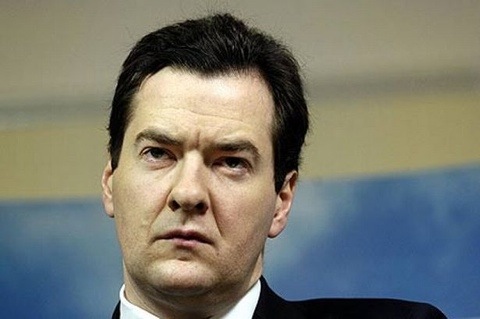
George Osborne stated that he will impose a financial cap on welfare spending. Later Ed Balls for the opposition intimated that Labour would support the proposal. Whatever both really thought, it is impossible to guess. It is difficult to believe that either could think that they could predict welfare spending with any certainty in the future. A more sensible approach would be to commit to limiting welfare spending to reasonable levels, without committing to a fixed cash sum. Unfortunately a reasonable rational approach to political decision making makes bad headlines.

If both politicians believe that they can limit welfare spending to a particular figure; they are assuming that little will change in Britain in the five years following the election. They both must be claiming to know what demands there will be on the welfare system in the years 2015 – 20, which is impossible. There are a number of possible events that could occur which would make it impossible to keep within the cap.

There is some evidence that the British economy is running into one of its periodic periods of decline. The most obvious manifestation of this is the growing disparity between earned incomes and housing costs, either rent or purchase price. A recent article I read suggested that a young nurse who lived in Central London would have to pay 75% of their income in rent. Even Islington the former desired choice of home for metropolitan professionals is now being rapidly divested of them as they seek more affordable tenancies in other areas. House purchase in London now prices average £600,000 must be impossible to all but a privileged minority. The UK housing crisis is one of the lack of affordable housing, either for the young, median income families, the disabled, or increasingly the new elderly suffering from draconian cuts to their pensions. Whatever the government does it cannot avoid a spiralling housing benefit bill from the increasing large numbers of people unable to afford the costs of even modest housing.

The government has succeeded in selling a cap on housing benefit, (together with the bedroom tax) as a means of limiting the costs of housing benefit to the nation and eliminating the dependency culture prevalent amongst the work shy. However the line cannot be held as increasing numbers particularly in the South East and London will need help with housing costs, who will obviously not the the work shy inhabitants of the dependency culture. At present an inhumane policy toward benefit claimants has worked, by depicting them as several varieties of scrounger. There will be a time when the hostility towards these claimants abates. It is not inconceivable that this will happen when in the near future the majority of families in London will be claiming help with housing costs. Then it will be no longer an option to put families on the street, as these will be the ‘hard working families’ so beloved of the government. Even the most hard hearted of politicians will be forced to make concessions in face of the popular reaction against the mean spirited housing policy of today.

There is an alternative, governments in the past took action to control house price and rents. However that occurred in the despised 1960’s and none of the current generation of politicians would wish to go back to the time of social democracy.

What could be an endless list of events that could break the welfare cap will be limited to one more, climate change. This year the Thames barrier has had to be raised a record number of times preventing the carrying out of essential maintenance, making a possible failure of the barrier in future likely. The welfare costs of a flood that devastated London would be huge. While the government could afford to be complacent about flooding in the far away North or Somerset. The hysterical reaction of the media and politicians when it was possible that flooding in the Thames valley, threatened both their homes and constituencies demonstrates that there would be no limit to the welfare spending to help distressed Londoners.

One writer whose name I forget (probably Samuel Johnson) said that ‘all politicians are either fools or rogues’ understood all to well the nature of politicians. They either cynically propose solutions which that they know that of no relevance to the numerous crises at hand but which suit their political agenda or seem unable to comprehend their seriousness of these crisis’s and go along with any plausible solution made by their leaders or the media. How many of the political opponents of climate change are paid advocates of the energy industry, who will do anything for money and who are really flat earth proponents it is hard to know. All one can say is that as never before the political classes are overwhelmingly made up of cynical liars and the fools.

>

Is George Osborne the greatest economist of the 21st century

20140321-180538.jpg

Describing George Osborne as this century’s greatest economist, is to choose a deliberately provocative title. While it is intended to be a title that catches the eye, I do have a more serious purpose in drafting this essay. There from the perspective of this writer a certain admiration for George, he is the supreme Machiavellian politician. He can persuade others to accept that black is white, even if they know he is wrong. As Chancellor he has set the agenda for the political debate. Labour politicians have responded to his agenda, rather than trying to set out their alternative approach. There are differences but these are intended magnify the difference in the eyes of the beholder (electorate), for an economist they are but trifling differences. Last week’s political debate illustrates this all too clearly. George Osborne announced that because of budgeting restraints that all NHS staff other than receiving annual increments would not get an increase in their pay. In his eagerness to appear responsible he said that if he became Chancellor he would follow George’s lead and implement a pay freeze.

20140321-181211.jpg

20140321-181255.jpg

There are two types of great economist, the first are economists such as John Maynard Keynes or Milton Friedman who revolutionise economic thinking and change the way governments approach economic policy. Secondly there are those such as Mao Tse Tung who set the economic agenda and policy making through sheer force of personality. (Often accompanied by the threat or use of violence.) Both are great in the sense that they revolutionise the practice of economic decision making and policy implementation. Communist China experienced several changes in the direction of economic policy under Chairman Mao. He tend to favour a razing to the ground of the economy and to be followed by a remaking of the economy in a purer communist mode. By doing so in the Great Leap Forward in 1958 he intended to take the control of the economy out of the hands of the bureaucrats and return control of the the economy to the workers and the peasants. The policy was disastrous which according to one source caused 60 millions deaths through starvation caused by reducing agriculture to a state of chaos. This use of greatness has no moral dimension, but views greatness as the power to revolutionise and change economic policy making for decades.

George Osborne is one of the Chairman Mao type economists. While knowing little about economic policy making he has through sheer force of personality changed the way economic policy making is viewed and discharged. He has made deficit reduction the central plank,of his economic policy. Unlike previous Chancellors he has made this the priority, other targets such as reducing and ending child poverty have been scrapped as being incompatible with this end. He has sold to the nation the belief that a continued and possibly constant programme of national austerity is necessary for national well being. Ed Balls I initially opposed this policy (as having a better understanding of economics he should have known that the policy was flawed from the start), yet after a few more squeals of protest he fell into line. He has promised that he will continue the programme of national austerity if Labour is elected. Quite an achievement for a ‘no nothing’ economist to dictate the direction of economic policy for at least 10 years and possibly more.
Having called George Osborne’s thinking flawed it is necessary to demonstrate these flaws. In 2009 Paul Tucker, Deputy Governor of the Bank of England produced a highly significant but little read report. He expressed concern not about the size of the government deficit but the size of the deficit in the banking sector. Then as now the deficit in the banking sector was just over 500% of GDP, while even today the government budget deficit will peak at 80% of GDP. George has closed his eyes to the potential crisis in the banking sector, where a ‘run on the pound’ will cause a catastrophic economic crisis that has the potential to reduce the incomes of British citizens to less than that of the impoverished Greeks. Is George hoping along with the entire Parliamentary community that nobody will notice this omission in his deficit reduction programme?

There other great flaw is his belief in ‘expansionary fiscal contraction’, one of the most nonsensical phrases coined in the debate on economic policy. His argument is that if the government to fund its deficit has to borrow large sums from the banks, it deprives industry of the money it needs for investment. Therefore if government borrowing is cut it will free funds for investment and the economy will grow and all will benefit. There has been no evidence of this ever happening (except in wartime), what has reduced the flow of money for investments, is the banks preference for speculative financial activities over long term investment. Banks prefer to lend money for speculation in the commodities, financial, equities and property markets. It this speculation that reduced the money for investment in industry. In fact 80% of all bank loans are to the property market, that is why they have no money to lend to industry for investment. A problem ignored by George Osborne who has preferred to give the banks £200 bn. A programme in quantitive easing, while announcing just £1 bn. for investment in the national infra structure.

20140321-181636.jpg

20140321-181709.jpg
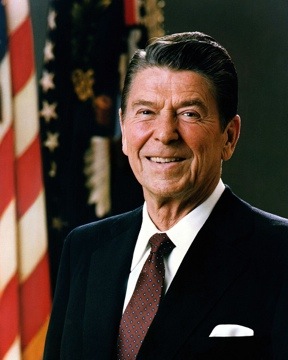
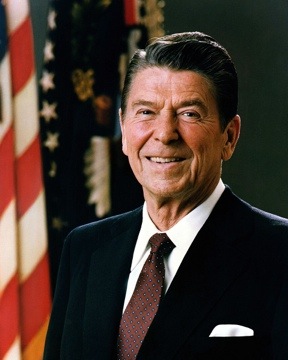
George Osborne’s success recalls to mind that other great non economist who rewrote the economics agenda and that was Ronald Regan. His rival George Bush Snr. denounced his economics as ‘voodoo’ economics, only to eagerly embrace it as Regan’s Vice President. Despite all the evidence to the contrary Ronald Regan’s economic policy was hailed as a success by politicians. He as with George Osborne preached the virtues of small government and he cut taxes and claimed to cut government expenditure. While he cut domestic spending on welfare he exponentially increased defence spending. Billions were wasted on his Star Wars programme. He funded this excessive expenditure through government borrowing and when he finally left office, the USA had its greatest budget deficit ever. George by comparison will by the time of the next election leave Britain with an ever spiralling banking deficit, leaving Britain at the mercy of predatory financiers.

However this essay is written in praise of George Osborne, so I must remain to central theme of why he is a great economist. While I could write about his Machiavellian skills in manipulating political friends and foes, there is a more interesting approach.

Economics is a subject that lends itself to charlatanry, because politicians are desperate for that one policy that will deliver success. When in conversation with economists their normal degree of scepticism is abandoned, they are so willing to believe that the proposed policy is the one that will deliver success. George Osborne must have realised early in his career that any well packaged and presented economic nonsense would sell. He would have had as a prominent politician have seen close up how the Treasury manipulated economic statistics and how whatever sleight of hand the Treasury used there would always be a coterie of economists praising the Chancellor’s policies. The reason economic charlatanry is so widespread is that economists only have the vaguest understanding of how the economy really works. To admit this as an economist would be to invite ridicule and so everybody pretends black is white even if they suspect that black really is black. Modesty is never a characteristic of any economist, bluster is the more usual characteristic. I am not suggesting that economists are ignorant of the working of the economy, so much as that they vastly overstate their understanding of the economy. If I can use an analogy into this pool of preening fish a predatory shark arrived, who realised how easy it would be to manipulate the consensus of views to suit his ambitions.

He would have found that politicians such as Ed Balls who play by the rules of the economic game were easy to manipulate. What any economist knows is that the future is uncertain, so predictions for the future have to be hedged around by ‘maybes’ and ‘perhaps’. Yet George Osborne has torn up the rule book, he knows what the future holds. He has set limits to future spending, including a welfare cap all of which Ed Balls as shadow chancellor has signed up to. If events turn out differently, George Osborne will happily abandon all his pledges giving some plausible explanation. While if Ed Balls becomes Chancellor he will be the hapless acolyte following the master, whatever happens he will stick to George Osborne’s targets.

At it’s worse economics as practiced in the UK is an invented game and those who stick to the rules in this imaginary game will always be at a disadvantage compared to those who have a complete disregard for the rules.

The Lawless Economy, more reflections from the Bad Economist

20140317-162450.jpg

Economics has been called mockingly the ‘dismal science’ because economists are always predicting a dire future for humanity. It remains a dismal subject; but I take exception to the use of the word science. In trying to establish it as a science economists have created an abstract world of economics distant from reality. The language in which economics is written often hides through its over complex technical jargon insights that are lacking in originality and often of little value. A bad economist such as myself eschews the use of the technical language of economics and uses a simpler language to arrive at different insights to my contemporaries.

One of the objectives desired by economists is the a attainment of a free market. A market that is free from any artificial constraints imposed on it by government (e.g. laws regulating the labour market or price controls) will maximise human welfare by maximising the output of goods and services at the lowest possible price. The market knows best and the government should not try to second guess it. Rather than go into a more detailed explanation, I shall assume that everybody is familiar with government propaganda extolling the benefits of a free and competitive market. Can I as an economist point out one unique feature of the free market; it is unlike any other part of society in that it is practically free of rules and regulations. As a civilised society we recognise that our community is best governed by regulations (laws), which ensure that society is run to the benefit of us all. Recent governments have produced a proliferation of laws regulating our conduct, except in the market where on the contrary it is trying to reduce them to a minimum. The government would never reduce criminal law to a minimum as it knows there are certain individuals who would exploit a law free society by using that freedom to harm others. Yet naively the government assumes that people who would behave badly in any other context, will behave well when working in the economy.

20140317-162733.jpg

What I am suggesting is that from a common sense point of view, the free market should be called the law free market or more appropriately the ‘lawless market’. Viewing the market from this perspective gives a completely different understanding of the free market. I would suggest that the free market is more akin to those lawless states governed by criminal mafias, such as Mexico or Russia. What I shall attempt to demonstrate is that by applying the concepts used to explain the mafia states, it is possible to develop a new and more valid understanding of the free market.

In lawless societies it is the strongest and best organised gangs that predominate. In Mexico they are the drug cartels and in Russia it is the Bratva (the organised collective of crime elements). These criminal elements rob and despoil their host communities, using both violence and bribery to attain their ends. It is no coincidence that the richest people in both these countries are linked to these mafias. Also in both countries they have corrupted the political process and the forces of law and order so successfully that they now work to protect the interests of the various mafias. Russia has been called the ‘mafia state’ as the criminal elements in that society are reputed to be closely allied with the government of President Putin.

A similar analysis can be applied to the relatively law free economies within British society. The difference being one of degree rather than kind. Bankers and the City of London have long argued for a ending of any legal restraints on the trade in money and savings. With the so called ‘Big Bang’ in 1986 (that is the deregulation of financial services) they have achieved their aim. Now gangs of bankers and financial traders as the strongest and best organised gangs are the best placed to exploit the lawless money markets.

With the introduction of large bonuses, City traders were encouraged to use clients money not to benefit them, but in a way best suited to maximise the traders’ bonuses. It could mean ‘naked short trading’, whereby traders borrow shares to sell, so as to force down their price. A practice which enables them to now buy shares at the new lower price, having already contracted to sell the same shares at the old higher price in a previous deal. The difference in the buying and selling price represents the trader’s profit but a loss to those funds who now find their holdings of shares have been reduced in value. Their are many types of financial scams (charges) that City traders, fund managers use to divert their clients money to their own accounts.

20140317-163141.jpg

This is the reason that an individual who invests in a private pension is likely (once inflation has been taken into account) only get back what they have invested. The profit earned from investing those funds as gone to others. In the more regulated financial market in the Netherlands, the average return on private pensions is 50% higher.

The City of London has as with the Russian mafia captured the government to such an extent that it can change policies to suit its interests. One example occurred at the start of the reign of ‘New Labour’. The Corporation of the City of London wanted to do something unique in a democracy, it wanted to enfranchise city businesses, so they could have a vote (size of vote determined by their number of employees) enabling them to outvote the residents of the City of London. Thereby there would be a Corporation that worked exclusively in the interests of the financiers. The government duly obliged. Obviously Gordon Brown’s infamous ‘light touch’ regulation maintained the relatively law free zone in the financial market brought about by the deregulation of the 1980’s. The result no restarting on the irresponsible behaviour of the financial community that brought about the crash of 2008/9. After the crash the government turned to the very people who caused the crash for a solution. The solution was to throw billions at the financial markets so no financiers suffered a real loss and the only losers were the non financier majority who provided the bail out money.

The corruption of the government and the law and order agencies is almost complete. The HMRC that is supposed to be a tax collecting agency, now actively works with large financial and industrial conglomerates to help them find ways of easing their tax burdens. The most infamous was the Vodaphone case when a tax bill of £6 billion was reduced through negotiation to a much smaller sum that only made a minimal dent in Vodaphone’s profits.

One of the most effective ways of bending governments to the City’s will is to fund them. The majority of the Conservative parties funds come from this source. With the successful media campaign to deny the Labour Party finance from the trade unions, it will become more dependent on friendly city financiers for cash.

While having focused on the financial sector I must not neglect the industrial and commercial sectors. Company law has been revised little, other than to favour business interests, since it was introduced in the 19th century. It is hopelessly out of date and is unfit for purpose, it provides no effective restraints on irresponsible company directors. There no no sanction that prevents gangs of company directors from raiding their company’s funds to pay themselves exorbitant salaries. Shareholder democracy is a myth. The thousands of individual shareholders have no means holding the directors to account. There is no way they can prevent irresponsible directors rewarding themselves handsomely, while running their company into the ground.

There are some governmental bodies intended to regulate business for the benefit of the wider community, but as with the old Department of Trade and Industry they have been shrunk into insignificance. Or as with the Serious Fraud Office so seriously under funded or so hampered by fraudster friendly laws that they are relatively ineffective.

Politicians such as Keith Joseph, Margaret Thatcher, Nigel Lawson, Tony Blair and Gordon Brown did not initiate a new era of prosperity through their free market market reforms, but instead introduced a new law free economy in which criminal like behaviours could thrive. Sharp or fraudulent practice is more widespread then ever in the ‘new economy’. Only if we stop regarding the economy as somehow distinct from the rest of society in that it must be ‘law free’ or ‘lawless’, can the economy be set of the path to sustainable recovery.

While I am bitterly critical of the new City of London, my criticisms are laced with regret. I worked in the old City of London in the 1960’s. A city in which different standards of conduct prevailed, a City in which the financial sector was well regulated and policed by government. Nostalgia may prompt me to over state the probity of conduct of the financiers of that time; but there has been a marked decline in the standards of conduct since then.

Finally I must state that I am reviving in this essay an old way of thinking about the economy, political economy. However I prefer to call it bad economics as it suggests an economics completely out of line with current thinking.