Category Archives: Politics

A Sceptical Economist’s understanding of War and War Making

The sudden rush of enthusiasm for war in Syria made me realise that there is no commentary on the economics of war and war making. What I don’t intend to do is repeat the moral and political arguments on the subject of war making, which others are better qualified to make. The question that I want to answer can economics justify war, is there an economic equivalent of the churches ‘just war’? (As defined by St.’s Augustine and Thomas Aquinas)

  
Image of  Syrian  War taken from  Geopoliticsmadesuper.com
The first thing to note is that there is a peculiarity embedded in the economics of war making. All war materials be they planes or tanks are built to be destroyed. Each item will be used repeatedly until it is either no longer fit for purpose or destroyed by enemy action. War weapons are a very poor investment one that adds little to the wealth of the community. This represents a problem for accountants and economists, how do you value an asset whose only purpose is to be destroyed? The simple answer is that these war weapons are valued according to their cost of production, they can add nothing to the future wealth of society.

There is another strange feature of war weapons that represent their paradoxical nature. They are designed not to be used, the best weapons are those which are an effective deterrent to war. One such weapon is the Trident nuclear weapons system, it works if it’s never used. The government’s of the sixty years have invested vast amounts of money into a product that has never been used. It cannot be stated often enough that the best weapons are those that are never used. This was a policy practised by the British Empire in the 19th century, it always had a fleet of warships that was at least twice the size of twice the size of its rivals. No rival power ever threatened the Empire, because it risked the annihilation of their navy. Trident as a weapon of mass destruction is unparalleled as a weapon of deterrence. Perhaps this is the only occasion in which vast amounts of resources and time is spent on a product that is intended never to be used.
Although military men might object, this is where marketing proves invaluable. It is very rare for these weapons to work as described. One version of the Trident missile was rumoured to be equipped with war heads that could malfunction when in action. There was the Lockheed Starfighter nicknamed the flying coffin because of the regularity with which it fell out of the sky. There are numerous other examples of under performing expensive weapons of war, but the military of both sides keep to the pretence that their weapon systems their super weapons work perfectly well. Given the success of the intelligence services of both sides in discovering the military secrets of their rivals, they must know about the underperformance of their rivals weapons systems but prefer to keep quiet. There is an omertà in the world’s military one that prevents them ever being honest about the poor performance of their weapons systems because that would undermine their credibility as masters of war.There are no marketing men in existence as effective as the generals when it comes to marketing a dud product. 
This is another strangeness of the war market, while military men claim to be men of action, they are more accurately termed men of inaction. The most successful ones never have to do the task for which they are paid. What the good general most wants to do is avoid action and the destruction of much of his military assets. A philosophy best demonstrated in medieval warfare. Then a battle would involve such huge loss of life, that each army would usually lose a third of their manpower in battle, more in the losing army. Therefore medieval monarchs tried to avoid open battle as it would leave their army so depleted that it would be unable to fight another war. When Henry V left France in 1405, the army that remained was so depleted that it was unfit for any further battle. Only the weakness of the French acing lost the Battle of Agincourt, kept this weakened army safe from attack and destruction.
On occasions military men forget the first rule of war, that is not making war. The most recent example was the war on Iraq. There were a number of senior officials and generals in the Pentagon who were eager to test their new weapons of war in combat. War technology was so far advanced in America that these men were eager to test their weapons in combat. While there were other reasons for the Iraq war, the American military and Pentagon officials were desperate for an opportunity to play with their new weapons. When it came to war, American technology was so superior that the war was over in a matter of weeks. However it later turned out that victory was due less to superior weapons technology and more to old fashioned bribery. The Americans had paid the generals of the elite Republican Guard not to fight. The chaos that has been Iraq since 2003 demonstrates why it is foolish to regard the military option as the first and best option. When leaving the Oval Office in 1961 President Eisenhower warned of the danger posed by the ‘military industrial complex’ a danger shown by the Iraq war when the arms salesman were able to push America into a costly and pointless war.
This leads to the first rule of the economics of war, never engage in a war unless the enemy poses an existential threat as the destruction of resources and human life is so that war can never be justified for any other reason. As a British citizen the war against Hitler can be justified as it presented an existential threat to the UK, the wars in the Falklands, Afghanistan and Iraq cannot be justified.
History provides examples of why war is such a bad investment, it is their huge cost. Recently I read a history of Edward I. He was a successful war leader constantly beating his Welsh and Scottish adversaries, yet time and time again his campaigns ground to a halt when he ran out of money. What usually happened was the foot soldiers who made up the majority of the army would desert when the campaign was well under way and approaching a successful conclusion, because they had not been paid. All medieval monarchs were in debt to their bankers, because of the huge sums they had borrowed to fight wars. Today it’s little different money borrowed to finance the campaigns in Iraq, Afghanistan and Syria will be paid by our grandchildren. When I was a student in the 1960s, I was told that the country was still paying for the Crimean War, a war that was fought in the 1850s. War is a fantastically expensive enterprise for which their is little return. 
As a sceptical economist I doubt the value of making huge investments in products that either will never be used or if used destroyed in combat. If I heard the new correctly our government is preparing to invest in a fleet of new fighter planes the F35 at a cost of £100 million a plane. I cannot as an economist see the utility or purpose of investing £10 billion in a product that only has one purpose which is to be destroyed. The cost of the new Trident missile system is estimated at £100 billion or just less than 10% of our annual national income. Why I don’t dispute the value of deterrence in an irrational world I do wonder if it needs to cost so much. Is their an inverse logic that applies to military thinking, which simply stated means the more that is paid for war weapons the more utility and value they possess regardless of their effectiveness? It is often said of the British military that they want gold plated weapons systems. The British and European government’s spent billions developing a warplane that had such poor flying characteristics that it was nicknamed the ‘flying sow’.
There can only be one somewhat nonsensical conclusion, the government has to invest in a product they never intend to use or hope never to use. The investment in military hardware must be sufficient to deter possible aggressors yet never be such as to bankrupt the economy. Perhaps the ideal situation occurred during the Cold War when both the USA and the Soviet Union invested billions in a weapon they never wanted to use, that is the nuclear deterrent. However peace was maintained only at the price of mutually assured destruction (MAD). This however was far from ideal as in the case of the Iraq war warriors, if one group of leaders thought they possessed an advantage over the others, they could be tempted to use their weapons of mass destruction. Perhaps the only solution is for the leaders of the most technologically advanced nation to limit their military superiority over others so no future leaders are tempted to use those weapons in a pre-emotive strike. 

The first thing to note is that there is a peculiarity embedded in the economics of war making. All war materials be they planes or tanks are built to be destroyed. Each item will be used repeatedly until it is either no longer fit for purpose or destroyed by enemy action. War weapons are a very poor investment one that adds little to the wealth of the community. This represents a problem for accountants and economists, how do you value an asset whose only purpose is to be destroyed? The simple answer is that these war weapons are valued according to their cost of production, they can add nothing to the future wealth of society.

There is another strange feature of war weapons that represent their paradoxical nature. They are designed not to be used, the best weapons are those which are an effective deterrent to war. One such weapon is the Trident nuclear weapons system, it works if it’s never used. The government’s of the sixty years have invested vast amounts of money into a product that has never been used. It cannot be stated often enough that the best weapons are those that are never used. This was a policy practised by the British Empire in the 19th century, it always had a fleet of warships that was at least twice the size of twice the size of its rivals. No rival power ever threatened the Empire, because it risked the annihilation of their navy. Trident as a weapon of mass destruction is unparalleled as a weapon of deterrence. Perhaps this is the only occasion in which vast amounts of resources and time is spent on a product that is intended never to be used.
Although military men might object, this is where marketing proves invaluable. It is very rare for these weapons to work as described. One version of the Trident missile was rumoured to be equipped with war heads that could malfunction when in action. There was the Lockheed Starfighter nicknamed the flying coffin because of the regularity with which it fell out of the sky. There are numerous other examples of under performing expensive weapons of war, but the military of both sides keep to the pretence that their weapon systems their super weapons work perfectly well. Given the success of the intelligence services of both sides in discovering the military secrets of their rivals, they must know about the underperformance of their rivals weapons systems but prefer to keep quiet. There is an omertà in the world’s military one that prevents them ever being honest about the poor performance of their weapons systems because that would undermine their credibility as masters of war.There are no marketing men in existence as effective as the generals when it comes to marketing a dud product. 
This is another strangeness of the war market, while military men claim to be men of action, they are more accurately termed men of inaction. The most successful ones never have to do the task for which they are paid. What the good general most wants to do is avoid action and the destruction of much of his military assets. A philosophy best demonstrated in medieval warfare. Then a battle would involve such huge loss of life, that each army would usually lose a third of their manpower in battle, more in the losing army. Therefore medieval monarchs tried to avoid open battle as it would leave their army so depleted that it would be unable to fight another war. When Henry V left France in 1405, the army that remained was so depleted that it was unfit for any further battle. Only the weakness of the French acing lost the Battle of Agincourt, kept this weakened army safe from attack and destruction.
On occasions military men forget the first rule of war, that is not making war. The most recent example was the war on Iraq. There were a number of senior officials and generals in the Pentagon who were eager to test their new weapons of war in combat. War technology was so far advanced in America that these men were eager to test their weapons in combat. While there were other reasons for the Iraq war, the American military and Pentagon officials were desperate for an opportunity to play with their new weapons. When it came to war, American technology was so superior that the war was over in a matter of weeks. However it later turned out that victory was due less to superior weapons technology and more to old fashioned bribery. The Americans had paid the generals of the elite Republican Guard not to fight. The chaos that has been Iraq since 2003 demonstrates why it is foolish to regard the military option as the first and best option. When leaving the Oval Office in 1961 President Eisenhower warned of the danger posed by the ‘military industrial complex’ a danger shown by the Iraq war when the arms salesman were able to push America into a costly and pointless war.
This leads to the first rule of the economics of war, never engage in a war unless the enemy poses an existential threat as the destruction of resources and human life is so that war can never be justified for any other reason. As a British citizen the war against Hitler can be justified as it presented an existential threat to the UK, the wars in the Falklands, Afghanistan and Iraq cannot be justified.
History provides examples of why war is such a bad investment, it is their huge cost. Recently I read a history of Edward I. He was a successful war leader constantly beating his Welsh and Scottish adversaries, yet time and time again his campaigns ground to a halt when he ran out of money. What usually happened was the foot soldiers who made up the majority of the army would desert when the campaign was well under way and approaching a successful conclusion, because they had not been paid. All medieval monarchs were in debt to their bankers, because of the huge sums they had borrowed to fight wars. Today it’s little different money borrowed to finance the campaigns in Iraq, Afghanistan and Syria will be paid by our grandchildren. When I was a student in the 1960s, I was told that the country was still paying for the Crimean War, a war that was fought in the 1850s. War is a fantastically expensive enterprise for which their is little return. 
As a sceptical economist I doubt the value of making huge investments in products that either will never be used or if used destroyed in combat. If I heard the new correctly our government is preparing to invest in a fleet of new fighter planes the F35 at a cost of £100 million a plane. I cannot as an economist see the utility or purpose of investing £10 billion in a product that only has one purpose which is to be destroyed. The cost of the new Trident missile system is estimated at £100 billion or just less than 10% of our annual national income. Why I don’t dispute the value of deterrence in an irrational world I do wonder if it needs to cost so much. Is their an inverse logic that applies to military thinking, which simply stated means the more that is paid for war weapons the more utility and value they possess regardless of their effectiveness? Is price becoming the new deterrent? It is often said of the British military that they want gold plated weapons systems. The British and European government’s spent billions developing a warplane that had such poor flying characteristics that it was nicknamed the ‘flying sow’.
There can only be one somewhat nonsensical conclusion, the government has to invest in a product they never intend to use or hope never to use. The investment in military hardware must be sufficient to deter possible aggressors yet never be such as to bankrupt the country.Perhaps the ideal situation occurred during the Cold War when both the USA and the Soviet Union invested billions in a weapon they never wanted to use, that is the nuclear deterrent. However peace was maintained only at the price of mutually assured destruction (MAD). This however was far from ideal as in the case of the Iraq war warriors, if one group of leaders thought they possessed an advantage over the others, they could be tempted to use their weapons of mass destruction. Perhaps the only solution is for the leaders of the most technologically advanced nation to limit their military superiority over others so no future leaders are tempted to use those weapons in a pre-emotive strike. 

Can a sense of collective depression account for the decline of Britain and the West

depression_by_ajgiel-d7l4ewu

Image taken from socialworktutor.com

Periodically I suffer from depression and with depression comes a self loathing. The depressed individual sees themselves only in terms of their failings, it is a worse picture scenario. When going through a bad patch I would compare myself unfavourably with others, in my mind I over exaggerated their strengths and virtues and under estimated my own. Something similar has happened to Western democracies, they seem to be under going a collective depression. This collective lack of self confidence negatively impinges on our choice of leaders. We just them by their failings not their strengths, we have lost the ability to pick leaders on the basis of their strengths.

Womanising politicians such as John Kennedy, Franklin Roosevelt, Lloyd George would have never made it near the top in our contemporary world. A rival would have revealed their many liaisons to the press so as to destroy their career. Yet these three men were visionaries who could envisage a better world and could motivate others to share their visions. David Lloyd George had a vision of a society in which the ills of the industrial revolution were ameliorated through the provision of unemployment benefit. Franklin Roosevelt bought into effect the New Deal which ended the mass unemployment and poverty of the Great Depression. John F. Kennedy initiated the Great Society and under the aegis of this umbrella term many reforms such as Medicare where introduced to improve the lot of the less well off in American society and he started the process that ended worst forms of racial discrimination in the USA. Black Americans now had the protection of the law and killing of ‘uppity Negroes’ had became a crime. This is not to deny that politicians with exemplary family lives don’t make great leaders, but as leaders are chosen on the basis of whether or not they behave well towards family, excludes the great leaders who have had a less than moral personal life.

Britain in particular cannot conceive of leaders except in terms of their vices or relative lack of vices. Not being a self confident society, it like the depressive only sees the world around them in the worst possible terms. Great ideas and the associated visionary politics have disappeared from British society. Now great ideas are seen to be a propaganda cover for a particular interest. Words are bandied about by politicians but those words have no real meaning. Rather than explain a policy vision a politician’s speeches contain a number of key phrases designed to evoke the right feeling and response from voters. In the words of a former Prime Minister, that ‘vision thing’ is lacking from politics. Our depressive society cannot believe that there can be any great ideas or leaders.

There is one example that I can call to mind, which illustrates perfectly the current low level of personality based politics. During a wartime debate in Parliament Winston Churchill was accused by an opposition MP Bessie Braddock of being drunk. He replied that ‘I may be drunk now, but I shall be sober in the morning, you are ugly now and shall still be ugly in the morning’. The sexist language is no longer acceptable but the important fact is many people in Westminster and the press where aware that he had a serious drink habit, yet it was considered of no significance. What mattered were the outstanding qualities he embodied as national leader. Churchill was also subject to intense periods of depression, periods he referred to as the black dog’. Today a rival would have leaked stories to the press about his drinking and depression ensuring that he would never get anywhere near the leadership of the country.

A more current example illustrates how a political career can be destroyed through gossip. Charles Kennedy as leader of the Liberal Democrats took the party from being an insignificant fringe party to the centre of British politics. He increased the number of the parties MPs from less than twenty to over sixty. Unfortunately he as with Winston Churchill had a serious drink problem. A problem which destroyed his career in these timid times. His rivals leaked stories about his drink related problems and he was forced to resign the leadership. After rejecting the next leader for being old, they selected a leader fit for the times. He was a very presentable young man who was a devoted father and good husband. This leader displayed such a lack of political acumen that he led the party to disaster at the polls. Now the total number of Liberal MPs could be comfortably be seated in a small family car. The party rivals by focusing on Charles Kennedy’s weakness, were able to obscure the fact that he was an inspiring and effective leader, who in spite of his drinking towered above his rivals. Charles Kennedy’s rivals were able to leak stories about his drinking problems to a press that saw an MPs vices as the story, not his politics. It is true as had been said that the British press rarely ventures out of the gutter in which it habitually wallows. Only a society with no confidence in itself would think that politicians foibles rather than policies are the main story.

There is an interesting historical comparison. In the dog days of Athenian democracy, when it was in decline, politicians stopped attacking each other’s policies and instead attacked their rivals by claiming their bad behaviour in their personal life made them unfit for high office. These politicians planted informers within the entourage of their political rivals. These informers would report salacious stories about these men to their employers. Political careers were destroyed on the basis of what can only be called malicious gossip. A situation not unlike today’s Britain were the informers are political rivals in the same party ever eager to leak damaging stories to the press. These stories are then published in the news media and a run of bad stories can ruin a politicians career. Today’s politicians have delegated the role of destroying political rivals through the publishing of malicious stories to the press. It is the press not politicians than determine the success or otherwise of a politicians career. These stories can be quite trivial in nature but the cumulative effect is the destruction of a career. One such example this trivia is the leaking to press of stories that a particular senior politician had a quick temper and threw staplers at his staff. A story that was totally irrelevant to his leadership capabilities. Unfortunately in today’s Britain politicians prefer to destroy their rivals anonymously through the leaking of malicious stories than through open debate.

Suggesting British society is going through a period of collective depression is unusual, but I can think of no other equally valid metaphor that can be used to describe Britain today. Only a society in this strange mood which can see nothing good in their politicians, a country in which the least bad are chosen as our leaders. One characteristic of all our leading politicians is their emphasis on their normality. They never aspire to greatness, oratory has vanished from our politics speeches put the emphasis on their ordinariness they always agree with the generally accepted opinions. The leader of the opposition party is subject to vilification for not going along with the majority view in parliament. When one reads about the actions of the members of his parliamentary party one gets the impression that there is a desire to abandon these challenging policies and retreat the safety of the parliamentary consensus. These MPs have been baying for military intervention in Syria in unison with the members of the governing party, they are afraid of seeming to be different. This fearfulness and the seeking of a security blanket is also typical of depression. The depressed individual seeks to hide from the world, normal social intercourse becomes difficult. There is also a desire for the peace of anonymity, a desire not to stand out. All characteristics of the current political classes.

All to often commentators speak of the loss of hope among the young, as they face a world which is increasing hostile to their aspirations. Yet this loss of hope is common to all levels of society, but particularly among the political classes. They also lack in the future, they lack the confidence to introduce for example radical policies on climate change. A selection of policy proposals from the last election demonstrate this timidity, rather than offering private rental tenants security of tenure, they were to be given the right to ask for it from their landlord after a certain period of time. Rather than ban zero hour contracts the employer would be given the right after twelve weeks to ask to be given permanent contract. Taking the last one it is obvious that employers would dismiss staff after eleven weeks to avoid having to offer that a permanent position in the workforce. Probably the same employer would after having given an enforced break to their employees, would rehire them on a new eleven week contract. A good example of promising to alleviate a major social ill, while in fact doing nothing to change the situation. What could be a better example of the mood of hopelessness that infects the mood of politicians.

Often it is the young who are cited as having no hope, which may be true but its more true of our political classes. They as with the depressed individual have lost hope and believe it hopelessly misguided to think they can do anything to improve the situation. They as with the depressive see themselves as helpless pawns who are the playthings of greater forces, such leaders lack the self belief to implement changes necessary to arrest the slow decline of this country economy a decline that will see the living standards of the majority fall towards those prevalent in the less developed economies. Already this country’s fall from major power status is obvious, as it can only provide six ageing fighter bombers for the campaign against Isis.

Superstition not reason is the basis for much government economic decision making

The English have any good luck mannerisms which are intended to ward off bad luck. One which I particularly do is crossing my fingers when I mention something dreadful, to prevent it occurring to me. Another is touch wood, as in I have not caught flu this year touch wood. Surprising this superstition is the basis of much economics practised by this government and to be fair many others.

Economists claim scientific status for their subject on the grounds that it based on quantitative analysis, analysis from which predictions can be made about future events. They will admit that in their predictions they cannot match the accuracy of those of a physicist, but the difference they claim is one of degree not nature. Governments invest billions in IT programmes that use the tools of economic analysis try to predict future events in the economy. It is telling that the most accurate predictions about the economy are made after the event, when there is more reliable information about the event that has taken place. Unfortunately the errors in these programmes have caused real problems in the past, as in 1976 when government statisticians calculated that the country was experiencing a horrendous balance of payments crisis; yet when later revisions of the figures showed that the initial calculations were inaccurate the damage had been done. The  revisions came to late to avert a financial crisis which included a large outflow of currency and forcing the government into borrowing from the IMF and the introduction of an austerity programme which effectively ended social democracy in the UK.

However past history demonstrates that this attachment to facts and figures is more apparent than real. One of the theories underlying the initial Neo-Liberal  free market economics, (practised by all British governments since 1979) was the quantity theory of money. This theory states that if money supply increases faster than productivity, inflation will result as their will be more money chasing the same number of goods. The control of inflation that as now was one of the chief concerns of government policy. In the 1980’s when this theory took hold one of the first policies that the government’s introduced was a policy to reduce the money supply to cut inflation. This in Britain caused the recession of 1980 and the loss of 20% of it’s manufacturing base, and this was decreed a good result, as in the new low inflation economy, growth would soon compensate for the losses of 1981/82. However after several years in power politicians of the Neo-Liberal persuasion seemed to forget about the quantity theory of money, despite it being the guiding principle of their policy decisions in the early 1980’s.

If Neo-Liberal economists wanted a demonstration of the truth of this theory, it is in their actions over the past thirty years. Politicians in Britain and Europe have overseen a huge rise in bank credit with a consequential inflation in asset prices, particularly in housing. According to the latest figures the debts of the UK banks total 340% and 324% respectively of the nation’s GDP in Britain and Germany respectively. Instead of the politicians reacting negatively to this huge rise in bank credit and the inflation that it induces, they have done all they can to keep that inflationary spiral going ever upwards. When in the crash of 2008/9 these over indebted banks should have experienced a painful devaluation of their assets, as many of their debtors defaulted on loans. Instead the governments of Europe  pumped money into these banks to prevent any real deterioration in their loan books. Consequently the banks have continued with their irresponsible behaviour and their loans spiral ever upwards, pushing up house prices. The politicians believe that the inflation in house prices contributes to the ‘feel good’ factor and that any downward movement in house prices would mean instant unpopularity and losing office, which would result if they reduced money supply through a reduction bank credit. Foolishly the Neo-Liberal politicians and economists put electoral popularity above a painful restructuring of the economy, which would mean no longer using inflation as a driver of growth.

Recently the governor of the Bank of England announced that he was happy to see bank deposits (largely loans) to increase to 900% of GDP. Sometime in the future there will be a painful awakening for the over indebted Western European economies. All this is detailed in painful detail by the economist Anne Pettifor in her book “The First World Debt Crisis’.

There is a blindness in economists and politicians to real nature of the problems of debt. Never in any debates in parliament will the huge private sector debt be mentioned. Policy is based on the hope that the problems that this huge debt will cause will never happen. It seems to be if you ignore the problem and hope for the best the debt problem can be wished away. Whether I call it crossed fingers or touch wood policy, it is a very naive belief by economists and politicians that all will be well in the future. It is economics as superstition in that if the real crisis is never mentioned it will never happen.

Going even further I can suggest that there is an element of voodoo about government and inter government policy making. They seem to think if they sacrifice one element of debt it will appease the Gods of economics and prevent them from causing the house to fall down. Rather than sacrifice a chicken they sacrifice public spending. They seem to hope that the misery inflicted on those dependent on welfare will appease the Gods of the economy. If the bankers are the Gods of the economy it has worked, as there have been no adverse movements in the financial markets against the pound sterling. They certainly are satisfied with the sacrifices made by the poor. However they are not the Gods, as is demonstrated by their failures in 2008/9, the Gods (if they exist) are much more abstract figures not to be appeased by minor sacrifices, inevitably they will visit punishment on the foolish and naive governments of the West.

The Return of Serfdom to Britain

Friedrich von Hayek published in 1944 his very influential book “The Road to Serfdom,” a book which is the mainstay of today’s policy makers. He warned of the dangers of an over mighty state, one in which professionals such as doctors gave up their independence as private practitioners to become servants of the state. The doctors would no longer be able to practise medicine freely but have to follow the dictates of their employer, the government. He warned of the same trend happening to all professions whereby independent lawyers etc would be giving up their freedom to become to be subject to a new form of bondage which denied them the freedom to practise as they wished, they would become the new serfs, bound to the new state. However he was living in the age of totalitarianism and he feared what he saw the makings of a new totalitarian state in Britain. Britain did not become a totalitarian state, in fact the totalitarian state that Hayek so feared, the Soviet Union collapsed in 1990.

  
Image of Chinese serfs working in a field taken from http://www.chinadaily.com

This was a prophetic book in that it was right to predict a new serfdom, but wrong in predicting the source of this new serfdom. He believed that the free market was the organisational mechanism best designed to ensure freedom, as in the free market the individual was free to make their own choices, as there was no powerful over arching organisation making the choices for them. However what Hayek failed to realise that the free market would be a source of the new serfdom. What he overlooked was the inequality in power relationships, in free market it the most powerful players have the most influence. The most influential players are the big business corporations, they determine the conditions under which the free market operates and these are often detrimental to their employees and customers. What Hayek failed to realise was that the state could be a liberating factor as much as an enslaving one. He failed to see the wood amongst the trees, he could not envisage alternate model of the state, for him the state was an authoritarian organisation,one that always threatened to take away an individual’s freedom. Given that he was a refugee from Nazi Germany this misconception as to the nature of the state is understandable. 
Perhaps the best understanding of the role of the state as a liberating force comes from the writings of the 19th century sociologist Emile Durkheim. He explained that the state in the 19th century through introducing laws to protect the citizen from oppressive landlords and employers was liberating the individual from these many local tyrants. Legislation to protect employees from unsafe working conditions, working long hours and being given the right to form associations (Trade Unions) to protect their interests gave people a freedom that they had never enjoyed before. Throughout the 20th century developments in legislation gave rise to the welfare state, in which the individual was guaranteed freedom from want and protection against the evils that can result from individual misfortune. The significance of this freedom from want was never understood by the intelligentsia, the freedoms they valued were the political freedoms, freedom of expression, freedom from excessive state control. Economists overwhelming came from the privileged classes, two of the 20th century greats Hayek and Schumpeter were aristocrats and for them what mattered was being free from an oppressive government, not from want.
Hayek despite witnessing the horrendous poverty that he saw in Europe in the period of the Great Depression, never ceased to believe that the free market was the best means to solve these problems. State control and intervention in the economy he associated with the totalitarian states of Nazi Germany and Communist Russia. He saw freeing the economy from state control as the only way to ensure the survival of the democratic state, for him there could be no democratic state without the free market. It was from his work that the Neo-Liberal economic and political philosophy of developed. This has become the dominant philosophy of the political classes, but its adoption as the practical philosophy of government has not lead to greater freedom and a more democratic society, but a new subtle form of serfdom. 
What the Neo-Liberals with their demand for a small state and minimal interference in the economy were creating was a society for most that has less freedom than its predecessor, as it was the state that guaranteed so many freedoms. It was these freedoms that were attacked by the Neo-Liberal economists, as they saw them as an obstruction to smooth running of the free market. Labour regulations restricted the hours for which businesses could employ staff, placed limits on how they could be used and made workers more expensive by imposing payroll taxes to finance social welfare benefits. Successive Neo-Liberal governments removed these restrictions and cost impediments on how employers could use their workers and have created what is called a flexible labour market. However this market has created by removing all the protections that labour enjoyed from abusive employment practices. What the Neo-Liberals have created a new social system that has many aspects of the old feudal system, such as being bound to one employer.

Our leaders in Britain boast that they have created the most flexible and competitive labour market in Europe, ignoring the many abuses practices in this new labour market. The most obvious abuse is the practice of zero hours contracts, where workers are contracted to work for an employee, but are not given any fixed hours of work or even guaranteed any minimum hours of work, instead they must be ready to work when the employee needs them. There is a clause in these contracts that forbids them to look for alternative work in the hours when their employer does not need them, as that would prevent them being free to work for their employer when needed. They as with the feudal villein are bond to their employer, the first could not leave their village to find work elsewhere and the zero hours worker is forbidden to find any additional work with a new employer. This new serfdom is a little more humane as employees are free to change employers, not a right enjoyed by medieval serfs.
However this right is severely limited as the new serf must have found a job before they leave. They don’t have the option of leaving an abusive employer, unless they have alternative work as the new benefits system will deny benefits to any claimant they deemed to have made themselves intentionally unemployed. 
Then there are the workers of split shifts, usually this is in the retail trade. Workers are expected to work two short shifts a day, when the shop is busy or the employer needs them. Again they cannot look for alternative work for those hours of the day when they are not employed in the shop, as they must leave themselves free for the unexpected call from the employer who might need them if a staff member is sick. Again they as with the zero hours employer are bond to their employee.
Britain can boast of one of the highest employment rates in the European Union but this is because labour in Britain is cheap and employers are free to employ workers using the most exploitative labour practices. Is it really a success story when a postgraduate student from Spain comes to London to find work as a barista?
Initially this practice was confined to the fast food outlets but the practice has become widespread within the services industry and has begun to spread to the professions. Increasingly new staff at the universities are employed on these contracts as are some technician posts within hospitals.
What the proponents of the free market have failed to understand is the inequality of power relationships within the free market. The market is not a meeting place of equals but of unequals, and the latter will if not constrained by law exploit their power. Unequals are the rich and powerful and the big business corporations. Freed from the law restricting how the business can use it staff, it will use them in the ways that suit them best and that best is treating the staff badly. It should be of no surprise that slavery is now a concern in modern Britain. At present it is foreign residents importing bringing in domestic staff with them who are largely responsible, but there are disturbing cases of it happening with exploitative UK employers who force vulnerable people into what can only be described as slavery. When the law is removed from the from market employers can behave as badly as they please. Even those agencies that are supposed to enforce the few remaining employment laws are reduced to ineffectiveness through constant staff cuts.
The Neo-Liberals failed to realise a free the market in which there is freedom of choice, frees people to behave badly as there is no sanction on bad behaviour. Perhaps it is not unfair to compare the big corporations with the medieval robber barons as both sought to enrich themselves at the expense of the wider community. While the medieval baron would levy a charge on goods passing through his territory, a more sophisticated robbery is practised today. One example of this is the pharmaceutical industry. There a small company will discover a new drug but lack the resources to market it. They then enter into a marketing relationship with a large company to market and distribute this drug, usually this relationship becomes a takeover and by the larger company. However this large company adds a further cost onto the price of the drug, which they call development costs and then sell it at many times its original price. These new robber barons rob both their staff (through paying them minimal wages) and their customers by overcharging for their products. 
What Britain as do many other Western countries seem to be doing is to be lurching into a Neo-Medieval society which is dominated by the business corporation. A glance at the last election demonstrated this when all the parties claimed to be busy friendly, the people barely got a mention. Despite the dire housing crisis in London caused by lack of affordable accommodation not one political party in the election proposed any measure that would put have effectively ended the crisis, as that would have threatened the income of the large property companies that dominate the housing market. 
History never repeats but older historical patterns can reoccur in later historical periods. Contemporary serfdom is not as cruel or restrictive as that of medieval Britain, but it is similar in its essentials, that is the great corporations can as did the medieval Dukes freely dispose of the people at their command. While the medieval Dukes could direct the lives of their serfs in a number of ways, they for example could compel them to join their armies, transfer villages and the people that lived in them to another lord without any regard to the villagers wishes and could in addition control most aspects of their lives, today the great corporations can exercise similar powers over their workers. In today’s Britain the government can decide to transfer a public service into private ownership, usually with the consequence of a worsening of working conditions for the existing employees. In the name of cost efficiency wages are reduced, pension schemes terminated or emasculated and employment protections removed. All these negative changes occur without the workers being allowed to voice their opposition to these changes. Also the new privatised owner is free to dismiss any number of existing staff. These new petty tyrants have a similar decree of control over their workers lives as did the medieval baron. The withdrawal of the state has meant any pressure to ameliorate or remove the most abusive of employment practices has been removed. Now increasing the British people are entering into a new form of servitude quite alien to the freedoms of a modern democratic society.

Can democracy survive in Free Enterprise Britain?

The collapse of the Soviet Union and the Communist bloc of Eastern Europe was greeted with a sense of triumphalism in the West,  which was marked by books such as that Francis Fukuyama (The End of History and the Last Man) in which he stated that human development had reached its apogee in the development of the free enterprise liberal democratic state. Amongst the rubble of the collapsed state Soviet politicians, businessmen and writers were eager to learn from the West how to remake Russia as a successful nation state. In response academics and businessmen rushed to Russia to help remodel the state into one similar to those of the successful West. Rather than these reformers helping Russia to rebuild they precipitated an economic collapse. A collapse only halted by the return to authoritarian rule and I will argue that the free market reforms are more likely to result in an an authoritarian state than a democratic one. 

It was not only the old Soviet Union that suffered from this enthusiasm for the free enterprise liberal democratic state. Surprisingly one of the victor states, the United Kingdom has suffered from an excess of the same excess of enthusiasm. Whether it is in the financial markets and the service sector or manufacturing, all have suffered from the malign practices engendered by the free market. 

The ‘hands off’ state has created an economy in which ‘the dog eats dog’ market but not as Neo-Liberal economists envisioned . Markets are not dominated by the most efficient companies who grown to dominance through outperforming their poorly performing rivals, but they are dominated by the most rapacious of businesses.  Poorly performing banks such as National Westminster and the Midland Bank were swallowed up by predator rivals, The Royal Bank of Scotland and HSBC. Instead of the banking market being dominated by a group of super efficient banks, it was dominated to large to manage corporations that monopolised the banking market. The rapacious nature of these monsters was demonstrated by huge salaries they paid their senior staff. These cumbersome financial giants inevitably failed in the crisis of 2008/9, but rather than being allowed to fail they were either taken over by the state or survived through an implicit state guarantee, that it would do whatever was necessary to ensure the survival of these banks.  The state mortgaged itself to enable these too large to fail banks to survive. Even after the failures of 2008/9 these banks remained powerful enough to fight off any significant attempts at banking reform.
One criticism of the Russian Federation is that the chaos that followed the collapse of the Soviet Union, made possible the rise of the Mafia state which now effectively controls the economy. Vladimir Putin is described as the boss of bosses within this Mafia state. Something similar has happened in the UK, which while it lacks what can be termed a criminal Mafia, business enterprise is in the hands of a non homocidal Mafia. In a market from which law has been effectively banished (in the name of free market reforms), it is not the most efficient that thrive but the most ruthless and rapacious. These rapacious business corporations exploit their customers and staff, by overcharging customers for their services or products and by condemning their employees to low pay and insecure working conditions. Other better run businesses are forced to follow suit if they wish to avoid going out of business. Also these rapacious businesses treat the state as an ever open purse to be raided when needed. 
There is hardly a sector of British business that does not benefit from generous state handouts. The government facilitates the poor treatment of employees by giving a cash handout (tax credits) to those employees of firms that pay less than the living wage.
Much as with Moscow’s much criticised government, the UK government collaborates with these Mafia like bosses. The Westminster government has legislated to destroy labour protection laws, I think this must be the only country in which it is legally permitted to dismiss an employee because their face does not fit. In Russia the state either collaborates with local mafia’s to destroy the opposition or uses its own security services to do the job. Similarly the British state has worked to undermine and emasculate any organised opposition to corporate Britain. Legislation has made it very difficult for unions to organise effectively on behalf of the workers, huge fines can be imposed on these unions. When the trade unions in Scotland organised against threatened wage cuts in an oil refinery, they found that not only did they face a hostile employer, but a hostile government and media. Even the Social Democratic Party in parliament refused to lend their support to the strikers. Legislation has also been introduced to make protests against corporate Britain difficult or impossible. Legislation that was intended to control stalkers is used against individuals protesting against business corporations. Even the courts do as in Russia work to support the limit the effectiveness of the opposition, any business corporation guilty of wrong doing can use the law to silence their critics. The libel law and the super injunction are the means by which they are achieved. When comparing the UK and the Russian confederation the difference is in degree as in both the government and legal system combine to hide the failings of the corporate state by silencing their critics and by destroying the opposition.
Freedom of speech has not yet disappeared in the UK, there is considerable opposition to the over mighty state and its business friends. Unfortunately as the UK government becomes more and more authoritarian the scope for the freedom of speech and organised dissent will become increasingly restricted. The opposition tends not be to within parliament but outside it, which makes it easier to criminalise it as extra parliamentary opposition. The convergence that Francis Fukuyama predicted between the old Soviet Union and the West, has in the case of the UK been a matching convergence movement towards a more authoritarian state. 

A good lie told well, the secret of managing the economy


Image courtesy of randalrauser.com

What every economics student used to learn at university was how difficult it was for leaders to make policy decisions on the economy. The effectiveness of policy measures were uncertain and the time lag in implementing these measures meant that when they came into effect they were often  addressing yesterday’s issues. What we learnt was how difficult it was to understand and manage that highly complex human institution, which is the economy. In one of our seminars it was decided that there were no economics was not a science comparable with physics and that economic  theory was at best a good guess as to how the economy worked. Consequently economics  for the student in the 1960’s was very much a work in progress. It was Churchill who said that if you asked four economists for a solution to a particular pressing economic problem you would get five answers and two of these answers would be from Keynes. (Keynes was the outstanding British economist of his  generation. This humility did no fit well with the demands from politicians for policy solutions, as exemplified in the words of Margaret Thatcher who said she wanted answers not problems. There was a group of economists responded eagerly to such requests and began to supply answers that were not hedged about with caveats about what might possibly make the policy ineffective. 
Economists had to know and there was a school of economists that knew. These new economists where named variously as the Chicago School of Economists, Monetary Economists, Free Market Economists or Neo-Liberal Economists. They took inspiration from the economist Milton Friedman the doyen of the Chicago School, who in turn was inspired by the economist Friedrich Hayek. What this group offered was a solution to the one problem that dogged the Western economies of the 1970 and that was inflation. They offered two solutions to the problem of inflation, they said that inflation could be controlled by controlling the money supply and by supply side economics.  
Monetary economists could supply answers to for example that of inflation, which reached 27% pa in 1976. Politicians could understands that if the money supply increased faster than the supply of goods, more money would be chasing relatively fewer goods and so prices would be pushed up. If money supply was cut inflation would fall and the economy would continue to grow on a smoother trajectory. What they did not want to know was as any non monetarist economist could tell them demonstrated a relationship between increased money supply and inflation is not the same as demonstrating a cause. 
However once politicians began to follow the policies advocated by these new economists, it became obvious that these new economists did not know. Britain was one of the first countries to practice monetary economics as suggested by Milton Friedman. In doing so one huge problem was discovered no Treasury economist was able to define what made up the money in circulation and what was the total money supply. The government came up with five possible measures and from this they selected one as their preferred measure which they called M3. M3 was chosen which was the total of currency in circulation plus bank deposits. They chose this one because it was the easiest to measure, after all the banks regularly published accounts showing their total bank deposits. They then made one huge assumption that all other measures of money supply would change in the same way as their preferred measure. However there was no evidence that all the other possible measures of money supplies the bank identified, would change in the same way as M3. It was a hope that all the unmeasured changes in money supply would follow M3, but the evidence for this was lacking. 
In desperation the Treasury and Bank of England gave up trying to account for changes in money supply and instead adopted a new practice. Admitting they could not count the money in circulation they opened for controlling the demand for money by changing interest rates. They believed that the supply of money was determined by the demand for money, therefore by controlling the latter they would control the first. Ever since the 1980’s changes in interest rates have been the main instrument for controlling the economy. Nobody today every mentions that the central plank of government economic policy is based on a theory for which evidence is lacking, simply because they cannot identify or correctly measure the key determinant, money supply.
Something very similar happened after the great financial crash of 2008/9. There were three deficits that could make recovery difficult the government or public sector debt, the private sector debt and the banking sector debt. The smallest was the government debt amounting in 2009 to about 60% of GDP and the largest was the banking sector deficit of 540% of GDP(as identified in a report by Paul Tucker, Deputy Governor of the Bank of England.) It is obvious that the debt that is in most urgent need of attention was that of the banking sector, yet the government of the day and succeeding ones chose to ignore it and focus instead on the government debt. The latter is the easiest to reduce as all the government had to do was cut its own spending, whereas the more serious bank debt was much harder to tackle. The government would have to take on the big banks and the City of London, very powerful opponents of whose power the government is in awe. Also if the government was serious about reducing bank debt it would negatively impact on the property market, as cutting the debt would be achieved by reducing the loans the banks could make in total. If there was less money available for house purchases, prices would fall. It is a truism of British politics that the easiest way to achieve electoral unpopularity is to preside over a fall in house prices. Consequently Britain remains with Japan one of the most indebted of the developed nations.
While these facts are known amongst the community of economists there is a conspiracy of silence in parliament about the true nature of Britain’s debt problems. There is no leading political figure that wants to be responsible for the painful economic adjustment that would result from putting the bankers house in order. Instead they focus on how they will reduce the least significant of the three debts and the noise of the debate on government debt crowds out any possible alternative debate on the real nature of the debt problem. 
The economic debate as understood by politicians is what matters, as they determine economic policy. The fact that the economic debate is founded on on misinformation and lies is irrelevant. What matters is that the economic lie is the one that every one accepts. In consequence the economic debate is about the wrong debt and the government has pursued the unnecessary austerity programe that impoverishe  an increasing number of people, while turning a blind eye to the excesses of the financial industry. Lies matter because they can be based on simple easily understandable untruths, whereas the truth about the problems of the economy is complex and hard to understand. To admit to truth would deny the politicians the opportunity to offer simple policy solutions that they could sell to the electorate. As the political debate of today is conducted in the simplistic language of the tabloid newspapers the truth about the real nature of Britain’s economic problems will remain concealed. Concealed that is until some major economic crisis forces the political and media classes to recognise the true nature of the problems facing the British economy.

The Forgotten Art of Managing the Economy


Economics is also assumed to have originated with the great British Economists of the 19th century, such as David Ricardo; whereas the truth is that it has been practised since human beings first began to live in communities. Then, if it was written about it would have been under the guise of writing about the domestic economy, such as the Classical Greek philosophers Aristotle and Xenophon. Since all manufacture and agriculture was conducted as a family business it was correctly regarded as a topic that should be addressed to householders.  Pliny one of the great Roman scientists  wrote about the management of slaves and as the Roman agriculture and manufacture was undertaken by a slave labour force, this should be regarded as a text on economics. There is a probably apocryphal saying attributed to Aristotle who complained that as an economist people kept asking him how to become millionaires, when they would never consult him in his role as a botanist on how to achieve eternal life. Aristotle if he said this was making the all too familiar complaint of all economists that people have to high an expectation of what there subject can do.
Perhaps the best known account of the early practice of economics is the story of Joseph and the Pharaoh’s dream in Genesis. Joseph was asked to interpret the strange dream of the Pharaoh in which he had dreamt that he first saw seven health cows grazing contentedly, whose grazing was interrupted by seven gaunt and ugly cows. These thin cows then eat the fat cows, and the dream continued in a similar manner. Joseph correctly interpreted the dream to mean that there would be seven years of plenty followed by seven years of famine. He then constructed warehouses in which he stored the surplus grain from the good years from which to distribute surplus grain from the good years to the people in the years of famine. There is evidence that societies such as Ancient Egypt did store grain in this way. Economics for people constantly be threatened by famine  and other natural disasters economics was a practical science whose good practise was necessary for the their survival. If economics had remained a subject of domestic or household economy and not become a subject of high theory some of the recent disasters of mismanagement of the economy would have been avoided. 
There is another historical comparison that is informative. In classical Rome the development of the slave economy led to the impoverishment of the majority of the people, as the small traders and farmers were undercut by the large slave owning farms and manufacturers. The most unfortunate of which had to sell themselves and their families as slaves to survive.  This created a large number of discontented people and Rome was torn apart by social friction. The aristocrats in trying to contain the anger of the plebs (people), resorted to repressive measures but these alone were not sufficient. The only viable solution was ‘bread and circuses’.  The Roman Emperors imported corn from the conquered African provinces which they distributed free to the Roman populace. They also organised festivals and circuses to distract and entertain the people. When the system worked well Rome was peaceful, when it broke down there were riots. 
What the rulers of these societies realised what that the economy was too important to be left unregulated. If the Roman emperors had not intervened to control the corn supply, Roman society  would have been riven by constant food riots and would inevitably it collapsed as a consequence. Securing the food supply meant the Roman Emperors had a secure base from which to embark on a campaign of world conquest. However the understanding that an unregulated economy can be a threat to the social order has been forgotten by contemporary Western governments. These governments put the needs of the economy above those of the people. Neo-liberal economic theory teaches that the unregulated free market is the best social mechanism for maximising the welfare of the people. Therefore when the market is visibly failing, for example the housing market in the UK the only policy offered by the government ‘is to do nothing’ and wait for the market to find a solution, which it does not. What policy there is towards the housing market is mere tinkering at the edges, finding some funds to make it easier for first time buyers is no solution to the housing crisis. 

It is surprising for a government so obsessed with economics, one that is constantly obsessing over the size often the government debt, that it misunderstands the need of manage the economy for the common good. If Joseph has not intervened in the grain market the supply of grain in the time of famine not only would their have been a shortage of gain, but what grain there was would have been in the hands of the grain merchants. These people given the worldwide shortage of gran would have maximised their profits by selling what grain they had to the highest bidder, leaving the poor hungry Egyptians to starve. Something similar happened in Ireland in 1845/6 when the potato harvest failed and millions of the Irish were threatened with starvation. Instead of the the  Irish grain merchants distributing their grain to the starving Irish, they exported it  for a high price to foreign buyers. Consequently thousands if not millions of Irish starved to death. The Great Irish famine would never have been the catastrophe it was if the government had intervened effectively to help the starving Irish, similarly today the housing crisis would not exist or at leat greatly ameliorated if the government intervened to correct the failures in the housing market. Unfortunately as with the British government of 1845/6 it does not believe that it is its role to intervene in the markets when they fail. The 11 million Britons that live in private rented accommodation, much of it inadequate will only grow in number with a government of ‘do nothings’. Unlike the Pharaoh they are indifferent to the suffering of these people.

NONSENSE AND THE PRIVATE HOUSING RENTAL MARKET


While watching television last night I briefly caught an announcement  by a newscaster about the leader of the opposition’s policy towards the private rental market. Apparently he had announced that his party would if elected, would  impose some modest rent controls in the private rental market. This in the interests of balance was countered by the newscaster saying that this was contrary to the advice of an esteemed economist, who said that such a policy woukd be self defeating as would reduce the supply of rental property. Today on  a politics programme I saw the panel of politicians as a body denounce this policy as being contrary to economic common sense, as everybody knows that if rents are controlled landlords will withdraw from the property market.   Today every politician, journalist and most economists have come to believe that the only role for government is to remove those restrictions that impede the working of the free market, not add restrictions that do the reverse. What the opposition leader had stated was free market heresy, the free market is sacrosanct and nothing should be permitted to interfere with its workings no matter how well meaning. To parody the lines of an old song, it was like the man who turned up to a funeral in brown boots, showing a marked sign of disrespect as everybody knows that only black boots should be worn at a funeral, and he was showing disrespect to the free market.
What really puzzles me is the assumption made by economists that landlords will automatically leave the rental market if they are faced with rent controls.  At present landlords particularly in London because of the shortage of housing can almost charge whatever they want. If any restrictions reduced the present exorbitant rents to a lower but still profitable level, what incentive would landlords have to leave the market? Given the relatively modest levels of profit  in other sectors of the economy, it is unlikely that they would find any other sector of the economy that would offer anything similar in terms of profit.
Implicit in the thinking of the anti rent control politicians and economists is the notion of a landlord’s strike. The assumption is that on the announcement of a policy of rent controls thousands of landlords will exit the private rental market, leaving a shortage of such properties. All these landlords have outgoings, usually quite considerable, particular their mortgage payments. Quite often these payments particularly if the property was bought recently they have high mortgage repayments to finance. It strikes me as strange that these landlords would sacrifice the income they receive from their tenants and risk not being able to make their mortgage repayments in a fit of pique. It seems to make little sense that landlords would sacrifice a substantial income to make a point.
The defenders of the sanctity of the market do not seem to realise that they are portraying landlords as the most despicable of people. They suggest at the merest hint of rent controls they will protest by making thousands homeless by emptying their properties. I cannot think of a better argument against the free market, if landlords are really that cruel and callous they should not be owning that most precious of assets person’s home? How can the defenders of free markets claim moral superiority, when any threat to the possibility of profitability is meet the threat to make thousands homeless?

‘And you thought the economy was safe in their hands’

One of the dominant  issues of this election campaign is the fitness of the contending leaders to manage the economy. Quite rightly people complain of this being a boring election campaign, as the big issues that concern us are largely ignored. Given the superficial nature of the campaign what is never mentioned is the incompetence politicians of all parties have demonstrated when managing the economy. Although my essay is about the UK, the issue of economic mismanagement is a characteristic of all governments of the Western world, there are no politicians of the calibre of Franklin Roosevelt or George Marshall. Instead we have a Rand Paul, David Cameron and Angela Merkel none  of whom have an understanding of the current economic crisis. 

When I was a teenager the recurrent problem was the balance of payments deficit, there were continuing runs on the pound sterling and the government was constantly having to change  policy to deal with this problem. Now I am in my sixties the problem of the recurrent trade deficit seems to have disappeared, sterling crises are now a thing of the past, although in fact nothing is further from the truth. In the last quarter a balance of payment deficits was recorded that equalled 6% of GDP, whereas in the 1960’s the deficit averaged 0.2% of GDP. Now the deficit is 30 times greater there is no problem! When a senior politician was questioned about this he said ‘times have changed’ and having the largest (in percentage terms) trade deficit in the Western world no longer mattered. Has the world really changed that much or was the senior politician being hopeless naive about the problems of the current trade deficit?
  
Any reference to an economic textbook will appear to explain this miracle. Today we live in a world economy with freely floating exchange rates. If a country is in deficit the value of its currency will fall (currency traders mark down what they see as weak currencies) making its exporters cheaper and its imports more expensive, so its exports will increase and its imports decrease until the balance of payments is once again in surplus. However this automatic self regulating mechanism has not worked in the case of the UK, as the trade deficit has continued to grow. At one stage the pound sterling had fallen 20% below its 2008 peak and yet the trade deficit continued to grow. Despite the failure of this automatic stabiliser and the growing trade deficit there was no sterling crisis. Foreigners did not clamour to sell devalued pounds on the foreign exchange markets. In fact the growing trade deficit coincided with a increase in the value of the pound sterling.
How has the UK got away with running the world’s largest trade deficit?

Politicians would claim it due to their superior  economic management that there have been no crisis to resemble those of the 1960’s or that of 1976. Whereas in reality they have ignored the growing problem that could provoke a crisis greater than that of 1976. 
The UK is at the heart of the world’s financial system and as such it is able to use the foreign currency deposited here to finance its trade deficit. Quite simply the UK is recycling the foreign currency it receives to pay the country’s debts. One economist has quite rightly called it a ‘ponzi scheme’, as to pay our way the UK has to attract an increasing amount of foreign currency  to finance its ever growing trade deficit. If the flow of funds ever slowed down or stopped the UK would be in serious trouble. This is one reason why all governments have made it their priority to ensure that the city of London remains the chief financial centre in Europe. Their greatest fear, if they would have the courage to admit it, is that Frankfurt might come to rival London as a financial centre which would undermine  their current economic strategy.
What are the politicians doing?

Nothing would be one answer, but the truth is that they actively pursuing policies that make the situation worse. Instead of taking on the really difficult task of eliminating the trade deficit, they are promoting the British ‘ponzi’ scheme. Politicians realise that they must continue to keep the funds flowing into London, if they are to avoid being forced into making the difficult decisions that would make them unpopular. Gordon Brown when Chancellor of the Exchequer went out of his way to attract foreign funds to London. He introduced the ‘light touch regulation’ which made London an attractive destination for those foreign depositors that wanted a safe haven for their money, but one from which they could easily withdraw it when needed. Yet it also made London at the same time the world’s largest tax haven. It should be explained that the so called tax havens of the Caribbean and the Channel Islands are only nominally the countries where the offshore money is banked. What they really are accounts held in London but spuriously named as accounts held in Bermuda etc. Consequently London has not only become the home for legitimate investors but also the place which at one remove is the destination for the world’s illegitimate funds. 
  

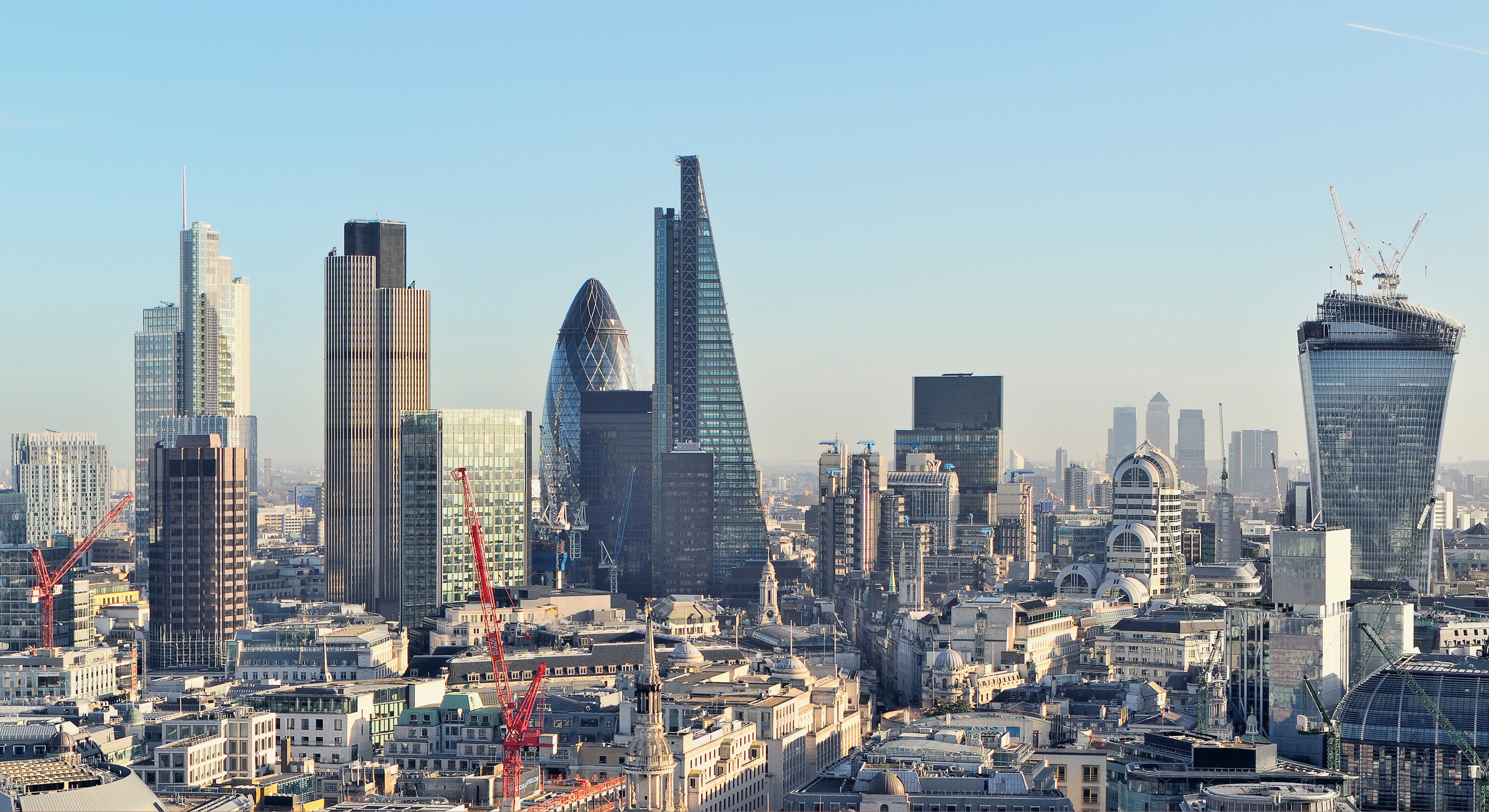
City of London (Wikipedia)

British governments have a long record in aiding the world’s undesirables. When the European Union (EU) proposed stringent measures to control money laundering in banks, Britain opposed the measure and succeeded in preventing their introduction. 
George Osborne the current Chancellor has been working hard to persuade the Chinese to allow London to become the official foreign exchange centre for the trading of the Chinese renmibi. If he succeeds there will be all those renmibi’s deposited in London that could be used to pay for our imports from China. 
Why is this policy so foolish?
Obviously any policy that depends on the rest of the world depositing ever increasing amounts of their money with us is foolish. There will inevitably be other financial centres developing that attract the world’s funds, London cannot for ever be the world’s number 1. Foreign investors are not  the foolish suckers that are  attracted to ponzi schemes, they can read the market as well us any London banker. It has been forgotten that in 1990 one astute fund manager (George Soros) almost bankrupted the UK with his astute speculation in the foreign currency markets. The UK will be the recipient of the world’s funds as long as it suits the rest of the world, but that won’t be forever. Unfortunately the government and all the leading politicians have never considered this possibility and prepared for that eventuality.
The UK being the world’s foremost banker is very susceptible to changes in the world’s currency markets. Any large outflow of funds would be catastrophic for the following reason. London borrows short and lends long, what this means is that money that is deposited in London on short term notice is then loaned out  for longer periods time. At the height of the property boom 80% of the  bank’s loans were made to the property market. Not only is it difficult to get money back quickly which has been invested in bricks and mortar, but the value of those loans is subject to market volatility fall rapidly in  a crisis. The prices in the British property market are subject to a speculative surge that can easily reverse itself. In consequence not only will the banks have trouble repaying those loans, but the value of those loans will have decreased, making it impossible for the banks to repay their foreign depositors. To repay these loans the banks would have to rely upon the Bank of England drawing on its foreign currency reserves to bail them out. History demonstrates that those reserves can soon be exhausted and in such a scenario the UK would need the largest loan in the IMF’s history.

Mark Carney (Governor of the Bank of England) has imposed reforms on the banks making them hold greater reserves to fund a run on them in a  crisis. However it has been suggested that in a crisis of the type that occurred in 2008/9 these measures would be inadequate.
Perhaps the worse consequence of this policy is that the government will be tempted to implement more and more foolish policy measures in a desperate attempt to attract more and more funds to this country. This is why the UK is always the one country no matter which party is in power to oppose any meaningful reforms of the worlds financial markets, as they are terrified of any change that might reduce the flow of foreign funds to London.

Gullibility and the economy of fools

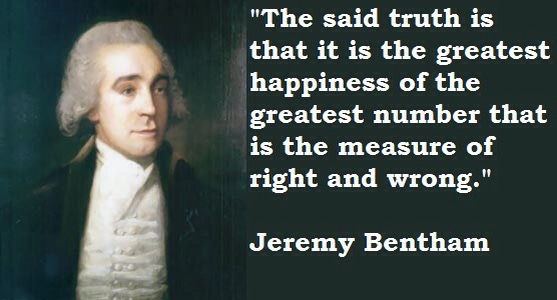
Jeremy Bentham is an almost forgotten philosopher today, yet of all the 19th century philosophers he was the most fascinating. He has an extremely logical turn of thought and it caused him to undertake actions that most would find peculiar.  One such action was his insistence on eating his meals back to front, he always had the desert or sweet dish first to be followed by the savoury dish. He argued that it was as logical to have the sweet first, as having it as the second dish, he could see no rational reason for always having the savoury dish first. Economists were influenced by his thinking and they adopted his ideas in their theories of market behaviour. Jeremy Bentham argued that good actions were those that gave the greatest pleasure to the greatest number. Similarly the free market gave the greatest satisfaction to the people as it was in the free market that people could satisfy their wants by determining what was made and sold. However there is one flaw at the heart of Jeremy Bentham’s utilitarianism and free market economics, both assume that the individual is capable of making a rational decision about being what is in their best interests. Our knowledge of human behaviour teaches us that in fact people often make important decisions for the most stupid of reasons. Economists and Jeremy Bentham cannot account for human gullibility and stupidity which undermines the whole accepted free market arguments. 


taken from aspirant forum.com

What fascinated me was the medieval obsession with collecting Christian relics. The relics would be held in veneration and became the site of pilgrimage. Pilgrimage was a very profitable business for churches and monasteries, where the relics were displayed, as pilgrims made large donations to these churches and monasteries. The more holy the relic, the more profitable a site of pilgrimage it became. In the spirit of money making pirates employed by the city of Calvi in Italy stole the bones of St. Nicholas from the Turkish town of Myrna, to display in the church in Calvi. This was such a profitable business that monks became involved in forgery to create more and more spectacular relics. One such relic was the Veil of St. Veronica. St. Veronica is supposed to have wiped the face of Christ clear of blood and perspiration on his way to crucifixion at Golgotha. The veil then bore the miraculous imprint of Christ’s face.  This obvious forgery was on display in Rome for hundreds of years. Even today the medieval forgery that is the Turin Shroud is still on display and venerated by pilgrims. This very profitable medieval industry founded largely on fraud and human gullibility stands in contrast to the so called rational consumer of economic theory.

Today human gullibility is the foundation for another large and profitable industry, the trade in the relics and artefacts of celebrity. These items are valued for their proximity to the person of the celebrity, much as were the relics of the medieval saints. Recently a wooden spoon signed by John  Lennon and Yoko Ono was sold for between £600 and £800 at auction. Graceland the last home of Elvis Presley is the object of pilgrimage. Visitors often leave speaking in awe of having experienced something of Elvis Presley’s life, an awestruck experience that would have been similar to that of the medieval pilgrims. 


A letter from John Lennon to Phil Spector blaming The Who drummer Keith Moon and singer-songwriter Harry Nilsson for urinating on a console at an LA recording studio is up for auction, with an estimated value of £6,000.
(Read more at http://www.nme.com/photos/the-weirdest-most-expensive-beatles-artifacts-you-can-buy/)

If so many of our acts are a consequence of gullibility or stupidity, the arguments for the primacy of the free market are undermined. If people are capable of spending large sums of money illogically there needs to be a corrective to the free market. Rather than the wisdom of the crowd, it is better to speak of their ‘unwisdom’. Once  their existed that corrective, the government, it was thought that this body had the overview and long term wisdom to make certain decisions better than the individual. Now that belief has disappeared and wherever possible government services are put out to tender in the free market. There is no leading politician that believes that energy supply because of its importance is best supplied by the government. One consequence is that while the former nationalised energy industry was one of the leaders in nuclear energy engineering, the now privatised industry has lost that expertise. The new nuclear power stations will be built by a combination of expertise from French and Chinese engineering firms.

Perhaps it is in public health that the consequences of human gullibility are the most obvious.  The smoking of tobacco was popular when I was a teenager was seen as cool, as exemplified by the advertising phrase the ‘cool taste of menthol tipped cigarettes’.There was complete ignorance of the health risk of smoking, it was only after many years of government action to inform people of the dangers of smoking, that that cigarette consumption dropped. The reverse has happened with alcohol consumption, a market in which all restrictions on its sale and consumption have been dropped. Consumption as a consequence has risen, along with the incidence of cirrhosis of the liver and throat cancers. What is perhaps most distressing is the fact that gullibility has prevented what would have been the elimination of that disease of childhood measles. Many such as myself thought measles as being a minor rate of passage of childhood, not realising that this was an illness that could cause blindness, brain damage and disability. One maverick researcher claimed that he had evidence that the vaccine that prevented measles could  cause autism in children. This research having been published in ‘The Lancet’ caused a moral panic, chiefly through the writings of journalists in nationally read newspapers. Inevitably vaccination rates dropped and measles became yet again a scourge of childhood. Fortunately this panic is largely restricted to the Anglo Saxon world. There have been outbreaks of measles in several British cities bringing disability to an unfortunate minority of children. The same has happened in California, where measles is a threat to the children of the best educated classes, proving gullibility is not the prerogative  of the poor and ill informed. Despite the original research being discredited, the fear of the MMR vaccine remains and children are again threatened by this dangerous illness.

Nietzsche would have enjoyed exposing the naivety of economists and politicians who trust the wisdom of markets. Neither understand the nature of humanity and why their policies for the economy and society are flawed. While this essay may appear misanthropic, that’s not really my aim. What I want is a return to the old belief that there is such a thing as human wisdom and that it should be a guide to public policy making. Instead we have a democracy of fools, one in which only those policies that can be understood by the simplest and most unreasoning of men are adopted. 

Possibly it’s unfair to suggest our politicians are gullible fools, it’s more correct to say that they act as if they are such. The popular press provides an example of this, if you read a tabloid newspaper the impression it gives is that it’s been written by people who left school at the earliest opportunity and with a minimal education. In fact the vast majority of journalists writing in such papers are graduates, often from the elite universities it just that they write as if they were uneducated, as they believe what their readers want are simple uniformed opinions. A training at a tabloid newspaper is highly valued as trainee journalists believe that it teaches them the skills needed to be a good journalist. What is teaches them is how to write a column that appears to have been written by an uneducated person, as that type of column is believed to appeal to the widest readership. Similarly our politics is peopled by graduates from the elite universities who believe that the same patronising approach is required in politics. As one famous film making said money is never lost through underestimating the public taste.