Category Archives: economic history

Why the British will never have an efficient or effective railway system.

20140715-165629-60989574.jpg

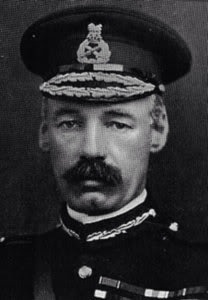
In Britain we have some of the highest bus and train fares in the world, yet the service we pay for is one of the worst in the developed world. Wherever you look in the UK the public transport system is a mess. How is it that the sixth wealthiest country in the world is unable to develop a system of public transport that works? Economists will give an answer couched in economic theory but I think the answer is to be found elsewhere, in the British political culture. I take as my starting point a comment made by Saul David about the Victorian army, the officer class as a whole disliked clever officers. This belief has persisted through to today our contemporary governing classes. A characteristic demonstrated most clearly by our First World War Generals. One German soldier observing the conduct of our troops at the Battle of the Somme, said they were ‘Lions led by donkeys’. Then General Rawlinson who commanded the conscript army at the Somme believed the conscripts were incapable of mastering good soldiering skills, so ordered them to advance in line abreast much like Wellington’s soldiers towards the German machine guns. The result was a slaughter. This same lack of imagination, the inability to consider alternatives is still the cultural mindset in today’s governing classes. Once this group fixes on an idea it refuses to change, whatever the evidence to the contrary. Within Westminster the privatisation of the public services such as railways is the current ‘idee fixe’ despite evidence of the many failings of the rail system. Just like a World War 1 General bringing out a dubious set of statistics concerning German casualties after yet another failed offensive, transport ministers can produce one dubious statistic after another to demonstrate the success of the privatised railways.
20140715-170316-61396613.jpg

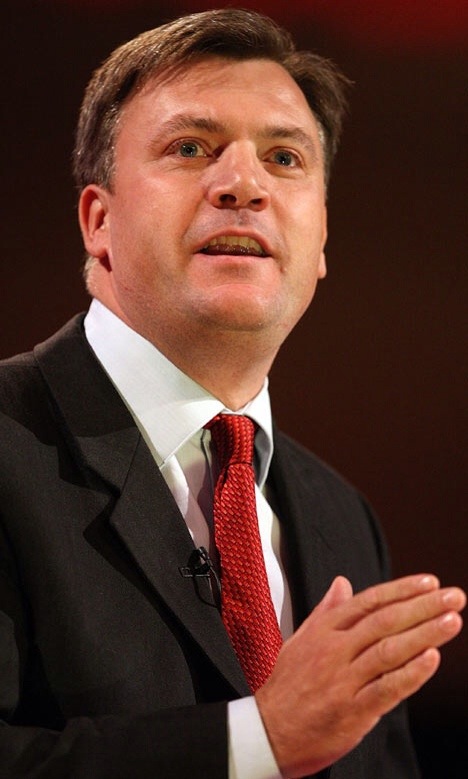
There can be several from our current political leaders who fit the General Rawlinson typology of unthinking leader. My favourite example is the Shadow Chancellor of the Exchequer, Ed Balls. He when pressed by members of his party to renationalise the railways, in response uttered the memorable nonsensical phrase, that he favoured a ‘non ideological’ approach to the management of the railway service. What he meant was that he did not want the state management of the railways, believing instead in the superiority of current market based approach. He stated that in future government owned ‘arms length’ railway companies (the only similar business is the state owned mutual, that is Welsh Water, run independently of the Welsh government) would compete with private companies for rail franchises. Many have pointed out the impracticalities of the scheme. Samuel Johnson memorably described the philosophy of Rousseau as ‘nonsense on stilts’, a phrase I would apply to Ed Balls approach to railway management. It is hard to think of a more unrealistic approach to the running of the railways.
20140715-170715-61635819.jpg

Interestingly it was criticised not for its impracticality, as it fell within the accepted parliamentary consensus of views, but for its lack of ideological purity. Within Westminster and Whitehall it is considered a heresy to believe that the state could provide any public service better than a privately owned business.

Any thought given to Ed Ball’s scheme will demonstrate its impracticality. This and the previous Labour government have stripped the department of those top level ciivil servants, who could prepare a tender for one of the rail franchises. Instead the government would have to call on one of the many private consultancies that advise the rail industry to prepare its tender. Given that there is no existing government rail company (the state owned East Coast railway will cease to exist when its franchise runs out) it would be an imaginative paper exercise on what a hypothetical state owned railway company. Perhaps the best sign of a failing political system is when politicians resort to meaningless paper exercises as a substitute for decision taking.

Charles Dickens in his novel ‘Bleak House’ described the template for the model of British political governance. In the case of ‘Jarndyce and Jarndyce’ the case continued interminably only to cease when legal fees had swallowed up the capital in the contested inheritance and the lawyers could no longer be paid. Fortunately for transport consultants their excessive fees will never exhaust the available funds as the fund is constantly replenished by tax payer monies. What successive governments fail to realise is that it matters little to this army of consultants whether or not a project is ever finished as they still get paid, they as with the lawyers in ‘Jarndyce and Jarndyce’ consultants have an interest in spinning out the consultation process for as long as possible. Already the unbuilt HS2 (the proposed high speed rail link between London and Birmingham) has incurred costs of £1/4 billion largely in consultancy fees without a rail being laid. Each time their is significant opposition a new consultant’s report is required to answer the questions raised by the opposition. When HS2 is finally cancelled it will be the final proof of the inability of the government to undertake large scale transport infra structure projects.

There is a concept rarely used in contemporary economics and that is the natural monopoly. A natural monopoly occurs when the market conditions favour there being only one supplier of the service or product. This type of market occurs where there are very high capital costs to providing a particular product or service. One such example is the huge costs of a railway system, there are the costs of purchasing rolling stock ( one of the new HST125 train engines cost Great Western £5 million) and the cost of the construction and maintenance of rail track. It is this reason why the nationalised British rail scrapped the North Devon railway line, because it was competing with the South Devon line to take passengers to Cornwall. It was uneconomic to have two competing rail lines. There is at present one railway between London and Leeds and it is perfectly feasible to build a competing line covering the same route. There would then be two companies competing to take passengers on this route, but given the huge costs of running a rail system, any price war between the two could bankrupt them. More likely they would be too aware of the disastrous consequences of a price war and they would come to some agreement to divide the revenues between them. Another way of staying in business is to keep investment to a minimum. This is what happened in the period 1919-1948, prior to the nationalisation of the railways. While other developed countries had introduced the new rail technologies, British rail companies were still operating steam engines (The technology of the 19th century).

20140715-171641-62201117.jpg

This is were the comparison with World War Generals comes in, they failed to recognise the realities of contemporary warfare, that was the machine gun and barbed wire, contemporary politicians fail to recognise the realities of the rail market. When the government in 1993 privatised the railways they failed to recognise that railways were a natural monopoly and that there could only be a monopoly provider of rail services. Politicians never read history and if they had they would have been familiar with the story of George Hudson and the railway crash of 1859. Prior to 1859 there was the railway mania when rival companies set up competing rail companies to the same destinations. The market could not support so many rail companies so many rail companies made little or no profit train services a situation that could not continue. When this became knowledge there was a financial panic which saw many rail companies bankrupted. After that there was the consolidation of the railway system to reduce competition so much so that by 1947 there were only four railway companies each being a regional monopoly. However the political classes have the collective memory of the codfish, which is reputed only to be able to remember the last 10 seconds of its life and being ignorant of the past they embarked on the folly of rail privatisation.

Once the process of privatising the railways began the politicians and civil servants preparing the legislation began to realise the difficulties of grafting a competitive model onto a natural monopoly. Whatever they did there would still be a monopoly provider of rail services on particular routes. The solution they adopted was to have time limited franchises, so they could claim that there would be competition for the franchise whenever it came up for renewal. Not competition today or tomorrow but in five years time. A very unusual competitive market that limited competition to specific time slots.

Whatever the benefits to society of a rail network most of their services run at a loss. Therefore the government devised a system of subsidies to be paid to rail operators, while it was claimed that it was a subsidy for running unprofitable services, it was in reality a subsidy to make each rail franchise profitable. No private rail operator would bid to run a rail service unless it could be guaranteed a profit and that was guaranteed by the subsidy system.

To disguise the uncompetitive nature of the ‘new competitive rail market’ all contracts between the government and rail companies are secret. The excuse given is that businesses who bid for rail franchises require commercial confidentiality, as a knowledge of one businesses costs would enable a rival to set costs below that of a rival. Publication of the details of a contract after completion would confer little benefit on rivals, because all cost calculations etc. will change over time. The real reason for confidentiality is that these contracts would not stand up to public scrutiny. Secrecy is the best guarantor of continued bad practice.
20140715-172246-62566082.jpg

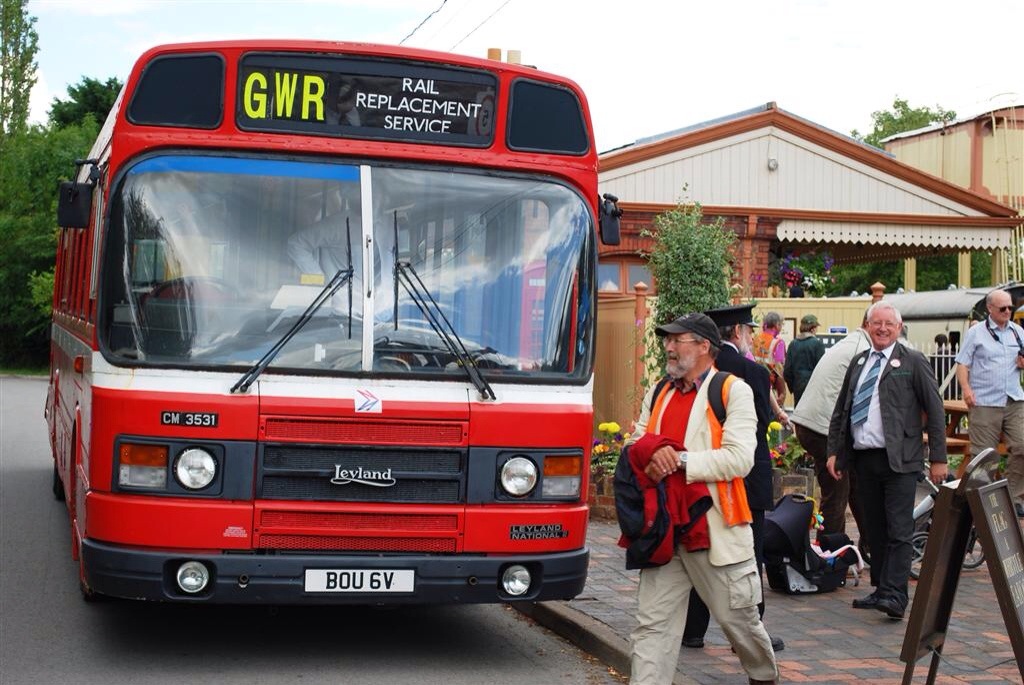
Passengers forced to get on the temporary bus service between stations, because of some failure on the rail network, should recognise that the failure lies not with the rail operator but with the politicians who devised the system and who are committed to its continuing into the indefinite future. It is in the nature of business to provide the minimum service it can get away with, as reducing costs is the most effective way of increasing profits. It is in the nature of feral profit takers to behave in this way to expect them to behave contrary to their nature is foolish. The fault lies with the politicians who decided that this unworkable system of rail management is the only one that is possible. They cannot conceive of an alternative system. There are probably clever cynical politicians who realise the rail management system is an ungovernable mess, but realise that to speak the truth would damage their career.

Cleverness is still frowned on in the army, which continued the ignoble British tradition of sending too few under equipped troops into conflict, as demonstrated in the Afghan conflict. In the Helmand province an area of British army governance, the lack of numbers and attack helicopters prevented the British army from effectively taking on the Taliban. Only when the well equipped American marines arrived were the Taliban driven out of Helmand province. When intelligence is a quality frowned on in the governing classes, it is doubtful that any government could deliver a high tech infra structure project such as HS2.

Why economists should be banned from public life; it’s for the good of us all

Can economists ever do good for human kind? If its contemporary economists that the question is asked of, the answer must be no. There are a few exceptions but generally speaking economists support the most inhumane of political experiments on mankind. With very few exceptions they have been the cheer leaders for the programme of austerity that has been inflicted on societies in Western Europe and the USA. Possibly there is some poetic justice in this turn of events. The leader of the IMF is always a European and the IMF has wreaked havoc on the economies of the developing world over the past decades. Whenever a developing country has turned to the IMF to finance its debts, the money has only been given on the condition that the country adopts the harshest of austerity policies. Health and education services are always the first the IMF insists on cutting, its a kind of perverse morality that believes the inhabitants of poor countries are deserving of poor health and education. Now the EU has adopted the same austerity policies to protect the debt holders (in this case German banks) who over invested in the Greek economy. The loans that saved the Greek banks from bankruptcy was only given on condition that Greece adopted the policies that turned the country into a basket case.

What I would like to suggest that governments adopt a ten year moratorium disbarring them from employing economists for that period. Society would be far better governed if politicians took responsibility for their actions instead of outsourcing the decision taking and blame to others. Perhaps if Tony Blair instead of sending his shadow cabinet on a business consultancy course but one on moral philosophy the horrors of the Iraq war may have been avoided. Infra structure products are hopelessly delayed as government invariably outsources decision making to think tanks, such as ‘The Adam Smith Institute’ or in the case the Third Heathrow Airport to an economist called Howard Davies. Stanley Baldwin when under pressure from the press barons to reverse his policy giving self governance to part of the British Empire spoke of them wanting the prerogative of power without responsibility, this is the prerogative of the harlot. The current generation of politicians want neither the power or the responsibility, just the opportunity to enjoy the trappings of power. The British government will not make the final decision on the High Speed 2 railway, that will be left to others.

20140613-112910-41350460.jpg

There is a striking counter example which both throws light on the poor political governance of the UK and that is the Senate of Republican Rome. The Senate before it authorised any major action by the Roman State, asked the Pontifex Maximus (High Priest) to read the auspices to assess the prospects for success. This involved divining the attitude of the Gods to the enterprise by examining the entrails of a sacrificed animal. If the enterprise failed it was because the priest reading the entrails had made an error and had failed to recognise the hostility of the Gods to this enterprise. Today economists are asked to perform the a similar ritual, it is the economic report into the viability of the project. They read the auspices by examining the entrails (statistics) of the economy. While it is not hard for a minister to find a tame economist who will divine the government’s intention and predict the success of the enterprise, our system has one major flaw and that is the divining the auspices rarely delivers a single definitive reading. There are several economists who claim to perform the economic ritual better than the chosen government economist. They will deny that the government economist gave the correct reading of the economic auspices which generates confusion as to what is the correct reading and hesitancy in decision making. Their are too many high economic priests.

George Osborne the Chancellor of the Exchequer is the driving force behind proposal to build a new town at Ebbsfleet in Kent. What I can predict is that is that there will be numerous other economists claiming that the entrails were read incorrectly by the Treasury and that a new town is not needed or that Ebbsfleet is the wrong location etc. Putting a measure in the Queen’s speech does not guarantee that the town will ever built, as it depends on the agreement of that quarrelsome collective the economists to sanction it. With the government having outsourced decision making to the economists, I cannot see the new town of Ebbsfleet being built. Rather it will be a project whose merits will be debated into the indefinite future.

20140613-113834-41914863.jpg

Despite the Roman system of decision taking appearing to depend on the whim of a supernatural deity, it was far more effective than ours. Firstly the Roman Pontifex Maximus (High Priest) was a senator and was always a powerful figure , unlike in Britain where the equivalent of the Pontifex Maximus is an outsider and is not regarded as an authoritative figure by other priests (economists). In Rome the reading of the auspices was merely confirming what the most powerful group in the Senate had decided. Murder was not an uncommon way of eliminating one’s opponents, as eliminating one’s opponents either ensured that only your supporters remained in the a Senate or it cowed the opposition into acquiescence. Mark Anthony was initially a gangster used by Caesar to intimidate his opponents in Rome. Our political leaders have rarely decided in advance what the policy will be, even if they favour one decision over another, they still outsource the decision to others. Economists the chosen group of outsiders lack the authority of the Pontifex Maximus, they all claim to be the Pontifex so there is no authoritative policy statement. What makes the Roman Senate a superior policy making body to the British Parliament was that the ritual was subordinate to art of decision making, whereas it is the reverse in the UK. The Senate unlike the British Parliament could make decisions even if they were bad ones. A similar phenomenon can be observed in the US congress which also appears incapable of decision making. One of the few policies Congress agreed on was designating the tomato sauce on pizzas as being one of an individuals five a day portions of fruit and vegetables. Congress can agree on meaningless acts but avoids difficult decisions.

20140613-114331-42211783.jpg

Another advantage of the Roman reliance on the Gods providing supernatural policy sanctions is that such authority is far more persuasive than that conferred by economists on government policy. If the Senate wanted to oppose a particular policy, usually one that favoured the lower order the plebeians, they could claim the opposition of the Gods. Threatening natural omens would be reported such as cows with two heads all suggesting that the Gods were angry. Claiming a policy that you don’t favour will make people worse off, does not carry the same threat as a policy that angers the Gods.

It may seem strange to state that the decision making process of the Roman Senate is superior to that of the UK government, when it has access to a wealth of economic statistics and computers to aid decision taking. I argue that the Roman system was superior because the Senate’s decisions were made on qualitative grounds not quantitative. A boldness of vision comes naturally to individuals who celebrated virtue. Their moral exemplars were men such as Lars Porsena who burnt off his right hand to demonstrate Roman courage and steadfastness to the enemies of Rome, who held him captive. British politicians schooled in the world of cost and benefits are incapable of any grand vision. It breeds a kind of modesty in decision making and with it a desire to avoid big difficult decisions. There was a heroic generation of British politicians it was those who had guided us through a Great War. It was that generation that gave us a National Health system, free legal aid so the poor would be on an equal footing with the rich in court. Both of which our modest generation of pseudo economists want to end because of their supposed ‘unaffordability’ . The grandest vision any contemporary politician could envisage, is cutting the cost of a public service. In these modest time the hero is the cost cutting politician. Certainly there is not one contemporary politician who venture any project as grand as a national health service.

20140613-114546-42346041.jpg

This is why this particular economist wants all economists banished from government and all forms of public service. I want to take away that prop politicians use to avoid making decisions, that is the economy, when everything is deferred due to economic considerations. University education is too expensive so the pseudo economists increase university fees to £9000 pa. The consequence is that a black hole develops in university funding into which the government is having to pour more and more money. Stupidity rules in Westminster/Whitehall masquerading as economic good sense, if higher education is really that unaffordable why not just cut the number of university places, instead of using the economic fudge of pretending it will be solved by increasing fees.

One further observation the contemporary Lars Porsena would not be the one who resisted the over mighty enemy, but the one who capitulated to the enemy and who facilitated their aims. Successive British governments when faced with the problem of tax evasion and avoidance by the rich and powerful, rather than taking action to end this abuse of power and offend these powerful men instead took action to make tax avoidance easier.

20140613-114708-42428813.jpg

The Insurgent Economy

20140505-173052.jpg

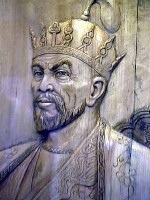
What we call the economy the economy is but a shifting powerhouse of competing and conflicting forces. The two most significant being the dominant and the insurgent economies. The former consists of the most powerful social groups in society, while they are have the power to distort and bend the economy to service their needs, they also through the exercise of power provide those services that hold the wider society together. While the 7% of wealthy public school educated men may hold the most powerful positions in society and abuse their power to serve their own interests, they do give society its system of governance. A system of governance that at its most basic consists of public administration, law and order and defence. No matter how exploitative their behaviour they hold society together. The Mongol warlord’s Genghis Khan and Timur the Lame were cruel abusive tyrants. Timur the lame making mountains of skulls out of his slaughtered enemies . Yet they provided a superb system of administration that held together an empire that stretched from Europe to the shores of the China Sea. However as both empires were over dependent on the the skills of the individual at the centre of government, they fell apart on the death of these men. Or to put it a different way the subject people’s were unwilling to pay a disproportionate share of their incomes to governors who could not provide an effective system of governance.

20140505-174819.jpg

While the social group that controls the dominant economy in the UK are less brutal that the Tatar Emperors, they also use their control of the services essential the maintenance of good society to exact an onerous return for their services. In the 18th century the landed aristocracy effectively controlled the governance of Britain and in return this service they exacted from society huge sums of money with which to build the great country houses such as Blenheim Palace and Chatsworth House. While the landed aristocracy lived in grand houses the impoverished majority lived in hovels of mud and straw, few of which survive until today. When the landed aristocracy of France offered increasing little in return for the disproportionate share of national income that they rewarded themselves, they were overthrown in bloody revolution.

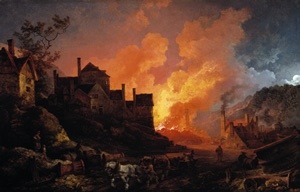
There is opposed to the dominant economy an insurgent economy peopled by those people excluded from the dominant economy. They threaten to take control of the economy from the dominant social grouping. In the 18th century this was the non-conformists, people from outside the dominant Anglican landed hegemony. People such as Josiah Wedgewood and James Watt, industrialists whose rapidly growing factories and the wealth they created enabled them to challenge the landed aristocracy for power.

The one way the members of the dominate economy can control the threat to their position was by denying or limiting resources available to members of the insurgent economy. In a largely agrarian economy of the 17th and 18th century Britain where most wealth was invested in land they were able to minimise this threat as they owned most of the nation’s land and were not willing to allow the control to pass into other hands. However this landed aristocracy while on the one hand tried retaining control of the nation’s wealth through a corrupt political system and by excluding people of dissenting views through from public office or the universities, did through their incessant wars with the French aid the rise of the insurgent economy. The suppliers of war material were the very people they wished to exclude from power. Men such as John ‘iron mad’ Wilkinson, who made the machinery that bored cannon barrels from blocks of iron. These manufacturers were so successful that even the French army that invaded Russia in 1812 wore British made great coats and uniforms. These industrialists benefitted from government largesse put their way. Such a large transfer of wealth inevitably affected the distribution of power in society and in the nineteenth century these industrialists effectively gained their merited share of power.

20140505-175410.jpg

Not all the members of the insurgent economy gained their wealth from government funding. Entrepreneurs such as Josiah Wedgewood created a new market for high class porcelain through developing new technologies and imaginative marketing. He displayed in London for several months the dining service he made for the Tsar of Russia. This public display of his wares won him customers from the middle classes who wished to emulate the nobility. The threat they posed was recognised by the landed aristocracy. Joseph Priestly scientist and friend of Joseph Wedgewod was driven out of his home by a mob (whipped up to a frenzy by the local nobility) who regarded him as a dangerous radical.

What I wanted to demonstrate by my foray into economic history was to give an indication of how the tension between the insurgent and dominant economy affects economic development and growth. Today this tension is demonstrated through the bid by the American pharmaceutical giant for the British pharmaceuticals company Astra Zeneca. It is a deal that will inevitably go through as it will have the support of the City of London. Predatory financiers will buy shares in Astra Zeneca and when they believe the market has reached its peak, they will through manipulation of their dominant shareholding force a sale. In the meantime they would have bought and sold the shares many times to make a profit of millions or for the City as a whole billions.

There can be no doubt that the dominant economy today is that focused on the City of London. Parliament is but a creature of the City, as demonstrated by George Osborne’s opposition to the proposed Tobin Tax from the EU on financial transactions. A position given tacit support by Labour’s silence on the issue. The takeover of Astra Zeneca demonstrates the dominance of the ethos of the financial sector in the economy. Investment in research into new drugs is expensive and the results uncertain, a far more certain way to make profits is to takeover a rival company and realise (sell) its assets. Already there has been talk of the new merged company needed to rationalise research and development by cutting down on duplicate research facilities. Astra Zeneca holds plentiful real estate which could be sold to generate profits for Pfizer. Then there is the cash rich pension fund. Pfizer by cutting back on pension liabilities (reducing pensions or increasing retirement ages) gives Pfizer access to funds that could be used profitably to boost the value of shares through a buy back scheme. There are numerous ways Pfizer could use the assets of Astra Zeneca to increase its profits. All the talk of creating a new mega pharmaceutical company which will use its funds to develop lots of exciting new drugs is just PR guff, needed for the politicians to justify their acquiescence to the purchase by yet another British company by a foreign buyer, who sees the acquisition of a British company a increase profits by selling off its assets.

What matters is the balance between the dominant and the insurgent economy. If the dominant economy is over powerful it can deny resources to the insurgent economy and as the insurgent economy is the generator of economic growth it can diminish, if not destroy the prospects for growth. The members of the dominant economy must be willing as with political parties in a democracy be prepared to see the other side win, not destroy any possibility of that happening. Members of the financial elite must be prepared to cede or share power, as did the landed elite of the 19th century, when they shared power with the industrialists. Cadbury’s, Astra Zeneca are all witness the dominance of government by the financial elite. The hedge funds, investment banks that have financed the Conservative party will not be wiling to let government veto the opportunity to make vast profits on the proposed Astra Zeneca deal. It is no coincidence that the decline of manufacturing industry has coincided with rise to dominance of the financial elite. Perhaps the clearest example of this the closure of Rootes Hillman factory at Linwood and the car making machinery sold to Teheran. It was a standard joke that if you wanted to buy a Hillman Imp, the place to go was Teheran. There must be hundreds of factories using machinery formerly used in British factories worldwide having been sold at knock down prices by the city. Former manufacturing giants such as Dunlop (tyres) and Pilkington (glass) have been sold by the city to foreign owners.

20140505-175615.jpg

The old manufacturing industries in UK would probably have declined but the actions of the city accelerated their decline. Unfortunately the dominant ethos of the financial sector is for short term speculative gain. Possibly this is why 80% of all bank loans are made to the property sector. This means the growth of the new rising insurgent industries have been choked off. Briefly Britain made computers but the only large scale manufacturer of them ICL was sold to the Japanese firm Fujitsu. The city having no interest in long term uncertain investments. This is why in the UK development in the new technologies has been confined to small software companies mainly based in the Thames valley area. Businesses that don’t require large scale city funding. There is hope that these new industries are beginning to make sufficient funds to finance expansion through reinvesting their own profits. Something that the iron masters and mill owners of the 18/19th century were forced to do, as all the traditional sources of finance went into land investment or the colonies.

A successful economy maintains a creative tension between the dominant and insurgent economies. The dominant economy is committed to social stasis to preserve the wealth of its members but in so doing it provides the social stability necessary for social order. Without that social order the insurgent economy would find it hard to develop. While the dominant economy is committed to no change, the contrary is true of the insurgent economy. Within the dominant social order there must be scope for the development of the insurgent economy, as that it the mechanism for future growth. This means the members of the dominant economy must be prepared to accept change and the loss of power. Not as in the UK where the city has systematically destroyed any threat to its power by disposing of new technology companies to foreign rivals.

There is hope in the new internet funding schemes which by-pass the banks. Crowding funding on the internet may hopefully develop as did 19th century joint stock company as a way getting funding for new businesses which are denied funds from the traditional sources.

The Great Desolation or the ruin of England’s countryside. Oliver Goldsmith’s deserted village revisited.

20140411-112330.jpg

Whenever I write about economics; I like many writers look to my own experience to comprehend the changes that have taken place in our society. Frequently I look back to my childhood for inspiration partly for reasons of nostalgia, but also because I mourn a way of life that has passed. The rural economy of my childhood has been replaced by the corporate business farms of today. British television with series such as ‘Downton Abbey’ and ‘Heartbeat’ refer back to an England of my childhood. I’m not a hundred years plus but the rural society pictured in Downton Abbey survived well into the 1950’s and ’60’s. However these programmes never make reference to the ‘Great Desolation’ that began then and continued until the population that depended on the rural economy had been largely removed from the land to the towns.

Our rural community was broken up following the decision of the landowner to become a tax exile and pass the land unto his son. His son was one of the new generation aristocrats in whom the tradition of ‘noblesse oblige’ had been replaced by the much harsher one of profit maximisation. In business terms the estate was under performing and his his first priority was to get the costs under control and increase its revenue. As the main cost was wages, this meant the mass dismissal of estate workers. All the forestry workers were given immediate notice. They were to be replaced by contractors who could be used as and when needed. Game keeping staff were reduced from five to two. Pheasant shooting would be restricted to those parts of the estate that could produce the greatest number of pheasants. Rather than the shoot being for friends and family that is the the old nobility, the new guests would be paying guests. These paying guests would expect to get a return on their money, so all that mattered was maximising the number of birds to be shot on shooting days. Consequently there became a curious case of over production with so many pheasants being killed, that many had to be buried on the estate grounds because no market could be found for them. The only group exempt from the staff cull were the gardeners who could maintain the estate gardens, which could be open to the public at a price.

20140411-112916.jpg

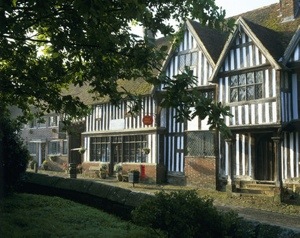
Having got rid of large numbers of workers, their houses were now freed up for sale or rent. The mock Tudor dairy from were I collected the family milk was converted into up market bijou residences for wealthy ‘out of villagers’. The working poor were dismissed from the countryside and forced to give up their attractive country cottages for houses on the council estate in the nearby town. Out of sight out of mind. When our family moved to this estate my father said he choose the job because the owners had a reputation for treating their staff well. There were even a row of modern day alms houses for retired workers. However welfare is cash expensive and in contemporary Britain employers only recognise that their obligations go only as far as providing a wage for their workers, welfare is the responsibility of the estate.

There was one further problem, the numerous small family farm tenancies did not earn a sufficient return on their land. Bringing a land agency who were notorious for their ability to get recalcitrant tenant farmers off their land was the solution. Immediately they enforced a rent review on the tenant farmers and the new high rents forced many out of their tenancies. They used even tougher tactics on the few that remained. One such tenant farmer suddenly found that his farm had two owners. Contacting these two new owners was difficult and getting them to agree on any developments on the farm was impossible. The tenant was forced to capitulate and give up his tenancy. This freed up one of the most beautiful farm houses on the estate for sale. Who bought it I don’t know but they paid an extortionate price for a part of one of the most desirable parts of the English countryside.

Strangely enough this new brutal landowner gained a reputation as a local beneficiary. Probably because he was always distant from the cruelties inflicted in his name. He gave money to the local community but this was not sufficient recompense for the devastation he wrought on the estate community which I remember with great affection.

Inevitably the justification for this cruelty was technology. The old high cost labour intensive methods had to go and be replaced by the new low cost technology. Large scale industrial factory type farms have replaced the small family farms of the past. Far more milk is now produced in the new dairy factories than was ever produced in the old milking parlours. There is as a consequence a problem of over supply of milk. This over supply has enabled the super market chains to drive a hard bargain with the farmers who are desperate to sell their milk. It is likely that only the huge low cost agri-business dairies will survive with the few remaining small milk producers being forced out of business. These huge dairy farms impose huge social costs on the community. To keep alive a huge herd of cows that contain many sickly animals requires the abuse of antibiotics. This user use has contributed to the problem of the development of drug resistant bacteria. There is also the attendant pollution problem, there is I believe nothing more unpleasant than a slurry pond.

To keep costs down these cows are kept in large numbers and fed drugs to increase their milk yields. Physically maltreated cows kept in overcrowded unhealthy conditions are a reservoir of disease, it is no surprise that TB is endemic in the British dairy herd. TB as always been a problem for dairy farmers, but it was a manageable problem in the past with small dairy herds of grass fed healthy cows.

What is never questioned in the agricultural community is the real efficiency of the new capital intensive farms. When the EU rewards farmers with a output based subsidy it rewards those farmers with the highest output regardless of the economic costs. Evidence shows that a disproportionate share of EU subsidies go to a relatively small number of agri-business farms, the corn barons of East Anglia are but one example. Without the EU subsidy they would go out of business as they would be revealed as uneconomic businesses over dependent on EU subsidies. Farming is all too often organised to maximise EU subsidies, rather than meet the needs of consumers.

There is also as a consequence of the change in agriculture support industries, that is the demise of the manufacturers of agricultural machinery. Fordson, Massey Ferguson and David Brown produced tractors and equipment ideally suited to the small British farm. When British farming switched to industrial scale production it opened up the market to foreign predators who specialised in making machinery for the new industrial farms. Relatively small in scale all the manufacturers of British farm machinery have since disappeared from the scene.

The drive to exploit all resources whether they be labour, livestock or land has led to abuse of that most precious of resources the English countryside. Fields are overgrazed through the excessive concentration of livestock on individual farms. Rapid growth and replacement of grass is only secured by the repeat applications of fertilisers, this can have the unfortunate effect of poisoning the grass making it unpalatable to cows. Herbicides to destroy non grass plants leads to the destruction of biodiversity and this impacts on the fertility of the soil. Heavy machinery compacts the soil meaning that rain runs off the soil rather than being absorbed by it, contributing to the heavy flooding of the last winter. Unfortunately the mass production of food stocks through the use of industrial farming methods leads to the degradation of the soil storing up problems for the future.

This essay on modern farming has a wider purpose, what I want to highlight is what happens when that most precious of resources, humankind is abused and degraded. The degradation of the English countryside is but one example of the devaluation of humanity in the productive process. It is not a coincidence that British workers work the longest hours, are paid the least and are the least skilled in Northern Europe. It is a consequence of the Anglo-Saxon management practice that regards people a things, just another commodity, a thing to be used in the productive process as cheaply as possible.

Oliver Goldsmith’s poem ‘The Deserted Village’ could be updated to today, I find his words as true as ever.

Where wealth accumulates, and men decay:
Princes and lords may flourish, or may fade;
A breath can make them, as a breath has made;
But a bold peasantry, their country’s pride,
When once destroyed, can never be supplied.

Although unlike Goldsmith’s village, the village of my childhood is not deserted, but populated by well off refugees from the great urban conurbations.

When I pass through one of the landscapes so beloved of ‘The Campaign for the Preservation of Rural England’, I wonder where are the people that should be working this land. The beauty of the landscape is protected at the price of excluding the rural working classes. They are not fit to muddy the view, instead they are to be banished to the impoverished housing estates in the cities exiled from their rural home.

London’s dire housing situation, are the banks also to blame for this?

20140226-152654.jpg

Reading a blog by Holly and Rhiannon on the New Statesman’s website prompted this post. In their blog they described the appalling conditions in which many young people live in London. Conditions reminiscent of those prevailing in the poorest parts of Victorian London. While the obvious villains are the new breed of landlord exploiting a dysfunctional housing market, these people are merely the catspaw in a highly dysfunctional inegalitarian society. Who are the real villains. One group are the third of MP’s who are buy-to-let landlords, who put their chance to earn a profit above the needs of the poorly housed young. What really is happening is a structural change in the economy that disadvantages the young and the poor, who are often the same. There is at the heart of this change a familiar villain the bankers and the City of London.

20140226-153645.jpg

How the bankers can in large part be blamed for the poor living conditions of the young in private rental accommodation can be explained by the structural change in the British economy engineered by the banking community. This explanation starts with how a business makes a profit. There are two ways either that business develops and new product or service that people want or it acquires the right to sell an existing service or product and is able to increase the price at which it sells the product or service by exploiting the market. Apple with their successful IPhone would be an example of the first and Centrica and the other energy companies that make up the dominant cartel of energy companies would be the other. Bankers in part have made their money in part through the second route. The banking market is dominated by the big four who can exploit the market for money handling services by collaborating informally. Credit card charges are exorbitantly high and yet no bank undercuts the others by offering a low interest rate credit card. Any deals offered are merely incentives to change card companies. The £80 billion of bonus payments to be paid to the bankers this year is merely another example of increasing the charges for money transaction services made by the banks, its the exploitation of a captive market.

However there is a way of profit making unique to the banks. To understand this other way it is necessary to go back to Tudor times and Henry VIII. Henry was constantly overspending building and furnishing palaces fit for a Renaissance Prince. There were also the almost constant wars against France and the need to build a modern navy to defend the UK against aggressors. When faced with the inability to pay his bills Henry resorted to debasing the currency, that is reducing the quantity of precious metals in the currency. This enabled him to produce many more coins with his limited stock of gold and silver. The losers in this situation were Henry’s creditors who received payment in the new debased currency. The pound in their pocket was now worth much less. Debasing the currency was a common practice for insolvent monarchs who wished to reduce their debts to manageable proportions. Unfortunately this new debased coinage had the effect of impoverishing the less well off as it was inflationary and increased food prices. When the less well off were the majority it had a very negative impact on national well being. Contemporary bankers like Henry VIII have similarly debased the pound sterling to benefit themselves at the expense of the rest of the nation.

20140226-155328.jpg

What is little understood is that in contemporary Britain it is the banks that are responsible for the supply of money in the form of bank deposits. Only 2% of money in circulation is notes and coins. It is banks through the process of credit creation that create most of the money in circulation. Realising the significance of this power governments in the Social Democratic era, but since 1971 all limits on the power of banks to create money have been removed by successive governments. The only limit of the amount of money the bank create is what the bank decides its reasonable to create. Perhaps leaving the bankers to decide how much money to create is not the best of economic policies. When Lehman Brothers collapsed it shocked many observers to discover that the banks deposits (bank money) was 50 times greater than its reserves. Later it was discovered that this was general practice and in fact many banks exceeded that ratio.
EU regulations require that banks equity total 1.5% by value of a banks deposits, which means European Banks are entitled to create bank money (deposits) that are 66 times the size of their reserves. The UK banks are marginally sounder as the ratio for them is 1:50. However their opposition to this limit and pleas for delay in its implementation suggest that even that ratio is exceeded in practice by our banks.

The power to issue money gives the banks incredible power. In 2010 the UK’s GDP(National Income) was £1.46 trillion, while bank deposits I estimate as totalling £7.3 trillion. Anybody glancing at these figures will realise that it gives the banks the power to dictate the direction of the economy. It is a power the banks don’t hesitate to use, most notably in 2009/10 when they succeeding in persuading (!) the government to save the banks by adopting a policy of national austerity.

This control of the nation’s money supply gives the banks the ability to direct the nation’s spending policies. If these excessive bank funds had been directed into developing the nation’s infra structure or long term industrial development their effects would have been less pernicious. It is no coincidence that this period of exponential growth in bank money was the period in which the number of new build homes declined catastrophically. To build a new housing estate meant money would be tied up for a long time in a construction project, which was unattractive when quick returns where available in other sectors in the housing industry. With a febrile housing market money lent on mortgages offered a quick return as there was always a large turnover in housing stock. Money was always being repaid from the sale of houses by customers wanting to move up in the housing market. Not only that but mortgage loans could be bundled up and be sold on as as part of a Collaterized Debt Obligation to other banks providing yet another source of ready cash.

The superior purchasing power of the banks enabled them to redirect activity in the housing market away from new build houses to the sale and resale of ‘second hand’ houses. There was a collapse in effective demand for new build houses, as all the money was going elsewhere to more profitable forms of speculation. Simultaneously the rise in prices of traded houses pushed up the prices of starter homes, reducing the purchasing power of the incomes of the first time buyer. Now the average house price is 5 times the average income, whereas most of recent history it was 3 times. Banks had effectively debased the domestic currency by reducing its purchasing power in terms of what really mattered, securing a home.

This change was effectively masked by a decline in interest rates, which reduced the cost of mortgages. In an economy in which people increased derived an income from property speculation it did not seem to matter.

Speculation in the various financial markets further increased the incomes of bankers and traders in the City of London. Bonuses of £1 million were becoming common place for traders in the City of London. It comes as no surprise to discover that this year England has become the largest market for Ferrari. What must be understood that the vast profits derived from this trading was money profits not real profits. It did not add to national wealth so much as become a charge on national wealth. Given that the bankers etc. now had control of a disproportionate share of the nation’s money they could outbid the rest of the population for the most desirable goods and services. Chelsea and Knightsbridge became the home of bankers, poorer residents were pushed out into other areas. Even less expensive areas in London such as Islington have become no go areas for professionals other than those who work in the financial trades.

Inflation figures whether shown in the Consumer Price Index or the Retail Price Index fail to show the extent of the true devaluation of the domestic currency. Since housing is one of the most significant items purchased in an individual’s lifetime it should be shown in a separate index and that would indicate the true decline in the value of the domestic currency. Giving bankers control of the money supply has resulted in them debasing the domestic currency as effectively as Henry VIII. Instead of reducing the value of the content of the currency, they reduce the value of the currency by increasing its supply of money, making each domestic pound worth less. Further by gaining a stranglehold over government economic policy they have been able to limit the incomes (money held) by the majority through persuading the government to adopt supply side economics and domestic austerity, which have kept incomes for the majority in real terms at 2003 levels, which means the bankers and the super rich can through their spending increasingly determine what is produced in the UK. The shrunken purchasing power of the majority means they have less say over what is produced, therefore less affordable housing.

UK government through surrendering control of the money supply to the banks have been able to remake the economy so that increasingly not just bankers but increasingly large parts of the population to look too making income through speculative activities, rather from gainful employment. It is a population with little optimism for the future that is attracted to the gambling websites, as they see it as the only chance of making money. A speculative economy in which the financial elite make fortunes through speculation in currency, commodities and equities is an unfair society as most are denied that opportunity. One such speculative activity is the buy-to-let property market in London, with prices increasing at a rate of 11% a year, the buyer cannot fail to make money. Since all too often its a short term speculative investment there is no desire to make the purchased property habitable.

Bankers I believe share a disproportionate part of the blame for the housing crises in the UK. Only by taking control of the money supply away from the banks can a fair and equitable society be created. There are lots of policies that could achieve this, one of the best is increasing the banks to hold a larger ratio of share equity (reserves) to bank deposits. A gradual increase of the amount of equity to deposit ratio to 1:10 would end many of the evils of the current system.