A Sceptical Economist’s understanding of War and War Making

The sudden rush of enthusiasm for war in Syria made me realise that there is no commentary on the economics of war and war making. What I don’t intend to do is repeat the moral and political arguments on the subject of war making, which others are better qualified to make. The question that I want to answer can economics justify war, is there an economic equivalent of the churches ‘just war’? (As defined by St.’s Augustine and Thomas Aquinas)

  
Image of  Syrian  War taken from  Geopoliticsmadesuper.com
The first thing to note is that there is a peculiarity embedded in the economics of war making. All war materials be they planes or tanks are built to be destroyed. Each item will be used repeatedly until it is either no longer fit for purpose or destroyed by enemy action. War weapons are a very poor investment one that adds little to the wealth of the community. This represents a problem for accountants and economists, how do you value an asset whose only purpose is to be destroyed? The simple answer is that these war weapons are valued according to their cost of production, they can add nothing to the future wealth of society.

There is another strange feature of war weapons that represent their paradoxical nature. They are designed not to be used, the best weapons are those which are an effective deterrent to war. One such weapon is the Trident nuclear weapons system, it works if it’s never used. The government’s of the sixty years have invested vast amounts of money into a product that has never been used. It cannot be stated often enough that the best weapons are those that are never used. This was a policy practised by the British Empire in the 19th century, it always had a fleet of warships that was at least twice the size of twice the size of its rivals. No rival power ever threatened the Empire, because it risked the annihilation of their navy. Trident as a weapon of mass destruction is unparalleled as a weapon of deterrence. Perhaps this is the only occasion in which vast amounts of resources and time is spent on a product that is intended never to be used.
Although military men might object, this is where marketing proves invaluable. It is very rare for these weapons to work as described. One version of the Trident missile was rumoured to be equipped with war heads that could malfunction when in action. There was the Lockheed Starfighter nicknamed the flying coffin because of the regularity with which it fell out of the sky. There are numerous other examples of under performing expensive weapons of war, but the military of both sides keep to the pretence that their weapon systems their super weapons work perfectly well. Given the success of the intelligence services of both sides in discovering the military secrets of their rivals, they must know about the underperformance of their rivals weapons systems but prefer to keep quiet. There is an omertà in the world’s military one that prevents them ever being honest about the poor performance of their weapons systems because that would undermine their credibility as masters of war.There are no marketing men in existence as effective as the generals when it comes to marketing a dud product. 
This is another strangeness of the war market, while military men claim to be men of action, they are more accurately termed men of inaction. The most successful ones never have to do the task for which they are paid. What the good general most wants to do is avoid action and the destruction of much of his military assets. A philosophy best demonstrated in medieval warfare. Then a battle would involve such huge loss of life, that each army would usually lose a third of their manpower in battle, more in the losing army. Therefore medieval monarchs tried to avoid open battle as it would leave their army so depleted that it would be unable to fight another war. When Henry V left France in 1405, the army that remained was so depleted that it was unfit for any further battle. Only the weakness of the French acing lost the Battle of Agincourt, kept this weakened army safe from attack and destruction.
On occasions military men forget the first rule of war, that is not making war. The most recent example was the war on Iraq. There were a number of senior officials and generals in the Pentagon who were eager to test their new weapons of war in combat. War technology was so far advanced in America that these men were eager to test their weapons in combat. While there were other reasons for the Iraq war, the American military and Pentagon officials were desperate for an opportunity to play with their new weapons. When it came to war, American technology was so superior that the war was over in a matter of weeks. However it later turned out that victory was due less to superior weapons technology and more to old fashioned bribery. The Americans had paid the generals of the elite Republican Guard not to fight. The chaos that has been Iraq since 2003 demonstrates why it is foolish to regard the military option as the first and best option. When leaving the Oval Office in 1961 President Eisenhower warned of the danger posed by the ‘military industrial complex’ a danger shown by the Iraq war when the arms salesman were able to push America into a costly and pointless war.
This leads to the first rule of the economics of war, never engage in a war unless the enemy poses an existential threat as the destruction of resources and human life is so that war can never be justified for any other reason. As a British citizen the war against Hitler can be justified as it presented an existential threat to the UK, the wars in the Falklands, Afghanistan and Iraq cannot be justified.
History provides examples of why war is such a bad investment, it is their huge cost. Recently I read a history of Edward I. He was a successful war leader constantly beating his Welsh and Scottish adversaries, yet time and time again his campaigns ground to a halt when he ran out of money. What usually happened was the foot soldiers who made up the majority of the army would desert when the campaign was well under way and approaching a successful conclusion, because they had not been paid. All medieval monarchs were in debt to their bankers, because of the huge sums they had borrowed to fight wars. Today it’s little different money borrowed to finance the campaigns in Iraq, Afghanistan and Syria will be paid by our grandchildren. When I was a student in the 1960s, I was told that the country was still paying for the Crimean War, a war that was fought in the 1850s. War is a fantastically expensive enterprise for which their is little return. 
As a sceptical economist I doubt the value of making huge investments in products that either will never be used or if used destroyed in combat. If I heard the new correctly our government is preparing to invest in a fleet of new fighter planes the F35 at a cost of £100 million a plane. I cannot as an economist see the utility or purpose of investing £10 billion in a product that only has one purpose which is to be destroyed. The cost of the new Trident missile system is estimated at £100 billion or just less than 10% of our annual national income. Why I don’t dispute the value of deterrence in an irrational world I do wonder if it needs to cost so much. Is their an inverse logic that applies to military thinking, which simply stated means the more that is paid for war weapons the more utility and value they possess regardless of their effectiveness? It is often said of the British military that they want gold plated weapons systems. The British and European government’s spent billions developing a warplane that had such poor flying characteristics that it was nicknamed the ‘flying sow’.
There can only be one somewhat nonsensical conclusion, the government has to invest in a product they never intend to use or hope never to use. The investment in military hardware must be sufficient to deter possible aggressors yet never be such as to bankrupt the economy. Perhaps the ideal situation occurred during the Cold War when both the USA and the Soviet Union invested billions in a weapon they never wanted to use, that is the nuclear deterrent. However peace was maintained only at the price of mutually assured destruction (MAD). This however was far from ideal as in the case of the Iraq war warriors, if one group of leaders thought they possessed an advantage over the others, they could be tempted to use their weapons of mass destruction. Perhaps the only solution is for the leaders of the most technologically advanced nation to limit their military superiority over others so no future leaders are tempted to use those weapons in a pre-emotive strike. 

The first thing to note is that there is a peculiarity embedded in the economics of war making. All war materials be they planes or tanks are built to be destroyed. Each item will be used repeatedly until it is either no longer fit for purpose or destroyed by enemy action. War weapons are a very poor investment one that adds little to the wealth of the community. This represents a problem for accountants and economists, how do you value an asset whose only purpose is to be destroyed? The simple answer is that these war weapons are valued according to their cost of production, they can add nothing to the future wealth of society.

There is another strange feature of war weapons that represent their paradoxical nature. They are designed not to be used, the best weapons are those which are an effective deterrent to war. One such weapon is the Trident nuclear weapons system, it works if it’s never used. The government’s of the sixty years have invested vast amounts of money into a product that has never been used. It cannot be stated often enough that the best weapons are those that are never used. This was a policy practised by the British Empire in the 19th century, it always had a fleet of warships that was at least twice the size of twice the size of its rivals. No rival power ever threatened the Empire, because it risked the annihilation of their navy. Trident as a weapon of mass destruction is unparalleled as a weapon of deterrence. Perhaps this is the only occasion in which vast amounts of resources and time is spent on a product that is intended never to be used.
Although military men might object, this is where marketing proves invaluable. It is very rare for these weapons to work as described. One version of the Trident missile was rumoured to be equipped with war heads that could malfunction when in action. There was the Lockheed Starfighter nicknamed the flying coffin because of the regularity with which it fell out of the sky. There are numerous other examples of under performing expensive weapons of war, but the military of both sides keep to the pretence that their weapon systems their super weapons work perfectly well. Given the success of the intelligence services of both sides in discovering the military secrets of their rivals, they must know about the underperformance of their rivals weapons systems but prefer to keep quiet. There is an omertà in the world’s military one that prevents them ever being honest about the poor performance of their weapons systems because that would undermine their credibility as masters of war.There are no marketing men in existence as effective as the generals when it comes to marketing a dud product. 
This is another strangeness of the war market, while military men claim to be men of action, they are more accurately termed men of inaction. The most successful ones never have to do the task for which they are paid. What the good general most wants to do is avoid action and the destruction of much of his military assets. A philosophy best demonstrated in medieval warfare. Then a battle would involve such huge loss of life, that each army would usually lose a third of their manpower in battle, more in the losing army. Therefore medieval monarchs tried to avoid open battle as it would leave their army so depleted that it would be unable to fight another war. When Henry V left France in 1405, the army that remained was so depleted that it was unfit for any further battle. Only the weakness of the French acing lost the Battle of Agincourt, kept this weakened army safe from attack and destruction.
On occasions military men forget the first rule of war, that is not making war. The most recent example was the war on Iraq. There were a number of senior officials and generals in the Pentagon who were eager to test their new weapons of war in combat. War technology was so far advanced in America that these men were eager to test their weapons in combat. While there were other reasons for the Iraq war, the American military and Pentagon officials were desperate for an opportunity to play with their new weapons. When it came to war, American technology was so superior that the war was over in a matter of weeks. However it later turned out that victory was due less to superior weapons technology and more to old fashioned bribery. The Americans had paid the generals of the elite Republican Guard not to fight. The chaos that has been Iraq since 2003 demonstrates why it is foolish to regard the military option as the first and best option. When leaving the Oval Office in 1961 President Eisenhower warned of the danger posed by the ‘military industrial complex’ a danger shown by the Iraq war when the arms salesman were able to push America into a costly and pointless war.
This leads to the first rule of the economics of war, never engage in a war unless the enemy poses an existential threat as the destruction of resources and human life is so that war can never be justified for any other reason. As a British citizen the war against Hitler can be justified as it presented an existential threat to the UK, the wars in the Falklands, Afghanistan and Iraq cannot be justified.
History provides examples of why war is such a bad investment, it is their huge cost. Recently I read a history of Edward I. He was a successful war leader constantly beating his Welsh and Scottish adversaries, yet time and time again his campaigns ground to a halt when he ran out of money. What usually happened was the foot soldiers who made up the majority of the army would desert when the campaign was well under way and approaching a successful conclusion, because they had not been paid. All medieval monarchs were in debt to their bankers, because of the huge sums they had borrowed to fight wars. Today it’s little different money borrowed to finance the campaigns in Iraq, Afghanistan and Syria will be paid by our grandchildren. When I was a student in the 1960s, I was told that the country was still paying for the Crimean War, a war that was fought in the 1850s. War is a fantastically expensive enterprise for which their is little return. 
As a sceptical economist I doubt the value of making huge investments in products that either will never be used or if used destroyed in combat. If I heard the new correctly our government is preparing to invest in a fleet of new fighter planes the F35 at a cost of £100 million a plane. I cannot as an economist see the utility or purpose of investing £10 billion in a product that only has one purpose which is to be destroyed. The cost of the new Trident missile system is estimated at £100 billion or just less than 10% of our annual national income. Why I don’t dispute the value of deterrence in an irrational world I do wonder if it needs to cost so much. Is their an inverse logic that applies to military thinking, which simply stated means the more that is paid for war weapons the more utility and value they possess regardless of their effectiveness? Is price becoming the new deterrent? It is often said of the British military that they want gold plated weapons systems. The British and European government’s spent billions developing a warplane that had such poor flying characteristics that it was nicknamed the ‘flying sow’.
There can only be one somewhat nonsensical conclusion, the government has to invest in a product they never intend to use or hope never to use. The investment in military hardware must be sufficient to deter possible aggressors yet never be such as to bankrupt the country.Perhaps the ideal situation occurred during the Cold War when both the USA and the Soviet Union invested billions in a weapon they never wanted to use, that is the nuclear deterrent. However peace was maintained only at the price of mutually assured destruction (MAD). This however was far from ideal as in the case of the Iraq war warriors, if one group of leaders thought they possessed an advantage over the others, they could be tempted to use their weapons of mass destruction. Perhaps the only solution is for the leaders of the most technologically advanced nation to limit their military superiority over others so no future leaders are tempted to use those weapons in a pre-emotive strike. 

A God for an Economist

Whenever I confess my belief in a God my friends are incredulous. They cannot understand how a person who they consider an intelligent rational thinker can believe in such a superstition. What makes my position seem even more ludicrous is that I am a negative theologian, that is I believe that God in his essence is unknowable. Bertrand Russell pointed out that is illogical to believe in something or someone that is unknowable as a knowledge of such a being is impossible, it’s a logical contradiction. How could you know if you did not know? However I want to turn these arguments on their head. As an economist I talk about the economy but I as with my thousands of fellow economists don’t really know what the economy is in its essence. I can talk about markets, the balance of payments but they are only certain highly visible parts of the economy. Classical economists and those of a Neo-Liberal persuasion will claim that the economy consists of a number of inter related markets. The falsity of this claim is demonstrated by this simple truth, if economists understood the true nature of the economy they would have at their disposal all the tools necessary to manage and control the economy. Economic crises would disappear instead of occurring at regular intervals and the economy would be on continuous trajectory of growth. The welfare of all would be maximised. History demonstrates the fallibility of economists, all to often they get it wrong. It should not be forgotten that when the financial crisis struck in 2008, the majority of economists were caught by surprise. Only a small minority expected a crisis, but they were a small disregarded and isolated minority.

I do then believe in the existence of two entities neither of which I can really know in essence. It can be argued that while I may not understand the real nature of the economy, I am every day affected by the reality of it, it is not something that I cannot ignore, it is just there. The economy generates the tax revenues from which my pension is funded, everyday I participate in this self same economy that has the shops and chains of distribution from which I buy the essentials and good things that make my life bearable. One such good thing is the cappuccino that I buy daily at my local Salumeria. Similarly nobody would deny that they are affected by the good and bad actions of others. What hurts most, being betrayed by a friend or being unable to buy the latest IPhone through lack of funds? We all participate daily in a network of relationships whose nature determines our sense of well being. However whether they are defined as spiteful, hurtful, mean, bad or evil actions, the consequences of such actions can be devastating for the victim, more so than any economic loss. Similarly friendly, helpful, kind or good actions can transform the life of the beneficiary of such actions.

Fiction provides the classic example of a life transforming good action. The Priest in ‘Les Miserables’ who forgives Jean Valjean for his theft of the church’s candle sticks. If he had not forgiven him, Jean Valjean would have been sent back to the prison galleys where he would have lived out a short and wretched life. Human relationships can be explained or described in many terms, but all too often they are permeated with a sense of good and bad. Theologians such as myself identify that sense of good with God.

There is a tradition of Christian Neo-Platonism that goes back to St.Augustine, a tradition to which I belong that identifies God with the Good. Identifying God with the good, transforms God into a solely moral entity, an identification which I find sufficient. God as the Good, that is the source of that sense of goodness that informs all moral actions. Constantly we speak of good actions that is actions which have in common that thing which we call good. Yet this good is indefinable except through descriptions of good actions. It is this indefinable essence that theologians such as myself call God.

Describing good as a moral sense derived from God is a pre modern concept, but one that is given a contemporary guise by the theologian Caputo. God he sees as a weak God in the sense that his is a God of moral sensibilities not power. This weak God exists outside human society but is constantly pushing in and that pushing in takes the form of a pushing in of moral sensibilities. Sensibilities which mankind is free to accept or reject. Given that all accept that good in its essence is indefinable I see this explanation of the origin of good as the most acceptable. Neither Caputo or I know God but we both know God as this moral sense or good itself. This to me is the most acceptable explanation of the existence of that moral sense known as the good. This understanding of good and the nature of God is a myth in the Platonic sense. It is a truth than can only be spoken of in terms of a myth, the myth of a weak but moral God, exist beyond but in constant contact with human society. Framing truths in mythological terms does not make them less true. Some truths because of their nature cannot be explained in other than the language of religious mythology.

There is a simple story that explains my reasoning. Heidegger was one the greatest 20th century German philosophers, the one who subjected the nature of being (humanity) to forensic scrutiny, yet he almost completely lacked any moral sense. When Hitler came to power he became an enthusiast for the Nazis. He refused to help his Jewish lover Hannah Arendt, he in fact abandoned her to her fate. Fortunately she was able to escape to the USA, but with no help from Heidegger. This supreme rationalist thinker eagerly participated in all the intellectual nonsense propagated by the Nazi regime. He believed that the of the philosophy of ‘sturm und drang’ captured the essence of the Germanic nation. A man who never understood why after the Second World War that is was right that he should be excluded from teaching in German universities. In contrast to him there was the lesser philosopher the catholic Jaspers, who opposed the Nazis and had to flee to Switzerland. What cannot be denied is that Jaspers moral sense was greater than Heidegger’s, although he was the inferior thinker. Jaspers had far more of the nature of goodness about him than did Heidegger. Hannah Arendt later described Heidegger as a man devoid of any moral sense. Perhaps because Jaspers knew that myth was a valid means of demonstrating truth, that he was able to comprehend the true meaning of the Christian myths and resist the evil of Nazism. An understanding denied to a purely rational thinker such as Heidegger.

At the end of his life Heidegger began to turn away from rationalism and began to look for truth as expressed in poetry. He found truth in the poetry of Rilke and Holderlin that was absent from his great work of philosophy ‘Being and Time’. This new searching for truth found him attending Sunday Mass at his local Catholic Church.

If I give an identity to good surely it is necessary to give an identity to evil, a theology such as mine requires a devil as the personification of evil. Admitting the existence of the devil would take my theology back to the Middle Ages. Fortunately Augustine provides an answer as to why there is evil in the world without needing to reference a devil. Evil acts according to Augustine are undertaken by those who do not know good or God. Rather than evil being a thing it is a not knowing, a not knowing God. Men with no moral reference points commit bad acts, because they have no knowledge of good. Knowing good means more than just knowing the word, it a knowing that penetrates the very fibre of existence. It’s a knowing that involves changing one’s persona according to the strictures of good or God. As Plato said once you know good you will not wish to do evil. The most extreme practice for the knowing of good was that undertaken by the hermits such as St. Anthony who spent a lifetime as a hermit living in exile in the desert struggling to know God or good. However Kierkegaard provides a more achievable alternative, he recognises the frailty of human nature. A Christian life for Kierkegaard is one of slipping in and out of that ecstatic knowing if God (good), it is impossible he says to constantly be know good, as we are all moral backsliders. In Augustine’s word we are the ‘not so good, saints but our actions are influenced by our understanding of the good.

The problem with theology as with philosophy is that once one starts to unpick the ideas that make up the content of the subject, the investigation into their significance and meaning can be endless. Rather than undertake such an investigation I prefer to state that this theologian and economist finds it sufficient to identify God with that moral sense we know as good. Other understandings of God are unnecessary, God might be a creator God, the Triune God (the one in three God) or the God that brings the world to an end at the end of days, but they are all irrelevant to how I act. They are questions that I don’t need answering. To put it in the language of the past I am an adept in two separate spheres of knowledge the non rational knowing of God and the rational understanding of economy. As with Jaspers I subordinate the knowledge of the second to the first, as moral sensibility must always take precedence over and inform my rational thinking. Never unlike many current economists and politicians could I subscribe to Says Law which states that in any recession unemployment and falling wages must be allowed to continue until the wages of the unemployed as so low that they price themselves back into employment. The misery that is consequent on adopting this policy disqualifies it as a viable policy option. How can it be right in a rich country such as Britain to have children going hungry and living in squalor? Yet our political class practises a more sophisticated version of Says law under the cover of globalisation, which states that to keep people in work in face of competition abroad it is necessary to reduce incomes to the lowest level to retain employment in this country. There are many alternative policies which could be adopted with better outcomes for all but which are never considered.

Stupid, Stupid Economics


Whenever I open the paper I read yet another article that makes me despair of the competence of our politicians in managing our affairs. The latest example occurred when I read that our Chancellor of the Exchequer was going to fund the increase in spending on the National Health Service (NHS) by ending grants given to student nurses to fund their training and instead make them fund their own training by forcing them to take out loans. It does appear on the surface as a reasonable policy as it means it can transfer the £800 million pounds spent on grants to und extra health service spending. However in both parliament and the media this went unquestioned as all accepted his reasoning. However the logic of his actions was nonsensical as any enquiry would have shown.
First of all that £800 million is not going to be taken from nurses training to fund extra NHS, he is in fact increasing overall spending by a further £800 million. The money that would have gone to fund these grants will now instead be paid to the loans company to enable them to lend the money to student nurses to fund their training. Nurse training takes several years and these nurses will not start paying back these loans until some time in the future. Then when they do start to repay them, repayments will only total a small proportion of the total. Sleight of hand and some imaginative book keeping will make it appear that the Chancellor has kept within his budgetary limits on NHS spending when in fact he has done the reverse. When Disraeli said that there are ‘lies, damned lies and statistics’ he could have been speaking of the practices of contemporary Western governments as when such stupid economic practises are commonplace. 
The British media is fond of reporting on the nonsense spoken by some of the more extreme of the Republican candidates for the American Presidency but in the words of the Bible, they have pointed out the splinter in their neighbour’s eye, while ignoring the beam in their own eye. Just because British politicians speak in an educated voice, one developed in years of tutoring at elite schools and universities, it does not mean that they are not incapable of speaking nonsense equal to that spoken by Donald Trump. Their education is one of manner not intellect.
Just last Sunday I had to travel 20 miles to collect my daughter from a railway station. The train service that should have come to her home station, terminated at this distant station. When I arrived at the station there were hundreds perhaps even a thousand people queuing in the cold night waiting for a replacement bus to take them to their destination. This is no unusual occurrence as every train traveller has similar stories, in Britain we have come to accept that on Sunday’s and public holidays our railways cease to work. In this case it was said to be a signal failure, when in effect it either routine maintenance work or essential upgrading work that had gone wrong. In Britain the convention is never tell the people the truth.
Perhaps this is yet another good example of stupid economics. British railways to the user provide what at its best is an adequate service, which all too often is mediocre or occasionally awful. Yet our elected politicians see the privatised railways as a success story. What they see is increased numbers travelling by rail as demonstrating the successful of privatisation. Failing to see that this is due the flight from the cities caused by high housing costs forcing millions to live distant from their place of work. These millions then have no alternative but to use the train to get to work. No matter how many complaints about the inadequate service, such as thousands being forced to travel at peak times in conditions worse than those in which livestock are transported, all politicians know the railways are a success story. They just know that railways run by private enterprise are superior to those run by the state, now matter how bad the service appears to customers. Politicians see their role as that of the PR division of the railway companies whose role is to deflect complaints about poor service by convincing rail users that they are not receiving a poor but the best possible service. As with so many evangelical salesman they tell people that their patience and will be rewarded with a place in railway heaven. 

Why is Stupid Economics so prevalent
The question must be asked why is stupid economics so widely practised. There are several possible answers. One must be the education that our leaders received, nearly all studied philosophy at an elite university. There they would have been taught that we live in a post modern age and what were assumed to be economic truths, were only the truths of a former age, that of mass production. Truths such as those that said a universal welfare and health system can be provided out of taxation are the ephemera of another age and have no place in today’s society. Post modernism teaches that truth is relative to a particular historical period and the truths of one age have no place in another time. The truth of post modernism is Neo-Liberalism and the associated in the virtue of the free markets. It is said that this is no longer an age of great truths, whereas it is an age that no longer believes in the big or great government. It is the age of the small state, the unregulated market and unrestricted freedom. The Treasury has even rewritten economic theory to reverse one of the truths of the modern age which is that government spending increases the level of economic activity, now it is claimed to do the reverse. Post Modernism teaches that what you believe is true is true, it’s what in former times was called relativism. Therefore stupid economics must prevail there are no economic truths, there are no grounds from which to crisis erupted the practise of stupidity..

There is one other answer that comes from the education our leaders received at their elite universities. Nearly all studied politics of which a part is a study of voting behaviour. This teaches that people respond not to policies but to emotion and feeling. Therefore rational policy making is less important that engaging with people’s feelings and emotions. As they are so distant from the people that they cannot gauge what the people are thinking from the press and other intermediaries. All to often they equate the headlines in the tabloid press with popular feeling. (Such headlines may coincide with popular emotions and feelings but not necessarily so), what they are seeing in these papers are what a number of university educated journalists believe is the popular feeling. They are looking at a mirror which reflects their contempt for the people, a people incapable of thought. Such contempt is a bad foundation of which o make policy.

One other factor is the decline in the great institutions that make up the democratic state. Parliament is seen less as the great assembly in which to make one’s reputation, than as a pathway to a profitable career in consultancy or to a directorship in a newly privatised industries. 
  
What these leaders would never understand that there can be a place for nonsense as opposed to stupidity in economic policy making. The former is a practise which contributes to the well being of the country, while the latter is just stupid as does no one any good. A good example of nonsense economics comes from the Second World War. People were urged to contribute their aluminium pots and pans to the war effort to provide the material for constructing Spitfires. In fact the amounts collected could never have helped build more than one Spitfire. Government economists used this policy as a ploy to convince people that they were contributing to the war effort and helping beat the enemy. It was nothing more than a morale boosting exercise, but it was a very effective one, as it made the householder believe than by sacrificing one pan they were helping to beat Hitler. I fear this good practise of nonsense economics is beyond the wit of our contemporary leaders. They prefer to practise the dumb economics of the herd think. 

Can a sense of collective depression account for the decline of Britain and the West

depression_by_ajgiel-d7l4ewu

Image taken from socialworktutor.com

Periodically I suffer from depression and with depression comes a self loathing. The depressed individual sees themselves only in terms of their failings, it is a worse picture scenario. When going through a bad patch I would compare myself unfavourably with others, in my mind I over exaggerated their strengths and virtues and under estimated my own. Something similar has happened to Western democracies, they seem to be under going a collective depression. This collective lack of self confidence negatively impinges on our choice of leaders. We just them by their failings not their strengths, we have lost the ability to pick leaders on the basis of their strengths.

Womanising politicians such as John Kennedy, Franklin Roosevelt, Lloyd George would have never made it near the top in our contemporary world. A rival would have revealed their many liaisons to the press so as to destroy their career. Yet these three men were visionaries who could envisage a better world and could motivate others to share their visions. David Lloyd George had a vision of a society in which the ills of the industrial revolution were ameliorated through the provision of unemployment benefit. Franklin Roosevelt bought into effect the New Deal which ended the mass unemployment and poverty of the Great Depression. John F. Kennedy initiated the Great Society and under the aegis of this umbrella term many reforms such as Medicare where introduced to improve the lot of the less well off in American society and he started the process that ended worst forms of racial discrimination in the USA. Black Americans now had the protection of the law and killing of ‘uppity Negroes’ had became a crime. This is not to deny that politicians with exemplary family lives don’t make great leaders, but as leaders are chosen on the basis of whether or not they behave well towards family, excludes the great leaders who have had a less than moral personal life.

Britain in particular cannot conceive of leaders except in terms of their vices or relative lack of vices. Not being a self confident society, it like the depressive only sees the world around them in the worst possible terms. Great ideas and the associated visionary politics have disappeared from British society. Now great ideas are seen to be a propaganda cover for a particular interest. Words are bandied about by politicians but those words have no real meaning. Rather than explain a policy vision a politician’s speeches contain a number of key phrases designed to evoke the right feeling and response from voters. In the words of a former Prime Minister, that ‘vision thing’ is lacking from politics. Our depressive society cannot believe that there can be any great ideas or leaders.

There is one example that I can call to mind, which illustrates perfectly the current low level of personality based politics. During a wartime debate in Parliament Winston Churchill was accused by an opposition MP Bessie Braddock of being drunk. He replied that ‘I may be drunk now, but I shall be sober in the morning, you are ugly now and shall still be ugly in the morning’. The sexist language is no longer acceptable but the important fact is many people in Westminster and the press where aware that he had a serious drink habit, yet it was considered of no significance. What mattered were the outstanding qualities he embodied as national leader. Churchill was also subject to intense periods of depression, periods he referred to as the black dog’. Today a rival would have leaked stories to the press about his drinking and depression ensuring that he would never get anywhere near the leadership of the country.

A more current example illustrates how a political career can be destroyed through gossip. Charles Kennedy as leader of the Liberal Democrats took the party from being an insignificant fringe party to the centre of British politics. He increased the number of the parties MPs from less than twenty to over sixty. Unfortunately he as with Winston Churchill had a serious drink problem. A problem which destroyed his career in these timid times. His rivals leaked stories about his drink related problems and he was forced to resign the leadership. After rejecting the next leader for being old, they selected a leader fit for the times. He was a very presentable young man who was a devoted father and good husband. This leader displayed such a lack of political acumen that he led the party to disaster at the polls. Now the total number of Liberal MPs could be comfortably be seated in a small family car. The party rivals by focusing on Charles Kennedy’s weakness, were able to obscure the fact that he was an inspiring and effective leader, who in spite of his drinking towered above his rivals. Charles Kennedy’s rivals were able to leak stories about his drinking problems to a press that saw an MPs vices as the story, not his politics. It is true as had been said that the British press rarely ventures out of the gutter in which it habitually wallows. Only a society with no confidence in itself would think that politicians foibles rather than policies are the main story.

There is an interesting historical comparison. In the dog days of Athenian democracy, when it was in decline, politicians stopped attacking each other’s policies and instead attacked their rivals by claiming their bad behaviour in their personal life made them unfit for high office. These politicians planted informers within the entourage of their political rivals. These informers would report salacious stories about these men to their employers. Political careers were destroyed on the basis of what can only be called malicious gossip. A situation not unlike today’s Britain were the informers are political rivals in the same party ever eager to leak damaging stories to the press. These stories are then published in the news media and a run of bad stories can ruin a politicians career. Today’s politicians have delegated the role of destroying political rivals through the publishing of malicious stories to the press. It is the press not politicians than determine the success or otherwise of a politicians career. These stories can be quite trivial in nature but the cumulative effect is the destruction of a career. One such example this trivia is the leaking to press of stories that a particular senior politician had a quick temper and threw staplers at his staff. A story that was totally irrelevant to his leadership capabilities. Unfortunately in today’s Britain politicians prefer to destroy their rivals anonymously through the leaking of malicious stories than through open debate.

Suggesting British society is going through a period of collective depression is unusual, but I can think of no other equally valid metaphor that can be used to describe Britain today. Only a society in this strange mood which can see nothing good in their politicians, a country in which the least bad are chosen as our leaders. One characteristic of all our leading politicians is their emphasis on their normality. They never aspire to greatness, oratory has vanished from our politics speeches put the emphasis on their ordinariness they always agree with the generally accepted opinions. The leader of the opposition party is subject to vilification for not going along with the majority view in parliament. When one reads about the actions of the members of his parliamentary party one gets the impression that there is a desire to abandon these challenging policies and retreat the safety of the parliamentary consensus. These MPs have been baying for military intervention in Syria in unison with the members of the governing party, they are afraid of seeming to be different. This fearfulness and the seeking of a security blanket is also typical of depression. The depressed individual seeks to hide from the world, normal social intercourse becomes difficult. There is also a desire for the peace of anonymity, a desire not to stand out. All characteristics of the current political classes.

All to often commentators speak of the loss of hope among the young, as they face a world which is increasing hostile to their aspirations. Yet this loss of hope is common to all levels of society, but particularly among the political classes. They also lack in the future, they lack the confidence to introduce for example radical policies on climate change. A selection of policy proposals from the last election demonstrate this timidity, rather than offering private rental tenants security of tenure, they were to be given the right to ask for it from their landlord after a certain period of time. Rather than ban zero hour contracts the employer would be given the right after twelve weeks to ask to be given permanent contract. Taking the last one it is obvious that employers would dismiss staff after eleven weeks to avoid having to offer that a permanent position in the workforce. Probably the same employer would after having given an enforced break to their employees, would rehire them on a new eleven week contract. A good example of promising to alleviate a major social ill, while in fact doing nothing to change the situation. What could be a better example of the mood of hopelessness that infects the mood of politicians.

Often it is the young who are cited as having no hope, which may be true but its more true of our political classes. They as with the depressed individual have lost hope and believe it hopelessly misguided to think they can do anything to improve the situation. They as with the depressive see themselves as helpless pawns who are the playthings of greater forces, such leaders lack the self belief to implement changes necessary to arrest the slow decline of this country economy a decline that will see the living standards of the majority fall towards those prevalent in the less developed economies. Already this country’s fall from major power status is obvious, as it can only provide six ageing fighter bombers for the campaign against Isis.

The Corporate Superman Myth and the decline of British industry

images

Image of Superman taken from bbs.sxrb.com

The of Theory of the business superman or why the British economy is constantly under performing

The readers of Marvel comics are not the only believers in superheroes and supermen, so are British politicians and other members of the various elite groups. Readers of ‘Superman’ realise that it is only a story but that is not true of the British political class, they do believe not only in one but several supermen. In the original ‘Superman’ can be rendered helpless and weak by kryptonite and the belief in British political and business circles that there is a kryptonite in the British society which turns business supermen into ordinary weak fallible human beings. It is this kryptonite which is responsible for the constant poor performance of British business.

What is this kryptonite that turns members of the business elite into mere ordinary mortals, that prevents these supermen from ever shedding their Clark Kent persona and revealing their true nature? This kryptonite is something known to us all, it is high taxes and over regulation, the familiar red tape. Governments have responded quickly to remove this poison from society. Taxes for the productive entrepreneur have been reduced by staggering amounts, from a marginal tax rate of 79% in the mid 1980s to 50% today. In fact few executives pay the 50% income tax, as a pro-business has made it possible to reduce that tax burden to 2%, through offshoring income to what in effect are shell companies. In fact the government through Her Majesties Revenue and Customs (HMRC) have collaborated with rich individuals and big corporations to help them reduce their tax burden.

The other poison which paralyses these supermen the government has reduced to such a minimum that its toxic effects are barely noticed. The government has reduced the cost of labour by removing all those employment protections that pushed up the cost of labour for the employer. Trade unions have been so emasculated by legislation that they can no longer effective bid up the price of labour or even resist the reduction in its price. The recent industrial problems at Grangemouth illustrated this when the government supported the employer Ineos in its planned programme of wage cuts for refinery employers. In the same vein the government has removed most of the employment protections that prevented employers using their workers as they please or how they believe they will be used most effectively. No longer does dismissing a worker involve expensive redundancy payments or trip to the industrial tribunal to defend against the claim of wrongful dismissal. (The government has reduced the possibility of employees taking their employer to an industrial tribunal by imposing a tribunal fee of £1200.)

If the stories of the business superman had any truth in them Britain would now be one of the most productive and prosperous countries in Europe, as it would be not only the fastest growing economy in Europe but also the world. However the reverse has happened economic growth has remained mediocre, increasing numbers of people have been falling into poverty and the productivity of the British worker has fallen. What political and business classes failed to realise was the main cause for failure lie not within a poisonous anti business society, but in the very ordinariness of the business class. Rather than being a superior group they are very like the other members of society, no better or worse. They don’t have any special talents. People such as Michael O’Leary the Chief Executive of Ryanair are unique, few business leaders have their acumen. Rather than liberating the inner superman the changes have liberated the inner Clark Kent. A series of mediocre managers claim the mantle of an O’Leary vastly overpaying themselves and underperforming.

At present I am reading Robert Burton’s ‘The Anatomy of Melancholy’ and the words that he quotes from an unidentified philosopher on leadership which ‘Of an infinite number, few alone are senators, and of those few, fewer good, and of that small number of honest, good, and noble men, few that are learned, wise, discreet and sufficient, able to discharge such places’ (p.82) these are words that our hero worshipping politicians should heed. What instead of there being a group of supermen running our business corporations, there are instead a group of Clark Kent’s who should never aspire to leadership positions.

What economists of a Neo-Liberal persuasion, politicians and business classes fail to realise is that high status and superior position does not confer greatness on an individual. Yet all too often these people assume the role of Demi Gods, regarding themselves as superior to the ordinary run of mankind. Again I rely on the words of Robert Burton to express the reality of this situation. He writes that where the wrong type of men are in power ‘all things are ugly to behold, incult, barbarous, uncivil,a paradise is turned to a wilderness” (p.86)

Given that men in power whether in business or politics are more often than not men of mundane abilities and wisdom, they are unfitted for roles of leadership. They will abuse the position which they are granted, often using it to extort from the company large sums in payment for their services. There are occasions when it is hard to believe that these people are working in the interests of the company rather than themselves. Given positions of responsibility for which they are unfitted, these men will either through their mediocre performance turn the business is into a underperforming one or through their recklessness bankrupt the business. Despite the claim that in a competitive market economy there is no reward for failure this is untrue for senior company executives. The failing director is dismissed with a generous severance package, so generous that they will never experience want. If the company fails through their incompetence they will have taken steps to ensure that their income and wealth is protected. Any observer of the Stock Exchange will be able to name companies that thorough the incompetence of their senior executives have ended up in the hands of the administrator.

It is not the interest of the common good that these mediocre individuals should be allowed to run large business enterprises as they please. There needs to be some legislative or regulatory framework that forces senior executives to improve their performance. What is notable is that there has been a collective dumbing down of business management since the bonfire of regulations that was the Neo-Liberal economic revolution, as these executives are accountable to non one. The one exercise in democracy the company Annual General Meeting is but a stage managed show in which the company directors talk about how well they have performed.
One change that would improve the performance of these under performing executives is a change in the law that made company directors and other senior executives accountable for the poor performance of the business under their stewardship. A financial charge on those directors incomes and wealth made in the event of the firms failure would see the end of much poor and irresponsible decision making. Bankruptcy law as it protects poor performing senior executives from any financial penalty as all debts to creditors are charged to the failed business, never to the executives who drove the business into bankruptcy.

The author believes that what is desperately needed is a new statutory regulatory framework to force senior executives to work to a higher levels of performance. A system that imposes no penalties for failure allows many corporate duds to thrive in the board rooms of British businesses. Neo-Liberalism goes against the grain of human nature as evidence demonstrates that the corporate geniuses are few and far between, and the so ordinary people that dominate businesses are incapable of performing well in a regulation free world. A much tougher regulatory regime would not prevent the few corporate geniuses such as Michael O’ Leary from thriving. What it would do is prevent British board rooms being dominated by the corporate duds, as is so often the case now.

Bad Economics and bad politicians, why the West is heading for yet another financial crisis

When I read any accounts of the debates conducted by the Republican candidates for the role of President, I am filled with despair. They all demonstrate astounding degrees of economic illiteracy, a tendency all too common demonstrated by politicians this side of the Atlantic ocean. The only economic topic deemed worthy of debate here is how to reduce the government debt. Economic illiteracy rules out the obvious solutions such as reversing the trend to reduce the tax take from the super rich and business corporations, as one conservative politician said increasing tax on the rich is immortal. Instead in one of the richest countries in the world there are constantly circulating in the media stories about how this poor country cannot afford to provide for the welfare of its citizens.

Economic illiteracy also prevents politicians in Britain discussing the more serious deficits that is those of the private sector and the banking sector, which are x2 and x5 greater than the government deficit. Only a self denying ordinance based on nonsensical theories about economics could possibly explain this strange politics.

20140321-181636.jpg

Ronald Regan image taken from the internet

America provides a good example of nonsense economics. Before George Bush Snr. was chosen as Vice President by Ronald Regan he described his economics as ‘voodoo economics’. What Ronald Regan was proposing was to cut federal taxes, spending on environmental and welfare programmes while increasing spending on defence and military aid to friendly states. Ronald Regan also said while doing these he would cut the government deficit. What his advisors had failed to understand was that defence spending was one of the great sources of ‘pork barrel’ politics. Many Congressmen and Senators had large defence industries in their states and what they wanted was massively increased spending on defence. The voodoo or nonsense was that while they paid lip service to cutting government spending, they constantly voted for the opposite. Under the presidency of Ronald Regan the government deficit spiralled upwards and none of the constant hand wringing over the problem did any good. It was not until the Presidency of Bill Clinton and the introduction of more economically literate policies that the budget deficit declined.

It is a truism but economic good sense is always rejected by politicians if it goes against their long held prejudices. Unfortunately British politics as with American politics is dominated by nonsense economics. One of the most common foolish prejudices is that if its not hurting its not working. This is a very selective hurting as the hurt about which British politicians enthuse is the hurt that they inflict on the poor and those on middle incomes. Great efforts are made to ensure the pain is not registered by the better off, who benefit from tax handouts or tax cuts to protect their income.

Hubris a neglected economic concept

While some economics is nonsense there are significant truths in the body of economics that politicians ignore at their peril. The temptation for any politician is to rewrite economics according to their own prejudices and personal beliefs. They can achieve this because the economy has constantly grown since the beginning of the century (apart from a few downs) and they can claim that this growth is a result of their policies. It is extremely hard to disprove such claims as the economy is such a vast complex mechanism and it is extremely difficult to distinguish cause and effect. Once in an economics seminar I and my fellow students argued for over an hour whether or not it was possible to identify the effects of a particular economic policy as by the time it began to take effect the economy had changed and it could not be known to what extent the improvement in the economy could be down to a particular policy measure or a change in the economy. The smartest of politicians took advantage of this uncertainty to rewrite economics according to their own personal preferences, as it was extremely hard to produce evidence to prove or disprove their theory. They were aided by a certain complacent belief amongst economists that the economy was self sustaining and that even the worst of economic policies would only have a small negative impact on the economy. In addition there is the Lysenko factor, that is many economists are only to willing to rewrite their economics in deference to the wishes of their employers, as that the way to preferment and prestigious academic positions.

Once politicians realised economics could be bent and reshaped according to their own personal whim, they began to treat economists as propagandists and not advisors. Economists became a servant of their political masters to be used and abused as they pleased. Whatever the failings of particular economists they are nothing as compared to that of the politicians. The arrogance of politicians is such that they are unaware of the dangers of the policies they practise. The classical Greeks had a word for this hubris, that is when ambition led men to overreach themselves. Greek tragedies featured a hero in conflict with his fate and often the Gods. In tragedy of Orestes it is foretold that Orestes will kill his father and marry his mother, yet in spite of this he continues on his path to his tragic fate, when after realising that he has killed his father and married his mother he is despair puts out his eyes. In the UK we have a number of Orestes that manage our public affairs, who as with him are blind to their fate, despite the warnings of economic soothsayers blindly commit themselves to a policy that will lead their nation into disaster. If they cared to look beyond the hermetically sealed world of Westminster they might realise that there are dangers out there of which they are ignorant.

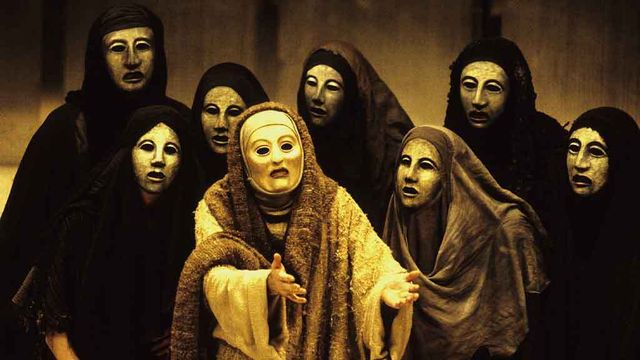
Oresteia -Chorus

The chorus from Orestia

Recently I read that the British government pledged £1.2 trillion of monies to support the banks in the crisis of 2008/9. The significance of that figure is that it was almost the same in total as the country’s national income. In other words the government was willing to pledge the whole of the nation’s income to bail out its banks. Fortunately the bank creditors were sufficiently satisfied with this pledge not to demand it be honoured, it is very unlikely this pledge won’t be cashed in during the next crisis. Our politicians being supremely self confident don’t realise that they have put in place a process that will lead to the destitution of the UK.

The cause of the next disaster will be the over extended British and Western European banks. At the root of this crisis is what is termed Fiat money, money that is no more than a promise to pay. Our banks can create money by making an entry in their computer records and the only limit to their powers of credit creation or money making is what they think is reasonable. What the banks believe is reasonable is what others may term unreasonable. In 2008 the banks backed their loans or bank money with cash reserves of 2% so for every £100 of bank money they created they only had £2. In the event of a crisis the banks quickly ran out of money to pay their customers who wanted their money back and a run on the banks and a collapse of the world financial system was only avoided by the prompt intervention of governments.

Our arrogant political class has learnt nothing from the crisis of 2008/9 and foolishly believe that by manipulating the money supply and interest rates they have beaten one crisis and have the tools to beat the next. Only the foolishly arrogant could believe this as all indicators show the economies of the West are desperately weak. Interest rates (that charged by the Bank of England on loans to banks) for example cannot be increased from there historically low levels of 0.5%, without fear of that increase sparking a major recession. The complacent politicians have even encouraged the governor of the Bank of England to announce that they see no reason why our ‘financially sound’ banks should not be allowed to increase their assets to total x9 our national income (GDP). Those assets will largely be loans or bank money, which has no value other than that given to it by the banks. Already with the slow down in China there is evidence that the new recession is starting, given the arrogant blindness of our political leaders they will be helpless to prevent a rapid spiralling downwards of economic activity as they have not the policy tools at hand to prevent it.

Can I finish this essay with another metaphor, that of the ship of fools. This was a popular subject for art in the medieval world and these pictures showed a boat crewed by all the political leaders of the time, kings, great lords and Popes, often this ship was shown heading to disaster on the rocks pictured in the background of the painting. The current ship of fools is driving Western society on to the rocks of yet another economic disaster and it is their arrogance that prevents them from seeing that their world is being put in peril from there foolish misdirections.

Why the wealth of Britain is more apparent than real.

butchers-crop

butchers-crop.jpg

Mummers of the type the author was familiar with as a child

The Idealised Non Monetary Market Economy

Having lived for almost seventy years I have witnessed a revolutionary change in society. The society I knew as a child, one rooted in a settled rural community has disappeared, to be replaced by the restless Neo-Liberal society of atomised individuals. As a child I attended a Christmas party for the estate children. The party organiser persuaded the older children to take part in a mumming play about St. George. A play in which St. George is slain by the treacherous Moor and then brought miraculously back to life by the doctor. It was a play that had been performed by mummers for hundreds of years in our community. Although were barely understood its mummery we knew it was part of our heritage and such should be cherished. Today that community has been dispersed by the forces of economic change and such a play today would only serve to remind the residents of the quaint rural past. The dairy and the houses of the dairy workers are now bijou residences for those lucky enough to have a well paid job in the new financial sector. Those inhabitants of the old rural communities have been dispersed to the margins of the rural community, living in the private rental housing in nearby towns.

The rural community in which I grew up consisted of a series of interlocking networks of supportive social relationships. When I went to a neighbouring hamlet I went there as the gamekeepers son who was friend of one of the boys living in the hamlet. Also my mother worked on the local farms fruit picking with some of the women of this hamlet. There were many other interactions between this hamlet and the one in which I lived. It gave me a seven year old boy a sense of security, if I got into trouble I could turn for help to one of the adults in this hamlet for help. I unlike the my own children could stray far from home without my parents being dogged by the fear of the stranger. Sociologists term this social capital but all too often they see it as did Pierre Bourdieu, as it being the acquisition of a series of cultural skills and attributes that make for success in society. The example usually given is being born into a middle class family and inheriting from them the cultural set that will make for a success in society. However this ignores the more important facet of social capital which is its contribution to the well being of a community. Those networks that are most supportive are developed by people living in settled communities, its part of the inbuilt sociability of being human. All this essential social capital of supportive networking requires is space and stability, people given time will always make and remake the community. Unfortunately this essential social capital that is the settled community regarded by economists and governments as a hindrance to economic development. They want a rootless labour force that moves from place to place according to the demands of industry. What others saw as misery the British Treasury saw as a success. The visitors to the Olympic games in 2012 in London had the no problem finding accommodation because the private landlords had evicted their former tenants in favour of better paying guests from abroad.
The decline of the non-monetary economy and the consequent destruction of social capital
The wealth of the British nation has increased immeasurably since my childhood. Car ownership was a rarity in my childhood, while today the majority of families own at least one car. In the street in which I live the majority of households own two cars, yet I would argue that my neighbour’s are in some ways much poorer than their predecessors. When I first moved into the street all the houses were owner occupied now whenever a house comes up for a it is likely to be bought by a landlord and the new residents are families on short term tenancies. These new residents are there on insecure short term tenancies and will rob ably be moved on within a year of two. Just as the influx of money destroyed the settled rural community of my childhood, the same is now happening to my street. Neighbour’s such as C… who have lived in this street for fifty years will become an increasing rarity, in future long term residents will be those who have renewed their tenancy agreement for the second year. To paraphrase another writer, the typical British resident will have a smart phone, a car purchased on credit, but live in unsatisfactory accommodation, possibly squalid and over crowded and working in low income insecure employment. This poses the question who lives the better life my father who having just been demobbed from the army in 1945 had a income of £4.50 on which to support his family or today’s worker on the average wage of £120 with the car etc, something my father never had. What I would suggest is that my father, had all the monetary and non monetary advantages,such as security of employment, security of tenure and the knowledge that although his income was small it be sufficient to feed and clothe his family, in other words peace of mind.

To give another example, whenever we moved into a new house, the new neighbour would always call to introduce themselves and offer the new family a cup of tea, some sugar and some basic groceries to tide them over until they could stock up on food. My first pair of slippers came courtesy of a neighbour. He stood me on a piece of cardboard and traced an outline of my foot on to the cardboard which he then cut out. Then he and his wife knitted the uppers which they attached to the sole. While it is possible to over romanticise the poor but compassionate society of the late 1940s and early 1950s, it does demonstrate that there is a wealth that is not quantifiable in cash terms. A wealth that is not exchanged for cash within the market, however as its intangible and impossible to quantify it is undervalued by economists, or more usually ignored. Yet for an economist anything that is valued should be regarded as wealth, good health is valued by all yet impossible to quantify. Economists will try to put a value on it in terms of possible days lost to work through ill health, yet this does not adequately describe the value that people attach to good health. Similarly there is no money value that can be attached to friendship or all that is good in human relationship.

The Contemporary Damaged Society

There is a canary in the mine * which demonstrates the loss of humanity within contemporary society. The canary in the mine is the young people of this society, they being the amongst the most vulnerable, will be the first to show signs of harm. Statistical evidence shows that British school children are amongst the most unhappiest in the developed world. Amongst British children there are also record levels of self harm. There further evidence which is anecdotal but there seems to be record levels of ill health amongst young women that did not seem to be there when I was young. Is this because young women are more vulnerable to stress and the ills of contemporary society? Are there additional insecurities and anxieties that affect young women in particular or is it changes in the environment that causes the harm to women’s bodies? Is it a coincidence that the two of young teenage female stars promoted by Disney, Britney Spears and Miley Cyrus, now they are adult both demonstrate the symptoms one associates with mental ill health? The struggle to reconcile the ideal female role with the reality of the real lived life, the result is unhappiness and ill health. This contrasts Justin Timberlake another former child star who seems to have suffered none of the mental health problems of his female counter parts. I know that young men have a higher suicide rate than men, but is women’s greater ill health because they are better able to handle depression, and that depression is sublimated into physical illness.

The Model for a Better Society

All the glitter and glamour of contemporary is merely the pretty surface that hides a dark interior. There is not just the physical misery of increasing impoverishment of large sections of the population but also the destruction of the non-monetary economy ( social capital) that provides the essentials necessary for a happy life. There is one interesting similarity that illustrates this and that is the prevalence of high levels of family breakdown in both the families of 19th century industrial Britain and today. Contemporary commentators in the 19th century wrote despairingly about the lack of morals amongst the working class, in particular promiscuity. Family groups were constantly breaking up and remaking themselves, either through death or the stress imposed on the family group through living in the inhuman conditions of the 19th century slum. One chilling example was the wife or companion of the ordinary soldier, usually because of the early death of the male partner, these women had to resort to prostitution to survive, taking on a number male partners was necessary to obtain the means for survival. In today’s rootless society there is a similar level of family breakdown, where it is estimated that 1 in 2 marriages will end in divorce.

Politicians and economists are obsessed with growth in the physical or monetary economy, failing to note the need for similar growth in the non monetary social economy. Whenever people are unrooted and forced to move to a new area. They immediately try to recreate the community that they have lost. Neighbours become friends and new social networks develop that provide the supportive framework necessary for individuals to thrive. In a street such as the one in which I live, increasingly the houses are purchased by landlords. The increases the material wealth of the city as the money the tenants pay for their accommodation far exceeds that paid by an owner occupier for their mortgage. In consequence the value of the houses go up in the area, the city appears to be much wealthier, as its capital stock has increased greatly in value. However the social capital is much diminished. Older people develop feelings of insecurity as they know less and less about their neighbours. The threat to the street is that it becomes a street of strangers, as the new tenants will be moving on within a year when their tenancy runs out and for such people it is a waste of their social capital to make friends. All those essential but intangible services that are provided by a stable settled community disappear. In such a society such as Britain or a society of strangers, the fear of crime far exceeds that of fear in crime in societies that experience high level crime societies. In society where you don’t know your neighbour fear of the unknown soon becomes fear of the criminal.

The solution to this problem is create a society of neighbours in place of that of strangers. The means are quite simple give the new private rental tenants security of tenure, legislate to make long term tenure the rule. Today any landlord can give their tenants two months notice to leave, and its very unusual for any tenant to remain in a property for more than 12 months. If they had security of tenure they would make friends of the neighbours and the support networks so common in the past would develop again in these urban communities. What economists and politicians never understand is that there is a wealth valued by people that living in settled communities, which is plays a key part in maximising human welfare.

The ignorance of this necessary and essential wealth is demonstrated time and time again by our political leaders. Whenever the major employer collapses in an area, such as is currently happening in the steel town of Redcar. The government sends in employment agencies for whom one of the priorities is to find work for the unemployed in another more prosperous area. Our government does not understand and therefore fails to value the social capital inherent in a stable community. Instead it sees the community as a drag on industrial mobility, that stops people leaving the area for work elsewhere. Unlike the government the residents of Redcar and other towns of the industrial holocaust recognise the value of the social capital inherent in their community.

In Praise of Being and Black Metal (and other counter cultures)

When I was a student in the 1960s a popular subject of study was futurology, that is a study of how society would change in the future. It’s a subject that seems not to have lost its popularity, there was not so long ago the seminal text by Francis Fukuyama “The End of History” and more recently there is the book I have just finished reading Paul Mason’s “Post Capitalism – A Guide To Our Future”. However while enjoying reading such books I as a sceptic look for different answers, answers that will satisfy my scepticism. Such answers I find in classical Greek philosophy as I am one of those who believes that old answers are the best.

Amazing-Facebook-Statuses-12534-statusmind.com

One such author who shared my views was Jonathan Swift. In one of his short stories he imagines “A Battle of the Books’. A battle in which the books in the library shelves fly off the shelves and form up into two rival armies. In one army there are the books written by the classical Greek and Roman writers and in the other the books written by Swift’s contemporaries. In a short but vicious battle the books of the classical Greek and Roman authors prove their superiority by triumphing in battle.

Aristotle provides my inspiration for this short essay. What I what to appropriate is his concept of being and give it a more modern context. Not only was Aristotle a philosopher but he was also a biologist and as such was aware of the diversity of life between and within species. He wanted to solve a simple classification problem, that is what do we mean when we speak of man or any other creature. These creatures change with age so the young creature is different from the adult and they differ markedly within each species. He wanted to know what was the chief characteristic or essence that enable one to call a man a man. How was man to be identified, what was the characteristic that gave man his identity. His answer was being, that is what was it that each individual evolved into, what was the perfection or ideal for their species. There was he believed a template for perfection into which the best of the species would evolve.

What was the essence or being of man, it seems to Aristotle it is man as the philosopher. The ideal man was one who reached that stage of intellectual maturity which enabled him to think. At the end of ‘The Ethics’ Aristotle writes briefly that the best type of life is the one spent in contemplation. The essence of man is that of a rational thinking being who spends his time contemplating the nature of their own existence. Any other type of human existence does not participate fully in the being of human nature.

To give my musings some contemporaneity, I want to consider the trend towards the 24/7 society or as the writer Negri wrote the means by which ‘society has become the factory. What he was referring to is the networked society and the ubiquity of the smart phone, which means work is no longer tied to the workplace. Once a person is in possession of a smart phone they can take their work with them. A friend of mine explained to me how when on a beach on holiday in Southern Europe, he received calls from work and carried on his consultancy work from the beach. What I am more familiar with is the individual working from the coffee shop using their laptop, tablet or smartphone. In our networked society the home can as much be the workplace as the office.

The downside of this networked society is the lack of privacy. I am reminded of a study in the 1960s of politicians who had nervous breakdowns. One cause of these breakdowns was the merging of the private and public spaces of these politicians personalities, the had lost the sense of the private. They could no longer cope because they had lost their individuality all that was functioning was their public persona, they were an empty shell or husk having lost the kernel of human individuality. What on concerns me is the very intrusiveness of the networked society and the diminishing scope for privacy. Work becomes an increasingly controlling factor in people’s lives. They are becoming less themselves and more somebody else’s person. The space in their life for personal development is becoming increasingly restricted. Their scope for achieving their potential being is increasingly limited. People are becoming increasingly ‘outer directed’ and lacking inner direction or creativity.

One commonality of the recent popular protests is their resentment of the controlling ‘big brother’, the oppressive monitoring of work and social life. Interiority is discouraged as it might conceal subversive thinking. The fear of dissent is the greatest fear of the new manager, everybody must be on message. Rather than there being a collective societal breakdown there will be increasing resistance to big brother. People will become increasingly creative in creating personal private spaces for themselves. Already it’s happening on an interpersonal level with under the screen events, when raves and music events are organised through social media, pop up events which lack legal sanction. Increasingly non big brother events will be organised, events at which individuals are free just to be. The social network will be increasingly used to create under screen events. The fog of social media messages make the control so loved of big brother impossible. Already protests have been organised through peer to peer networks; whether it be protests in East London about gentrification and the lack of affordable housing or Chinese factory workers protesting about poor pay and working conditions.

bma3353037263_16

bringthenoise.oulfm.fr                                              whitbybayl.bandcamp.com

What I believe is that the organised network of ‘big brother’ is contrary to human nature. If I can modify Aristotle’s concept of being, human nature contains within it the urge to fulfil individual potential, that is to be a something. Whether it be Aristotle’s philosopher or something else this potential cannot be ‘other directed’. The monitoring of individual behaviour whether it be by the security services or employers can only provoke hostility and a counter reaction. In a relatively free society such as the UK individuals will come up with ways to subvert big brother and make their inner selves increasingly impenetrable to big brother. There is a thriving under the screen counter culture which appears to be about music and clothes, yet for anybody who is familiar with these cultures it is far more than that. Clothes and music are but the visible appearance of the new man or woman, one who has created a personality separate from that imposed by the societal big brother. When I read any literature given to me by my nephew who is a Black Metal enthusiast, I am made aware of this resistance amongst the young to an oppressive culture that wishes to deny them their individuality.

Reading this last paragraph I realise that I identify being or individuality with non-conformity. I am a serial non conformist a non joiner in, when teaching I was described by one colleague as being one of the three eccentrics, who taught in that school. My non conformity was sought in emphasising my individuality and I think my personal experience can be generalised, the good society is one that allows individuals to exercise their individuality, to develop their potential or being in ways free from the direction of society’s big brother. A society that calls itself free cannot impose big brother through the social media it will meet with resistance. Resistance to the brutalities of the industrial workplace in the early 19th century developed within small private rooms in public houses and resistance to the brutalities of the new social order, poverty pay, insecurity and poor housing will develop in those under the screen places made possible by the new social media.

Fear of the outsider. moral panics – why governments alway fail to respond to the impending crisis

Colin Wilson wrote a book in the 1950s which became a sensation, it was titled ‘The Outsider’ and it caught the mood of the time. This was the era of the beatnik and French existentialism and his account of how he became an outsider through dropping out of society and rejecting the culture mores of the time captured the sense of angst of the time. It was a book of its time and is no longer read. Although Colin Wilson claimed a uniqueness of view, viewing society critically from the imagined position of an outsider has a long tradition. The tradition is demonstrated most clearly in the Christian religion as human society is constantly judged as failing from God’s perspective. Jeremiah the Old Testament prophet gave his name to a pessimistic philosophy of human failing.

Society needs the outsider as the stranger to society is the best person to question its mores. Too often a complacency sets in amongst the classes that make up the leadership of a society. They develop a fixity of view and regard anything outside the consensus of agreed thinking as heretical. While it may be unfair to claim that they view society as the best possible of all societies, it is they believe the best that can be achieved given the limits of human nature. In Britain the growing impoverished underclass can be ignored, as they are the price that has to be paid for the attaining of the good society. If all the members of this elite group of leaders have a similar background, this consensus of views is unlikely to be challenged. Britain provides an exemplar of this closed group think, the majority of our political leaders, lawyers and journalists have been to one of the elite colleges all having studied for the same degrees, whether intended or not Oxbridge does impose a fixity of views on our elite. From within this elite there may be critics but their criticisms are very muted. Only the outsider or stranger can question the views of this elite group as they are not bound into the group think.

jeremy_corbyn_stwc_460

The outsider or stranger does not have to be a foreigner just somebody from outside the elite groups. In America this outsider status is so highly valued that even insiders such as the billionaire Donald Trump claim to be outsiders. However when this claim to outsider status is real, the political establishment can become upset over the perceived threat to their status. Jeremy Corbyn a serial outsider in British politics has become the leader of the Opposition Labour Party. The reaction from the political and media class has become hysterical, he is challenging their world view. No greater threat can be conceived than a non sharer of group values being leader. Horror best describes their reaction, last week a popular tabloid stated that he intended to abolish the army, then rumour had it that all the senior leaders in the armed services threatened to resign if he became Prime Minister, threatening mutiny in the armed services. All Jeremy Corbyn has done is to question the unfairness of the current social system and why the . He is not an armed terrorist yet the modest threat poses to the existing inequality, demands that he be treated as one.

A similar tendency is demonstrated in Europe where the elites have thought it necessary to demonise Tsiparas and Syriza the Greek outsider and his outsider party. They are criticised as being naive, unrealistic and even childish. The purpose of the negotiations over the Greek debt was to nullify the threat posed by the outsider. Tsiparas it goes without saying was not a member of the existing political class but an outsider and as an outsider he had to be marginalised.

Outsiders may not always be correct but in not subscribing to the group view of the majority they ask the questions that will force the “insiders“ to reconsider their policies. There is in British politics one question the outsider would ask would cause a significant shift in policy. At present all the main three parties are agreed on the need to reduce the government deficit. Yet there is a much larger deficit which is never mentioned, the banking sector deficit which is five times greater than the government deficit. An outsider would ask if debt reduction is so important while is all political debate and decision making focused on the one smaller debt. A debt is a debt, whether its run up by the government or the banks. Interestingly this is a question that never asked in other European countries. Germany for example has a banking deficit of 324% of GDP, yet German politicians never question whether this is sustainable.

Fear of the Outsider

However all too often the outsider is feared and disregarded by the governing classes and the much needed change in the policy direction does not happen. Maynard Keynes a respected academic but an outsider to the conventional economics of his time (1930s) was at first ignored and later accepted. His outsider views of how to manage the economy had become the views of the insider by the 1950s. More usually the governing classes react with horror and fear towards the outsider, ignoring the very valid claims they make for change.

mods-and-rockers

The fear of the rich and powerful insiders can be understood in the sense that outsider groups threaten their wealth and privileges. Naturally they would act against any such threat, however the reaction of the rich and powerful insider groups to the outsiders goes beyond this and borders on hysteria. One British army general was reported in the press as saying that there would be a mutiny in the army if Jeremy Corbyn the radical Labour leader became PM. Given that this nameless general was not exposed and dismissed, it seems likely that his views are shared by many senior officers. Yet this can only be seen as an over reaction, as the policy changes proposed by Jeremy Corbyn are quite modest, he is not advocating violent revolution.He is a Gandhi rather than an al Baghdadi (leader of Isis). A man who seeks to persuade, pacifists don’t tend to practice violent revolution. All abuse and fears expressed in the reaction of the insider groups seems out of all proportion, however there is an explanation for this behaviour.

One is that there is a moral panic developing amongst these powerful insider groups. The best example of a moral panic comes from the writings of Stanley Cohen (Folk Devils and Moral Panics). There were he said a small number of shuffles between two youth sub cultures on popular holiday beaches. The two groups where the mods and rockers, while there was plenty of noise there was little real violence. Yet the press wrote up the story, these young men were a feral group threatening the existing social order. What disturbances there were few and easily put down by the police. Similarly the press particularly the tabloid press have conjured up a folk devil in Jeremy Corbyn. He is seen as an agent of anarchy and disorder who threatens the very fabric of society. This fear justifies a variety of measures to disempower the social movement he represents. In this atmosphere the general who threatens an armed insurrection to prevent this radical coming to power is applauded. Other plots will develop to prevent this radical ever becoming Prime Minister, such as a parliamentary coup which removes his as leader. Just recently one senior party was reported as discussing when would be the best time to remove him through a parliamentary coup.

This over reaction by the political, financial and industrial elites will prevent them from acknowledging that his support comes from a mass movement that has a number of very justified discontents with the contemporary social order. A disproportionate number of his supporters are young and they are the group that has been dispossessed of the greatest wealth. The politicians have imposed high tuition fees on those going to university, so ensuring that they will be in debt for the rest of their lives. They have presided over a growing dysfunctional housing market in which it is increasingly impossible for the young to buy a home, leaving them at the mercy of rapacious private landlords. Just as the aristocratic elite were deaf to the cries of the impoverished poor in the 18th century, so the parliamentary class of today are deaf to the cries of the young. This deafness is not just simple callousness, but having created a folk devil out of Jeremy Corbyn and his supporters they are incapable of dealing rationally with them and their demands for change.

This moral panic is not just limited to the British elites and insider groups but this fear is widespread throughout the governing classes in the West. The horrified reaction of the European Union politicians to the leaders of Syriza attempts to ameliorate the harsh bail out terms imposed on Greece was typical of those in the grip of a moral panic. The politicians of Syriza were childish, naive, unrealistic dreamers. Once having demonised these politicians they did not need to treat them as equal negotiating partners. Instead they could abuse the power they had to compel the Greeks to accept the harsh austerity terms they wanted. This was done through the simple expedient of denying Euros to Greek banks forcing the country into near total collapse through the collapse of its banking system.

The leadership groups in society are often gripped by these moral panics, panics which blind them to the real nature of their opponents. Perhaps the McCarthyite panic that gripped the USA in the 1950s, when the country was gripped by the fear of a non existent communist conspiracy is the best example. What this fear does is to prevent the governing classes from coming to terms with the outsider groups and never dealing with the very real problems that have caused these movements to form. Whatever very real problems Britain faces the major problem is getting the governing classes to admit there is a problem, to accept that the outsider groups have a valid viewpoint and that they should listen and not suppress them. Our governing classes have seen the ‘canary in the mine die’ yet they ignore the warning signs of imminent danger.

Scapegoating the dominant economic policy of our times

images

There is a difference between the economics practised by politicians and the economics taught in the universities. One commentator has called the former macromedia (Professor Wren-Lewis) meaning that politicians have developed their own unique understanding of economics. The politician’s economics is a mish mash of economics, common sense and prejudice. While the economy is doing well this misunderstanding of economics matters little, however the problems occur when this misguided economics is the basis of policy making in the time of crisis. This is seen in the various crisis that have afflicted Europe since the crash of 2008/9. Greece is perhaps the most notable policy failure, although even the one self proclaimed success story the UK, if far less successful than claimed by its leaders. The Central Bank interest rate remains at crisis level of 0.5% as even a modest increase will derail the recovery.

The consequence of this misguided economic practice is that all governments can now do is hope that the next crisis will not occur on their watch, as they have little clue as to how to tackle it. Political economics is informed by prejudice as with many a primitive religion and always looks for scape goats to blame for provoking the anger of the Gods. If they can identify those who have angered the Gods, they can deflect blame from themselves. This policy means the government won’t have to undertake of those difficult policy measures that would mean taking on those powerful interests that would oppose change. In Europe a convenient scape goat has been found in the people, much as in many a fundamentalist religion it is the misdeeds of the people that has brought suffering on them. God punished the people of Sodom and Gomorrah by turning their cities into salt, while the God of the market punishes the people by making them poor. In the case of Sodom and Gomorrah it was the sexual licence that brought down on them the punishment by God. In Europe it was the greed of the people. They were not content with the modest income the market allocated them, they wanted more. More generous wages, sick pay, benefits of all kinds, the greed of the people know no bounds and forced the governments into borrowing more and more and forcing the government into greater and greater debt. The God of the market punished the people with the great crash of 2008/9 and his angr could only be appeased through an act of penance. This penance was to intended to get the people to reject their greedy lifestyle by embracing austerity. Since the people would not willing do this themselves government would have to act to compel them to do  penance. Penance was enforced through cutting people’s incomes, such as by welfare cuts, wage cuts or wage freezes Once people had learnt the error of their ways after a period of suffering, prosperity would return.

(Using ‘The Old Testament’ to explain the practices of contemporary politicians might seem strange. However once it is realised that the sophistication of policy making by the political leaders has advanced little since the time of ‘The Old Testament’; this use of ‘The Old Testament’ stories as a metaphor to explain contemporary political behaviour is  valid.)
One consequence of this is that it is hard to make a reasoned defence what is an irrational policy so the opponents of the austerity programme must be labelled as deviants, to prevent their policies being given a hearing. Politics can be divided into the sensibles and the foolish. The upholders of the agreed of consensus of policies are the sensibles and their opponents are as but foolish children, who know no better. One notable sensible is Christine Lagarde of the IMF who described the Greek politicians who opposed austerity as children. In Britain since the Labour party members elected a leader opposed to austerity he has been subject to a constant stream of abuse by the media and the austerians of his own party. This last group have pledged that they will do all in their power to prevent a move away from the agreed policy consensus. In terms of ‘The Old Testament” metaphor the guilty people are asking to practice again those bad habits that got them into trouble in the first place. Only the superior people that is the austerians in parliament understand what is best for the people.

When the next crash occurs the austerians will tell the people it is because they did not willingly embrace poverty. They again are at fault and the only solution is to subject more of the people to increasing poverty so they learn the error of their ways. Only in that way can the God of the market be persuaded to relent and ease the suffering of the people. How long this policy approach will work is unknown. It will at some stage be challenged by an equally irrational ideology or belief system that cannot be discredited by upholders of the dominant austerian ideology. Perhaps the ideology of the Neo Fascist Golden Dawn in Greece will be that of the group that successfully challenges the dominant irrational belief system with that of a more compelling narrative, but one that is equally irrational.