Category Archives: Philosophy

Machiavelli and the Madness of Politicians

What puzzles me is why when we have the best educated politicians in history, the governments that they lead are so abysmal. At least one European leader has a doctorate and most were educated at the elite universities in their own countries. Why are these so well educated leaders so awful at the business of government? The only plausible answer that I can find plausible is that they are affected with a degree of madness in that they consistently mistake the world of their fanciful imaginings for reality.

Perhaps this is best demonstrated with the current crisis in Greece. The  leaders of Europe insist on repeating the  changes they have forced on the Greek economy which rather than solve Greece’s debt crisis has worsened it. The programme of imposed austerity and so called structural reforms pushed Greece into a situation which resembles the Great Depression of 1929 to 1939. Obviously a country in suffering an economic recession is less able to pay its debts than one that is booming. Yet the so called Troika (the European Commission, the International Monetary Fund [IMF]) and the European Central Bank) insist that the Greeks must accept even greater levels of austerity if they are to receive the bailout funds necessary to keep their banks open. It is obvious to all that this a policy that won’t work, yet our European rulers insist that it must continue.

20140214-160204.jpg

Reading this it seems that there is a hint of madness in the decisions of the European policy makers. They were all the time confusing the world of their imaginings with the Europe of today. Anybody can misunderstand the reality they face yet to consistently do so suggests madness. The IMF has twice produced reports saying that Greece is incapable of repaying its debts, the latest report suggests that Greece should be granted a moratorium of 30 years before it has to repay any of it debts. Yet despite the evidence from the Greek economy demonstrating that the policy forced on it by the Troika has put it into long term decline making it less likely to the economy will ever achieve a level of growth that will enable it to repay its debts, they continue to insist that the policy must not change. While it is possible that the European leaders directing the policy of the European Commission can be deluded as to the effectiveness of their policy, what is most surprising is that Christine Lagarde as managing director of the IMF is supportive of this failed policy when her own organisation is writing the reports stating that the policy is wrong headed. Why this level of delusion, why do these politicians fail to see what is in front of their eyes? Why are so self evidently mad?

The best explanation for the behaviour of our contemporary leaders comes from the writings of Machiavelli. In ‘The Prince” there is a chapter in which the following scene is described. The son of one of the Greek tyrants is accompanying his father on a walk. Then as they are walking past a field of wheat, and the son he asks how is it possible to remain in power when their are so many potential enemies in society. Rather than answering his son directly this man picks up a stick and knocks of the heads of the tallest stalks of wheat. European leaders in their dealings with Greece have adopted a similar policy. Whenever a Greek leader appears who might threaten their policy of austerity, they destroy them. The greatest threat the European leaders have faced is Tsiparas  so they had set about undermining him and destroying his power base. In denying the Greek banks access to much needed Euros they have reminded him that they possess the power to close the banks and with that wreak havoc on the Greek economy and society. Rather than risk chaos, Tsiparas has capitulated. The leaders have calculated that the terms that they have forced him to accept will force his eventual resignation and destruction of his radical Syriza party. Not only these politicians cut down the tallest wheat stalk in Greek society, they have made it clear that they will do the same to any other wheat stalks in any other European country that might threaten their authority.

This leadership style that Machiavelli demonstrated is not a style of leadership appropriate for a democratic society, which depends on political dialogue and consensus to function effectively. If the opposition is destroyed or emasculated the political dialogue becomes extremely limited, as all the potential leaders realise that only by following the accepted script can their careers advance. Consequently there is a political echo as what leaders hear from the political dialogue is but an echo of their own views. ‘Yes’ men and women become the vogue in politics, individual thinkers self exclude, as they must pursue careers outside politics as the system penalises individual thinkers.  They  realise if they entered  politics would be marginalised in the political set up or more likely as in the Greek example have their political reputation and  career destroyed by a hostile elite of non thinking conformists, who hate any threat to their authority. This gives leaders a sense of omnipotence as all they ever hear is their words repeated back to them. Political difference is viewed in the words of Christine Lagarde, as not being ‘adult’ and not worth consideration. The views of Tsiparas and the Greek leaders were not worth considering as they were not spoken in the language of the elite. They were children who failed to understand the grown up world of the political elite.

Never having to engage in serious dialogue with your rivals and their alternative views, leads to an arrogance of power. By never facing contradiction these leaders cannot but believe in the rightness of their views. These leaders have been driven mad by power, they believe the acquisition of power sanctities the rightness of their views. What they say is true, anything else is heresy. They are like so many  Kim Jong-uns who don’t have to pay regard to any view but their own. Kim Jong-uns that will resort to any tactic to destroy the reputation and career of rivals.

There is one great failing in Machiavelli’s book ‘The Prince’ he failed  warned leaders that acquisition of power does not equate with greatness of mind. What we have in the West is a series of mediocre leaders who have attained power by Machiavellian means, but who lack the greatness of mind to govern effectively. In Britain and Europe the means to power is also the means by which great individuals are excluded from power.  Mediocre thinkers who have attained power by manipulating the political system overestimate the significance of their success, playing the system well does not equate with greatness. The technocrat governments appointed in many southern European countries are not experts in economic management but timeservers willing to do the bidding of their political masters. The technocrats that Europe will put in charge of the running of the Greek economy, will be no more successful than their predecessors. The misery and damage they inflict on Greek society will be hidden behind a serious of dubious statistics that appear to shw success. Britain and Europe are ruled by a number of petty Napoleons who are blinded by power and in the madness, they believe that their insane visions represent what is best vision for humanity. We are ruled by the self deluding inhabitants of a political madhouse.

Greece and the Sceptical Economist

Three kinds of economics

http://www.neuerope.eu

From a glance at the media it would seem that there is only one economics, usually what is now termed free market or Neo-Liberal economics. People are familiar with the mantras of these economists whether it spoken by them or a politician. Mantras such as a country must live within its means and it must reduce its debts to a sustainable level as is constantly repeated in the debate on Greece. However economics can be divided into three separate schools, Neo-Liberal economics being but the most dominant strand in but one school of economics. What ever school economists belong to will determine their approach to the crisis such as that in the Eurozone and Greece?

Neo-Liberal economics derives from the school of economics that sees the economy as an integrated system that when working well maximises the welfare of all. Economists from this school will see their role as to explain how the system works and how to make it work better. Changes such as removing restrictions or impediments that prevent the free market from working at its optimum. This has lead to the emasculation of trade unions and worker protections,as each are seen as an impediment to the smooth working of the free labour market. A loss it is believed that will be offset by higher incomes the now more efficient workforce. Ideally there should be no restrictions on how and where individuals choose to work and how employers choose to use them.

There are other schools of economics within this school that sees the economy as an integrated social system that can be made to work for the benefit of all. Although disregarded by policy makers today, they are the Keynesian economists who believe that through intelligent government intervention the economy can be made to work for the benefit of all. Their concern is ameliorating the damaging effects of the trade cycle, that is the economy goes through a repeated series of bans and busts. In the upswing period they are determined to stop the worst effects of the boom,  which is inflation, by regulating credit; similarly they wish to avoid the worst effects of a recession which is unemployment by using various measures such as increasing public spending to stimulate economic recovery. This school is anathema to the Neo-Liberals who believe that any government intervention in the economy can only have a malign effect.

Next there are a group of economists who see the economy as working for only one privileged group and merely providing the majority with the means of survival. These are the Marxist economists of whom there are few today. At the core of Marxist economics is the labour theory of value. This theory at its simplest states that it is labour that in the production process that adds value to the product, but that added value is skimmed off by their employers the bourgeoise. This group take a disproportionate share of the added value (profit) leaving the worker with only the minimal means of income. Marxist economists advocate measures to reduce or eliminate the power of the bourgeoise to take a disproportionate share of national income to achieve a more equitable sharing of that income.

There is a third school of economics of which I am a member, we are probably the smallest of all the economic schools. These are the sceptical economists who believe that seeing the economy as an integrated social system that works as fallacious. (I use the term sceptic after the sceptical school of philosophy, whose most prominent recent exponent of whom was Nietzsche, from whom I take my understanding of scepticism.) This is not to deny that the economy does not produce goods and services that add to the sum of human welfare, but to see it as working mechanism or a well functioning social system is wrong. There was a film realised  in the 1965 about an air race from London to Paris that took place in 1910.  In it there was song about ‘Those Magnificent Men in their Flying Machines’ which included the words if my memory is correct, that these machines fly but I do not know how they stay up in the air. A sceptical economist has this view of the economy, we know that somehow the economy works but not exactly how. Parts of the system we do understand but not the whole, we even doubt if it correct to describe the economy as a system, we only use the term system to imply a something. What we deplore is seeing the economy as a mechanism that is capable of being perfected, that can be made the best of all possible economic systems, as is the claim of Neo-Liberal economists. Not that we don’t believe that changes cannot be made to improve the working of the economy but those changes will have only a limited impact. The revolutionary economics of the Marxists or Neo-Liberals who claim to have the ability to transform society and its human members we see as misguided. Economics is the science of small changes that have been proved to work not the messianic social science promising a better future for all.

Greece and the sceptical economist

Greece provides the perfect example of the fallacious nature of much of economics. When the financial crisis of 2008/9 came it exposed the frail nature of the Greek economy without its over dependence on foreign loans. The European Union (EU), the International Monetary Fund (IMF) and the European Central Bank (ECB) provided the loans Greece needed on the condition that it adopted a programme of austerity and embarked on a series of Neo-Liberal reforms. These reforms were to cut welfare spending, remove labour protections and embark on a large scale privatisation of state owned assets. After five years debts have increased to 177% of GDP, youth unemployment has reached 50% and many individuals especially pensioners have been forced into poverty. Despite the disaster that is now the Greek economy the EU insists that Greece most continue to follow the programme of austerity and Neo-Liberal reform. Even the election of a government opposed to austerity and the issuing of an IMF report saying that the continuation of the current policy will make it increasingly unlikely that Greece will ever repay its debts,has failed to make the EU change its policies. The Neo-Liberal politicians and economists that control policy making at the EU believe that in spite of the evidence to the contrary that the Neo-Liberal reforms imposed on Greece will eventually deliver. It is a matter of holy writ for these people that only the truly free market can deliver the best of all possible worlds.

A sceptical economist such as myself might point out to the failure of a similar radical Neo-Liberal programme in the former USSR. This programme of radical reform had such disastrous effects that some Russian nationalists believed that it was a programme implemented to deliberately weaken the Russian economy and nation. There was in the 1990s after the collapse of the communist system, the wholesale privatisation of state run businesses. The least efficient were closed for lack of buyers so creating large scale unemployment and poverty.  Those businesses that were bought were purchased at knock down prices from the state by the oligarchs (often former officers of the KGB), with the result that control of the economy was transferred from the state to the oligarchs to the detriment of the Russian people. Economic reform was introduced by a government that had no real understanding of Western society and economy and into a society that lacked the social institutions to make the reforms work. Instead of the free market reforms creating a new Russian liberal democracy, they created a new authoritarian state. All the old methods of repression are returning, political dissidents are confined to mental institutions or imprisoned. Poverty is still persists and it is no coincidence that Russian men have the lowest life expectancy in Europe.

Perhaps a phrase for describing the policy towards Greece would be Iraqi economics. When George Bush successfully conquered Iraq he ordered the destruction of the existing governmental system. He intended to create a liberal democracy out of the ruins of the old Baathist political system. Instead this overly optimistic programme created a political wasteland which has lead to a decade long period of internecine warfare, as the authoritarian government that existed was replace with nothing more than misplaced optimism that once freed the Iraqis would by themselves create a democratic state. The radical Neo-Liberal economic policies that have introduced to the former USSR and Greece have created an equivalent economic and social wasteland.

At some subconscious level of thought it does seem that the European politicians do seem realise that radical Neo-Liberalism can only be imposed by an authoritarian government. They have been trying to remove the democratically elected Syria government and replace it with one of technocrats that will do their bidding.

What the sceptical economist would have done is to work within the existing political system and with its leaders to adopt a gradual reform programme, consisting of those measures that would bring some amelioration to suffering of the Greek people.  The obvious one is some measure of debt relief, this would mean that the European banks that made irresponsible loans to the Greek government would suffer financial loss as their would the Greeks would be defaulting on their loans. However they would be paying their price for their irresponsible lending, which is what should happen in a free market economy. There would be no ‘big bang’ reform of the economy but a series of negotiated and sensible reforms. Reforms that would be made with the consent of the Greek political leadership and people. There would be sufficient incentive to reform as the downgrading of Greece’s credit status, would make raising international loans difficult and costly until the Greek economy showed signs of recovery. The reforms would be modest in scope, there would be attempt to destroy Greek ‘clientelism’ as it is one of the key elements of the existing society. Reform certainly of its worst features but recognition that it is part of the unique nature of Greek society. No attempt would be made to make it a southern European equivalent of Germany or free market Britain.

What I am trying to say is the politicians and economists of the EU should recognise the limits of their knowledge. They are the last people that should claim to have a knowledge of the ideal society and economy, as people in glass houses should not throw stones. One of the criticisms is that the Greek tax collection system was ineffective, as one writer stated it was as if the state was putting out a collection plate. Yet these European critics are in their own countries encouraging rich individuals and business corporations to avoid tax. Many business corporations locate their head quarters in Luxembourg, Ireland and the Netherlands to avoid tax. Soon the UK will be added to their number as our government is developing new tax avoidance schemes to encourage business to locate in the UK.

The sceptical economist has no one big answer to the problems of managing an economy, instead they have a series of small answers. These small answers are to be tried and if fail to be replaced by alternate measures that might work. What the sceptical economist recognises is the uniqueness of different societies, which come up with different solutions to solve common problems. Is the Greek system of ‘clientelism’ really much worse than the employment practices of the United Kingdom? If clientelism produces over employment, the Anglo Saxon free market produces under employment. Government departments in Greece may have been over staffed with political place men, but British business corporations such as supermarkets are staffed with the under employed, that is workers working on split shifts on low incomes, who desperate for extra hours of work  to boost their incomes. The Greek practice of clientism is far from perfect but so are the practices of the Anglo Saxon free market. What I want but don’t see is a recognition of the fallibility of social institutions and that what might work in one society does not necessarily work in another.

The Corrupted Human Spirit

What economics lacks is the space to include other human sciences such as philosophy in the scope of its subject matter.  Philosophy has the grand vision that is usually lacking in economics, which is all too often a science of the minutiae of life. One concept outside the understanding of economists is Hegel’s zeitgeist or the spirit of the age. What Hegel means by this is that there is one overall idea that animates a period of human history. It is an idea which expresses the characteristics of an age, such as the ‘bélle époque’ of 19th century Paris. A Paris of the freeing of human spirit, painting was freed from the old conventions demonstrated in the art of the impressionists, the vitality of popular culture was epitomised by the exuberance of the ‘Can Can’ yet this was a freeing that also allowed the darker side of the human spirit, corruption and venality to thrive. French politics of this time was characterised by a series of corruption scandals. As a believer in the zeitgeist, I wondered what was the spirit of this age? What was the spirit that informed human behaviours in our contemporary world?

Usually this is seen as the age of Neo-Liberalism ,  yet that phrase needs explaining. According to its advocates the freeing of the markets will lead to a freeing of the human spirit. Yet the art of the age does not seem to embody the freedom of the human spirit, rather it embodies the spirit of reproduction or copying. One art work that epitomises this spirit of reproduction is an art work by Damien Hirst, it was a series of dots on a white background. These dots varied only in colour but not in any other way. They seemed to have been placed in lines on the screen only the colours of the dots seemed to be chosen at random. I as a viewer could see little creativity at work, it was a machine like picture, a picture that for me could only be produced by a machine. What it lacked was the spark of human imagination. Damien Hirst work demonstrative of an age that is lacking in originality and creativity.  A lack of originality that can be seen on any new housing estate, which consists of houses which are copies of those built for generations by the builder’s predecessors. They are inferior copies of the house of the past as they are being built of inferior materials and to much smaller dimensions. Houses that were built according to a least cost formula, a least cost that necessarily implies a lack of originality. Why go for the expense course of employing an architect to create a contemporary house incorporating new materials and bold design, when it is cheaper and easier to copy an old design?

What Neo-Liberalism has given to the age is a dominant mode of thought. Policy decisions are not to be made of according to values or any grand vision but according to a cost benefit calculation. A government project such as the High Speed Rail link from London to the North is made on this basis. Do the demonstrated costs outweigh the benefits in cash terms? This leads to all sorts of strange calculations to render values such the enjoyment of living in the undisturbed countryside in cash terms. Decisions can only be made on quantifiable or cash terms, this thinking leads to a diminution of the human spirit, as decision making is reduced to a process of calculation.  Human values have been reduced to a simple cash nexus, it is a corruption of the human spirit.

It is a world in which the heroes are the bankers and speculators, those who are the masters money. There heroic status derives from the fact that they handle vast quantities of money, money a product which is the holy grail of contemporary society, in that those who are greatest possess the most of this asset.  We know a footballer is a footballing genius as much through the income he commands as for his skill on the football pitch.

There is embodied in Neo-Liberal philosophy a realism of the most naive form. What is valued is what is tangible, what can be counted and weighed, not abstraction? There is the belief that abstract universal values have no place in contemporary society. What counts is the practicality of a belief or ideology. Neo-Liberalism is the most practicable of beliefs in that only those outcomes that can be quantified, the benefits be counted, are valued. Only those practices that have a quantifiable end result matter. The result is the target culture in the public sector, where performance is measured in terms of targets achieved. The emphasis is on ‘through put’ not on quality. In hospitals the target culture has damaged good practice. What matters is that the target is met, not the quality of service. This results in some bizarre practices, because there is a time limit set for treating patients in Accident and Emergency (A&E), patients will be deliberately kept waiting in ambulances, as by so doing the patient has not yet been admitted to A& and is not counted as an in patient. This means that the time they spent waiting in the ambulance does not count when it comes to measuring how successful the A&E department has been in meeting its  performance targets.

One of the most damaging aspects of the Neo-Liberal zeitgeist is to found in our schools. What is causing great excitement is the new stem subjects, the officially defined list of subjects in which students are expected to do well? These stem subjects are little more than a sophisticated version of the 3 r’s ‘reading, ‘riting and ‘rithmetatic’ that formed the curriculum of many state schools in the 19th century. Dickens’ Wackford Squeers would feel very much at home in the new academies. This change has happened because schools are now measured by output. The output that matters is in that of the skills that business wants. Businessman want employees that are competent in the 3 r’s, if they do want painters it is a painter who can paint a wall, not an artist. There is in our schools a deskilling and narrowing of the curriculum. A deskilling in all that matters is those skills that can be quantified and measured, so creativity achieves a zero score while the rote repetition of the agreed answer gets the highest score.The narrowing the curriculum is caused by the downgrading of the creative arts, that is art, music and drama get few marks in the current system, so headteachers that wish to do well, discourage their brightest students from doing anything but the stem subjects.  There cannot have been a curriculum more designed to create a dull, boring and miserable education for children than the current one.

When economists look for reasons for the poor performance of the economy, the look the reasons that do not relate to the human spirit. The reigning zeitgist is one that is unimaginative, it only values the measurable and is one of uninspiring dullness.A corruption of the human spirit, one that discourages all that is best in the human personality. Are not some of the failings of the British economy to be found in a zeitgeist that discourages innovation and creativity. If economists raised their eyes from their desks they might see that there are studies pointing them in this direction. A recent study of the booming computer software industry in East London showed that one of the reasons for its success was that it was perceived as a ‘cool’ place to work and live and as a consequence attracts some of the best computer software engineers in Europe. Rather than worrying about how to make workers more productive, perhaps economists should look more to creating a zeitgeist that encouraged creativity and innovation. A zeitgeist that would drag the society out of its current doldrums.

The Return of Serfdom to Britain

Friedrich von Hayek published in 1944 his very influential book “The Road to Serfdom,” a book which is the mainstay of today’s policy makers. He warned of the dangers of an over mighty state, one in which professionals such as doctors gave up their independence as private practitioners to become servants of the state. The doctors would no longer be able to practise medicine freely but have to follow the dictates of their employer, the government. He warned of the same trend happening to all professions whereby independent lawyers etc would be giving up their freedom to become to be subject to a new form of bondage which denied them the freedom to practise as they wished, they would become the new serfs, bound to the new state. However he was living in the age of totalitarianism and he feared what he saw the makings of a new totalitarian state in Britain. Britain did not become a totalitarian state, in fact the totalitarian state that Hayek so feared, the Soviet Union collapsed in 1990.

  
Image of Chinese serfs working in a field taken from http://www.chinadaily.com

This was a prophetic book in that it was right to predict a new serfdom, but wrong in predicting the source of this new serfdom. He believed that the free market was the organisational mechanism best designed to ensure freedom, as in the free market the individual was free to make their own choices, as there was no powerful over arching organisation making the choices for them. However what Hayek failed to realise that the free market would be a source of the new serfdom. What he overlooked was the inequality in power relationships, in free market it the most powerful players have the most influence. The most influential players are the big business corporations, they determine the conditions under which the free market operates and these are often detrimental to their employees and customers. What Hayek failed to realise was that the state could be a liberating factor as much as an enslaving one. He failed to see the wood amongst the trees, he could not envisage alternate model of the state, for him the state was an authoritarian organisation,one that always threatened to take away an individual’s freedom. Given that he was a refugee from Nazi Germany this misconception as to the nature of the state is understandable. 
Perhaps the best understanding of the role of the state as a liberating force comes from the writings of the 19th century sociologist Emile Durkheim. He explained that the state in the 19th century through introducing laws to protect the citizen from oppressive landlords and employers was liberating the individual from these many local tyrants. Legislation to protect employees from unsafe working conditions, working long hours and being given the right to form associations (Trade Unions) to protect their interests gave people a freedom that they had never enjoyed before. Throughout the 20th century developments in legislation gave rise to the welfare state, in which the individual was guaranteed freedom from want and protection against the evils that can result from individual misfortune. The significance of this freedom from want was never understood by the intelligentsia, the freedoms they valued were the political freedoms, freedom of expression, freedom from excessive state control. Economists overwhelming came from the privileged classes, two of the 20th century greats Hayek and Schumpeter were aristocrats and for them what mattered was being free from an oppressive government, not from want.
Hayek despite witnessing the horrendous poverty that he saw in Europe in the period of the Great Depression, never ceased to believe that the free market was the best means to solve these problems. State control and intervention in the economy he associated with the totalitarian states of Nazi Germany and Communist Russia. He saw freeing the economy from state control as the only way to ensure the survival of the democratic state, for him there could be no democratic state without the free market. It was from his work that the Neo-Liberal economic and political philosophy of developed. This has become the dominant philosophy of the political classes, but its adoption as the practical philosophy of government has not lead to greater freedom and a more democratic society, but a new subtle form of serfdom. 
What the Neo-Liberals with their demand for a small state and minimal interference in the economy were creating was a society for most that has less freedom than its predecessor, as it was the state that guaranteed so many freedoms. It was these freedoms that were attacked by the Neo-Liberal economists, as they saw them as an obstruction to smooth running of the free market. Labour regulations restricted the hours for which businesses could employ staff, placed limits on how they could be used and made workers more expensive by imposing payroll taxes to finance social welfare benefits. Successive Neo-Liberal governments removed these restrictions and cost impediments on how employers could use their workers and have created what is called a flexible labour market. However this market has created by removing all the protections that labour enjoyed from abusive employment practices. What the Neo-Liberals have created a new social system that has many aspects of the old feudal system, such as being bound to one employer.

Our leaders in Britain boast that they have created the most flexible and competitive labour market in Europe, ignoring the many abuses practices in this new labour market. The most obvious abuse is the practice of zero hours contracts, where workers are contracted to work for an employee, but are not given any fixed hours of work or even guaranteed any minimum hours of work, instead they must be ready to work when the employee needs them. There is a clause in these contracts that forbids them to look for alternative work in the hours when their employer does not need them, as that would prevent them being free to work for their employer when needed. They as with the feudal villein are bond to their employer, the first could not leave their village to find work elsewhere and the zero hours worker is forbidden to find any additional work with a new employer. This new serfdom is a little more humane as employees are free to change employers, not a right enjoyed by medieval serfs.
However this right is severely limited as the new serf must have found a job before they leave. They don’t have the option of leaving an abusive employer, unless they have alternative work as the new benefits system will deny benefits to any claimant they deemed to have made themselves intentionally unemployed. 
Then there are the workers of split shifts, usually this is in the retail trade. Workers are expected to work two short shifts a day, when the shop is busy or the employer needs them. Again they cannot look for alternative work for those hours of the day when they are not employed in the shop, as they must leave themselves free for the unexpected call from the employer who might need them if a staff member is sick. Again they as with the zero hours employer are bond to their employee.
Britain can boast of one of the highest employment rates in the European Union but this is because labour in Britain is cheap and employers are free to employ workers using the most exploitative labour practices. Is it really a success story when a postgraduate student from Spain comes to London to find work as a barista?
Initially this practice was confined to the fast food outlets but the practice has become widespread within the services industry and has begun to spread to the professions. Increasingly new staff at the universities are employed on these contracts as are some technician posts within hospitals.
What the proponents of the free market have failed to understand is the inequality of power relationships within the free market. The market is not a meeting place of equals but of unequals, and the latter will if not constrained by law exploit their power. Unequals are the rich and powerful and the big business corporations. Freed from the law restricting how the business can use it staff, it will use them in the ways that suit them best and that best is treating the staff badly. It should be of no surprise that slavery is now a concern in modern Britain. At present it is foreign residents importing bringing in domestic staff with them who are largely responsible, but there are disturbing cases of it happening with exploitative UK employers who force vulnerable people into what can only be described as slavery. When the law is removed from the from market employers can behave as badly as they please. Even those agencies that are supposed to enforce the few remaining employment laws are reduced to ineffectiveness through constant staff cuts.
The Neo-Liberals failed to realise a free the market in which there is freedom of choice, frees people to behave badly as there is no sanction on bad behaviour. Perhaps it is not unfair to compare the big corporations with the medieval robber barons as both sought to enrich themselves at the expense of the wider community. While the medieval baron would levy a charge on goods passing through his territory, a more sophisticated robbery is practised today. One example of this is the pharmaceutical industry. There a small company will discover a new drug but lack the resources to market it. They then enter into a marketing relationship with a large company to market and distribute this drug, usually this relationship becomes a takeover and by the larger company. However this large company adds a further cost onto the price of the drug, which they call development costs and then sell it at many times its original price. These new robber barons rob both their staff (through paying them minimal wages) and their customers by overcharging for their products. 
What Britain as do many other Western countries seem to be doing is to be lurching into a Neo-Medieval society which is dominated by the business corporation. A glance at the last election demonstrated this when all the parties claimed to be busy friendly, the people barely got a mention. Despite the dire housing crisis in London caused by lack of affordable accommodation not one political party in the election proposed any measure that would put have effectively ended the crisis, as that would have threatened the income of the large property companies that dominate the housing market. 
History never repeats but older historical patterns can reoccur in later historical periods. Contemporary serfdom is not as cruel or restrictive as that of medieval Britain, but it is similar in its essentials, that is the great corporations can as did the medieval Dukes freely dispose of the people at their command. While the medieval Dukes could direct the lives of their serfs in a number of ways, they for example could compel them to join their armies, transfer villages and the people that lived in them to another lord without any regard to the villagers wishes and could in addition control most aspects of their lives, today the great corporations can exercise similar powers over their workers. In today’s Britain the government can decide to transfer a public service into private ownership, usually with the consequence of a worsening of working conditions for the existing employees. In the name of cost efficiency wages are reduced, pension schemes terminated or emasculated and employment protections removed. All these negative changes occur without the workers being allowed to voice their opposition to these changes. Also the new privatised owner is free to dismiss any number of existing staff. These new petty tyrants have a similar decree of control over their workers lives as did the medieval baron. The withdrawal of the state has meant any pressure to ameliorate or remove the most abusive of employment practices has been removed. Now increasing the British people are entering into a new form of servitude quite alien to the freedoms of a modern democratic society.

The Deceivers

 Theology with its emphasis on ‘other worldly’ experiences appears to be at the opposite end of the spectrum of thought to economics which deals with the mundanity of every day existence. It’s a science of facts far removed from the speculative thinking of the theologians. Yet this is a false understanding of theology, as it can be as every day as economics, the only difference being the approach to life. A theology that had no relevance to daily existence would be pointless subject of study. Adopting something of the perspective of theology would be of benefit to economics.


What I intend to do is demonstrate how an analytical framework taken from St.Augustine’s Fifth Century classic, “The City of God” can be used to explain developments in the economy of today.


The City of God & the City of Man | Koinonia palamas.info

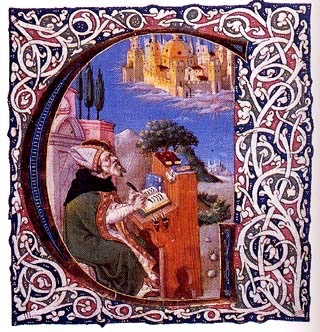
Although  Augustine’s book is primarily intended to explain why the eternal city of Rome fell to foreign invaders, what interests me particularly is Augustine’s account of the role of its Gods in Roman society. The Roman’s assumed one of the reasons for their success was their fidelity to their ancient Gods. Castor and Pollux the heavenly twins were thought to have intervened in a crucial battle to assure the Roman army of victory. In gratitude to the two Gods the Romans constructed temple in the forum for their worship. When Rome fell it was thought by some that the cause was the abandoning of the worship of the old Olympian Gods, the Gods who had always stood by Rome and ensured its survival and success. Augustine suggested a very different Christian version of Roman history


The Olympian Gods were for Augustine not Gods but demons who lead mankind astray. Stories about these God’s such as Zeus’s rape of Europa in the for of bull demonstrated their demonic nature. The nature of these Gods was capricious and cruel.  Apollo was for instance challenged to a music contest by the satyr; unfortunately for Marsyas he was judged the loser and for having had the impudence to challenge a God  Apollo hung him upside down and flayed him alive. Roman cities that had temples of Mars, chained the statue to the temple in the hope that the God would not wander  and provoke war with a neighbouring city. 


Augustine saw these God/demons as having bodies of air and circulating around the earth in the atmosphere waiting for the opportunity to intervene in the affairs of men and cause mischief. Misleading mankind was not difficult for them as all men were corrupted by original sin and easily corrupted. Despite pretending to be protectors of Rome, they had according to Augustine in fact allowed it to be sacked in the past by the Gauls; so the sacking of Christian Rome by the Visigoths was little different from the sacking of pagan Rome by the Gauls in earlier centuries. The visions and dreams that Roman’s had of the God’s which they thought gave them insight into future events, were nothing more than trickery intended to mislead the dreamer. On innumerable occasions Roman Emperors and Generals made sacrifices to the God’s to ensure victory. Yet on so many occasions instead leading their armies  to victory they led them to defeat.


The Gods for Augustine were the deceivers of men, leading them into error from their own sense of mischief. This concept of a group of deceivers leading mankind into error by making deceptive promises is a useful concept when it is shorn of its supernatural context.  I would like to recast Augustine’s concept of a world of men mislead by a race of demons into a more human form. Rather than seeing original sin as the corrupting element in mankind, I see ambition as the corrupting element, something best expressed in the term vainglory. Leaders wish to be remembered in history as men and women who changed the world for the better. While this is a laudable ambition it can led them into following certain practices or beliefs which they believe will improve the lot of mankind, but which in fact does the reverse. Unlike the demons of Augustine these deceivers often deceive themselves as they really do believe that they have discovered the holy grail of human betterment. The current race of deceivers are not demons but Neo-Liberal economists and philosophers. 


These philosophers and economists have been campaigning actively since the 1970’s for the adoption of Neo-Liberal economic policies and the creation of a free market society, one largely free of government intervention. The argument in the 1970’s by these economists was that by freeing markets to find their own equilibrium there would no longer be any foreign exchange crisis, as currencies would freely move up and down to their natural level. (This was a time of crisis when the IMF was constantly having to bail out countries such as the UK which were experiencing such crises.) Despite that the world has not seen an end of foreign currency cries. However Neo-Liberal economists would assert that these have been due to governments not wholeheartedly adopting the Neo-Liberal agenda. 


The UK is one of the countries that have most wholeheartedly adopted Neo-Liberal economics, through the practice of supply side economics. Supply side economics stated that the cause of economic under performance were the various restrictions imposed the markets that supplied the factors of production, in particular labour. Following these policy prescriptions the government almost completely destroyed the powerful trade union movement and removed most of the employment protection measures that previous governments had imposed on the  labour market.  The UK now has one of the most flexible labour markets in the developed world, a market in which employers have few restrictions on how they use labour. Yet the UK is not an economic success story, 1 in 3 workers in the UK are receiving less than the living wage, having to rely on government handouts to held them pay for their accommodation, food and clothing for their families. The trade deficit also has spiralled out of control, in the 1960’s it averaged 0.2% of GDP, whereas today it is 30 times larger at 6% of GDP. Despite all the increased flexibility in the labour market, the productivity of the average British worker is significantly less than in our European partners such as Germany or France. However Neo-Liberal economists continue to assert that the economy is healthier than ever, usually citing some statistics to prove their point. They are self deceiving as many of the statistics that really matter show an economy that is performing badly.


However the self deception is largely that of the politicians, as economists have always known that changing to a Neo-Liberal economy would create a substantial group of losers. The deception has been in that they have always dismissed the losers as a small and insignificant minority. Those British economists asking for reform in the 1960’s argued for an unemployment level of 3% and for those  economists this would be made up largely of those people temporarily unemployed and who were between jobs. However the more influential have been the public choice theorists and Neo-Liberal philosophers such as Ayn Rand, who have argued for a more social Darwinist approach to public policy making. Ayn Rand argued that the poor had little place in society as they contributed little to it and saw starvation as one means of reducing the number of useless mouths. (Atlas Unshrugged). She has been extremely influential in British political circles and her followers have been effective in creating a society wide contempt for the poor, which has led to a whole series of measures directed against them. These politicians have never gone so far as advocating the starvation of the poor, but they have implemented policies that have impoverished them. What these deceivers have been successful in doing is portraying the poor as the OTHER, a group to which the majority never belongs. They have successfully concealed from the public imagination that disabling illness is not confined to the poor, but it can affect anybody and only the richest can avoid being driven into poverty by disabling illness.


Perhaps the worst of the deceivers are the public choice theorists who pretend that privatising public services will only create winners as we all will benefit from cheaper public services. However these are labour intensive services and cheaper services can only be delivered through reducing the incomes of the people working in these services and through worsening their conditions of service. One very effective way of doing this is to abolish extra payments for working outside normal hours, or by using zero hour contracts, by rewriting the terms of employment or using temporary agency staff. All of which enables the employer to get more for less.  Today my dustbin was collected by the refuge service on a day which for most is a public holiday. In past I had to wait until the day after the public holiday. While most people will probably appreciate the fact that there is no break in the service; I am concerned that the families of the three men on the lorry are deprived of their company on a holiday. Am I in a minority in preferring to have my bin collection delayed by one day so these men could have a day with their children?


These Neo-Liberal deceivers have succeeded in portraying those who lose as a consequence of their reforms as the losing OTHER. Yet there is a danger that this other might become the majority should society move backwards in recreating the widespread hardship and misery of previous eras. These economists, philosophers and politicians have successfully deceived the majority by portraying their changes as necessary if society and the economy are to prosper and that the only losers will only be the insignificant OTHER, not them. Yet the purpose of a Neo-Liberal agenda is to create a large impoverished serice or underclass to service the deserving better off minority(?). In fact in 2011 a group of politicians published a book which blamed the poor for their plight, they were poor because they lacked the work ethic. I don’t think it’s wrong to compare the Neo-Liberal deceivers of today with Augustine’s demons, as both promise a better tomorrow, while in fact intending the opposite.


Gullibility and the economy of fools

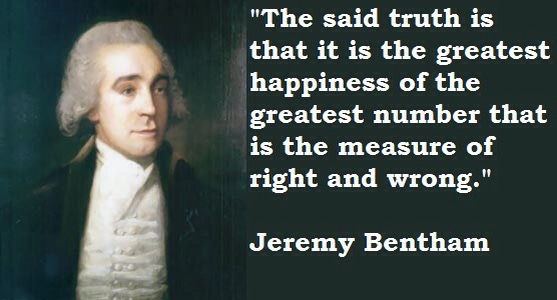
Jeremy Bentham is an almost forgotten philosopher today, yet of all the 19th century philosophers he was the most fascinating. He has an extremely logical turn of thought and it caused him to undertake actions that most would find peculiar.  One such action was his insistence on eating his meals back to front, he always had the desert or sweet dish first to be followed by the savoury dish. He argued that it was as logical to have the sweet first, as having it as the second dish, he could see no rational reason for always having the savoury dish first. Economists were influenced by his thinking and they adopted his ideas in their theories of market behaviour. Jeremy Bentham argued that good actions were those that gave the greatest pleasure to the greatest number. Similarly the free market gave the greatest satisfaction to the people as it was in the free market that people could satisfy their wants by determining what was made and sold. However there is one flaw at the heart of Jeremy Bentham’s utilitarianism and free market economics, both assume that the individual is capable of making a rational decision about being what is in their best interests. Our knowledge of human behaviour teaches us that in fact people often make important decisions for the most stupid of reasons. Economists and Jeremy Bentham cannot account for human gullibility and stupidity which undermines the whole accepted free market arguments. 


taken from aspirant forum.com

What fascinated me was the medieval obsession with collecting Christian relics. The relics would be held in veneration and became the site of pilgrimage. Pilgrimage was a very profitable business for churches and monasteries, where the relics were displayed, as pilgrims made large donations to these churches and monasteries. The more holy the relic, the more profitable a site of pilgrimage it became. In the spirit of money making pirates employed by the city of Calvi in Italy stole the bones of St. Nicholas from the Turkish town of Myrna, to display in the church in Calvi. This was such a profitable business that monks became involved in forgery to create more and more spectacular relics. One such relic was the Veil of St. Veronica. St. Veronica is supposed to have wiped the face of Christ clear of blood and perspiration on his way to crucifixion at Golgotha. The veil then bore the miraculous imprint of Christ’s face.  This obvious forgery was on display in Rome for hundreds of years. Even today the medieval forgery that is the Turin Shroud is still on display and venerated by pilgrims. This very profitable medieval industry founded largely on fraud and human gullibility stands in contrast to the so called rational consumer of economic theory.

Today human gullibility is the foundation for another large and profitable industry, the trade in the relics and artefacts of celebrity. These items are valued for their proximity to the person of the celebrity, much as were the relics of the medieval saints. Recently a wooden spoon signed by John  Lennon and Yoko Ono was sold for between £600 and £800 at auction. Graceland the last home of Elvis Presley is the object of pilgrimage. Visitors often leave speaking in awe of having experienced something of Elvis Presley’s life, an awestruck experience that would have been similar to that of the medieval pilgrims. 


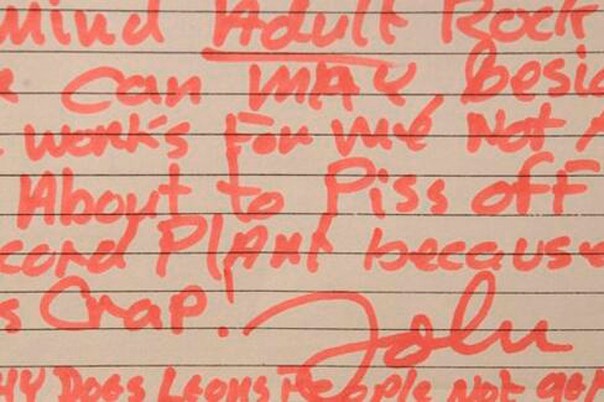
A letter from John Lennon to Phil Spector blaming The Who drummer Keith Moon and singer-songwriter Harry Nilsson for urinating on a console at an LA recording studio is up for auction, with an estimated value of £6,000.
(Read more at http://www.nme.com/photos/the-weirdest-most-expensive-beatles-artifacts-you-can-buy/)

If so many of our acts are a consequence of gullibility or stupidity, the arguments for the primacy of the free market are undermined. If people are capable of spending large sums of money illogically there needs to be a corrective to the free market. Rather than the wisdom of the crowd, it is better to speak of their ‘unwisdom’. Once  their existed that corrective, the government, it was thought that this body had the overview and long term wisdom to make certain decisions better than the individual. Now that belief has disappeared and wherever possible government services are put out to tender in the free market. There is no leading politician that believes that energy supply because of its importance is best supplied by the government. One consequence is that while the former nationalised energy industry was one of the leaders in nuclear energy engineering, the now privatised industry has lost that expertise. The new nuclear power stations will be built by a combination of expertise from French and Chinese engineering firms.

Perhaps it is in public health that the consequences of human gullibility are the most obvious.  The smoking of tobacco was popular when I was a teenager was seen as cool, as exemplified by the advertising phrase the ‘cool taste of menthol tipped cigarettes’.There was complete ignorance of the health risk of smoking, it was only after many years of government action to inform people of the dangers of smoking, that that cigarette consumption dropped. The reverse has happened with alcohol consumption, a market in which all restrictions on its sale and consumption have been dropped. Consumption as a consequence has risen, along with the incidence of cirrhosis of the liver and throat cancers. What is perhaps most distressing is the fact that gullibility has prevented what would have been the elimination of that disease of childhood measles. Many such as myself thought measles as being a minor rate of passage of childhood, not realising that this was an illness that could cause blindness, brain damage and disability. One maverick researcher claimed that he had evidence that the vaccine that prevented measles could  cause autism in children. This research having been published in ‘The Lancet’ caused a moral panic, chiefly through the writings of journalists in nationally read newspapers. Inevitably vaccination rates dropped and measles became yet again a scourge of childhood. Fortunately this panic is largely restricted to the Anglo Saxon world. There have been outbreaks of measles in several British cities bringing disability to an unfortunate minority of children. The same has happened in California, where measles is a threat to the children of the best educated classes, proving gullibility is not the prerogative  of the poor and ill informed. Despite the original research being discredited, the fear of the MMR vaccine remains and children are again threatened by this dangerous illness.

Nietzsche would have enjoyed exposing the naivety of economists and politicians who trust the wisdom of markets. Neither understand the nature of humanity and why their policies for the economy and society are flawed. While this essay may appear misanthropic, that’s not really my aim. What I want is a return to the old belief that there is such a thing as human wisdom and that it should be a guide to public policy making. Instead we have a democracy of fools, one in which only those policies that can be understood by the simplest and most unreasoning of men are adopted. 

Possibly it’s unfair to suggest our politicians are gullible fools, it’s more correct to say that they act as if they are such. The popular press provides an example of this, if you read a tabloid newspaper the impression it gives is that it’s been written by people who left school at the earliest opportunity and with a minimal education. In fact the vast majority of journalists writing in such papers are graduates, often from the elite universities it just that they write as if they were uneducated, as they believe what their readers want are simple uniformed opinions. A training at a tabloid newspaper is highly valued as trainee journalists believe that it teaches them the skills needed to be a good journalist. What is teaches them is how to write a column that appears to have been written by an uneducated person, as that type of column is believed to appeal to the widest readership. Similarly our politics is peopled by graduates from the elite universities who believe that the same patronising approach is required in politics. As one famous film making said money is never lost through underestimating the public taste.


Nietzsche’s nightmare – the rise of the untermensch, a world ruled by mediocrity

History has been unkind to Nietzsche as his writings have been seen as one of the giving a philosophical underpinning to the emerging Nazi movement of the 1930’s. Principally because his sister pillaged his notes to produce ‘The Will to Power’, which appeared to endorse the ideology of National Socialism. Certainly Nietzsche appeared to give some credence to this reading of his work. In one of his last books he refers to the superiority of the ‘blond beast’ of Germany, however this was written at a time of his increasing mental breakdown and cannot be taken as characteristic of his thought.  Even then the phrase ‘blond beast’ cannot be taken as an implicit endorsement of German nationalism. Readers of Nietzsche have forgotten that he was primarily an aesthete and it is in that context that his writings should be understood.  

Throughout the twentieth century there have been constant reinterpretations of the Nietzsche’s philosophy. While his sister was the first there have been countless others. One writer that adopts the Nietzschean theme is Ayn Rand in her text ‘Atlas Shrugged’. A novel that through its endorsement of the now dominant philosophy of Neo-Liberal economics has become one of the books that all aspiring politicians claim to have read. This novel demonstrates a worship of the rich and powerful and  a contempt for the poor. However Ayn Rand’s failure as with all the others, was to misunderstand Nietzsche’s will to power, it was not about power. Nietzsche himself expressed doubts later about the naming of this concept. Personally I think it would have been better phrased as the will to aspire, that is the drive to fulfil human potential. 
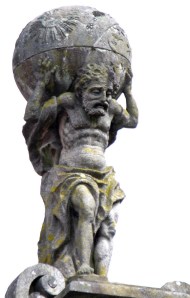
  

When Nietzsche introduced the concept übermensch (super or over man) he was not so much thinking of übermensch as the superman as a man of extreme  physical strength but the man of superior intellect and sensitivity. His first three candidates for the role of übermensch were the artist, philosopher and Saint. Saint Francis would have been one of an übermensch as Nietzsche originally intended the term to be used. He had the vision to seen the failings of Italian society of the 13th century, he rejected the role of chivalrous knight, which was seen as the highest ideal that could be aspired amongst the rich merchant class of Assisi. He saw not knightly chivalrous’ warfare but murderous warfare between city states. St. Francis had the qualities to make him an übermensch; he had superiority and uniqueness of intellect allied and the courage to go against the norms and conventions of his age. The distancing of time negates the radicalism of St. Francis. His preaching was seen by later Pope’s as a threat to the social order. After his death the Pope had two Franciscan friars burnt, because they had condemned too forcibly the wrong doings of the rich and the powerful. 

Nietzsche later dropped the Saint from his typology  of supermen. 

Twentieth and twenty first century writers tend ignore the influence of the thinking of Classical Greek thinkers on Nietzsche. One such Greek was the philosopher Aristotle, who wondered how can you classify ever changing beings such as man. It was obviously wrong to identify man only through his physical characteristics, as these characteristics kept changing. What was it that identified the child and the man as being the same creature? Aristotle’s answer was that it was ‘Being’, that is what they had the potential to become. The child would evolve into the intelligent thinking being that was the mature man. Nietzsche’s insight was that the potential of each man or woman was different, not all,  in fact only a tiny minority were capable of achieving the full human  potential. He despised the common herd of humanity that lacked the potential to achieve this highest level of being. What he saw was a society in which the rules were written to benefit the average of humanity. The poor specimens that made up the mass of humanity needed rules and regulation, as their independent thinking tended on their towards barbarism and animal like behaviours. Behaviours that needed controlling for the social good. Unfortunately for the fate of humanity these rules and regulations constrained the übermensch to such an extent that they were denied the opportunity to fulfil their potential. It is impossible to calculate the loss of society of this unfulfilled potential. How many Michelangelo’s  had been confined to a life of mediocrity because of the oppressive nature of a society of mediocrities?

Nietzsche hated democracy because it enshrined the rule of the mediocre. Some of his fiercest criticisms were directed at the British, as he saw the triumph of the business orientated bourgeois as the triumph of mediocrity. He wanted a society in which the übermensch would thrive, as what could be a better society than one in which the best of humanity thrive, as opposed to one in which the worst prosper. It was his despair that caused him to make the more extreme statements that he made towards the end of his life, when he was nearing mental and emotional breakdown. He  despaired that the rise of industrial civilisation was embedding in society the rule of the mediocre, that is the industrial bourgeoise. 

German nationalism he despised as there could not be a superior people, only a society in which the superior were allowed to thrive. Übermensch could only be individuals not nations. 

Nietzsche’s left many notes, that is notes made for book written and for those yet to be written. It from these notes that Elizabeth Forster Nietzsche could draft a philosophy of German nationalism. A philosophy of power which misused Nietzsche’s concept the will to power. What she changed it into was something akin to Chamberlain’s social Darwinism, a philosophy of competing racial types. A competition in which the Germanic Aryan racial type was best fitted to win. Other philosophies of power  developed in that century, one of which was that of Ayn Rand. A philosophy of the power of wealth, a philosophy in which wealth became the criterion of human worth, or as she described it a philosophy of rational selfishness. This particular one has become extremely influential in the contemporary world. 

This philosophy is clearly explained in her novel ‘Atlas Shrugged’. This  novel starts in a dystopian society of the future, a society in which business enterprise is oppressed through a series of restrictions imposed on it by a dictatorial government. Restrictions that eventually provoked a businessman’s strike. The billionaire owners of business gradually disappear and without them at the helm of their businesses, these businesses begin to fail. The rich have disappeared, so as to avoid the depredations of the  ‘looters’, these looters are the government and labour unions which extort wealth from the non looters (the rich) through the threat of force. Wealth which is squandered on the undeserving poor. The productive entrepreneurs have had enough and can no longer tolerate the leeching of their wealth by the non productive looters and mooches.  Without the beneficent rich directing their companies chaos results and thousands of the poor die, because they lack the ability to provide for themselves. The death of thousands of these non productive leaches, she sees as a great benefit to human society, as they made no contribution to the well being of society. Eventually these self secluded billionaires return and restore prosperity and freedom to society. Freedom for Rand was the removal of restrictions on the rich powerful wealth creators, restrictions such as labour protection laws, that prevented them introducing the most cost efficient methods of production. A society that would cease its persecution of the rich wealth creators. In Rand’s utopia all are free to use their talents to maximise their individual wealth, nobody had the right to expect the society to support them. If there were poor hungry people it was their own fault, either through lack of effort or ability. There was no reason why the members of society should show any concern about the poor, as in this society all had an equal opportunity to become rich, if some ignored that opportunity it was their fault.

Rand did not create the callous Neo-Liberal society of today, but her philosophy of power is one of the more substantial foundations on which it stands. It would be difficult to argue that she was more influential that Friedrich Hayek and Milton Friedman, but her novels through simplifying the tenets of Neo-Liberalism contributed through popularising this philosophy. Her novels give the best explanation of the thinking behind Neo-Liberal thinking, in which people are valued for their worth as wealth creators. Those such as the poor who make meagre contributions to wealth creating are deserving of society’s contempt.

However the people who she elevates to the status of super men, the billionaires are the mediocre men who Nietzsche despises. They are to borrow Marcuse’s phrase the ultimate ‘one dimensional men’. A  simple historical comparison will demonstrate this. Cosimo de Medici, the man who dominated Florence in the late 14th century, was a wealthy banker which would have qualified him as one of  Ayn Rand’s financial supermen. Yet he was more than just that, he was a patron of the arts and artists he was responsible for funding the completion the dome of Santa Maria del Fiore (the “Duomo”, Florence’s cathedral). He had the foresight and wisdom to support the bankrupt architect Brunelleschi in completing this work. He was the patron of great artists such as Fra Angelico and Donatello and of perhaps patron of the greatest philosopher of his time, Ficino. Cosimo committed a great part of his wealth to public works, the magnificence of contemporary Florence is in part due to him. This contrasts with the selfish rationalists of Rand. These people avoid try to making any contribution to the society in which they live. Britain may be host to record numbers of the super rich, but the majority avoid paying tax. While their lack of tax payments show their unwillingness to contribute to the well being of society, they will also leave nothing behind in the form of public works. Any visitor can tour Florence today and marvel at its architectural splendours, whereas future visitors to London will see little to admire in in various shopping malls and office blocks of today.  If there was a negative  prize for the worse architecture in the world, London would regularly win the prize. The mediocrity of the new ruling class of politicians, financiers etc, is reflected in the mediocre buildings they erect. In biblical terms are a little more than the barbarous temples to mammon, in which worship and wonder are replaced by the act of buying and selling.
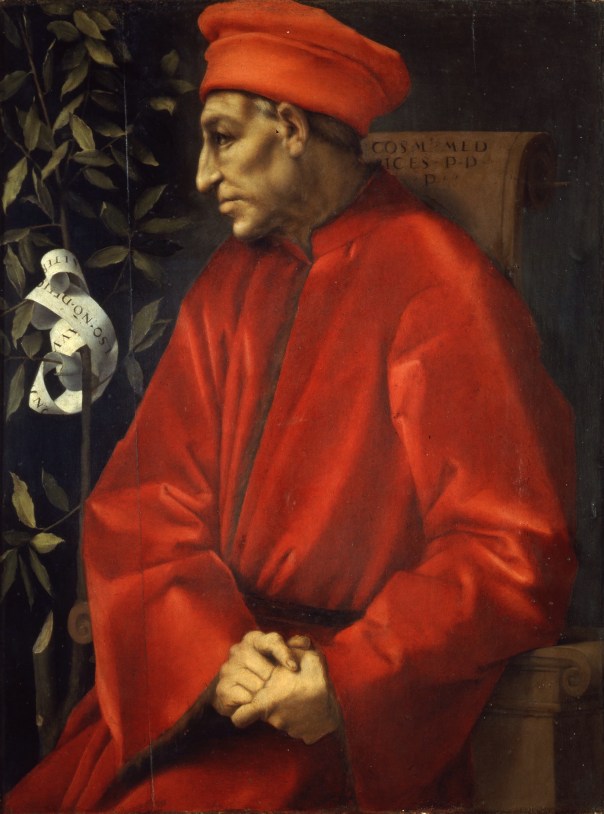
 

Cosimo de Medici, Portrait by Jacopo Pontormo; the laurel branch (il Broncone) was a symbol used also by his heirs [4]

The reason for my selecting Cosimo de Medici is that he is typical of the merchant princes of Renaissance Italy. These men used a large part of their wealth to sponsor public works on their cities, they vied with each other to get the best artists to create the greatest works of art of their cities. Cosimo de Medici is perhaps the type of capitalist that could be classed as one of the übermensch.  Today the super rich celebrate their philistinism. One suspects that Renaissance Italy was the one country that was most hospitable to the übermensch, while in contrast contemporary Britain is one of the least hospitable. 

This inhospitable climate can be demonstrated in the attack on the humanities in the universities. Mediocre men, be they politicians, university vice chancellors or businessmen can only see value in education if it  contributes directly to increasing the national income. When applying (unsuccessfully) to do a theology PhD, I was asked to write how my research would benefit society. Since I proposed to research the esoteric language that was used to speak of God, the I could not. The new type of university Vice Chancellors are all committed to make universities more productive in the business sense and of more direct benefit to the economy. These new university managers see no place for a liberal education as it does not translate in cost effective learning. Why study English literature, when the more cost beneficial course would be to study English as business communication?  Today those that want to study English or a modern language are favoured if it’s linked to business studies. Similarly the old tradition of disinterested research is being discarded in favour of that research that can best be demonstrated to show an economic benefit.  The cull of those cost ineffective departments has speeded up with the new coalition government of millionaires. A wrecking ball has been used on British universities in the expectation that from out of the rubble a profitable business enterprise is to be built. 

In the 1930’s great European philosophers came to teach in British universities, philosophers such as Isiah Berlin, Karl Popper, Ernst Gellner and Ludwig Wittgenstein. Either because they were freeing a regime that threatened their liberty and/or British universities with their tradition of disinterested research were congenial places to study.  Now such philosophers would merely use Britain as a transit point on their way to the more welcoming universities of the USA. 

Why I criticise Ayn Rand is not because she helped make Neo-Liberalism possible,  but because her doctrine of rational selfishness elevated selfishness into a virtue. The tax dodging businessman is no longer an immoral individual avoiding his social obligations, he is instead a moral non looter. They are acting morally in that they don’t want to see their hard earned income frittered away on poor ne’er do wells.  By elevating a particular kind of narrow mindedness (one that sees wealth accumulation as the only good), she has given sanction to the rule of mediocrity. A Cosimo de Medici would be regarded with horror by his billionaire contemporaries of today, all they would see is a billionaire frittering away a large part of his wealth on goods that produced no cash return. Perhaps it is in art that the clearest example is shown of the rule of mediocrity, Renaissance Florence produced  Michelangelo’s David, while contemporary Britain has produced Tracey Emin’s unmade bed.  

Rather  than initiating a new era of freedom as its proponents expected, the free market revolution has led to the rise of the new mediocrity, the rule of the untermensch (under man). Untermensch not as used by the Nazi’s to denote subhuman’s but men of dullness of mind, men self satisfied lacking any greater vision. Men and women with a preference for things as they were, wanting a return to an imaginary world of social peace, one unthreatened by change.  It is these men and women that dominate Britain, a Britain where thinking the same as the right people is the most admired trait. As demonstrated in Parliament where all the senior ‘responsible’ leaders all share the same view of Britain. They can see no alternative to austerity, anybody that suggests otherwise is subject to abuse, as witnessed by the demonising of Syriza. Syriza with its threats to end austerity in Greece is a threat to the agreed political consensus, where the fear is not the Syriza will fail, but that it will succeed. Therefore by continuing to insist on the inhumane policies that have impoverished Greece, they make it unlikely to happen. These scared people exclude from power the übermensch as they would threaten their position through change. Wherever you look in Britain the upper layer  of any institution, whether it be in parliament, finance or the universities, they are dominated by the untermensch. Mediocrities  of unbearable dullness who work collectively to ensure that the exciting, the new and the challenging ideas and people remain marginalised. Hayek thought that the social democracies of the 1950’s were drifting into a new serfdom, what he did not foresee was that his alternative society would be one by a ruled by a new class, the untermensch, the ultimate of one dimensional men. 

Notes 

Friedrich Hayek – the author of ‘The Road to Serfdom’ – one of the leasing advocates of what is termed Neo-Liberalism

Milton Friedman – the leading proponent of Chicago school  of Free Market Economics

Nietzsche and the Economists


Nietzsche made many criticisms of philosophy as taught in Europe. One of his main criticisms was that it was written in ignorance of its real subject matter, that is man. Free will is one of the main tenets of moral philosophy yet Nietzsche cast doubt on its existence. How free he asked was tge criminal when he conducted his crimes? He argued that psychology taught that many actions of the individual are pre determined by their biological drives. Is the criminal freely committing his criminal acts or is he not acting in a predetermined manner. If this true how can the criminal be responsible for his actions? 

While Nietzsche’s  reasoning was founded on a rather crude biological determinism his argument is still valid. Moral philosophy was wrong when it assumed that an individual was responsible for his actions. Therefore all philosophers such as Kant were wrong when he based his moral philosophy on the categorical imperative. Kant’s categorical imperative states  that one’s actions should be capable of serving as the basis of a universal law,a philosopher’s updating of Christ’s injunction, to do onto as others as you would have done onto yourself. Nietzsche would argue that the individual man was incapable of acting rationally as Kant believed, as his actions were driven by a series of biological drives which could be quite irrational. To put it simply the rational man of the philosophers did not exist, so all philosophy was flawed, because of this fundamental error.

Nietzsche’s scepticism applied to economics

As a student of economics I do believe that although many of the insights that economics has developed are invaluable in understanding the economy, too much of the subject matter of economics is based on assumptions about the nature of human behaviour and the workings of the economy which are flawed and therefore much of economics is just plain wrong. What economists never practise is self reflection, they never question the assumptions on which their predictions about economic behaviour are based.

One of these fundamental assumptions of economics is that the economy runs most effectively when consumers are free to choose without constraint between a variety of options. Economists believe that they know best what they want. They don’t want some remote body such as the government making choices for them. If it does it because of its remoteness from the individual citizen will make the wrong decision. This philosophy underpins much of the reform of public services in the UK, which is about giving the user choice. Now when you go to your doctor you are given a variety of options to choose from. Last week when I saw my doctor I was given a choice of health care providers at which to have my chest X-Ray. Politicians and health care economists see this as an unalloyed good. They believe it is preferable that Individual such as myself have a choice about which health care provider to use. Rather than being directed to be health care provider by the government, to a help care provider that I would not have chosen. However there is evidence that this apparently self evident good is not always a good.

What evidence there is suggests that whatever we want as consumers it is not always choice. Two American economists conducted an experiment into choice. They ran two market stalls selling jam, on one stall they had an almost infinitely large selection of jams and on the other a very limited selection of jam types.  The second stall sold the most jam, as it appeared that when  people faced a large range of products from which to choose an almost they found it difficult to decide which one to buy. When choice was limited they found it easy to make a decision. Tesco Britain’s largest supermarket discovered this truth through its falling sales . In its stores there could be up 30 different varieties of one product on display, whereas it’s more successful rival Lidl would have one or occasionally two examples of one product. Customers did not want a large product range, they preferred the Lidl approach. Lidl also by limiting its product range was able to buy in bulk and could negotiate large discount through being a bulk buyer. This fed through to lower store prices which made Lidl a formidable competitor for Tesco. 

Economists by recommending the break up of public sector monopolies its several competing private suppliers to offer the service user more choice may be mistaking the public mood.  Until 1993 railway services were provided by the state owned British Rail. Then the state monopoly was broken up and rail services and divided up among various competing rail companies, so to give the rail traveller a choice of service provider.  After 22 years of privatisation the majority of the people want railways to be renationalised. Rail fares are now some of the highest in the world and the conditions travellers are subjected to are distinctly second class. The term ‘cattle truck’ as a description of how people are transported at peak times is a frequently used term. Also the costs to the government of a privatised rail service are much higher than the costs of running the former nationalised rail service. Private firms require from the state a huge subsidy to run what they claim is an unprofitable public service. They claim that they need subsidies to break even or to make a modest profit. Yet all the companies make a significant profit,a profit that up is massaged downwards for reasons of public relations and tax avoidance. Only a free market economist would find something of value in a rail service which charges some of the highest fares in the world for what are some of the worst of travelling conditions. 

  www.bringbackbritishrail.org

Economists lack the skills of self reflection, they never question the core principles or truths on which the subject is founded.  These founding principles of economics are little more than assumptions about human behaviour which are frequently wrong, which be proved on reflection. Until economists can apply a little Nietzschean scepticism there subject will continually provide the wrong answers to the questions asked of it.

Do our leaders still not worship the old pagan Gods?

This short essay is an attempt to answer a conundrum  that puzzles me. All the members of our government would claim if pushed to an extreme to be Christians. There are even some members of the government who demonstrate an extreme piety by being regular church attenders and by being active  proselytisers for their faith. Christianity is foremost a religion of compassion and caring, yet this government treats the most vulnerable of people with inhuman contempt. Today it was in the papers that the government was stoping the personal care allowance for an eight year old girl with a distressing and disabling illness. It is the type of illness that makes the child totally dependent on her adult carers.  With complete inhumanity this government denied the money for care, because the British father worked mainly in Germany and therefore it was up to the German government to provide funding. Even when claimants whose lose benefit commit suicide, this most inhumane of governments remains unmoved. Obviously this government is unfamiliar with the gospel text, in which Christ when surrounded by children and tells his disciples that if anyone harmed these children it would be better for him that he threw himself into the sea with a millstone around his neck, rather than face the wrath of God. (Matthew 18:6)

What kind of God I wondered do the members of this government worship? Obviously it is not the Christian God with which I am familiar. The members of this government see their actions as virtuous so what God can possibly condone such inhumanity? Whatever God it is it cannot be the Christian one. 

One candidate is the secular religion, which goes by the name of Neo-Liberalism. Practitioners of this religion worship the market and believe that it this this very secular deity that will distribute wealth to each according to their deserts. They do realise that the free market will at times create human misery, but they believe that the good the market does outweighs the bad.

However the explanation lies with the religion of entitlement and privilege that has pre-dated Christianity but which has continued to coexist with Christianity. Christianity was a break from the religions of the past, which were little more than state religions. Religions whose role was to validate the social order, for whom the people were just an anonymous mass. The only individuals that mattered to these religions were the kings and the warrior heroes.  In contrast the heroes of Christianity were the common people fishermen, carpenters and tax collectors. Christianity was a religion of individualism, one that threatened the existing social order as it saw merit in all not just the rich and powerful.  A religion that would appeal to the oppressed groups such as slaves and women,  who were the majority of its early members, a religion of the downtrodden.

Achilles Slays Hector, by Peter Paul Rubens (1630–35).

One of the  best examples of a pre-Christian religion of entitlement and privilege is the religion of classical Greece, that of the Olympian Gods. Homer in his two poems ‘The Iliad’ and ‘The Odyssey’ gives expression to the beliefs of the classical Greeks. In the Iliad the poor or the ordinary Greeks only get mentioned once. This is when a boastful soldier from the ranks foolishly challenges Odysseus (King of Ithaca) to a boxing match. Odysseus brutally beats the upstart challenger to a pulp, to the approval of the watching Gods and Homer. Throughout the epic story of Odysseus’s return from Troy, the members of his crew, the ordinary seamen are who crew his ship are almost never mentioned. When Odysseus finally returns to Ithaca he has lost all his crew through various misfortunes, yet he never expresses any regret about their loss. For Homer and the Olympian Gods of Greece, all that is of concern or interest are the actions of the heroes, all of whom come from a rich aristocratic warrior class. The masses or majority are merely there to provide a backdrop or audience for these aristocratic warriors. Throughout the Iliad the only conflicts described are those between the various Greek and Trojan aristocratic heroes. The war virtually stops while the ordinary soldiers observe the conflict between Achilles and Hector beneath the walls of Troy. Classical Greece is an aristocratic society whose religion only attributes any worth to the great and the good. Regret is only expressed over the death of the heroes, as with the funeral games held for Achilles. Only aristocrats can be heroes, ordinary people lack the virtues necessary to make them heroes or interesting to the Gods.

Only a religion that treated the common man with insignificance would be of value to our new governing classes. Rather than heroic warriors we are now governed by a class of less than heroic bankers and financiers. George Bush’s advisors who pushed for the war in Iraq were largely ‘chicken hawks’, men seconded from the large corporations who when young dodged the Vietnam draft. This new class of financiers, hedge fund managers and bankers, needs a greater vision to validate their superiour position in society. Something similar to Homer’s Iliad which glorified the heroic aristocrats. These self proclaimed ‘movers and shakers’ need a poet of Homer’s stature to justify their acquisition of vast wealth. Lacking a Homer, their virtues are lauded in such books as Ayn Rand’s ‘Atlas Shrugged’, a book in which her billionaire heroes show the same contempt for the common man, as exhibited by Homer’s heroes. In this book thousands of the useless poor die from hunger, freeing the heroic billionaires from the burden of caring for this group of useless humanity.

What Ayn Rand and others such as Friedrich Hayek proclaim is a philosophy that frees the rich and powerful from the obligations and restrictions that are thought to make for the good society. Tax avoidance becomes a duty as the billionaire is better equipped to spend his money wisely, than is the wasteful state, who will foolishly squander its tax revenue.  Poverty for example is no longer a social evil but a spur to the poor for self improvement.


Posted: Oct 24 Twenty Fourteen

By: Silvia Hoffman


The new class of financiers and politicians want more than the rather unappealing philosophy of Neo-Liberalism, as there are only so many ways that selfishness can be redefined as a virtue. Fortunately for our new governing classes of politicians and financiers, the Christian tradition is sufficiently plastic to be written to favour the rich and powerful. As Constantine proved, when he oversaw a remaking of Christianity as a religion of empire and power in the 5th century CE. These classes have successfully used Christianity as a means of sacralising the social order. The role of monarch is God sanctioned at the Coronation service, any sense of social injustice is dissipated by emphasising that the poor will get their reward in heaven. The campaigning priests of South America who preached liberation theology were silenced by the Vatican. It was a Vatican that preferred the poor getting their reward in heaven than on earth.   

Theologians have used the concept of accommodation to explain how the organised churches drop those parts of their doctrine that are a threat to the established social order, so as to facilitate their acceptance within society. What I am suggesting is that the Christian churches long ago won acceptance by incorporating into their doctrines an acceptance of the old religion of power and privilege. The position of the rich and powerful in society was sanctioned by God.  In England this new God had many of the characteristics of the old pagan Gods such as Odin and Thor. This new Christian God sanctified wars of conquest much like the deities of old.  One of the first Saxon Saints was St. Oswald a warlord and king who was killed by a pagan adversary. Many of the new evangelical churches have so far accommodated to contemporary society in that they preach a doctrine of business success rather than one of compassion. Even the new Archbishop of Canterbury has instituted a reform programme to make the church more business minded. The culture of business targeting  supplementing the existing practice welfare practices


Parish church in Sankt Oswald ob Eibiswald ( Styria ). Statue of Saint Oswald riding a horse.

There has always been an uneasy alliance in the church between what can be called the Christianity of compassion and the Christianity of power. This compromise is represented by two twentieth century Archbishops, Archbishop Temple the social reformer and Archbishop Cosmo Laing a conservative, who wanted to restore the old power and privileges of the church. The first a reformer who said in a speech, that if it was possible the rich would charge us for the air we breathe, while the second wanted to increase the wealth of the church by reinstating the collection  church tithes (a practice that had long fallen into disuse.)  

What I am arguing is that the practice of accommodation has led to the churches accepting, all be it implicitly many of the characteristics of the old pagan religions into their Christian practice. Is not the God of George Bush and Tony Blair who sanctioned the war of Iraq more like Zeus than Christ? The Christ who had an abhorrence of violence, is replaced by one who advocated turning the cheek has been replaced by a Zeus like Christ who hurls thunderbolts to destroy his enemies.  In this accommodating church it easy for a cabinet minister to find an accommodating priest who will be accepting of the most inhumane of policy decisions. The old religion of power and privilege is very alive in today’s  Christian church.   

Evil always comes with a smile on its face

When you write it is because there are certain ideas and thoughts that obsess you and you find that all to often you are reworking familiar themes, no matter what the subject matter of the essay. In my case it is the learning of the past, I cannot dismiss the writings of the Christian fathers or the medieval Islamic philosophers as being rooted in the past and as having no relevance to today. What could be more relevant in the age of Isis, than St. Augustine’s thoughts on the nature of evil. He offers a far better explanation of the actions of Abu Bakr Al-Baghdadi and his followers than any contemporary analyst. Not only that but the hateful ideology of Isis and the Salafist strand of Islam which it encapsulates, obscures the wisdom and learning of the medieval Islamic scholars. What has been forgotten is the debt that medieval Christianity owes to the great Sufi scholars of Spain, who had preserved the teachings of the classical and Hellenistic philosophers in their writings. Without their knowledge medieval Christianity would have been much the intellectually poorer. Yet Islam is now seen as a religion of cruelty and barbarism, a religion of the stoning of adulterers. What has been lost is the compassionate and sophisticated religion of the Sufi’s of Islam. Could anybody today know that the great Sufi thinkers saw Christianity and Islam as two different approaches to one the true religion, religious brothers in arms not enemies?

The Temptation of Christ
Ary Scheffer, 1854
The Devil depicted in the Temptation of Christ, by Ary Scheffer, 1854.

One such lost wisdom is the understanding of evil, an understanding that evil all pervasive and constantly needed to be countered. St. Augustine’s conception of evil as ignorance or not knowing God is easily misunderstood today. Obviously the members of Isis know God but still commit horrible atrocities. What they claim is that they are the true followers of God, who are opposed to kafirs or those individuals who do not know God and are therefore not worthy of humane treatment. However knowing God is not knowing as its usually understood, it’s far more than a knowledge of the correct religious tracts. It’s a knowing that is beyond words and cannot be explained in the words of the everyday language of the world of human experience. A knowledge and understanding the religious texts is just the first stage towards knowing God. Knowing God is a transforming life experience, knowing God means accepting a life changing experience through religious enlightenment. Perhaps it can be described as an engagement with God, an emotional commitment or living a life informed by God. However one tries, words remain inadequate for explaining the experience of knowing God. As Plato writes once a person knows good (God) they never want to know anything else, it is a sufficient principle for life. The sufi’s explain knowing God as moving beyond religious ritual and practice to a higher level of understanding, an understanding that can only be achieved with the guidance of a teacher. One Christian text that explains this level of knowing, is medieval Christian classic ‘The Cloud of Unknowing’, in which the author describes the various clouds of misunderstanding and misapprehension that obscure a knowledge of God.

What I am arguing for is a Christian sensibility to be part of the mainstream of human thinking. A perception of the world that is infused with the language of morality, but the sophisticated moral practice of the past. The Christian Fathers such as St.Anthony, Athanasius and Augustine spent a life time trying to understand what it meant to lead a good life. Unfortunately the language in which they write makes them seem alien to today’s readers. The sin about which they write should be understood as human fallibility or weaknesses, a weakness which makes a person liable to commit act badly. It takes a determined act of the will to act well. Christian belief and practice gave them the strength to overcome their very human fallibilities and act well. This lifetime of study and prayer gave them an intuitive knowledge of the good, but they were never so naive that they did not realise that they had to constantly revise their thinking in terms of what they understood to be the good, as they were constantly beset by human weakness that plague us all. Augustine while being a caring father to the people of Carthage who looked after their welfare, could also,support the cruel persecution of heretics. However they had a better grasp of human psychology then today’s generation of leaders and how to better overcome its flaws.

The Christian sensibility of Augustine is founded on a very different psychology to that of today. He sees the human personality divided between two opposing drives. There is the sensory or appetitive drive that tends to the indulgence of selfish interests. Then the soul which is the self reflective drive that directs the individual towards a higher level of behaviour be it spiritual or philosophic. These two parts of the personality are tendencies within the human personality and not a literal description of that personality. Accepting Augustine’s theory of human personality does not mean rejecting later theories of personality, it’s just a different perspective on human behaviour.

Walter Benjamin offers a different approach to the past. He writes that the past is that part of the past that lives within contemporary culture. Europe for centuries embodied this past in the form of Christian culture living within the mainstream of society. Christianity and with it the learning of the past has been now been expelled from the main stream of contemporary culture. The fundamentalist Christianity of the American mainstream or the Wahhabism Islam is a contemporary creation. It is the crude reimagining of a golden religious past, it is religion in monotone, it excludes the kaleidoscope of understanding that is real religion. Whether a state is secular as with contemporary Britain or religious in practice as with the USA or Saudi Arabia, all are bereft of the learning of the past.

In Saudi Arabia and Western Europe and the USA, what is happening iis the removal of all traces of the past learning from contemporary culture. In Saudi Arabia it takes the form of the physical destruction of the buildings of the old Islam. Their presence is regarded as a temptation to heresy, Muslims who identify Islam with particular holy sites, are behaving like the pagans who identified their temples as the dwelling place of God, confusing idols and icons with God. In Western capitalist countries the destruction of the thinking of the past, is through the teaching of post modernism which teaches that a philosophy or belief system are only valid for a particular time and place. There can be no universally valid belief systems, and those of the past should have no claim to validity in contemporary Britain. Britain is a post ideological society, a society that believes in nothing or perhaps whatever is considered right at a particular moment. There is no great inclusive vision such as the Christian belief system of previous generations, a belief that gave politicians an vision of what makes a good society.

IMG_0427

Philip Jacques de Loutherbourg:Battle Between Richard I Lionheart 1157-99 and Saladin 1137

This is not to deny that in the Christian past there were not leaders who committed horrendous atrocities in the name of God. Richard the Lionheart slaughtering thousands of Arabs when he captured the Acre. There was the lesser known Arnaud Amaury, Abbot of Cîteaux the leader of the Albigensian crusade who went his forces captured the city of Béziers ordered the killing of all the inhabitant with the immortal phrase “Kill them all. God will know his own”. About 20,000 were slaughtered in this brutal massacre. Yet throughout this period there was a moral counterweight opposed to the brutality of the medieval knight. Churchmen tried to civilise the barbaric knighthood by trying to persuade them to accept the code of chivalry, which insisted that the victorious Knights treated the defeated with compassion. One of the great stories of the Middle Ages, that of the Holy Grail, was an attack on brutal ways of the medieval knight. The greatest knight of Christendom (Lancelot) is denied any vision of the Holy Grail because of his sins, which included adultery. Only three Knights who are pure in spirit get to see the Holy Grail and unlike the Knights of the Round Table they accept martyrdom at the hands of a Saracen king. Any other of the knightly heroes would have fought there way out of such situations with the slaughter of hundreds or thousands of their enemies. There were always great churchmen and women such as Saint Francis or Hildegard of Bingen who lived lives that were a constant criticism of the knightly ideal.

With the relegation of Christianity and ideologies such as socialism to the history books, there is no longer this moral counter weight to the self seeking actions of the political and financial elites. Some of the most brutal of the medieval leaders accepted the Christian critique of their actions and endowed the churches with money to build great cathedrals, or money to relive the suffering of the poor. Unlike today when only monuments the great and good will leave behind are shopping malls and offices blocks. The super rich of today no longer have to contend with the criticisms of a thriving moral counterweight in the community. Instead contemporary culture lauds them as the heroes of the age, they are the ‘movers and shakers of society’. A view expressed at its most extreme by Ayn Rand (Atlas Unchained) a book in which the heroes of our age are the billionaires and the poor are nothing but the dregs of humanity, worthless beings who must die their thousands to relive society of the burden of providing for such worthless beings. This book despite its inhumanity is a book popular with with people of this new uncaring world.

Perhaps this problem is best expressed in the words of Hannah Arendt in her book on the trial of Adolf Eichmann, when she writes of the ‘banality of evil’. What astounded her was the very ordinariness of this monster who had been responsible for the gassing of millions of Jews during the holocaust. Evil did not give him any distinguishing features, there was no hint of evil in this appearance of this very ordinary looking man. Even his speech was undistinguished,he was unable to give more than a matter of fact account of his activities. If this was the Nazi superman, he was indistinguishable from the ordinary clerk, the myth of the superman was merely that, a propaganda exercise. Judging by Eichmann evil is extraordinarily average, evil comes with a smile on its face and with a modest demeanour. Eichmann could easily be a member of the British Parliament, he is indistinguishable in appearance and demeanour from the average British MP. He has no understanding of morality that went beyond being kind to his family and friends, which is also characteristic of the majority of our politicians. Having no concept of evil politicians are extremely poor judges of what is wrong. They are products of the Neo-Liberal society of the 1980’s that declared that there is no such thing as society. In a society of individuals there can be no public morality, there can only be the morality of friends. It’s a society in which tax avoidance and evasion becomes elevated to a moral good. Through avoiding tax, the family income and assets are maximised for the benefit of its members and its contributions to that meaningless abstract, society are minimised. What is lacking from the public and political debate is common moral belief against which the actions of the great and good can be measured. Perhaps which could be best achieved by reintroducing the sophisticated Christianity of Augustine into the mainstream belief system.