Category Archives: Economics

Why you can never understand what economists are saying

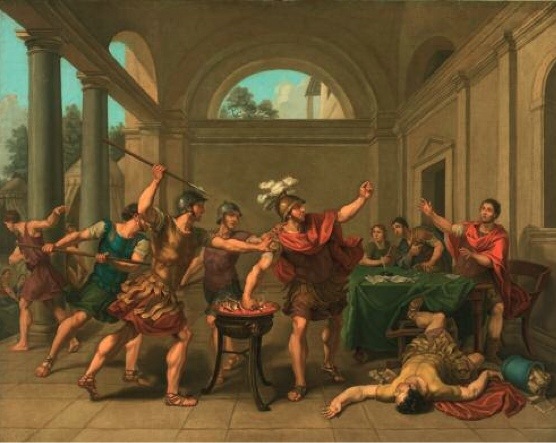
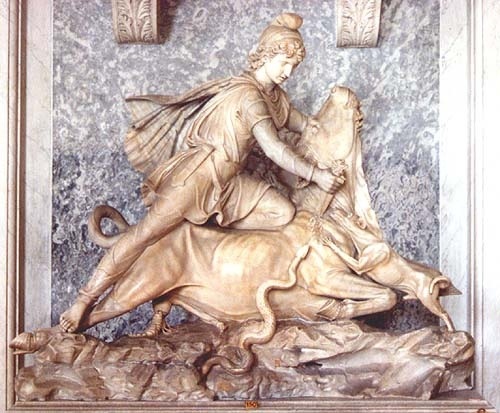
Being a theologian as well as an economist gives me an insight into the subject of economics that is denied to my non theological colleagues. When puzzling over the the current mundane level of thinking that passes for economic analysis, I came to the realisation that economics is not one of the analytical human sciences so much as a new mystery religion. A cult of economics that can be compared with the cult of Mithras in classical Rome or the Eleusinian Mysteries of dark ages Greece. Initiates in the latter achieved enlightenment by using psychedelic drugs, economists through years of confinement in economics departments. By a mystery religion I mean that religion whose truths are only known to its initiates, its truths are concealed from outsiders. While economists practise their craft in the full view of society their arcane truths are known to them alone. The language in which they conduct their dialogues and debates is incomprehensible to the uninitiated, that is non economists. Rather than it being a language of clarity that informs it is that of the obscurantist, a language that hides and conceals and deceives, a language almost totally devoid of common sense meanings. Gordon Brown was mocked for using the phrase ‘endogenous growth’ in one of his speeches, when what he meant was he wanted an economy that was characterised by self generated growth without the need of any external intervention. Economists never, but never speak in a language that people understand for that would take away from the mystique that attaches to the profession. It would also reveal the insignificance of much of their thinking and threaten their high status as experts.
20140803-182816-66496391.jpg

There is a better example of this from British economic history. All economists would agree that the free market economy of today is superior to the state managed economy of the 1960’s. Yet in the 1960’s unemployment averaged about 2% of the workforce, while today it is 7% of the workforce. Today the deficit on foreign trade is nearing 5% of GDP, it is the highest deficit of any developed country. In fact a trade deficit of these proportions more nearly resembles that of a developing country,that is that of a country insufficiently productive to pay for it’s much needed imports. Economic growth for the past five years has been below the trend rate of 2% per annum, whereas in the 1960’s it for many years it was over 4%. Only naive economists such as myself can fail to recognise the superiority of the dynamic free market economy of today, compared to the sluggish corporate economy of the 1960’s, we let statistics blind us to the truth. Economists judge the performance by other standards, standards which non economists are ignorant. Any apparent failures are but the consequence of the slowness of transforming the economy, unemployment is but a function of the existing remnants of the old dysfunctional economy persisting in their dysfunctional manner in the new age. Economists don’t need statistics they ‘know’ that their reforms will initiate a new golden age for the British economy.
20140803-183234-66754382.jpg

Economists who practice the cult of economics have created a new God, that in many ways is as barbaric as the Gods of classical Greece and Rome, a God that is the economy. This new God demands the sacrifice of the hopes and aspirations of youth to satisfy its demands. Youth unemployment averages over 20% in much of mainland Europe. Unemployment caused by the implementation of one of history’s most savage programmes of austerity. Economists believe Europe suffered a catastrophic financial crisis in 2008/9 caused by overspending, a problem that can only be put right by a savage programme of cuts to ‘balance the books’. A programme of savage cuts made mainly by denying employment to the young. The young ‘indignacios’ of Spain who rage against the austerity programme lack the understanding of economists who know that there suffering is necessary for the well being of the economy and that this is but the first stage in creating a better world for them. Is it unfair to compare the cult of economics to that of some primitive religion, whose practitioners believe it is necessary to sacrifice their young to appease their savage God?

What economists see is not the world as others see it, but one constructed according to their imaginings. They see in every society that the free market God is frustrated in its desire to create the good society. Frustrated by such as the devils of state intervention, trade unions and all the other enemies of free enterprise. Their beliefs blind them to reality, they don’t see a world in which young workers who lack employment rights are exploited by greedy and cruel employers. Instead they see a Britain in which labour is infinitely flexible, an economy whose labour force can adapt rapidly to change demanded of them. One of the boasts of coalition politicians is that Britain’s flexible labour force (easy to dismiss and paid near third world level wages) attracts foreign firms to invest in Britain.

How in a democracy have economists been able to persuade politicians to accept and implement the most inhuman of economic strategies? It is in a large part because economics is in a large part similar to the old mystery religions. Outsiders fail to understand the truths of the economists because the difficult language in which they are phrased makes understanding only possible to insiders, that is other economists. Politicians have long been persuaded of the desirability of supply side economics, without understanding what it really means. They believe it means increasing the productivity by policies such as improving schools and universities to give the young the skills to make them more productive. This is the nice but incorrect understanding of supply side economics. Below the surface of this public debate on supply side economics, lurks the very different understanding of what supply side economics means. It means changing the character and nature of the labour force to make it more suitable for employment in a contemporary society. Those ‘realist’ supply side economists lurk beneath the surface in institutions such as the UK Treasury and political consultancies and who seek to make politicians to adopt whatever inhuman policy is necessary to make labour fit for work in a people unfriendly economy.

One of the great concerns of the UK Treasury was the immobility of labour. Workers were not willing to move to find work. They saw labour shortages caused by labour’s unwillingness to move, as causing production bottle necks as firms lacked the workers to needed if they were to operate at full capacity. What they as saw causing this immobility was security of tenure, tenants in secure social housing or in owner occupied homes, were unwilling to give up their homes to move to find work elsewhere. Treasury officials saw the ending of security of tenure as the means to achieve this end.

They (the experts) could always sell this policy to the politicians who never really understood what the Treasury officials were saying as the technical language employed by these these economists hid its inhumane policy implications. One such technical term was the inefficient use of housing stock, what they by which they meant too many houses were under or unoccupied or under occupied for long periods of time. If tenancy agreements were changed to favour the landlord, more landlords would come forward to offer accommodation in areas of greatest need, such as London. This was made possible with the assured short term rental system. More important was the destruction of the system of social housing (council housing) which these officials believed discouraged tenants from moving from areas of high unemployment to those of low unemployment. Rather than go into the details of the policy changes, it is sufficient to say that the majority of social housing has been transferred from state to private ownership. What economists knew was that by changing the nature of the housing stock they would replace security of tenure with insecurity of tenure, with all its unpleasant consequences such as market abuse by unscrupulous landlords. What economists had persuaded the political classes was that PEOPLE HAD TO BE MADE TO WORK THE BENEFIT ECONOMY, NOT THAT THE ECONOMY SHOULD BE MADE TO WORK FOR THE BENEFIT OF THE PEOPLE. They could sell the new economics to politicians as making the economy more productive which inevitably would benefit all. However they knew that their actions would do the reverse as to benefit the economy one group in society would be impoverished, that those dependent on social housing. The reforms would create a new group in society the house and home poor.

The new economics can only be understood by using concepts borrowed from the study of religion. Those who had undergone a rigorous schooling in economics would have revealed to them the truths known only to economists, as in many cultist religions. It is this learned language that prevents the layman from participating in the cult of economics. Their only role is that of bemused bystander.

A similar criticism could be made of the study of physics or cosmology, but the difference is that these subjects seek to understand the world, not remake it according to the revealed truths of their subject. There is a religious like fervour to the study of economics; economists like the religious missionaries of the Jehovah’s Witnesses or the Church of the Latter Day Saints wish to remake the world according to the revealed truths of their belief system. Just because the revealed truths of economics come from a profane rather than a scared source does not exclude the cult of economics from being a contemporary religious belief system.

One final remark, the free market economy that economists believe in is as unreal as the God Mithras worshipped by Roman soldiers. The other night on the television I saw one cultist who stated that our current high level of standing was due to a combination of technological advance and the market economy. Only when such beliefs are recognised as just another cult belief on a par with that of Jehovah’s Witnesses will society be able to look to real solutions to its problems. Cultists are the only people that believe society is perfectible and that is why their beliefs are so unreal. Society is an organised mess and muddle, which can be improved but never perfected. Economics can help find the answers to problems as it does contain some very real insights into the nature of society, but not while it remains a cult belief system.


Don’t believe the pessimists who are our leaders, it is possible to build a better society

Western societies are affected by a paradox which is that as these societies become richer and richer they are less and less able to ensure that their peoples enjoy a reasonable standard of living. This is in large part due to the malaise that affects the political classes. They know something is wrong, they are disturbed by their inability to help the neediest, yet they believe it is impossible to help their peoples. All they can do is repeat the failed policies of the past and hope than eventually these policies will deliver better outcomes.

Their problem stems from the fact that work within a very narrow set of guidelines which are known as free market economics or Neo-liberal economics. Their policy mindset can be summed up in the following phrase, if the problem cannot be resolved by the actions of the free market that their is nothing they can do. When it comes to the unfairness of zero hour contracts they are unwilling to act for fearing to upset the market equilibrium and that their misinformed actions can only make the situation worse. They for instance fear that by putting restrictions on the use of zero hour contracts that they will by increasing the costs of labour will increase unemployment.

What our political leaders lack is a sense of ‘can do’, a political philosophy that validates their taking action to end the abuses in society. Although I cannot draft that philosophy, I can put forward a theory of economics that justifies an activist economic policy, and that is MODIFIED MARKET THEORY. One of the greatest problems afflicting society is gross inequality which impoverishes many people which in turn prevents them experiencing any of the benefits that should accrue to people living in one of the world’s richest societies. Rather than the free market functioning well, the market has become a dysfunctional mechanism which enriches the few that possess market power and impoverishes the many that lack any real market power. What is needed is a recognition that the market does fail and state intervention is needed to correct those failures.

20140723-144300-52980734.jpg
The Ideal Economic System

The market fails when the market mechanism rather than creating wealth impoverishes people. Market economies such as Britain have created a system of social and economic equality that is dysfunctional. Rather than being a wealth creating economy ours is a wealth taking economy, which only benefits a small high status group.

Critics such as our Neo Liberal politicians will criticise those such as myself for naivety. The core criticism is that we are being unrealistic as we fail to recognise the realities of a world in which people have unequal talents and skill. Life is a competition and its wrong to expect the losers in the occupational race to have the same income as the winners. There is even a theory of inequality propounded by Davies and Moore which explains the benefits of social inequality. They explain that inequality is an economic sorting mechanism which distributes the right people to the right jobs. Society needs the best people as doctors, so the best should be encouraged to become doctors by paying them the most. It is the competition that is training to be a doctor that weeds out the incompetent and leaves as the winners the best educated and most skilled practitioners of medicine. There is no society that would benefit if it paid road sweepers received the same salary as doctors, as that would result in a shortage of skilled doctors and many unnecessary deaths.

This is as an unfair criticism as we too are realists. We recognise that society is unfair and unequal and believe that inequality must be one of the principles on which society is organised. What I and others want is a narrowing of the range of inequality, we don’t see why being in a low status and low income occupation should deprive people of their rights to a reasonable standard of living. Social Democrats such as myself accept that the rich as with the poor will always be with us, what we cannot accept is that there should be a large number of people who are impoverished in a market society which deprives of many of the decencies of a civilised life.

David Ricardo clearly understood this problem when he wrote about the price of labour. There were for him two prices for labour, the natural and the exchange price. Their former was the price which gave the worker an income sufficient to pay for the necessities of life and the latter is the price which the worker gets when he sells his labour in the market. Problems occur when the exchange price of labour falls below that of the natural price, as is happening in contemporary Britain. Many workers are on zero hour contracts or work split shifts both of which pay a price for labour way below that of its natural price. These people are poorly fed, housed, face constant insecurity of income and employment, suffer disproportionate ill health, living a life coming to resemble that of the slum dwellers of Victorian England. (Having worked as a social worker on some the poorest housing estates, I can state that this is an unfortunate truth, not an hyperbole.)
One of the major evils that afflicts British society would be removed if all who wanted it could receive the natural price for their labour. This would enable them to participate in society and enjoy the benefits of a rich consumer society.

There is a criticism that can be levelled at the understanding that labour can have a natural price, and that its extremely hard to determine what would be a natural price. Already those advocates of a living wage accept that the living wage will be different for those in London and the regions. The real criticism is that the list of items that the person earning the minimum wage be able to purchase can be limitless. What are the necessities of life? How many of today’s consumer goods are one of life’s necessities, is for example a smart phone a necessity? Yes if an individual needs it for their work. When I fell and cut my forehead badly the surgeon took several pictures of the gash on her iPhone, including before and after surgery, to guide the surgery and my after care, so for her a smart phone was a necessity. The real problem is that what is a necessity is both relative to the individual, the society in which they live and the time in which they live. I have a silly example as an illustration. I heard on the radio a rich women saying that the rich have greater needs than the poor so they need a greater income as their lifestyle has more wants and needs. She needs to go the Opera and theatre, which is a want a poor person lacks. However despite these criticisms there is an answer.

The answer can be formulated in in terms of what a natural price is not. A person is not paid the natural price for their labour, if they are unable to feed and clothe themselves adequately, lack the income to purchase reasonable living accommodation and lack the income for those simple luxuries that make life pleasant. Why should not the poor buy a packet of cigarettes is it gives them a sense of relief from a life of hard labour and pain? If any of these is lacking they are not receiving the natural price for their labour. While it is impossible to give an exact monetary value to the natural price for labour, it can be used to identify those incomes that fail in to come near what is the natural price for labour. A pizzeria in London that pays only the minimum wage to its staff and gives them only the minimum hours of work is not meeting this criteria.

Similarly for coffee addicts such as myself paying perhaps 10 pence more for a price of coffee is not a great hardship. Even if it increased it by 20 pence a cup that would be little compared to the future price rises that are in the pipeline. Climate change is adversely affecting the coffee crop both in terms of quantity and price and this will result in huge rises in the price of coffee. At present my small cappuccino in Starbucks costs £2.15 a price which could conceivably rise to £3 in the near future.

What I don’t want to do with this essay is describe in any great detail how the government can ensure that all who want can earn the natural price for their labour. Intervention can be justified because the labour market is broken, its dysfunctional, by its very nature it prevents millions earning the natural price for their labour. Our politicians who claim that any state intervention would have a malign effect on the labour market are those who have not recognised this fact.

There would need to be further interventions in the market other than legislating for the introduction of the living wage. If the example of London is considered it can be seen how inadequate is the concept of a living wage. Prices for accommodation are exorbitant, high rental prices deny the majority the option of having decent living accommodation. If the living wage was increased to take account this fact the average London income would have to rise in excess of £50,000. Obviously such a large increase in incomes would be inflationary and would have a negative impact on the London economy. The only practical solution are rent controls, controls that reduce rents to an affordable level. If the cuts were large enough it could reduce the need for a large increase in the living wage. Yet again there is every reason for the state to intervene when it is obvious that there is a failing market. There is only one beneficiary from the housing market being organised as it is and that is the 2% of the population that are landlords. A figure that rises to 33.3% when the question is asked what proportion of MP’s are landlords. This is a group who aggressively promotes their self interest over that of the nation.

The defenders of the current private rental market claim that rent controls would harm tenants as many landlords would withdraw from the market and cease to rent out property. This is extremely unlikely, as many have borrowed heavily to buy their properties and would not want to risk personal bankruptcy. A timely rise in the bank rate would make it even less likely to happen. There is no reason why a system of fair rents would not allow landlords to earn a reasonable income; all that’s preventing it is the current extortionate high prices in the property market. Landlords have for a long time been the beneficiaries of an unfair housing market being indirectly subsidised in their life style by the state paying housing benefit to finance their accommodation of their tenants.

To conclude I want to return to Victorian Britain and its writers. When studying this period at university I was made acutely aware of the fear of destitution in the middle classes. Dickens demonstrated this in his character Wilkins Micawber who is best known for his phrase “Annual income twenty pounds, annual expenditure nineteen pounds nineteen and six, result happiness. Annual income twenty pounds, annual expenditure twenty pounds nought and six, result misery.” At the end of ‘David Copperfield’ a destitute Wilkins Micawker is fleeing England for hope of a better life in the colonies. Britain in the immediate post war period and up to the 1980’s had freed from the minds of the people the fear of destitution, now that fear has returned to the minds of the people.

To conclude I want to return to Victorian Britain and its writers. When studying this period at university I was made acutely aware of the fear of destitution in the middle classes. Dickens demonstrated this in his character Wilkins Micawber who is best known for his phrase “Annual income twenty pounds, annual expenditure nineteen pounds nineteen and six, result happiness. Annual income twenty pounds, annual expenditure twenty pounds nought and six, result misery.” At the end of ‘David Copperfield’ a destitute Wilkins Micawker is fleeing England for hope of a better life in the colonies. Britain in the immediate post war period and up to the 1980’s had freed from the minds of the people the fear of destitution, now that fear has returned as is to real.

Why are we are where we are today. Some answers from Alfred Marshall, David Ricardo and Charles Dickens

Philosophers define our contemporary society as post modern, but economics remains apart as it belongs to what those philosophers disparaging call the modernist tradition. A science of humanity that believes its analysis and truths are true for all societies and their economies, whereas post modernists believe the truths of economics are only relative, rooted in a particular society at a particular time. Philosophy and other post modern sciences seem to have passed economics by, left it in some historical lay-by. Unlike other human sciences the truths enunciated by Alfred Marshall are held to be valid today as when he first enunciated them in the 19th century. Teachers of economics such as myself taught generations of students Marshall’s theory of the market. They copied us in replicating Marshall scissors diagram of demand and supply not realising that they were doing the same as their 19th century peers. Today after many minor modifications Alfred Marshall’s theory of the market forms the central core of contemporary economics. It is this theory that I shall take as my starting point for my new perspective on economics.

Economists believe that in the free market they have discovered the fairest way of allocating resources, one that can be rivalled nowhere in the efficiency of its distribution mechanism. According to economists this how the market works. All goods and services are sold by price and if consumers want them they are free to buy them. There are no restrictions to the freedom to buy and sell, it’s the key economic freedom. This is the only economic system that maximises consumer satisfaction and gives sovereignty to the consumer. Price is the key factor that enables consumers and suppliers to get the best deal in the market. The market is incredibly flexible as both consumers and suppliers constantly responding and responding again and again to the signals given off by changing prices in the market. The market for smart phones illustrates how the free market works.

20140721-012047-4847500.jpg

Initially all mobile (or cell phones) were relatively simple devices that allowed users to make phone calls, store a list of contacts and enable the user to send text messages. Further improvements were made to the phones and a revolution occurred in the phone market when Blackberry and Apple introduced their smart phones. Now people wanted smart phones because of all the extra facilities they offered, emailing services, instant messaging (BBM), cameras and the millions of apps on Apple’s and Samsung’s phones. Consumers saw these phones as being so desirable that they were willing to pay up to £400 for them, whereas the best of the old models Blackberry phones had sold for les than £200. The bottom dropped out of the market and simple mobile phones can now be bought for less than £20. Producers reacted by cutting down on their manufacture of these simple phones as there was little profit in making them and increasing their manufacture of up market phones as they were so profitable. Firms such as Apple and Samsung are constantly innovating and improving their phones so they retain their position of market leaders and earn a premium price for their products. This strategy has been so successful that Apple has an income greater than that of many countries. Those companies that can read the market correctly and anticipate consumer demand can make fortune. This is a win win situation as these profitable companies are those companies making what people want.

Nokia the firm that originally dominated the mobile phone market saw sales plummet as consumers did not want its old fashioned phones. It had to cut back on phone set production to match its shrinking share of the market. Declining sales and loss of income would probably forced it to close, if it had not been purchased by Microsoft. The market is a harsh master towards those companies that don’t read the signals correctly. Those signals are simple to read if Nokia was having to cut the prices of its phones it failed to understand the message which was nobody wanted their phones now. Another term for this is consumer sovereignty, the market is the only mechanism which enables manufactures are other producers to keep up with the ever changing needs of the consumer. There are in history many examples of economies that are not run on the free market model collapsing because of the discontent of their people. East Germans living in a communist society were discontented with the limited variety of goods available in their country and once they had the chance they opted to join free market economy of West Germany.

Having demonstrated the superiority of the free market I must now point out the flaws in what seems to be the perfect economy. In fact economists frequently refer to perfect competition, which demonstrates all the perfections of a competitive market, an ideal to which all economies should strive. Unfortunately in real economies there are imperfections in the market which can result in the minimising of consumer satisfaction and sovereignty.

One of the best ways of explaining the fault line that runs through the market is to look back at the work of another nineteenth century economist, David Ricardo, on the price of labour. He distinguishes between two prices paid for labour, the first is the natural price and the second is the exchange or market price. Natural price is that price which is sufficient to cover all the necessities of life, while the exchange price is that paid for labour in the market. Throughout most of the latter part of the twentieth century the exchange price of labour was higher than its natural price. This was an era associated with rising living standards. However increasingly since the early 21st century for many people the exchange price of labour has fallen below its natural price. Increasing numbers of people are classified as the working poor, relying on food banks and social security payments to feed, clothe and house their families. The current debate about the living wage is about the failure of the market to pay increasing numbers of people an income that is equal to their natural wage. Britain as with many other developed European countries is reverting to an older historical pattern in which increasing numbers of people experience poverty and want.

This can be clearly demonstrated by one example. When I was teaching in London in the 1970’s the exchange price paid for my labour exceeded my natural price; I could if I had wished bought a house as did many of my colleagues. Today the exchange price of a teachers salary is so far below its natural price, that it only yields enough income to pay for one room in a shared house.

There is another fault line running through the market and that is that for many the much valued economic freedom does not exist. Free market economists when they use the term effective demand acknowledge this. We may all want to live in an idyllic country cottage in rural Berkshire but only those who have sufficiently large income may do so. However it is not just about pointing out the impossibility of achieving our dreams. There are obstacles in the market that prevent many even making the most minimal of choices. Dominant market players such as landlords abuse their market power. They charge such exorbitant rents that many are only able to afford the poorest of accommodation and the cost of that accommodation may be so high that other choices are denied to the individual. Stories frequently appear in the media about tenants having to choose between a whole variety of necessaries, paying rent, buying food or clothes or paying heating bills. Economists will never admit it but for many the so called freedoms of the market are illusory, in reality the necessity of survival means they have no choice.

What economists and our political leaders educated in the Neo-Liberal tradition need to recognise is that the free market that they worship does not work. What is needed instead is a MODIFIED MARKET a market that delivers all the benefits of the free market but one from which intervention by the state has removed the most pernicious of abuses associated with the free market. If only everybody who participated in the market could earn the natural price for their labour those abuses would disappear. There is no reason why a country as rich as Britain could not achieve this end. After the much poorer Britain of the 1950’s achieved that end.

Readers such as myself of 19th century novelists will realise that destitution was an ever present fear. Charles Dickens due to his father’s mismanagement of the families finances ended up working in a shoe blacking factory, while his father sent to debtors prison. The memory of which haunted the adult Dickens. Unfortunately the circle of history is turning and a run of bad luck could result in many a contemporary Dickens suffering a similar fate.

Why the British will never have an efficient or effective railway system.

20140715-165629-60989574.jpg

In Britain we have some of the highest bus and train fares in the world, yet the service we pay for is one of the worst in the developed world. Wherever you look in the UK the public transport system is a mess. How is it that the sixth wealthiest country in the world is unable to develop a system of public transport that works? Economists will give an answer couched in economic theory but I think the answer is to be found elsewhere, in the British political culture. I take as my starting point a comment made by Saul David about the Victorian army, the officer class as a whole disliked clever officers. This belief has persisted through to today our contemporary governing classes. A characteristic demonstrated most clearly by our First World War Generals. One German soldier observing the conduct of our troops at the Battle of the Somme, said they were ‘Lions led by donkeys’. Then General Rawlinson who commanded the conscript army at the Somme believed the conscripts were incapable of mastering good soldiering skills, so ordered them to advance in line abreast much like Wellington’s soldiers towards the German machine guns. The result was a slaughter. This same lack of imagination, the inability to consider alternatives is still the cultural mindset in today’s governing classes. Once this group fixes on an idea it refuses to change, whatever the evidence to the contrary. Within Westminster the privatisation of the public services such as railways is the current ‘idee fixe’ despite evidence of the many failings of the rail system. Just like a World War 1 General bringing out a dubious set of statistics concerning German casualties after yet another failed offensive, transport ministers can produce one dubious statistic after another to demonstrate the success of the privatised railways.

20140715-170316-61396613.jpg

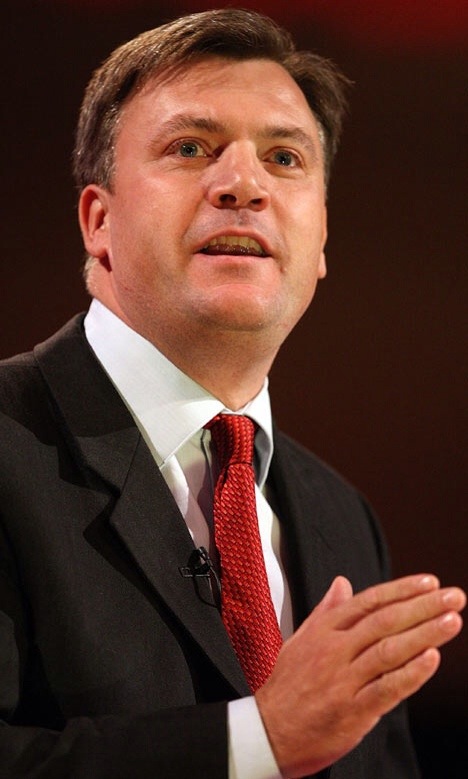
There can be several from our current political leaders who fit the General Rawlinson typology of unthinking leader. My favourite example is the Shadow Chancellor of the Exchequer, Ed Balls. He when pressed by members of his party to renationalise the railways, in response uttered the memorable nonsensical phrase, that he favoured a ‘non ideological’ approach to the management of the railway service. What he meant was that he did not want the state management of the railways, believing instead in the superiority of current market based approach. He stated that in future government owned ‘arms length’ railway companies (the only similar business is the state owned mutual, that is Welsh Water, run independently of the Welsh government) would compete with private companies for rail franchises. Many have pointed out the impracticalities of the scheme. Samuel Johnson memorably described the philosophy of Rousseau as ‘nonsense on stilts’, a phrase I would apply to Ed Balls approach to railway management. It is hard to think of a more unrealistic approach to the running of the railways.

20140715-170715-61635819.jpg

Interestingly it was criticised not for its impracticality, as it fell within the accepted parliamentary consensus of views, but for its lack of ideological purity. Within Westminster and Whitehall it is considered a heresy to believe that the state could provide any public service better than a privately owned business.

Any thought given to Ed Ball’s scheme will demonstrate its impracticality. This and the previous Labour government have stripped the department of those top level ciivil servants, who could prepare a tender for one of the rail franchises. Instead the government would have to call on one of the many private consultancies that advise the rail industry to prepare its tender. Given that there is no existing government rail company (the state owned East Coast railway will cease to exist when its franchise runs out) it would be an imaginative paper exercise on what a hypothetical state owned railway company. Perhaps the best sign of a failing political system is when politicians resort to meaningless paper exercises as a substitute for decision taking.

Charles Dickens in his novel ‘Bleak House’ described the template for the model of British political governance. In the case of ‘Jarndyce and Jarndyce’ the case continued interminably only to cease when legal fees had swallowed up the capital in the contested inheritance and the lawyers could no longer be paid. Fortunately for transport consultants their excessive fees will never exhaust the available funds as the fund is constantly replenished by tax payer monies. What successive governments fail to realise is that it matters little to this army of consultants whether or not a project is ever finished as they still get paid, they as with the lawyers in ‘Jarndyce and Jarndyce’ consultants have an interest in spinning out the consultation process for as long as possible. Already the unbuilt HS2 (the proposed high speed rail link between London and Birmingham) has incurred costs of £1/4 billion largely in consultancy fees without a rail being laid. Each time their is significant opposition a new consultant’s report is required to answer the questions raised by the opposition. When HS2 is finally cancelled it will be the final proof of the inability of the government to undertake large scale transport infra structure projects.

There is a concept rarely used in contemporary economics and that is the natural monopoly. A natural monopoly occurs when the market conditions favour there being only one supplier of the service or product. This type of market occurs where there are very high capital costs to providing a particular product or service. One such example is the huge costs of a railway system, there are the costs of purchasing rolling stock ( one of the new HST125 train engines cost Great Western £5 million) and the cost of the construction and maintenance of rail track. It is this reason why the nationalised British rail scrapped the North Devon railway line, because it was competing with the South Devon line to take passengers to Cornwall. It was uneconomic to have two competing rail lines. There is at present one railway between London and Leeds and it is perfectly feasible to build a competing line covering the same route. There would then be two companies competing to take passengers on this route, but given the huge costs of running a rail system, any price war between the two could bankrupt them. More likely they would be too aware of the disastrous consequences of a price war and they would come to some agreement to divide the revenues between them. Another way of staying in business is to keep investment to a minimum. This is what happened in the period 1919-1948, prior to the nationalisation of the railways. While other developed countries had introduced the new rail technologies, British rail companies were still operating steam engines (The technology of the 19th century).

20140715-171641-62201117.jpg

This is were the comparison with World War Generals comes in, they failed to recognise the realities of contemporary warfare, that was the machine gun and barbed wire, contemporary politicians fail to recognise the realities of the rail market. When the government in 1993 privatised the railways they failed to recognise that railways were a natural monopoly and that there could only be a monopoly provider of rail services. Politicians never read history and if they had they would have been familiar with the story of George Hudson and the railway crash of 1859. Prior to 1859 there was the railway mania when rival companies set up competing rail companies to the same destinations. The market could not support so many rail companies so many rail companies made little or no profit train services a situation that could not continue. When this became knowledge there was a financial panic which saw many rail companies bankrupted. After that there was the consolidation of the railway system to reduce competition so much so that by 1947 there were only four railway companies each being a regional monopoly. However the political classes have the collective memory of the codfish, which is reputed only to be able to remember the last 10 seconds of its life and being ignorant of the past they embarked on the folly of rail privatisation.

Once the process of privatising the railways began the politicians and civil servants preparing the legislation began to realise the difficulties of grafting a competitive model onto a natural monopoly. Whatever they did there would still be a monopoly provider of rail services on particular routes. The solution they adopted was to have time limited franchises, so they could claim that there would be competition for the franchise whenever it came up for renewal. Not competition today or tomorrow but in five years time. A very unusual competitive market that limited competition to specific time slots.

Whatever the benefits to society of a rail network most of their services run at a loss. Therefore the government devised a system of subsidies to be paid to rail operators, while it was claimed that it was a subsidy for running unprofitable services, it was in reality a subsidy to make each rail franchise profitable. No private rail operator would bid to run a rail service unless it could be guaranteed a profit and that was guaranteed by the subsidy system.

To disguise the uncompetitive nature of the ‘new competitive rail market’ all contracts between the government and rail companies are secret. The excuse given is that businesses who bid for rail franchises require commercial confidentiality, as a knowledge of one businesses costs would enable a rival to set costs below that of a rival. Publication of the details of a contract after completion would confer little benefit on rivals, because all cost calculations etc. will change over time. The real reason for confidentiality is that these contracts would not stand up to public scrutiny. Secrecy is the best guarantor of continued bad practice.

20140715-172246-62566082.jpg

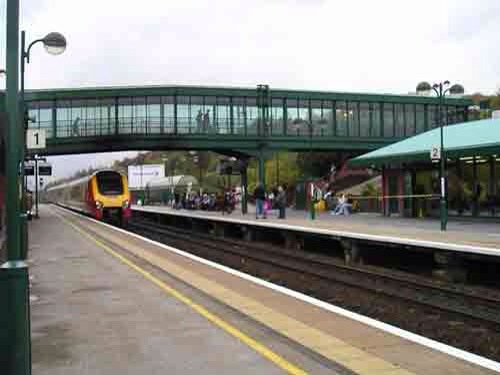
Passengers forced to get on the temporary bus service between stations, because of some failure on the rail network, should recognise that the failure lies not with the rail operator but with the politicians who devised the system and who are committed to its continuing into the indefinite future. It is in the nature of business to provide the minimum service it can get away with, as reducing costs is the most effective way of increasing profits. It is in the nature of feral profit takers to behave in this way to expect them to behave contrary to their nature is foolish. The fault lies with the politicians who decided that this unworkable system of rail management is the only one that is possible. They cannot conceive of an alternative system. There are probably clever cynical politicians who realise the rail management system is an ungovernable mess, but realise that to speak the truth would damage their career.

Cleverness is still frowned on in the army, which continued the ignoble British tradition of sending too few under equipped troops into conflict, as demonstrated in the Afghan conflict. In the Helmand province an area of British army governance, the lack of numbers and attack helicopters prevented the British army from effectively taking on the Taliban. Only when the well equipped American marines arrived were the Taliban driven out of Helmand province. When intelligence is a quality frowned on in the governing classes, it is doubtful that any government could deliver a high tech infra structure project such as HS2.

Mean spiritedness pretending to be sound economics. The ending of free fares for senior citizens.

20140630-165036-60636580.jpg

There is a mean spiritedness in contemporary culture which masquerades as economics. One good example is the public debate over free fares on public transport for pensioner or senior citizens. Bus companies have been complaining that the revenue that they get from the government is an inadequate return for transporting all these pensioners. They claim it is the cost of transporting all these extra people for minimal return that is hitting their profits. There is at present a dispute going on between pensioners in Barnsley and the South Yorkshire Passenger Transport Executive (SYPTE). The executive wants to end free travel to the Meadowhall, (the great shopping mall) in Sheffield and impose a charge to help fund the cost of providing the service. What from a common sense point of view seems to be reasonable, is in fact poor economics. Unfortunately the UK suffers from a surfeit of poor economic decision making.

Listening to the SYPTE its seems reasonable to suggest that the pensioners from Barnsley should make a contribution to the increase in costs consequent on the large number of pensioners travelling to the Meadowhall shopping centre. However there is no extra cost imposed on the train company through having to transport large numbers of pensioners to their favoured destination. The company is already running running a regular train service from Barnsley to Meadowhall and it is not putting on any extra trains to accommodate these pensioners. The real cost of transporting these extra passengers is zero as the company is already running these trains. Only if they provided more trains would there be an additional cost. There are also no extra staff employed either to man the stations or run the trains, so no additional costs there either. In fact the subsidy paid by the central government and local authorities for transporting pensioners adds to their revenue.

20140630-165507-60907192.jpg

What has hit companies most is the cut in government subsidies for the running of train and bus services. This has really impacted on their revenues and free travel for pensioners has little or nothing to do with this loss. Already fares on trains and buses in the UK are the highest in Europe, so the public transport companies are already doing their best to squeeze every last penny out of the travelling public. Obviously they feel frustrated that government policy exempts one group, the pensioners or senior citizens from this policy.

Any service that is free at the point of use has attracted the ire of big business. They will claim that without the discipline of price, people will wastefully use free services as it costs them nothing. Yet there is little evidence of public transport companies having to put on extra bus or train services to accommodate these free loading oldies. However it does make it more difficult for them to reduce bus and train services, as they are denied the excuse that these services are not needed as the demand for them from pensioners is high. Yet this has not stopped bus companies in Yorkshire cutting services, its only made it a little harder for them to make this decision, as their under used service excuse has been removed.

20140630-165711-61031559.jpg

While it is impossible to obtain accurate figure for the cost of a bus, the new double decker buses bought for London will cost £300,000 each. Given that many of these buses will be purchased by central or local government and then hired out to the various bus companies, it is a great waste of tax payers money if they are under used. In London alone £180 million was spent by Transport for London on new buses. If bus companies cut services and leave these buses in the garage for increasingly long periods of time, it represents a very poor return on tax payers’ money. If the extra demand created by pensioners really did mean these buses undertook more journeys it would be much better investment of tax payers’ money.

The companies claim that if these pensioners paid the full fare their finances would be transformed. This ignores the fact that most pensioners that use public transport are on low incomes and any increase in bus fares would reduce their demand for bus travel. The rich ‘baby boomers’ who could pay the higher fares will be using their cars rather than using uncomfortable public transport. The basic state pension is £113 per week and any additional benefits pensioners get will be spent on housing or energy costs. For me to travel to the centre of Leeds on the bus costs £2.00 or £4.00 for the return journey, which is a small but significant part of the basic state pension. Looking at the off peak buses I use, I estimate that each contains between 10 and 30 pensioners, a number which would would be considerably reduced if they had to pay the full fare. Now if the number of pensioners using these buses fell to 2 or 3 there would be little financial gain for the bus company, possibly even a loss as the pension subsidy for 20 passengers would probably exceed the revenue from 2 to 3 passengers paying full fare. While I can only speculate as to the reduction in passenger numbers, it is unlikely that by ending free fares for pensioners the public transport companies would gain much in extra revenue as low income pensioners would probably cut the number of journeys they made to the detriment of the bus companies wallet. There has been no research into the real loss or gain in revenue due to providing free pensioner fares, all there has been is speculation.

If public transport companies are really losing money, there are better ways of increasing their revenues than by ending the free senior travel passes. The much more effective way would be through reforming the structure of the large dysfunctional inefficient multinational companies that run public transport services. They are structured to provide the maximise the financial return to their owners not to provide a good transport service. My example of the inefficiency of these companies is a personal one. When I came to Leeds in 1970 the bus I travelled on then is very little different from that on which I travel today as a senior citizen. Forty years in which there has been minimal technological advance demonstrates the inefficiency and technical backwardness of these companies.

Why politicians would benefit from reading fairy tales

20140625-112126-40886122.jpg

Folk tales and fairy stories with their black and white characterisation for example the evil step mother and the virtuous, noble and abused step daughter are characterised as stories only for children. Their tales of good and evil are seen as being far too simplistic for adult reading. This is a misreading as the fairy tales we tell our children are but sanitised versions of the original folk tales. In the original story the step sisters cut off parts of their feet so as to fit their feet into the glass slipper. What is not understood is that folk tales are but attempts to explain the malevolent world in which our peasant ancestors lived. Fairies were not seen as good but as spirits that had to appeased as angering them could result in misadventure. When the Church insisted this was a good world created by God, how could the misfortune that people suffered be understood except by understanding there must be a lower level of supernatural beings who were responsible for the evil men suffered. What our peasant ancestors saw was that they lived in a world in which good and evil co-existed, not so simple but realistic.

This simple world view is in contrast to the sophisticated society of today. Rather than the simple black and white world view, it a world view of greys, varying from the darkest of greys (bad) to the palest of greys (good) and between these two there are a whole series of different shades of grey. However bad is not totally excluded, but bad only applies to those people, the psychopaths who operate outside the normal range of behaviours. When morality is seen from the perspective of the political and dominant social classes there is an incredible fluidity to moral concepts, particularly when the politeriat who govern Britain is considered. This merging of good and bad can be seen in the concept of the just war. Killing is bad except when its undertaken as part of a just war. St. Augustine defined the concept when he cited the conditions under which a soldier could kill to defend his country. Others such as Thomas Aquinas further refined this concept. While there was justice in fighting the Second World War to remove Hitler the concept becomes stretched to breaking point with the Iraq war. Our leaders invented the threat of Saddam Hussein’s weapons of mass destruction and the threat they posed to the West to make the war just. One bad example does not made a moral principle bad, however the concept is open to misinterpretation or abuse, as political leaders are always tempted to give it a meaning that suits them. Government’s never fight bad wars only just wars.

Goodness takes on an incredible diversity of meanings when used by politicians. Good for them is the greater good, a good which only they understand. Only they can make the greater good a reality. The austerity programme the UK government imposed on society is for the good of all. It will like the medieval practice of bleeding purge society of ills. All very reminiscent of Stalin, who regularly sent thousands to the death camps, for the good of Russian society. Killing thousands of Ukrainian farmers led to starvation and the death of millions. Britain’s austerity programme has impoverished millions and the spread of poverty level wages has reduced demand and slowed the recovery from recession. When political leaders define good or the greater good it rapidly loses any moral content and all kind of evils can result from this. The Iraq war was intended to achieve two goods, the removal of weapons of mass destruction that threatened the West and the freeing of the Iraqi people from a cruel dictator. Instead of it being a being it good action the reverse happened. Thousands were killed in a bloody civil war consequent on the invasion and now the country is threatened with a new civil war, one against an extremist Sunni militia.

Perhaps if George Bush and Tony Blair had a sounder understanding of morality than they displayed at the time, they would not have committed themselves to the folly of the Iraq war. Politicians have long given up reading Christian moralists such as Erasmus, but if they had not, they might have come across his article entitled ‘War is sweet to those who have never tried it’. Nothing is new, ambitious princes have always through the folly of war damaged the health and welfare of their peoples.

There is a danger in our contemporary society of having leaders lacking any fixed moral reference points. If good is a flexible thing only given the meaning that the leaders and political class give it, there is nothing to stop them committing inhumane experiments of their people. Stalin, Mao and Pol Pot murdered millions in the name of their self proclaimed goods. On the same spectrum but at the other end our politician practice inhumane experiments on us. Austerity is perhaps the worse, although there are plenty of other examples. Children in Britain have had to endure endless experiments with their schooling experiments of varying degrees of cruelty. Education ministers impose diktat after diktat on our schools which seem destined to introduce the spirit of Gradgrind into our schools. Schools are becoming akin to Victorian factories with child labourers repeating a series of unending mundane tasks. Experimentation is not limited only to our children but also to the sick, the disabled and the young unemployed, all the major political parties seem to be engaged in a competition to produce the most inhumane policies towards these groups. When any real understanding of the good is lacking, cruel and inhumane policies will result not so much from a sense of cruelty but an inability to see people as other than things, just another resource. Possibly the bear pit that is Prime Minister’s Question Time is the best representation of the callous unfeeling nature of our politicians.

Not recognising or understanding good is only one part of the problem, the other is the failure to acknowledge the bad. Children understand that out there are bad people, be they evil fairies, step mothers, dwarves or trolls. Politicians having no conception of bad fail to recognise bad people. The evil financial wizards who managed to make billions disappear were never recognised for what they were, in fact many of them were rewarded with titles from the government. Similarly politicians never recognise the evil trolls, dwarves and queens that populate the market. There are many bad landlords who charge exorbitant rents for unfit housing, yet politicians don’t recognise that there can be bad landlords and that only government regulation can resolve this problem. When reforms of the private rental market are suggested, a chorus of ministers, politicians and journalist cry it is impossible. They claim that any regulation would make the market worse, claiming that regulation would force landlords to withdraw from the market. Conveniently ignoring that those self same landlords have borrowed vast sums to buy their rental properties and it would be suicidal not to let them. The free market for them is an unalloyed good in which their can be no bad or evil. Bad landlords are not a problem that the market can’t resolve.A child from their knowledge of fairy tales would recognise really do exist, while politicians with a moral free sensibility cannot.

20140625-112736-41256464.jpg

There has always been a clash between doing what is expedient in politics and what is principled. However what is unique in the present parliament is the lack of great principled individual politicians, our current parliament is a moral free zone. All the great reforms of the past have been driven by outstanding principled leaders. Lord Shaftesbury a Christian politician was the driving force behind the ending of child labour in the factories and Non-conformist Christian politicians such as Keir Hardie, Lloyd George and Aneurian Bevan were largely responsible for the creation of the welfare system, which their moral free successors are in the process of hastily dismantling.

It would be naive to claim that the politics practised in the past was much superior to today, but then unlike today there were moral giants who could drive through measures of social reform. One has to ask why is our parliament populated by a generation of moral pygmies? Perhaps an answer can be seen in the education of our predecessors. Not so much academic education as their education in values in the wider community. Wilberforce and Shaftesbury were evangelical Christians, Lloyd George and Aneurian Bevan were Non-Conformists and it was their Christian education that gave them a fierce attachment to a compassionate value system. Interestingly Lloyd George was as venal in many respects as our contemporary politicians, a womanising politician who willing sold political office; yet he was redeemed by a greater moral vision. What is lacking in contemporary society is the moral counterweight that the churches in the past provided to unbridled self interest. The great universities educate politicians in the practicalities of government, usually in PPE (Philosophy, Politics and Economics). Contemporary philosophy courses teach scepticism, politics courses the art of vote winning and economics the management of society, skills needed for the second rate political Machiavelli’s. As an economist I tend to single out economics for the greatest part of the blame, it is the great leveller, a subject in which everything is reduced to a material benefit or cost, much like Oscar Wilde’s cynic who knows the price of everything but is ignorant of the value of anything. Economics I believe has a tendency to shrink people’s moral vision. Particularly as current Neo-Liberal economics teaches that the economy is best left untouched by government intervention and that it is the unregulated free market that will deliver the goodies that people want, be it a home or high quality medical care.

20140625-113058-41458715.jpg

What is moral in a government that values the interests of the drinks industry above that of the health of the community. Successive governments be they Labour or Conservative have facilitated the expansion of the drinks industry by easing the licensing laws. Our more principled ancestors (Non-Conformist politicians) recognised the evils of too free a consumption of alcohol and introduced licensing laws. Neo-Liberal economics teaches that the greatest freedom is the freedom of the individual to consume what they please. The costs to the health service of alcohol abuse, the increase of the number of babies damaged through alcohol fetal syndrome and alcohol induced violence count as nought against the individuals right to self abuse.

The present cannot be remodelled according to the ground rules of the past societies. It is not possible to reinstate the church as a powerful institution in society and it is probably not desirable. There are too many examples from the past of the church abusing its powerful position, not least with the burning of heretics. One answer is to demote the inhuman human sciences from their dominant position in the political and public dialogue. Plato does for me provide a way forward, he said that whoever knows good desires nothing else. What he meant by this was that the study of the nature of good has the potential transforms the human personality. (Such a brief statement does not do justice to the complexity of Plato’s thought, to do it justice would require a lengthy exposition.) Only Christians take the study of good seriously, university ethics courses teach students that good is an unknowable concept and at worst an emotion. I guess contemporary philosophers would be unsuitable to the teaching of good and probably only theologians could teach it without self mockery. What I desire is a reordering of the university syllabus particularly for the great and good in the elite universities. Obviously I am not naive enough to think this teaching would modify the behaviour of the great and the good that enjoy the ‘frat boy’ life style at university, but it might produce a new Lord Shaftesbury to be a moral counter weight to the moral free sheep that populate our politics.

Why economists should be banned from public life; it’s for the good of us all

Can economists ever do good for human kind? If its contemporary economists that the question is asked of, the answer must be no. There are a few exceptions but generally speaking economists support the most inhumane of political experiments on mankind. With very few exceptions they have been the cheer leaders for the programme of austerity that has been inflicted on societies in Western Europe and the USA. Possibly there is some poetic justice in this turn of events. The leader of the IMF is always a European and the IMF has wreaked havoc on the economies of the developing world over the past decades. Whenever a developing country has turned to the IMF to finance its debts, the money has only been given on the condition that the country adopts the harshest of austerity policies. Health and education services are always the first the IMF insists on cutting, its a kind of perverse morality that believes the inhabitants of poor countries are deserving of poor health and education. Now the EU has adopted the same austerity policies to protect the debt holders (in this case German banks) who over invested in the Greek economy. The loans that saved the Greek banks from bankruptcy was only given on condition that Greece adopted the policies that turned the country into a basket case.

What I would like to suggest that governments adopt a ten year moratorium disbarring them from employing economists for that period. Society would be far better governed if politicians took responsibility for their actions instead of outsourcing the decision taking and blame to others. Perhaps if Tony Blair instead of sending his shadow cabinet on a business consultancy course but one on moral philosophy the horrors of the Iraq war may have been avoided. Infra structure products are hopelessly delayed as government invariably outsources decision making to think tanks, such as ‘The Adam Smith Institute’ or in the case the Third Heathrow Airport to an economist called Howard Davies. Stanley Baldwin when under pressure from the press barons to reverse his policy giving self governance to part of the British Empire spoke of them wanting the prerogative of power without responsibility, this is the prerogative of the harlot. The current generation of politicians want neither the power or the responsibility, just the opportunity to enjoy the trappings of power. The British government will not make the final decision on the High Speed 2 railway, that will be left to others.

20140613-112910-41350460.jpg

There is a striking counter example which both throws light on the poor political governance of the UK and that is the Senate of Republican Rome. The Senate before it authorised any major action by the Roman State, asked the Pontifex Maximus (High Priest) to read the auspices to assess the prospects for success. This involved divining the attitude of the Gods to the enterprise by examining the entrails of a sacrificed animal. If the enterprise failed it was because the priest reading the entrails had made an error and had failed to recognise the hostility of the Gods to this enterprise. Today economists are asked to perform the a similar ritual, it is the economic report into the viability of the project. They read the auspices by examining the entrails (statistics) of the economy. While it is not hard for a minister to find a tame economist who will divine the government’s intention and predict the success of the enterprise, our system has one major flaw and that is the divining the auspices rarely delivers a single definitive reading. There are several economists who claim to perform the economic ritual better than the chosen government economist. They will deny that the government economist gave the correct reading of the economic auspices which generates confusion as to what is the correct reading and hesitancy in decision making. Their are too many high economic priests.

George Osborne the Chancellor of the Exchequer is the driving force behind proposal to build a new town at Ebbsfleet in Kent. What I can predict is that is that there will be numerous other economists claiming that the entrails were read incorrectly by the Treasury and that a new town is not needed or that Ebbsfleet is the wrong location etc. Putting a measure in the Queen’s speech does not guarantee that the town will ever built, as it depends on the agreement of that quarrelsome collective the economists to sanction it. With the government having outsourced decision making to the economists, I cannot see the new town of Ebbsfleet being built. Rather it will be a project whose merits will be debated into the indefinite future.

20140613-113834-41914863.jpg

Despite the Roman system of decision taking appearing to depend on the whim of a supernatural deity, it was far more effective than ours. Firstly the Roman Pontifex Maximus (High Priest) was a senator and was always a powerful figure , unlike in Britain where the equivalent of the Pontifex Maximus is an outsider and is not regarded as an authoritative figure by other priests (economists). In Rome the reading of the auspices was merely confirming what the most powerful group in the Senate had decided. Murder was not an uncommon way of eliminating one’s opponents, as eliminating one’s opponents either ensured that only your supporters remained in the a Senate or it cowed the opposition into acquiescence. Mark Anthony was initially a gangster used by Caesar to intimidate his opponents in Rome. Our political leaders have rarely decided in advance what the policy will be, even if they favour one decision over another, they still outsource the decision to others. Economists the chosen group of outsiders lack the authority of the Pontifex Maximus, they all claim to be the Pontifex so there is no authoritative policy statement. What makes the Roman Senate a superior policy making body to the British Parliament was that the ritual was subordinate to art of decision making, whereas it is the reverse in the UK. The Senate unlike the British Parliament could make decisions even if they were bad ones. A similar phenomenon can be observed in the US congress which also appears incapable of decision making. One of the few policies Congress agreed on was designating the tomato sauce on pizzas as being one of an individuals five a day portions of fruit and vegetables. Congress can agree on meaningless acts but avoids difficult decisions.

20140613-114331-42211783.jpg

Another advantage of the Roman reliance on the Gods providing supernatural policy sanctions is that such authority is far more persuasive than that conferred by economists on government policy. If the Senate wanted to oppose a particular policy, usually one that favoured the lower order the plebeians, they could claim the opposition of the Gods. Threatening natural omens would be reported such as cows with two heads all suggesting that the Gods were angry. Claiming a policy that you don’t favour will make people worse off, does not carry the same threat as a policy that angers the Gods.

It may seem strange to state that the decision making process of the Roman Senate is superior to that of the UK government, when it has access to a wealth of economic statistics and computers to aid decision taking. I argue that the Roman system was superior because the Senate’s decisions were made on qualitative grounds not quantitative. A boldness of vision comes naturally to individuals who celebrated virtue. Their moral exemplars were men such as Lars Porsena who burnt off his right hand to demonstrate Roman courage and steadfastness to the enemies of Rome, who held him captive. British politicians schooled in the world of cost and benefits are incapable of any grand vision. It breeds a kind of modesty in decision making and with it a desire to avoid big difficult decisions. There was a heroic generation of British politicians it was those who had guided us through a Great War. It was that generation that gave us a National Health system, free legal aid so the poor would be on an equal footing with the rich in court. Both of which our modest generation of pseudo economists want to end because of their supposed ‘unaffordability’ . The grandest vision any contemporary politician could envisage, is cutting the cost of a public service. In these modest time the hero is the cost cutting politician. Certainly there is not one contemporary politician who venture any project as grand as a national health service.

20140613-114546-42346041.jpg

This is why this particular economist wants all economists banished from government and all forms of public service. I want to take away that prop politicians use to avoid making decisions, that is the economy, when everything is deferred due to economic considerations. University education is too expensive so the pseudo economists increase university fees to £9000 pa. The consequence is that a black hole develops in university funding into which the government is having to pour more and more money. Stupidity rules in Westminster/Whitehall masquerading as economic good sense, if higher education is really that unaffordable why not just cut the number of university places, instead of using the economic fudge of pretending it will be solved by increasing fees.

One further observation the contemporary Lars Porsena would not be the one who resisted the over mighty enemy, but the one who capitulated to the enemy and who facilitated their aims. Successive British governments when faced with the problem of tax evasion and avoidance by the rich and powerful, rather than taking action to end this abuse of power and offend these powerful men instead took action to make tax avoidance easier.

20140613-114708-42428813.jpg

Demonic or Nietzschian Economics

20140604-131852-47932324.jpg

Nietzsche is perhaps the most misunderstood of philosophers, he is remembered for the praise of the ‘blood beast’ of his declining years, not the insights of his philosophy in his early years. As a skeptic philosopher he criticised his fellow philosophers for failing to understand the subject the nature of the subject they studied, man. His most potent criticism that all grand philosophies were fallible as they went contrary to the nature of man. One of his most trenchant attacks was on the notion of free will, he demonstrated that so many acts of criminals were predetermined so to punish them as if they had freely committed a criminal act was wrong. Similarly I want to conduct a skeptical or Nietzschian analysis of economics

What I want to contribute to the study is ‘satanic or demonic economics’, a new reading or interpretation of economics. The devil or Satan offers a wonderful tool for explaining the true nature of economic analysis. While I prefer to believe that we as individuals have sufficient potential for evil within ourselves; I cannot deny the value of having a demonic figure to explain the evils committed by men. Previously I have written of economists adopting a devil substitute to explain the failure of the perfect economic system, the free market. What I have realised since then is that it is the economist’s failure to recognise the existence of evil that has lead them to blunder into creating the most inhumane of human sciences.

There is a novel which demonstrates all too clearly the problem with contemporary economics. That novel is James Hogg’s ‘The Private Memoirs and Confessions of a Justified Sinner’. Robert Colwan the anti hero of the novel fails to see that his companion and friend Gil-Martin is the devil. He is so blinded by his sense of self righteousness, that is his own sense of goodness, that he fails to see that Gil-Martin is leading him into committing acts that become progressively more and more evil, culminating in the murder of his brother. While James Hogg is poking fun at the intolerant lowland Scot’s Calvinists who would abolish fun if they had the power, his book contains a fundamental truth. Those who don’t acknowledge the existence of evil usually go on to commit evil, because they are blind to the existence of evil. The German bureaucrats who sent millions to the gas chambers could do so because their only concern was to make the German railway system run efficiently. The fate that awaited millions of Jews was irrelevant. What Bauman discovered about the behaviour of German railway officials could not unfairly be applied to the current generation of economists. They as with the German bureaucrats only want to make the system run efficiently, they have no concern about the consequences of their actions for their fellow men.

20140604-132238-48158020.jpg

Economists have always argued that their subject is a social science not a moral science. They claim that by excluding value judgements from their analysis they can offer the objective analysis which delivers the answers to the problems that bedevil mankind. What they fail to recognise by committing themselves to a self declared moral blindness they cannot recognise the inhumanity and evil of their language and practice. The only fair comparison I can make is the psychopath who is unable to develop human empathy because they have been damaged so severely by their dysfunctional upbringing that they are incapable of moral empathy. Economists similarly have so damaged by their study and practice of economics that they are also incapable of moral empathy.

The model that economists wished to emulate was that of the natural sciences. Its success had been due to the adoption of the scientific method and the exclusion of any value judgements that predetermined the answer. Scientific study had progressed little until religion stopped determining the answers to any scientific investigation. Bishop Usher had calculated that the earth was created in 4004 BC from his study of chronology of events listed in the bible. This effectively prevented the development of earth sciences until non-Christian scientists such as Darwin and Huxley demonstrated this was untrue as the earth evolved over millions of years. Economists wished to achieve the same standard of impartial enquiry that prevailed in the natural sciences. What they ignored was that economics is a human science and that if considerations humanity are removed from the study all that is left is a science of inhumanity. The consequences of which can be appalling.

One subject that has been a constant topic for study by British economists has been the low productivity of the British economy. By excluding any considerations of human welfare, they were able to come up with a number of ‘objective’ solutions. They identified the cause of low productivity as an under performing and dysfunctional labour market. There were too many restrictions on the use of labour which limited its efficiency. Employment protection legislation, health and safety legislation together with over powerful trade unions prevented its efficient use. What they saw was not a people who had legitimate rights as regards fair wages and a safe working environment, but a multitude of dysfunctional workers who needed to be subject to the harsh realities of the market to turn them into productive human resources. People are not people, they are the labour and they only right they should have is to be used productively. Fortunately for economists all governments since 1979 have seen the benefit of a utilitarian approach to labour. Employment protection and health and safety legislation have been so effectively emasculated that employers need have little concern about them impeding their exploitation of their workers. Trade unions have been so weakened that with a few exceptions they are of no concern to employers.

What has been created in Britain since 1979 is a low cost flexible labour force that is attractive to business. Consequently Britain has recorded one of the sharpest rises in employment in Europe during the economic recovery that has occurred since the crash of 2009. Labour is cheap to hire and easy to dispose of, so employers are willing to take on staff, knowing that they cost little and can be disposed of easily if the market takes a downturn. All this increase in employment has been at the expensive of productivity as its has lead to the growth of low cost industries, warehousing, call centres that require little investment as plentiful cheap labour is available. Cheap people rather than expensive investment. The misery of zero hours contracts, split shifts or low wages is of no consequence to the economist, as they are merely signs that the market is working efficiently in making good use of unemployed labour. What is most matters for them is that the employer able to use labour as cheaply or efficiently as possible.

Economists never speak of the need for fair wages, security of employment, good housing or free health care. As the value of the sense of well being from a fair income etc. cannot be priced so the
Its ignored. The economic calculus that is calculating the benefit derived from human activity can only calculate benefit in quantitive not qualitative terms. The economist has an opt out from moral judgements, it the market can make decisions about what people want and need, so such decisions about health care provision should be left to the market. However this ignores the dysfunctional nature of the market, as billionaires can pay more for their health care than can the poor, the market will provide excellent health care for the rich and minimal health care for the poor as the latter will make little money. Yet as economics is a subject devoid of morality economists would never be concerned with the poor being deprived of health care, as with the German railway officials human misery caused by their actions are not their concern.

20140604-132553-48353968.jpg

Lacking any understanding of morality economists are prey to a diverse number of Gil-Martins. that economists have no conception of morality, I mean public morality, they lack any conception of the common good. They are not lacking any conception of private morality,I’m sure many economists are good fathers and mothers.) These Gil-Martins are the wealthy businessmen and large corporations that endow university professorships or fund think tanks. As economists lack any moral sensibility they are easy to corrupt, promoting schemes that will benefit their benefactors. While there are numerous economists advocating the benefits of free enterprise, that is a lack of regulation which benefits the large corporations, as treating people well costs money, there are few that argue the benefits of a strong regulatory state.

Perhaps it would be wrong to call economists the ‘devil’s spawn’, such harsh language is not suitable for these civilised times. Yet economics is the ‘demonic science’ as the policy recommendations of its practitioners always increase human misery. Can anybody recall any economist ever speaking out for fair wages or security of tenure for private rental tenants. In fact the latter is anathema to economists as they believe that security of tenure impedes the mobility of labour as people are reluctant to give up the security of their existing tenancy for uncertain accommodation prospects in an area were there is work. If secure social housing tenancies are destroyed in Newcastle, there will be nothing to prevent the unemployed in Newcastle moving to jobs in the prosperous Thames valley, as they will be swapping one insecure tenancy for another. Ever since its inception economists have been campaigning against the National Health Service (NHS) as its providing of free care care at the point of use, which is contrary to the fundamentals of good economics. Free service encourages over use they claim,* if a service is priced people will only use it if they really want it, that way the correct distribution of resources is achieved as only those willing to pay for a service will use it. Services free of price are used wastefully, therefore the NHS must go. Economists are like so many Robert Colwans plotting the demise of a much loved health service, rather than a much loved brother. From the point of view of this theologian any human science that lacks any conception of the good can only practice evil. This is why using the concept of the devil as an explanatory tool is so useful in understanding contemporary economics, as evil infects all its economic analysis, medieval Christians were wiser than use in seeing the devil constantly at work in society.

*It is intriguing that economists tend to view ill health as a product of free service revision at not a risk that occurs naturally to human beings.
.

I am a person not a shopper

20140526-111442-40482965.jpg

Shopping is unfortunately the prism through which the government now views the people. People have one fundamental right and that is to be consumers. What matters is not that the government should provide high quality public services, but to provide a choice of service providers. Changes in education and health are intended to present the consumer with an array of services from different providers so they can choose the service that most meets their needs. Economists are responsible for this nonsense. Having advised governments that choice and competition are the mechanisms best fitted to provide good public service, they forgot to mention that economy theory states that this market mechanism only works if consumers have perfect knowledge. When buying vegetables it is possible to judge what is the best potato but the same cannot apply purchasing medical services. How can I know what is the best possible medical care for what may be life threatening illnesses or even know what illness effects me? When given the choice of five medical providers for my eye surgery, I had no idea which to choose. I lacked the knowledge to be able to choose the best provider. What I did was ask the optician which were the best. All she could say was that a previous patient had been a doctor and he choose this one, and in my ignorance I copied the example of the doctor.

20140526-111632-40592697.jpg

How did this become the accepted public policy? Baby boomers are blamed for many things unfairly, but the economists and politicians of this generation are to blame for this policy nonsense. As a member of this generation I can give an insight into this malaise. The sixties generation are often described incorrectly as the generation of ‘free love’, sexual and social liberation. What is less often acknowledged is that this is the generation that gave up on serious thought. It was not so much that this generation became obsessed with the new sensual delights of drugs and rock and roll, but their dropping of old difficult belief systems in favour of a new simpler techo-scientific belief system. A system that would deliver ‘real’ solutions to the problems facing the world. Unrealistic and unworldly ideologies such as socialism which never delivered on their impossible promises were replaced by a belief in a hard edged social realism. A dogmatic belief system called Neo-Liberalism, as one politician said it is the only game in town.

This hard edged belief system was one disseminated downwards from the social and intellectual elite. The intellectual elite schooled the new and up and coming political elite and the mass media disseminated it into wider society. Usually by highlighting the horrors of the old ways, ‘the winter of discontent’ and by simultaneously giving over column inches to the gurus and prophets of the new politics.

I as a student in London University witnessed the early stages of this new inhumane ideology. The economics professors were teaching that the dominant humane system of social democracy was wrong it gave people an unrealistic expectation of what the state could do. Two of our professors expounded the then shocking view that unemployment was too low and must increase if the economy was to grow. Yet they were part of the generation that lived through the Great Depression.

Unknown to us at the time was that the new theory of cost benefit analysis as taught then would prove a useful tool for destroying social democracy. It would replace the more subtle and complex ethical thinking of the past with the crude simplicities of technical analysis. All the benefits of living in a civilised society are difficult to price, because they are all too often the intangible benefits of the mind. Yet just as real as the material benefits. How can the deleterious effects of the noise nuisance caused by a third runway at Heathrow airport be priced? Only by indulging in a series of thought experiments can such harmful experiences be priced and by any reckoning such reasoning lacks any really sound underpinning in the reality of people’s lives. It is much easier to calculate the benefits in terms of increased passenger flights and cargo deliveries. They can easily be priced and the value of increased air traffic is calculated on a much sounder basis than the cash cost of noise pollution, so it is hardly a surprise that cost benefit analysis usually turns out to favour the proposed development. The benefits of a good life cannot be priced, they can only be part of a moral calculus. Fortunately for the developer cost benefit analysis avoids any such difficult problems.

20140526-112059-40859861.jpg

What was disseminated outwards from the universities was the new culture of ‘not thinking’. Calculation would replace open debate, values were dismissed as distractions that prevented a realistic assessment of the issues. Ostrogorki would shudder to think to his study how the Conservative party of the 19th century used various tricks to manipulate the popular prejudice to win elections would lead change they nature of politics teaching. Political philosophy would be replaced by the study of the means of manipulating the popular vote. The science of calculation would replace the discussion of values. Values other than those as an embodied in an ideology to get out the vote were to be regarded as an irrelevance. Politics became nothing more than the study of the mechanics of politics. As a significant number of the dominant politicians studied PPE at an elite university, it left them ill prepared for the great debates than dominate contemporary politics.

There is a danger of over stating the influence of the ‘new intellectuals’ in shaping the nations thought. Higher education has to a large extent in the UK been part of the interlocking system of social elites that govern this country, educating the members of the new political elites. The new science of ‘realism’ suited the needs of the social elite who felt their interests had been ignored and disregarded by the social democratic settlement of the post war period. A teaching of humanities that regarded calculation as the supreme virtue suited their interests as any course such as philosophy that embodied a teaching of values would expose them as a privileged elite whose position lacked any moral justification. Isaiah Berlin the great political philosopher once wrote that there could be no such thing as a right wing philosophy. No moral virtue attaches to the abuse of power and privilege.

It was no coincidence that when this group achieved overwhelming political power with the conservative governments of the 1980’s they ordered a purge of the universities, the thinking departments were to be closed. Philosophy departments shut in many universities and the liberal arts were starved of resources so as to reinforce their new second class status. Instead the humanities were to be replaced with the new ‘non thinking’ subject, business studies. A subject in which students are to be taught to do business, not to think. It is no surprise that students are beginning to rebel against the dullness and enforcement conformity of thinking that characterises British universities.

North Korea is mocked for the peculiarities of the most authoritarian of systems that cannot tolerate even the most innocuous of dissent. Even to the extent of limiting its barbers to a few approved types of hair styles. What its leaders should instead do is copy the example of the UK, the country of ‘not thinking’. People are not forced to become model citizens of the people’s republic, but have been taught to express themselves as shoppers. A much more complex interplay of forces have made the non critical culture the popular culture. Great cultural events have now become little more than festivals of shopping.

This is demonstrated by the two so called insurgent parties in the USA and the UK, where the dissent or insurgency is more confected than real. UKIP the insurgency party is funded by a millionaire, its leader is a former investment banker, one of the new privileged elite. Its policies are those intended to protect the interests of the privileged elite. The withdrawal from Europe is really a wish to withdraw from the EU regulations that control business, such as the working hours directive. Limiting immigration is a popular policy but immigration has become less necessary for business as the organised labour has been effectively destroyed and employers can now treat the indigenous population as badly as it likes so there is less need for cheap easily exploited foreign labour. Other policy measures such as the introduction of a 10% flat rate of income tax and the privatisation of the NHS are contrary to public interest. What can demonstrate more clearly a ‘non thinking’ culture than one in which the popular party is the one that has absolutely no interest in the welfare of the people, who it claims to represent.

How a knowledge of the devil can aid in the understanding of economics and government policies.

20140508-151239.jpg

Manchester University economics students are campaigning for a change in the teaching of economics at their university. They are discontented with a curriculum whose content is limited to Neo-classical economics and mathematical modelling, a curriculum that fails to adequately address the issues of the day. They have called for a broadening of the curriculum to include other subjects such as psychology and economic history so as to develop a more reality based subject. One subject not included in their list was theology, so as a theologian I am going to demonstrate how theology can contribute to economic analysis. I want to show how using what many consider an out dated concept ‘the devil’ aids our understanding of economics.

Satan or the devil does not really figure in religious iconography until the last century BCE. In the Old Testament Satan is but one of the angels. He is one of the angels that are involved in inflicting pain and suffering on Job. With the rise of the new religious beliefs and practices of the last century BCE, the new religious world view was increasingly at odds with reality. There was the problem of how to reconcile a good God, who created a good world with the cruelties and suffering of the contemporary world. A problem that became more acute with the Roman persecution of Christians in the 1BCE. How could a world ruled by cruel Roman governors who used crucifixion as the punishment for dissent be part of a world created by a good God? The answer they found was in the devil a fallen angel, a malevolent being who introduced sin into creation and worked unceasingly to corrupt God’s good world. The old Olympian Gods who were cruel, licentious and deceitful were redefined as demons. St. Augustine portrays a world in which these demons (whose bodies were made of air) circle around the earth in the atmosphere looking for opportunities to lead men astray. One of the most ruthless persecutors of Christians in the Roman Empire, the Roman a Emperor Diocletian is shown in medieval pictures in companionship with demons. The actions malevolent spirit explained why the world did not fit with the Christian world view.

Perhaps the most compelling picture of the world as imagined by the Christians of the early centuries CE, is the picture of St. Anthony in the desert being tortured and tempted by devils. Frequently a subject for medieval and renaissance artists. Despite its apparent dissimilarity the Christian obsession with the devil and contemporary economic thinking, it does provide the perfect analytical tool for understanding the latter.

20140508-152311.jpg

Economists have created through ‘thought experiments’ the perfect economy. Yet whenever they put their precepts into practice it inevitably fails. Why does the free market economics as practised in the developed West so frequently fail? Why in this perfect world did the financial crash of 2008 happen? Their mathematical modelling of the economy showed that the free markets economic systems were those ideally best suited to maximise human welfare. If there models were correct what was going wrong in this perfectly manufactured economic system? There had to be some extraneous malevolent force interfering which made the system malfunction. Economists needed their own devil to explain the failures of their policies. Fortunately it was not hard to find this new devil, it had to be government. Neo-Liberal economists set about rewriting history to prove their case. There were sufficient horror stories from the Social Democratic era to demonstrate why the government should be excluded any management role in the economy. Perhaps the most striking of these stories of failure is that of DeLorean sports cars. DeLorean persuaded the government to fund the construction of a factory to make futuristic stainless steel sports cars in Belfast. Unfortunately there was no market for these cars and the business collapsed, losing the government millions of pounds. Now not only had economists found their devil they could demonstrate the horrors of his work to unbelievers.

There is a parallel between the preaching of early Christian missionaries and that of modern Neo-Liberal economists. Both could demonstrate the horrors of a life lived in thrall to the devil. For the first it was a life which ended in eternal torment in the fires of hell, for the second it was a life lived in the hell of social democracy as witnessed through the winter of discontent in 1979. Who would not want a life free from the horrors of the winter of discontent 1979 or the Great Society and LA riots associated with Lyndon Johnson’s occupancy of the White Hose.

Once the devil had been discovered a whole host of minor devils could be found to be working to frustrate the free market. NGO’s by campaigning for aid to help the most troubled of developing countries, were through the provision of aid undermining local economies and preventing the development of a local agricultural market that would feed the people. A profitable and thriving farming sector could only develop if they were not undermined by the distribution of free food. Saving lives now was misguided as it only laid up troubles for the future.

Just like the evangelical Christians who have to co-exist with the devil as he is part of God’s creation and economists have the accept the existence of government as it part of society, without which there could be no social order. Evangelicals rely on prayer, missionary work and political campaigns to profit abortion etc, to minimise the influence the devil has over people’s lives. Economists endlessly proselytise on the benefits of the small state on the assumption that the smaller the state the less damage it can do. Consequently there has been the constant privatisations and out sourcing of government activities to make this happen.

Free market economists are similar to fundamentalist or evangelical Christians in the horror in which they regard their own devil. One prominent Christian Republican politician advocated the killing of those who had claimed to have encountered aliens. His reasoning was that as aliens don’t exist they must have encountered devils and the only way to prevent these dupes of the devil spreading corruption in society would be to eliminate them. Grant Shapps the Conservative Party Chairman reacted with horror when the Labour Party suggested some modest regulation of the housing market. The most vile term he could come up with to describe it was ‘Venezuelan’ . For him their could be no greatest horror than living in the socialist state of Venezuela. Similarly in the US Congress a similar revulsion attaches to the word socialist.

Obviously it can be no surprise that there is an overlapping between membership of fundamentalist evangelical Christian organisations and the right wing political parties which are populated by believers in the free market. In the USA the Southern Baptists are Republicans and in the UK those Christians who oppose contemporary mores such as gay marriage are to be found disproportionately in the Conservative Party. What cannot be denied is the popularity of the belief in the devil, perhaps because its offers reassurance. In a world that seems alien or hostile too them it is easy believe that the cause is an external malevolent force, it explains everything.

What I can conclude by saying is that contemporary economists and first century CE Christians share a similar dilemma, how to explain a world that does not accord with their world view. For the Christian it was the Roman government dominated by the Satanic ethos and for the economist it is a malign government dominated by a similarly destructive ethos.