Category Archives: economic history

Why does our government seem to be determined to increase the levels of criminality in our society

claudeduval

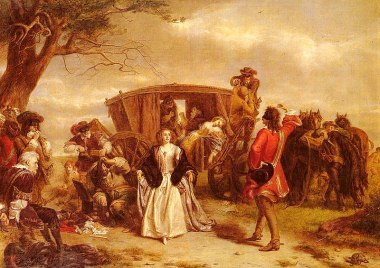
The famous incident in which Claude Duval the notorious highwayman tells a lady  whose coach that he has just held up that in exchange for a dance he will refrain from robbing her.

Our current government claims to be one that is tough on crime, yet in practice it seems to being doing the opposite. What I am going to suggest that the government through its policies is reverting back towards an earlier model of society, one similar to that of the 18th century. In that century policing was massively under resourced. Crime prevention and detection was in the hands of the Parish Constable. A man who had to rely on the support of his parishioners to arrest criminals. Policing was so ineffective that the government had to resort to the extreme measure of making most offences capital offences as a means of deterring crime. The Black Act of 1723 tried to compensate for the lack of an effective police force by making some 50 offences punishable by hanging, for example the punishment for breaking a farmer’s gate was hanging.The only way the to keep one’s household safe was to ensure that all the doors where secured by good locks and a variety of loaded guns where at hand to fend off any intruders. Ominously I was told by a member of the police force that his recommendation was to secure one’s house with good locks and stay in at night, he thought the policing levels were inadequate to guarantee the public’s safety. One senior police office ventured the opinion that he would not go into the centre of Manchester at night because it was not safe.

The combination of weak governments and under resourced policing is all to evident in Eire. Even before the financial crash and the austerity programme that forced large cuts on the Garda (Eire’s police force), this force was struggling to cope with the criminal activities of both terrorist groups and criminal gangs. These gangs were then so powerful that they could shoot a campaigning journalist at a busy cross roads and get away unhindered. Now an even more depleted police force is unable to prevent tit for tat killings that are occurring between these criminal gangs. Yet in spite of the evidence of the evident dangers of relying on an under resourced and undermanned police force to contain these dangerous criminal gangs the government is insistent on following the unwise path already trodden by Eire.

There is ominous evidence from my home city that this is already happening. Cuts to the number of the police have meant the ending of an effective pro active drugs strategy. The teams that were used to break up and disrupt the drug dealing gangs have been disbanded and the remaining police officers used to street patrols. The police will now only react to evidence of drug crime and only if it is thought that the individual in question has drugs in excess of a street value of £10,000. This means that the street dealers which are the bread and butter of the organised drugs trade are given a relatively free hand.

Why despite all the evidence of the dangers of allowing the drugs gangs to flourish has the government adopted policies that will encourage these gangs to flourish.

Why?

There are several possible answers but the most likely is the change in the philosophy of the government. The adoption of the brutalist philosophy of Neo-Liberalism, which emphasised the supremacy of free market, competition and the end of regulation. Regulation it was argued did not prevent wrong doing so much as impose additional and unnecessary burdens on business. However Hayek (The Road to Serfdom) who was the founding father of Neo-Liberalism did not argue for the extreme Neo-Liberal system of today. He believed in the good society, a society in which all paid tax for finance those items that made up the common good. He never once in his writings claimed that the ideal state is one in which the tax authorities collaborated with the rich in a programme of tax avoidance. He would have been horrified at the programme of tax cuts that reduced the effectiveness of the police and other public services.

Rather than looking to Hayek it is the writings of a novelist and minor philosopher called Ayn Rand that are the inspiration for the new Neo-Liberal State. In her influential novel “Atlas Shrugged” she wrote that the billionaires are the saviours of society. It is their energy and drive that moves society forward. Any restrictions on the activities of these people negatively impact on society as it prevents them fulfilling their primary purpose which is wealth creation. Therefore in her good society there are to be few regulations imposed on the billionaires or the businesses they run. Regulations that protect workers at their place of work are no more an unnecessary increase in costs as they disproportionately increase the costs of labour far beyond the contribution labour makes to wealth creation. All these high labour costs do is reduce the number of goods and service produced as what might have been produced if labour was fairly priced is now uneconomic. Similarly high rates of taxation on the rich do little more than reduce the amount of money that they have available for investing in the economy. In contrast the poor and the great majority contribute little to the economy, they are merely the simple tools that the billionaire uses to create wealth. Only if the billionaire class is freed from all restriction will they be able to use their energies creatively to add to the wealth of society. It is this author who is the inspiration behind the new Neo-Liberal State, that is the Britain of 2016.

Although her books are widely read amongst students at our elite universities, there has to be another reason as to why she has been adopted as the political philosopher of choice by our political classes. I think part of the answer is that they identify with her billionaire class. They see themselves as much victims of society as the billionaires of Ayn Rand. These leaders are continually frustrated in their great schemes for change and reform by the opposition of the little people. People of little worth, who lacking the skills or even intelligence for government think they have to right to a say in how policy is made. This contempt for the little people is demonstrated in the distain our leaders show for them. One former leader spoke of constantly being stabbed in back by public sector workers who failed to understand that the policies he was introducing were for their benefit and the good of society. Another continually referred to his opponents as the ‘blob’, abusive terms are the common currency of politicians who want to minimise the role of the people in a democracy.

It must also be mentioned that the political classes believed that the political and economic reforms espoused by Ayn Rand would if adopted would lead to a new political and economic dynamism in what they saw as a moribund society and economy , too rooted in the practices of the past.

Rather than continue with a psychological analysis of the political classes, what I want to demonstrate is the impact of what I shall call ‘Randism’ has on society and crime in particular. If the billionaires and their proxies the great business corporations are to be freed from almost controls and regulations, there are other greater predators the will benefit, which are the organised crime networks.

Changes in the legal system, in that is company law and tax law have created a situation in which the big corporations are largely outside the law (at least in the UK). What has been created is an opaque system of company organisation the will frustrate any attempt at regulation or control. However such a system is open to abuse and it offers possibilities for criminal organisations that had not previously existed. Formerly in the UK criminal groups used small businesses as a front for their illegal activities, such as scrap metal dealing, now they have the opportunity given the opaque nature of company organisations to move into large scale legitimate business. What is to be feared that the change or weakening of company regulation could result in a similar situation to that in southern Italy where the criminal gangs have penetrated legitimate businesses.This has already happened in the meat processing trade, there was a recent scandal in Britain where it was discovered that criminal gangs had infiltrated the food processing industry and were able to pass off horse meat as beef. While a few minor wrong doers were arrested the members of major criminal gangs were never arrested. The abolition of most regulation relating to food production has not freed the large supermarkets from unnecessary regulation but opened up a new field of opportunity for organised crime.
Perhaps the fate of the National Crime Agency illustrates best the dangers of an opaque legal system. The National Crime Agency was set up to tackle organised crime or more particularly the large drug gangs. It was to be a British FBI, with some of the best detectives seconded to it. However it has been largely ineffective in its main purpose which is to seize the assets of the big criminal gangs as a means of rendering them ineffective. Its ineffectiveness is a consequence of legal changes designed to minimise the impact of regulation on the big corporations and it is this lack of legal powers to intercept the flows of cash within big business that means this agency is unable to disrupt the large organised crime enterprises. It is not only in Britain that the law enforcement agencies are unable to confiscate the income of these criminal empires but also in Eire where the crime lords can amass their ill gotten gains without any apparent interference from the legal authorities.

Governments know that the lack of effective financial regulation means that the large income flows that enable the criminal gangs to prosper. What prevents them taking effective action is the corporate interest which is opposed to any stricter regulation of international finance. They see any change as a threat to them, what they want least of all is to be liable for their fair share of taxation. They will continue to work against any effective control of financial transactions, even if it means tolerating the growth of large scale criminal empires.

The political classes in Britain with the belief in Ayn Rand’s Neo-Liberal dream would never countenance any change in law which might disadvantage the billionaires or their proxies the large business corporation. Their rigid adherence this extreme ideology or dogma means that effective action will never be taken against these criminal empires as the consequence of any such actions may have what the big corporations see as negative consequences for them.

This belief is all to clearly illustrated in the actions of the British Treasury who believe that any government spending reduces national income and so the minimum should be spent on public services such as policing. Newspaper columnists can continue to write horror stories about the iniquities of the trades trade but the Treasury would never countenance any increase in spending on the police as they believe it would negatively impact on the nations wealth. They believe that if the price of greater wealth is increased criminality, that is a price worth paying, as its better to live in a dynamic society that has high growth and crime than in one that is the reverse.

The Philosopher and the Economist

Over the last twenty plus years their have been a series of financial crisis each inflicting damage worse than the previous on the world economy. Yet economists see no need to change there understanding of economics as they believe that in the years before 2008/9 they had discovered the ‘holy grail’ of economics, that is the free market economy. The two schools of British economics Neo-Liberalism and its free market cousin, New Keynesian have an enthusiasm for the largely unregulated market system, seeing it as the best possible of all possible economic models. Yet evidence suggests otherwise and as an avid student of philosophy I would say that all understandings of human behaviour and society are imperfect and that no one understanding of the nature of the economy is without significant flaws. 

 
Image taken from drury.edu

John Locke in his discussion of the nature of philosophy (Essay on Human Understanding) makes what I believe the most compelling case for the inclusion of philosophy in the economists tool box. He compares the role of the philosopher to that of the under labourer. The under labourer on the 17th century building site cleared the ground in preparation for the building work to come. Similarly the philosopher clears and tidies up the area of study for others, they clear the intellectual clutter from the site making clear to other, making clear the areas of study and highlighting the key questions to be answered. Their role is to dismiss all those questions that prompt research that hinders or obstructs the progress of research. In the science of the 17th century this would mean excluding astrology from the in study of astronomy, as the study of this distracted from the real science of the universe. While it might be argued by economists there is no equivalence of astrology studies in economics today, their still practise their subject in a way that prevents real solutions being found to the current economic malaise.

As a Lockean philosopher I would ask why do economists not recognise that the economy is an integral part of the wider social organisation that is society. What they should be asking is how does the wider society impact on the economy? What are the consequences for the economy in changes of human behaviours and attitudes, do these changes contribute to the current economic malaise? Why leave the builders out of the study, after all the economy is but a human construct?
Just as with the fashion in clothes it is at affected by changes in people’s tastes and attitudes.

Perhaps the most significant change in people’s attitudes and behaviour is the shared undertandin of the purpose of the legal system. Initially lawsand the legal system were seen as indispensable to the working of society, as they prevented those disruptive behaviours that would prevent a settled society from existing. These crimes when committed could attract severe sanctions, in the most extreme cases a life sentence. However there has developed in recent years a new understanding of the role of law. Law is now seen as a means of facilitating certain approved behaviours which are known by the generic term entrepreneurship. Laws aimed at eliminating bad behaviours by this group have been removed or emasculated, as it is believed that the free market is the best means of regulating such behaviours. The assumption is that competition in the market will drive out bad entrepreneurs and the law that by intervening in this Darwinian market will result in interventions that damage the economy. Consequently laws on employment protection and the governance of companies are either abolished or have their impact minimised. Now the legal profession is tending towards the belief that the free market and not law is the best guarantor of good behaviour in business and that their role is to stop groups such as environmental activists interfering in the market. In Britain there any many legal restrictions that can be imposed on such awkward groups.

One such consequence is that company law has been rendered largely ineffective. Originally the public company was developed as a means of enabling businesses to raise large sums of money from the public to finance large scale business investment. This organisation has now evolved primarily into a means of tax avoidance or for the owners a means of avoiding legal responsibilities and liabilities. When companies go bankrupt through mismanagement ,the directors are free to walk away from the company free from any legal sanction. No blame attaches to them. It is the legal entity the public company that has gone bankrupt, not the directors. The structure of the public company encourages irresponsible and reckless behaviour by company directors, as was demonstrated during the crash of 2008/9 when no senior banker was held to accountable for reckless or irresponsible behaviour.

This widespread practice of wrong doing throughout the corporate sector has had very negative consequences for the economy. Increasingly people come to distrust the large business corporations all they see is a group of greedy individuals exploiting their customers for their own benefit. Such people have achieved the impossible in making people yearn for a return of the once much derided nationalised industries. The directors of the privatised rail industry have been responsible for massive increases in rail fares making British railways the most expensive in Europe. Fares on British trains can be six times the price of their equivalent in Italy. This behaviour is producing a reaction in the community at large, in Western Europe groups such as Momentum in Britain or Podemos in Spain are campaigning to end this abuse of the system.

However my intention is to demonstrate how the tolerance of widespread mismanagement, corporate greed and wrong doing impacts on the economy as a whole.This is most clearly demonstrated in the finance industries. In the days of my childhood one of the most trusted figures was the ‘man from the Pru’. He called every month to collect a small payment from my parents for life insurance, savings and house insurance. My parents knew that a reputable firm such as the Prudential would always pay out whatever the circumstance, they had faith in the company. The first sign that all was not well in the finance industry was when England’s oldest insurance company ‘The Equitable Life’ went effectively bankrupt, as it lacked the funds to pay the pensions it had promised. There then followed a long series of scandals in this industry due largely to a combination of mismanagement, individual greed and irresponsible behaviour. The consequence was the development of a widespread distrust of the financial services industry.

This justified widespread distrust of the financial services sector has led to some unfortunate consequences. People began to look for alternatives to saving their money with these institutions; they looked for investments that would offer far better and safer returns than those promised by the financial institutions. The one alternative for most people was property, asset prices rose more rapidly in the housing market than in any other alternative market, so any investment in property appeared to be a win, win situation. There is no other market in which the value of the initial investment would increase so quickly. Many entered the rental market as the returns on rental properties were astronomic, it was a market in which it seemed nobody could lose, except they did. There is the now forgotten property crash of 1990 and the more recent one of 2008/9. The problem was that the increase in house prices was due to a speculative boom, caused by more and more money chasing an ever more slowly increasing supply of homes for sale. A market based on speculation will always be subject to booms and busts. The supply of money for this speculative investment will always slow at some stage, usually due to some downturn in the economy or the realisation that much of the property in which the money is invested is not worth the money paid for it, as in the sub prime market in the USA. Such as downturn is occurring now and there will be a crash in the property markets in either 2016 or 2017. What cannot be predicted is the scale of the crash.

Unfortunately this rise of the property market has coincided with the decline of the manufacturing sector. Manufacturing now only generates 10% of UK’s national income. In the housing market much of the investment is recycled money as the same properties are sold over and over again at ever increasing prices; whereas the manufacturing industry creates new products for sale, which generates ‘real’ extra’ income. With the decline of manufacturing people could look less and less to an increase in income, as most new jobs created were in the less productive service sector. As people could no longer rely on ever increasing incomes that looked to speculative returns to boost there spending. The market that offered huge speculative returns was the housing market.

There are two negative impacts on the economy from the growth of the housing market. Funds are attracted to the higher speculative returns in that market, rather than the lower returns from investment in manufacturing industry. At the time of the crash in 2008 over 80% of bank loans where made to the property market. A manufacturing industry starved of investment funding can only decline. The consequence is that Britain has become increasingly dependent on foreign manufacturers to supply the goods it needs. Britain now has the largest trade deficit as a percentage of national income for any developed industrial country.

This has resulted in a disastrous change in government economic policy. Now as so many people are dependent on speculative booms in the housing market for extra income (loans secured against the increase in property values), the main role of government economic policy is to support the speculative boom by adopting a series of policies that constantly increase house prices. What never occurs to the government is that this is a foolish policy that can only end in tears,as happens when the market crashes. No government minister or Treasury official seems to have noticed that each successive crash requires greater and greater sums of government money to bail out the losers in the crash. Figures for the money used to bail out the bank’s etc in 2009 are notoriously opaque. One figure I came across was that in 2009 the government pledged £1.2 billion to support the bank. This figure was about a 100% of national income, fortunately it was no called on, it remained just a pledge. If the bank creditors had demanded that the money be paid into the banks coffers, Britain would be in a far worst situation than is Greece.

What I am trying to say is that as a philosopher I look beyond the current economic toolkit to try to understand the nature of our current economic malaise. It is by asking different questions that I arrive at different conclusions to those proffered by orthodox economists. The main solution to our problem is to stop the speculative frenzy that is the property or more accurately the housing market. If the banks and other lends could not increase by astronomic sums the amount they lend to the property market, there would be no money to fuel this frenzy. This could be done quite simply by increasing the reserves the banks hold, one economist has suggested that the bank’s reserves should be increased to 10% of total assets (or loans). If this happened banks would have to go to the market to raise huge sums of money to increase their share capital. It would not happen and banks would be forced to withdraw funds from the housing market. There would be a painful crash in that market, but once that the effects of that crash had receded the economy could be rebalanced towards manufacturing. An increase in manufacturing activity would have many beneficial effects, one of which would be the reduction of our horrendous trade deficit, as people rather than buying imported goods bought domestically produced ones.

There would be a price for making this change, there would be a fall in the incomes of many people, as they could no longer rely on loans to boost they’re spending. It is quite likely that there are a number of senior politicians that are aware of this and for that reason they are afraid to end the speculative housing boom. Conventional knowledge states that any government that presides over falling house prices is committing electoral suicide. Instead they hope the great crash will happen on somebody else’s watch. To put it another way fear of electoral suicide makes cowards of all politicians.

What I am saying is that while economists fail to consider factors such as a change in the attitudes and behaviours in the population at large and in particular that of the political and cultural elites, they will never come up with solutions to the current economic malaise. This type of thinking that does take into account these cultural changes was known as political economy, yet this school of economics has long been abandoned by practising economists.

Returning to my initial thoughts on Locke and the under labourer, perhaps what really needs to be cleared away is the current economic orthodoxy, which acts as an intellectual road block to prevent the development of any new approaches to solving the current economic malaise.

Stupid, Stupid Economics


Whenever I open the paper I read yet another article that makes me despair of the competence of our politicians in managing our affairs. The latest example occurred when I read that our Chancellor of the Exchequer was going to fund the increase in spending on the National Health Service (NHS) by ending grants given to student nurses to fund their training and instead make them fund their own training by forcing them to take out loans. It does appear on the surface as a reasonable policy as it means it can transfer the £800 million pounds spent on grants to und extra health service spending. However in both parliament and the media this went unquestioned as all accepted his reasoning. However the logic of his actions was nonsensical as any enquiry would have shown.
First of all that £800 million is not going to be taken from nurses training to fund extra NHS, he is in fact increasing overall spending by a further £800 million. The money that would have gone to fund these grants will now instead be paid to the loans company to enable them to lend the money to student nurses to fund their training. Nurse training takes several years and these nurses will not start paying back these loans until some time in the future. Then when they do start to repay them, repayments will only total a small proportion of the total. Sleight of hand and some imaginative book keeping will make it appear that the Chancellor has kept within his budgetary limits on NHS spending when in fact he has done the reverse. When Disraeli said that there are ‘lies, damned lies and statistics’ he could have been speaking of the practices of contemporary Western governments as when such stupid economic practises are commonplace. 
The British media is fond of reporting on the nonsense spoken by some of the more extreme of the Republican candidates for the American Presidency but in the words of the Bible, they have pointed out the splinter in their neighbour’s eye, while ignoring the beam in their own eye. Just because British politicians speak in an educated voice, one developed in years of tutoring at elite schools and universities, it does not mean that they are not incapable of speaking nonsense equal to that spoken by Donald Trump. Their education is one of manner not intellect.
Just last Sunday I had to travel 20 miles to collect my daughter from a railway station. The train service that should have come to her home station, terminated at this distant station. When I arrived at the station there were hundreds perhaps even a thousand people queuing in the cold night waiting for a replacement bus to take them to their destination. This is no unusual occurrence as every train traveller has similar stories, in Britain we have come to accept that on Sunday’s and public holidays our railways cease to work. In this case it was said to be a signal failure, when in effect it either routine maintenance work or essential upgrading work that had gone wrong. In Britain the convention is never tell the people the truth.
Perhaps this is yet another good example of stupid economics. British railways to the user provide what at its best is an adequate service, which all too often is mediocre or occasionally awful. Yet our elected politicians see the privatised railways as a success story. What they see is increased numbers travelling by rail as demonstrating the successful of privatisation. Failing to see that this is due the flight from the cities caused by high housing costs forcing millions to live distant from their place of work. These millions then have no alternative but to use the train to get to work. No matter how many complaints about the inadequate service, such as thousands being forced to travel at peak times in conditions worse than those in which livestock are transported, all politicians know the railways are a success story. They just know that railways run by private enterprise are superior to those run by the state, now matter how bad the service appears to customers. Politicians see their role as that of the PR division of the railway companies whose role is to deflect complaints about poor service by convincing rail users that they are not receiving a poor but the best possible service. As with so many evangelical salesman they tell people that their patience and will be rewarded with a place in railway heaven. 

Why is Stupid Economics so prevalent
The question must be asked why is stupid economics so widely practised. There are several possible answers. One must be the education that our leaders received, nearly all studied philosophy at an elite university. There they would have been taught that we live in a post modern age and what were assumed to be economic truths, were only the truths of a former age, that of mass production. Truths such as those that said a universal welfare and health system can be provided out of taxation are the ephemera of another age and have no place in today’s society. Post modernism teaches that truth is relative to a particular historical period and the truths of one age have no place in another time. The truth of post modernism is Neo-Liberalism and the associated in the virtue of the free markets. It is said that this is no longer an age of great truths, whereas it is an age that no longer believes in the big or great government. It is the age of the small state, the unregulated market and unrestricted freedom. The Treasury has even rewritten economic theory to reverse one of the truths of the modern age which is that government spending increases the level of economic activity, now it is claimed to do the reverse. Post Modernism teaches that what you believe is true is true, it’s what in former times was called relativism. Therefore stupid economics must prevail there are no economic truths, there are no grounds from which to crisis erupted the practise of stupidity..

There is one other answer that comes from the education our leaders received at their elite universities. Nearly all studied politics of which a part is a study of voting behaviour. This teaches that people respond not to policies but to emotion and feeling. Therefore rational policy making is less important that engaging with people’s feelings and emotions. As they are so distant from the people that they cannot gauge what the people are thinking from the press and other intermediaries. All to often they equate the headlines in the tabloid press with popular feeling. (Such headlines may coincide with popular emotions and feelings but not necessarily so), what they are seeing in these papers are what a number of university educated journalists believe is the popular feeling. They are looking at a mirror which reflects their contempt for the people, a people incapable of thought. Such contempt is a bad foundation of which o make policy.

One other factor is the decline in the great institutions that make up the democratic state. Parliament is seen less as the great assembly in which to make one’s reputation, than as a pathway to a profitable career in consultancy or to a directorship in a newly privatised industries. 
  
What these leaders would never understand that there can be a place for nonsense as opposed to stupidity in economic policy making. The former is a practise which contributes to the well being of the country, while the latter is just stupid as does no one any good. A good example of nonsense economics comes from the Second World War. People were urged to contribute their aluminium pots and pans to the war effort to provide the material for constructing Spitfires. In fact the amounts collected could never have helped build more than one Spitfire. Government economists used this policy as a ploy to convince people that they were contributing to the war effort and helping beat the enemy. It was nothing more than a morale boosting exercise, but it was a very effective one, as it made the householder believe than by sacrificing one pan they were helping to beat Hitler. I fear this good practise of nonsense economics is beyond the wit of our contemporary leaders. They prefer to practise the dumb economics of the herd think. 

Fear of the outsider. moral panics – why governments alway fail to respond to the impending crisis

Colin Wilson wrote a book in the 1950s which became a sensation, it was titled ‘The Outsider’ and it caught the mood of the time. This was the era of the beatnik and French existentialism and his account of how he became an outsider through dropping out of society and rejecting the culture mores of the time captured the sense of angst of the time. It was a book of its time and is no longer read. Although Colin Wilson claimed a uniqueness of view, viewing society critically from the imagined position of an outsider has a long tradition. The tradition is demonstrated most clearly in the Christian religion as human society is constantly judged as failing from God’s perspective. Jeremiah the Old Testament prophet gave his name to a pessimistic philosophy of human failing.

Society needs the outsider as the stranger to society is the best person to question its mores. Too often a complacency sets in amongst the classes that make up the leadership of a society. They develop a fixity of view and regard anything outside the consensus of agreed thinking as heretical. While it may be unfair to claim that they view society as the best possible of all societies, it is they believe the best that can be achieved given the limits of human nature. In Britain the growing impoverished underclass can be ignored, as they are the price that has to be paid for the attaining of the good society. If all the members of this elite group of leaders have a similar background, this consensus of views is unlikely to be challenged. Britain provides an exemplar of this closed group think, the majority of our political leaders, lawyers and journalists have been to one of the elite colleges all having studied for the same degrees, whether intended or not Oxbridge does impose a fixity of views on our elite. From within this elite there may be critics but their criticisms are very muted. Only the outsider or stranger can question the views of this elite group as they are not bound into the group think.

jeremy_corbyn_stwc_460

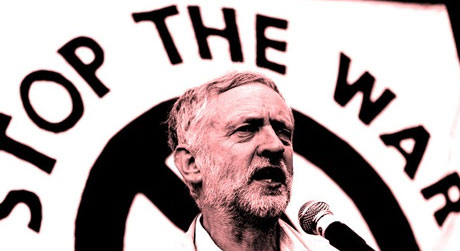
The outsider or stranger does not have to be a foreigner just somebody from outside the elite groups. In America this outsider status is so highly valued that even insiders such as the billionaire Donald Trump claim to be outsiders. However when this claim to outsider status is real, the political establishment can become upset over the perceived threat to their status. Jeremy Corbyn a serial outsider in British politics has become the leader of the Opposition Labour Party. The reaction from the political and media class has become hysterical, he is challenging their world view. No greater threat can be conceived than a non sharer of group values being leader. Horror best describes their reaction, last week a popular tabloid stated that he intended to abolish the army, then rumour had it that all the senior leaders in the armed services threatened to resign if he became Prime Minister, threatening mutiny in the armed services. All Jeremy Corbyn has done is to question the unfairness of the current social system and why the . He is not an armed terrorist yet the modest threat poses to the existing inequality, demands that he be treated as one.

A similar tendency is demonstrated in Europe where the elites have thought it necessary to demonise Tsiparas and Syriza the Greek outsider and his outsider party. They are criticised as being naive, unrealistic and even childish. The purpose of the negotiations over the Greek debt was to nullify the threat posed by the outsider. Tsiparas it goes without saying was not a member of the existing political class but an outsider and as an outsider he had to be marginalised.

Outsiders may not always be correct but in not subscribing to the group view of the majority they ask the questions that will force the “insiders“ to reconsider their policies. There is in British politics one question the outsider would ask would cause a significant shift in policy. At present all the main three parties are agreed on the need to reduce the government deficit. Yet there is a much larger deficit which is never mentioned, the banking sector deficit which is five times greater than the government deficit. An outsider would ask if debt reduction is so important while is all political debate and decision making focused on the one smaller debt. A debt is a debt, whether its run up by the government or the banks. Interestingly this is a question that never asked in other European countries. Germany for example has a banking deficit of 324% of GDP, yet German politicians never question whether this is sustainable.

Fear of the Outsider

However all too often the outsider is feared and disregarded by the governing classes and the much needed change in the policy direction does not happen. Maynard Keynes a respected academic but an outsider to the conventional economics of his time (1930s) was at first ignored and later accepted. His outsider views of how to manage the economy had become the views of the insider by the 1950s. More usually the governing classes react with horror and fear towards the outsider, ignoring the very valid claims they make for change.

mods-and-rockers

The fear of the rich and powerful insiders can be understood in the sense that outsider groups threaten their wealth and privileges. Naturally they would act against any such threat, however the reaction of the rich and powerful insider groups to the outsiders goes beyond this and borders on hysteria. One British army general was reported in the press as saying that there would be a mutiny in the army if Jeremy Corbyn the radical Labour leader became PM. Given that this nameless general was not exposed and dismissed, it seems likely that his views are shared by many senior officers. Yet this can only be seen as an over reaction, as the policy changes proposed by Jeremy Corbyn are quite modest, he is not advocating violent revolution.He is a Gandhi rather than an al Baghdadi (leader of Isis). A man who seeks to persuade, pacifists don’t tend to practice violent revolution. All abuse and fears expressed in the reaction of the insider groups seems out of all proportion, however there is an explanation for this behaviour.

One is that there is a moral panic developing amongst these powerful insider groups. The best example of a moral panic comes from the writings of Stanley Cohen (Folk Devils and Moral Panics). There were he said a small number of shuffles between two youth sub cultures on popular holiday beaches. The two groups where the mods and rockers, while there was plenty of noise there was little real violence. Yet the press wrote up the story, these young men were a feral group threatening the existing social order. What disturbances there were few and easily put down by the police. Similarly the press particularly the tabloid press have conjured up a folk devil in Jeremy Corbyn. He is seen as an agent of anarchy and disorder who threatens the very fabric of society. This fear justifies a variety of measures to disempower the social movement he represents. In this atmosphere the general who threatens an armed insurrection to prevent this radical coming to power is applauded. Other plots will develop to prevent this radical ever becoming Prime Minister, such as a parliamentary coup which removes his as leader. Just recently one senior party was reported as discussing when would be the best time to remove him through a parliamentary coup.

This over reaction by the political, financial and industrial elites will prevent them from acknowledging that his support comes from a mass movement that has a number of very justified discontents with the contemporary social order. A disproportionate number of his supporters are young and they are the group that has been dispossessed of the greatest wealth. The politicians have imposed high tuition fees on those going to university, so ensuring that they will be in debt for the rest of their lives. They have presided over a growing dysfunctional housing market in which it is increasingly impossible for the young to buy a home, leaving them at the mercy of rapacious private landlords. Just as the aristocratic elite were deaf to the cries of the impoverished poor in the 18th century, so the parliamentary class of today are deaf to the cries of the young. This deafness is not just simple callousness, but having created a folk devil out of Jeremy Corbyn and his supporters they are incapable of dealing rationally with them and their demands for change.

This moral panic is not just limited to the British elites and insider groups but this fear is widespread throughout the governing classes in the West. The horrified reaction of the European Union politicians to the leaders of Syriza attempts to ameliorate the harsh bail out terms imposed on Greece was typical of those in the grip of a moral panic. The politicians of Syriza were childish, naive, unrealistic dreamers. Once having demonised these politicians they did not need to treat them as equal negotiating partners. Instead they could abuse the power they had to compel the Greeks to accept the harsh austerity terms they wanted. This was done through the simple expedient of denying Euros to Greek banks forcing the country into near total collapse through the collapse of its banking system.

The leadership groups in society are often gripped by these moral panics, panics which blind them to the real nature of their opponents. Perhaps the McCarthyite panic that gripped the USA in the 1950s, when the country was gripped by the fear of a non existent communist conspiracy is the best example. What this fear does is to prevent the governing classes from coming to terms with the outsider groups and never dealing with the very real problems that have caused these movements to form. Whatever very real problems Britain faces the major problem is getting the governing classes to admit there is a problem, to accept that the outsider groups have a valid viewpoint and that they should listen and not suppress them. Our governing classes have seen the ‘canary in the mine die’ yet they ignore the warning signs of imminent danger.

Scapegoating the dominant economic policy of our times

images

There is a difference between the economics practised by politicians and the economics taught in the universities. One commentator has called the former macromedia (Professor Wren-Lewis) meaning that politicians have developed their own unique understanding of economics. The politician’s economics is a mish mash of economics, common sense and prejudice. While the economy is doing well this misunderstanding of economics matters little, however the problems occur when this misguided economics is the basis of policy making in the time of crisis. This is seen in the various crisis that have afflicted Europe since the crash of 2008/9. Greece is perhaps the most notable policy failure, although even the one self proclaimed success story the UK, if far less successful than claimed by its leaders. The Central Bank interest rate remains at crisis level of 0.5% as even a modest increase will derail the recovery.

The consequence of this misguided economic practice is that all governments can now do is hope that the next crisis will not occur on their watch, as they have little clue as to how to tackle it. Political economics is informed by prejudice as with many a primitive religion and always looks for scape goats to blame for provoking the anger of the Gods. If they can identify those who have angered the Gods, they can deflect blame from themselves. This policy means the government won’t have to undertake of those difficult policy measures that would mean taking on those powerful interests that would oppose change. In Europe a convenient scape goat has been found in the people, much as in many a fundamentalist religion it is the misdeeds of the people that has brought suffering on them. God punished the people of Sodom and Gomorrah by turning their cities into salt, while the God of the market punishes the people by making them poor. In the case of Sodom and Gomorrah it was the sexual licence that brought down on them the punishment by God. In Europe it was the greed of the people. They were not content with the modest income the market allocated them, they wanted more. More generous wages, sick pay, benefits of all kinds, the greed of the people know no bounds and forced the governments into borrowing more and more and forcing the government into greater and greater debt. The God of the market punished the people with the great crash of 2008/9 and his angr could only be appeased through an act of penance. This penance was to intended to get the people to reject their greedy lifestyle by embracing austerity. Since the people would not willing do this themselves government would have to act to compel them to do  penance. Penance was enforced through cutting people’s incomes, such as by welfare cuts, wage cuts or wage freezes Once people had learnt the error of their ways after a period of suffering, prosperity would return.

(Using ‘The Old Testament’ to explain the practices of contemporary politicians might seem strange. However once it is realised that the sophistication of policy making by the political leaders has advanced little since the time of ‘The Old Testament’; this use of ‘The Old Testament’ stories as a metaphor to explain contemporary political behaviour is  valid.)
One consequence of this is that it is hard to make a reasoned defence what is an irrational policy so the opponents of the austerity programme must be labelled as deviants, to prevent their policies being given a hearing. Politics can be divided into the sensibles and the foolish. The upholders of the agreed of consensus of policies are the sensibles and their opponents are as but foolish children, who know no better. One notable sensible is Christine Lagarde of the IMF who described the Greek politicians who opposed austerity as children. In Britain since the Labour party members elected a leader opposed to austerity he has been subject to a constant stream of abuse by the media and the austerians of his own party. This last group have pledged that they will do all in their power to prevent a move away from the agreed policy consensus. In terms of ‘The Old Testament” metaphor the guilty people are asking to practice again those bad habits that got them into trouble in the first place. Only the superior people that is the austerians in parliament understand what is best for the people.

When the next crash occurs the austerians will tell the people it is because they did not willingly embrace poverty. They again are at fault and the only solution is to subject more of the people to increasing poverty so they learn the error of their ways. Only in that way can the God of the market be persuaded to relent and ease the suffering of the people. How long this policy approach will work is unknown. It will at some stage be challenged by an equally irrational ideology or belief system that cannot be discredited by upholders of the dominant austerian ideology. Perhaps the ideology of the Neo Fascist Golden Dawn in Greece will be that of the group that successfully challenges the dominant irrational belief system with that of a more compelling narrative, but one that is equally irrational.

Bad economics, bad politics – Britain’s policy towards Syrian refugees

There has been an ongoing public debate in Britain about what the country’s policy should be towards the refugees arriving in Europe from Syria and other war torn countries. The consensus is that our Prime Minister’s response has been determined by the hatred expressed for refugees in the popular media and fear of losing votes to the anti immigration party (UKIP). However there is another compelling reason as to why our Prime Minister is so opposed to Britain taking its fair share of the immigrant population now arriving in Europe and that is bad economics. This government has claimed the mantle of fiscal probity and as such is committed to keeping public spending to minimal levels. If the government admitted large numbers of refugees to the country it would be committed to increasing it’s spending. Much of that increase would go to local authorities (to house the refugees) just at a time when the government is committed to reducing their budgets. It is fear of breaking its fiscal rules that prevents it from admitting these refugees.

The government has as a consequence made a pig’s ear of its policy and produced a immigration policy that will please no one. It has made a commitment to admit 20,000 refugees over five years or 4000 a year on average. This will be financed from the foreign aid budget, money that would otherwise be spent in developing countries will instead be used to finance the accommodation needs a modest number of refugees for one year. After that the councils will have to fund from their much reduced budget all the extra services that these new arrivals will require.

What the government fails to understand is that economics is unsuited to providing policy goals at what can be called the ‘summum bonum’ policy level. Economics is a servant subject a subject that when used correctly determines the feasibility of government policy proposals, it cannot provide the grand objectives that determine all policy decisions. The object of economic policy making is to set intermediate goals whose attainment will make possible the attainment of the greater goals of universal policy making. This government has reversed this process, the grand overall objective is to attain a budget surplus, whereas good economics would demonstrate how to or whether an open door policy to refugees is economically feasible. If this government is trying to disguise its greater policy goal of keeping Britain a predominantly white non-muslim country through rejecting these immigrants, this would count as a greater policy goal.

What I am trying to state is that economics is a terrible subject for providing the greater goals that should be at the heart of any government policy making, that is the role of ethics or political philosophy and economics should not intrude areas into which it is unfitted. Formerly the conservative party was a practitioner of “One Nation Toryism”, a philosophy that stated while the aristocracy, financial and industrial elites were best fitted and entitled to rule, they owed an obligation of care to the lower orders of society. This is why the Conservative party of the 1950’s was able to embrace the National Heath Service and full employment. Now the vision of the Conservative party has shrunk to accommodate the goals and principals of Neo-Liberal economics, which can offer nothing more than series of lower order objectives. The philosophy of Ayn Rand dominates this government, a government that like her sees the lower orders of society as nothing more than a drain on the nation’s resources. While the only people it see’s as demanding of respect are the giants of business and finance. These people it rewards with generous tax allowances and government grants. Hume, Oakshott and all the great conservative philosophers of the past would despair of a government that only had good housekeeping as the only summum bonus of its policy making. Minimal government of the sort practised by this government makes for ineffective and bad government.

The folly of an economics first policy is demonstrated by the government’s policy towards Syria. It is now proposing armed intervention to end the current conflict so as to halt the flow of refugees from that country, yet its policy of budget cuts have denied it the means to make any effective intervention. The cuts have reduced the fighter bomb force to a total of six planes and its cuts to the army budget have made it impossible for the army to make any effective contribution to any overseas conflict through lack of resources. Realism demands that the policy becomes not one of intervention but one of appealing to other countries to fight the battle on Britain’s behalf, not the most effective of policies.

Les Miserables and the economics of revolution

  
http://www.dailytelegragh.co
Towards the end of the film ‘Les Miserables’ there is a very moving scene in which the young radical students who rose in revolt against the government are shot by the police. The revolt is doomed to failure as they fail to gain the support of the wider Parisian population and the authorities are easily able to suppress this uprising. This is the popular perception of revolution, that is a futile uprising by the young against the tyranny of the old order one that is easily put down by the authorities. Any history of the 19th century consists of a long list of failed uprising, the Poles in particular participated in number of uprisings against their Russian overlords, all of which ended in its participants being imprisoned or going into exile. However this is a misunderstanding of the nature of revolution, the successful ones usually don’t involve violence and generally take place over a number of years. What I mean by revolution is the shift in people’s attitudes that can be best described as a sea change in their behaviour and attitudes. 
Revolution of the Right
Often this type of revolution is initiated by the right, as instanced by the successful revolution by the right against the welfare state. If Britain is taken as an example when the welfare state was introduced it was seen as a bulwark against the twin evils of sickness and unemployment. It was seen as an individual right that the state should provide an income for those unemployed through sickness or bad luck. The political right in Britain never really concealed their dislike of the welfare state principally because they saw it as an injustice, that the rich were expected to pay more tax than the poor to fund welfare programmes. They ceaselessly campaigned against the iniquities of the welfare state. Now they have practically succeeded, welfare payments are now seem as benefits to a group of undesirables the work shy. The emphasis now is on reducing benefits and targeting the claimants with sanctions to force them into work. Only last week the welfare minister announced to general a claim that he would target the disabled forcing more of them to take work, through making it harder to claim benefits and by reducing individual welfare payments. The assumption is that by making life progressively more difficult for them, they will take up employment to avoid the unpleasantness of life on benefit. As one who has worked with disabled people, I can only see this minister as an uncaring monster largely lacking the human traits of empathy and compassion.
Now the philosophies of such as Ayn Rand are the guides to life for the decision makers in society. While it may seem harsh to suggest that a writer who would welcome the death by starvation of hundreds of the useless poor provides the distorting ideological glass through which these people view the world, evidence suggests otherwise. Recently our rulers withdrew the Royal Navy from the task of rescuing refugees adrift in the Mediterranean, on the grounds that by making the journey across the sea safe it would encourage migrants to attempt the crossing. The unspoken assumption was that if some refugees drowned at sea it would discourage the rest from trying to enter Europe. This policy was not questioned by any of the opposition leaders, so demonstrating that the spirit of Ayn Rand flows through our the veins of all our political leaders. Now it is ‘cool’ to be uncaring, as this is regarded as hard nosed realism, as distinct from the naive sensitivity of the political left. 

Revolutions of the Left

Unlike revolutions of the right which are initiated at the top of society, revolutions of the left are initiated by those in the middle and lower orders of society. This means that they are inevitably doomed to failure as the top orders of society command the instruments of power. The legal system can be directed against the insurgents. Imprisonment being but one of the means of suppressing such people. Yet such revolutions are not futile even if they end in defeat. They can despite their repeated failures change the nature of society and ultimately achieve their desired ends. This can be demonstrated through a metaphor, these revolutionary movements are as a wave from the sea smashing against a rock, the rock at first repulses the wave leaving it to fall back into the sea, yet the constant pounding sea will eventually destroy the rock. Similarly while the revolutionary movements of the left are initially doomed to failure, they can through insurgencies change society. By revolutionary surges I don’t mean violent revolution, so much as oppositional social movements which constantly rise and fall, but which eventually undermine the existing social structure, which leads to change.

The sea metaphor has further applications. British society at present resembles a placid sea but which under the surface there are currents swirling which can change the nature of the sea. One such current which has surfaced in the insurgency which threatens the Labour party. In the current elections to find a new leader it is the outsider Jeremy Corbyn who seems to have an unassailable lead in the contest. He represents a very different politics to that of the main stream party, a politics well to the left of the current parliamentary consensus. It is quite likely if elected his term as leader will be brief, as the parliamentary party will find means of rejecting a leader they don’t want. However he is representative of a much larger social movement, a left insurgency that rejects the harsh austerity programmes endorsed by the parliamentary party. This current which is sweeping through the party will change it whatever happens in the leadership contest. There are other similar examples of insurgency in Europe such Podemos in Spain and Syriza in Greece. Whether these individual insurgencies succeed or fail, what matters is that the initial process of undermining the unequal social order has begun.  
Then there is in the USA the ‘Fast Food Forward’ campaign whose aim is to secure a national minimum wage of $15 an hour, if it succeeds it will transform US society and economy, it is yet another insurgent movement. What these movements have in common is that they form outside the political system, as that system is constructed so as to prevent change, rather than facilitate it. Change of this significance will only take place in response to change from outside the political process. The established political process is dominated by the dogmatists who believe that the existing social and economic order is the the best possible one as it is founded on the universal truth of the free market. Politicians believe their only role is to implement changes to make the market system work more effectively, keep things as they are and if necessary repress those movements campaigning for change.

The economics of change and revolution

Society comprises of competing social groups with conflicting claims on its wealth. Rather than stable social order organised around one universal organising principle  that of the free market, it is a kaleidoscope of competing different groups all wanting very different orderings of the social system and its wealth. Society at best is the ring in which these groups compete, but according to rules of the competition.  Violence for example as a means of effecting change is ruled out. However if the dominant group refuses to recognise the legitimacy of the competing groups and tries to suppress them, violence will be resorted to as the social order or the rules of co-existence have been destroyed by the dominant social group.

Economics to have any relevance must be a dynamic subject one that can accept change, not a subject that believes that it has found the holy grail of social existence in the free market. It must recognise that the society of today can be very different from that of yesterday and so should accommodate that change. Economics cannot be a subject of universal truths, but one of partial truths, it must establish which of those truths in its current content list can be used in the study of different societies. A modest subject that seeks to find truths in very different economic and social systems, rather than have a universal blue print to which all societies and economic systems must conform. 

The Flawed Belief in TINA (there is no alternative)

Today there was yet another article in my daily newspaper by a prominent politicians disparaging those on the political left that fail to recognise the realities of life and want to make impossible changes in society. This disparaged group who are abused as fantasists, protest voters but never by terms that suggest that their choices are made on the basis of rational judgement. The only surprise is that he did not suggest taking the vote away from these ‘childish’ voters. Actually one former leading politician did suggest that by suggesting that the vote for the new leader of the Labour Party should be sabotaged by the other candidates withdrawing so making the contest invalid. If this had happened the same politician would have advised on how to rig the voting mechanism to ensure the right person was elected.

costume-french-nobles-2

18th Century Aristocrats (counter-factual.net)
What is barely understood is that we are governed by an elite comparable to the landed aristocratic elite that dominated politics in the eighteenth century. This elite is composed of politicians, media persons, technocrats and financiers educated at the elite universities. (There are other groups that could be included but for brevity I have excluded them, what they all have in common is an education at one of the elite universities. It is this education that sets them apart from the rest of society.) What they practice is a policy of exclusion, only the dialogue between the members of this selected group is considered valid. They only listen to themselves, the rest of society is to be a childish rabble whose views and opinions are not worthy of consideration.

What I want to attack is the shared understanding of this group, an understanding which ‘things must be as they are’ or as it is more familiarly known TINA that is the society in which we live is the product of economic, social and technical forces that are beyond the control of individuals. What the politician must do is understand those forces making for change and work within the constraints imposed by them. Social democratic politicians recognise the pain of people working on zero hours contracts and that caused by job insecurity, but their role is not to change the cruel inequalities in society. Their task is to explain that low wages and job insecurity are a feature of modern society and must be accepted and that it is only through individual efforts at self improvement can circumstances change. The only amelioration they offer is the most modest of reforms, which will have little impact on there working lives. The social democratic party refuses to accept policies that would reduce or end job security by insisting that it is not the role of government to ensure that employers treat their employers well, what they instead offer is a way out of this appalling way of life through self improvement via education.

This new elite remains isolated by its adherence to things must be as there are ideology from the wider discontent in society. They believe that they are the ‘grown-ups’ in the words of Christine Lagarde (Managing Director of the International Monetary Fund). The new left in Greece (Syriza), Spain (Podemos) and Britain are childish fantasists trying to ignore the reality of the grown up world.

As a sceptical economist I must doubt such understanding of society I would ask why is it society is as it is? The reasons given are irreversible technological and social changes. Yet on examination they are only partial truths. Technological change has taken place but the distribution of incomes is determined by the social order. The company director in Britain earns a hundred times the salary of the average of the incomes of the employees in his business. In the 1960s the director’s salary was only 30 times greater than the average. Why the change, if the answer is that company directors have become more productive, that is open to objection. The profitability of companies as a return on capital invested in very similar to that of companies in the 1960s. The falsity of this view is demonstrated by the fact that in many failing businesses the directors are paid excessive salaries, how can huge salaries be justified for such corporate dimwits?

What as the sceptical economist I would say that there are different reasons for gross income inequality. While it cannot be doubted that some income differentials are due to technical change in that information technology has made many former skilled occupations redundant, the growing prevalence of the low wage culture has origins elsewhere. One is custom and tradition which decrees that unskilled occupations only deserving of low incomes.There is one interesting example which demonstrates this fact. When at university I read a book on applied economics by a Professor Brown and one example from that book sticks in my mind. He stated that the evidence suggested that wage differential between craftsmen and unskilled labourers had remained the same since Roman times. This suggests to me that much the justification of current income differentials comes from custom and tradition and does not reflect the real contribution each employee makes to the business. Why should the cleaner or the sales assistant be paid so little?

The other factor is power, the financial and industrial elites have cited custom and tradition as the reasons for low pay. Their mantra is unskilled staff make such a small individual contribution to the businesses profitability that they are only deserving of low pay. Yet I have never read of any study which has successfully identified the contribution to the firms productivity of say the cleaner and the financial director, yet the salary of the latter is more than that of the former. Businesses are a collaborative venture in which it is impossible to identify the contribution that each individual makes to the success of the business. Is the cleaner really that unproductive? It is the cleaner that maintains the workplace as a clean and healthy environment in which to work. Dirty toilets and uncleaned washrooms would lead to outbreaks of illnesses associated with unhygienic environments. How productive would the company director or IT specialist be if struck down by dysentery? There is good reason to suggest that cleaners are vastly underpaid, yet employers continue to pay the minimal wages.

Governments have enabled this power grab by the business elite by passing legislation to weaken or destroy those organisations that are the only means of equalising power in unequal labour market. Ever since the Neo-Liberal revolution politicians have constantly weakened the power of those groups that threaten the power of the over mighty employer. In Britain it has meant the emasculation of the one powerful trade union movement, changes in the law now make it very difficult for the unions to effectively organise industrial action. Therefore there is little restraint on the employer who wishes to pay as little as possible to his staff. It is no coincidence that some of the most profitable businesses with the highest paid directors in Britain have been the supermarkets an industry where low pay and job insecurity are endemic.

Scepticism as a philosophy is misunderstood, sceptics don’t believe are no truths, in that all philosophies or ideologies are fallacious. Instead it is the belief that in subjecting an ideology, philosophy or belief system to sceptical enquiry the truths it contains can be discovered it is the stripping away of error.

Being a sceptic is not contrary to a belief that society can be improved through reform, it is just a scepticism about the nature of such much contemporary reform, reforms whose fundamental truths are based on custom, tradition and exploitation of market power. I am a left of centre sceptic who believes in the superiority of left of centre ideology because it contains less wrongs than the alternatives and that with its emphasis on fairness those wrongs are likely to be less damaging to humanity than the wrongs of alternatives that exclude any notion of fairness. A sceptic also favours democracy as in a democracy there are always contending philosophies and ideologies as the proponents of each that will be subjecting each to scrutiny and through that many of the errors of policy associated with the mono-thought of the Neo Liberal world view can be avoided.

Unlike the interchangeable Neo-Liberals and New Keynesians who dominate the political process with their uniformity of view, I want a political culture that recognises many ideologies and philosophies as valid and that a recognition the aim of politics is not to destroy the opposition but to create a political culture in which many views can thrive. Contemporary politicians are so assured of the rightness of their beliefs that they cannot concede that they may wrong. They are as in Christine Lagarde’s word the grown ups who understand reality and who don’t indulge in childish fantasies. What a sceptic would say is that any believers in any ideology that denies it contains any errors or wrongs are the childish and naive ones.

Public servants and their inefficient ways

Society has always needed scape goats for its many failures, it makes it easier if one can identify a person or group responsible for these failures, it avoids any difficult soul searching into the real cause of the problem. Usually these scapegoats are from an ethnic minority, it was only 50 years ago that boarding houses would have notices stating that the Irish were not welcome. Since that time new scapegoats have appeared usually from the new immigrants at one time is was Afro Caribbean’s who were blamed for the increase in crime in the 1980s, a role they have now vacated, which is filled by Eastern Europeans. However what is unusual is the addition of an occupational group to this list of scapegoats, that is the public servant. We are blamed for the lack of dynamism in society or as it is more usually termed economic growth. Public servants either through their adherence to bureaucrat practices make change so or impossible or they just syphon off tax revenues to little productive purpose.  
The outing of this parasitic group that feeds off the life blood of the economy was the work of the American public choice theorists. They highlighted our bad work practices, in the words of Charles Murray the public servants solution to a problem was always the same, to ask for more money to create a new department to deal with the solution and promote themselves to run this department. All that motivates us is the opportunity to increase our own status and incomes. Job security means that we don’t have to respond to public demand. Our customers the public lack any sanction to compel us to perform better. The solution is to break up these public sector monopolies into competing businesses that are forced to compete for the public’s custom if they are to survive. 
These theorists confirmed what society had always thought that we were a group of jobsworths who were only interested in feathering our own nests who provided the public with an abysmal service in return for our inflated incomes and job security. This is such an obvious truth that journalists such as Simon Jenkins can state with certainty that the education, health, legal and defence systems waste public money on a vast scale and that profligacy with public money produces little of value. It is such an obvious truth that he does not have to produce any facts or figures to prove his assertion, everybody knows that he is right.
Governments have long been persuaded of the truths of public choice theory, so much so that they have contracted out, wherever possible services to the private sector. Where services have remained in the public sector, they have created large external costly bureaucracies, whose only task is to ensure that public sector workers do their job, according to the principles of the free market. These inspectorates have names such as, the Care Quality Commission and their sole role is to police public sector workers. Neither the government or the advocates of public choice theory see the irony of having to introduce a large and costly bureaucracy to ensure that the public sector now works according to the principles of the free market. Public servants instead of experiencing the freedoms of the so called free market are in fact part of a new ‘Big Brother’ society. Winston Smith’s world is that of the new public sector.
Given that public choice theory teaches that public servants are only self interested of individuals who have little interest in serving the people the new inspectorate and public sector managers have to be vigilant to root out any of the bad practices and habits that are associated with bureaucracies. The only way they can achieve this is to monitor every minute of the public servants working day. However even the new bloated management teams and inspectorates cannot be physically present at every minute of the working day of each staff member. Consequently they have devised a system of targets which is constantly growing as inspectors are constantly thinking of new ones and workers are expected to provide evidence that they have been working to achieve these targets. This involves members of the staff team completing paperwork to demonstrate how they have achieved these targets.The demands on staff time for record keeping have reached such level that in teaching for instance the time spend on record keeping is creeping up towards 50% of time spent in work. The priority in the public sector has become not service delivery but record keeping which enables the manager to demonstrate the ‘appearance’ of staff adopting good working practices which is thought to be indicative of the quality of service provided. 
These new managers and inspectors have a fear of staff having free time on their hands, teachers provide perhaps the worst example in their minds. They have breaks when the children are going out to play or having lunch. Unfortunately for these new ‘public choice’ theorist children cannot be keep working without a break. This gives the teachers an opportunity to get together and talk, this give rise to the greatest fear of the public sector reformer, which is ‘canteen culture’. Given free time the teachers have the opportunity to discuss their teaching with their colleagues and what this enables is the dissemination of ‘worst practice’,the so called canteen culture or what others might call the ‘work ethic’. These reformers are terrified of the older staff passing on bad practice to new teachers. The only solution is to turn free or non teaching time into work time, this time can be used to complete some of the many records required of teachers to demonstrate good practice.
I can confirm the worst fears of the public choice theorists, we did not spend non teaching time discussing good teaching practice, but we gossiped about television programmes, who was having an affair with who, argued about politics. In other words we never used this precious time to discuss how to improve our teaching practice, we were of target or whatever the management speak is for wasting time. I can remember that is one school a group of staff had set up in one of the staff rooms the board game ‘Risk’ and spent all their lunch times playing this fiendish game. This surely demonstrates best the horrors of allowing staff to do what they wish with non teaching time.
Fortunately reformers were able to see the horrors of the old well established service practices and were able to sweep them away. Now in schools staff are constantly on target and the obstructive ‘canteen culture’ of the past is fast disappearing. As an example of the latter I can remember receiving a survey from the education ministry asking to complete and return so they could work on the results to improve teaching practice in all schools. I with all my senior male colleagues threw the survey in the bin. Today no teacher would contemplate treating with such contempt a directive from the education ministry.
What I going to suggest is that when we consider the fruits of these reforms the question to be asked is have the expensive reforms achieved what was intended or could improvements have been better managed at a much smaller cost. As a sceptical economist I tend to the latter view, perhaps an example from teaching will demonstrate my view better. The governments of today and the recent past keep trumpeting the success of their reforms as demonstrated by the improvement in school exam results. What these politicians fail to understand is that there is a different between coaching students to pass an exam and educating them. Educationalists will admit what makes a good education is open to debate, as is how students actually learn, yet our education ministers claim they know, in fact they have very little understanding of what makes a good education. It may be elitist to say so but throwing out a few spurious statistics will impress a gullible press and media but that all it is the appearance of an improvement in the education system.
Unlike most critics of the recent reforms I am not going to argue that the previous education system in which the public service ethos was seen as the main motivator was perfect but that the reforms introduced at great cost have failed to achieve their purpose. There were much better ways to improve a system that actually worked quite well, methods better than adopting a ground zero approach to reform. What reformers believe is only by destroying the old system and practices will they will be able to change the system. 
What Simon Jenkins the journalist and all the denizens of Fleet St., Westminster and Whitehall fail to understand is that public sector work is undertaken by people for other people, it’s a personal relationship. People are different and have different needs they cannot all be fitted into one schema developed some Whitehall bureaucrats under the direction of a politician. Policy is directed in way that will win favourable headlines. The teaching of reading demonstrates this, any educationalist or teacher will say that children learn to read in a variety of different ways.Yet the education ministry has declared in all ignorance that only one method is acceptable and that is phonics. Good practice or reality matters little to the Whitehall bureaucrat or politician, why matters is conformity to what is seen as good practice.
What politicians and the media are good at doing is seeing perceived failures or inefficiencies and acting in a way that is often counter productive to good practice. Certainly it is frustrating when you are queuing at the Post Office when the counter clerk takes what seems to be an inexplicable break, when there are huge queues in the office. Yet this may be the only way the stressed staff can cope with the myriad list of rules, understaffing and the sheer monotony of the work. However it is on this perception of the service that our political masters decide policy. When I was in the teachers staffroom myself and my colleagues would often express in disrespectful attitudes our attitude to our managers and the latest government initiative. Our disrespect was often a way of coping with the stress of the job, can I suggest it was no more than skin deep moaning. Today that would be considered as heresy and such negativity would be discouraged quite actively in the staff room, denying the staff the opportunity to let go, now everybody has to be on message. 
When prejudice becomes policy it makes for bad policy, the fact that every body knows that public sector works abuse the system to their own advantage, is the poorest basis on which to form a policy. The evidence for the poor performance of public service has never been more than anecdotal, yet it is on the basis of this anecdotal evidence that the reforms of the past twenty or so years have been based. While there may be some evidence for improvements in quality of service the evidence is not overwhelming. Policy based on an obsession with the minutiae of the workers daily routine it is obviously going to miss the ‘wood for the trees’. Success is now measured in small percentage increases in statistics, the sight of the bigger picture has been completely lost. The old British civil service had the skills and resources to focus the whole nation’s productive effort towards fighting the war, the new British civil service was unable to organise the competitive tendering by rail companies for right to operate the West Coast railway line. It was so poorly organised that the losing bidder Virgin Rail was easily able to get the decision reversed at a court hearing. If mistrust is the abiding characteristic of the relationship between ministers and civil servants the quality service provided is going to be poor.
To this sceptical economist it appears that the politicians having identified faults in the public sector have devised reforms that instead of improving the service have on the whole made it much worse public service.  

The Demise of the Liberal Democratic State and the rise of the Corporate State

Francis Fukuyama was wrong the 1990s did not herald the triumph of liberal democracy, but its showy demise. George Bush’s attempt to impose democracy on Iraq by force demonstrated the folly of this premise. Even the democratic programme that he sketched out gave a dominant role to the business corporations that would effectively control the new Iraq. Giving lie the all the claims about remaking Iraq on democratic lines. Prior to the invasion there was a quarrel between two of the main participants in the invasion over the distribution of the spoils  between the victors. British oil companies believed that the post invasion constitution gave too much to American and too little to British oil companies. The chaos of the post invasion Iraq denied the business corporations the influence and income they expected. Although the part of the profitable oil industry that is not under the control of Isis, is run by American oil corporations.

  
Perhaps it is in Europe that the evidence of the new nation state is best demonstrated. What is developing in Europe is a new corporate state, a state which functions primarily for the benefit of the business corporations? The financial crisis of 2008/9 illustrates this all too clearly. Due to irresponsible lending practices the banks failed, even if only a few crashed all threatened by the crash. Rather than let the banks fail the governments of Europe injected cash into the banks to prevent them failing. In Britain the bailout was equivalent to 10% of GDP, although given the huge size of the banking deficit the government was effectively mortgaging the countries assets and wealth to save the banks. It was not the banks that had to pay the price of their failure but the peoples of Europe. Europe wide austerity was regarded as necessary to reassure the banks creditors of the financial worthiness of the nations that were the guarantors  of their debts. A government with small debts would be regarded as a better guarantor of the banks credit than one with large debts. Surprisingly the banks got of almost scot free apart from a demand that they increase their cash reserves to 3% of total liabilities and ring fence retail banking, on which the banks are stalling. The Banks are now asking for the government eforms of an increasingly dysfunctional financial sector. In response to the pleas of the banks the demand to increase their cash reserves to their required total has been constantly put back, nowhere more so than in continental Europe. Despite claiming a government of financial prudence Germany has been one of the worst offenders. Only the other week the government in Britain refused to renew the contract of the chief executive of the Financial Conduct Authority as the banks had accused him of being to hard on them. In Britain as in Europe, what the banks want the banks get.

There are many serious problems that the government in Britain needs to tackle but one of them is not the reform of the state funded broadcaster the BBC. The agreement under which the BBC is funded is up for renewal soon and the government has used this as an opportunity for root and branch reform of the broadcaster. One of the main backers of the winning Conservative party was News International, the largest shareholder in Sky TV. The directors of this company has long argued for a change in the nature of the BBC, a change that would make it less of a competitor to Sky News. Its former Chief Executive James Murdoch argued for a change that would benefit Sky TV. He said in a lecture that the BBC  had a role as an innovative producer of TV programmes but it was not its role to exploit those innovative programmes. Once those programmes had been developed they should be given to the commercial broadcasters as the role of the BBC was to experiment not create popular TV. Unsurprisingly the main conservative spokesman on the media has echoed these views. He wants to end the BBC’s role of producer of popular programmes that compete with those of Sky TV. There is little doubt that one of the priorities of this government is to repay its corporate sponsors with favours.

Rather than continue with list of items that illustrate the increasing corporatisation of Britain, I want to compare the British governmental system to that of Russia. The Russian system of governance is often referred to as a mafia run oligarchy. All these commentators that do so fail to recognise the similarities between the Russian and British system of governance. Probably the only difference is in the level of criminality of the oligarchs in each country.

When the Soviet Union collapsed in 1990 the reformers in charge of the country wanted to adopt the free market of the West, so as to enjoy a similar level of prosperity. However they rushed into privatising their stated owned industries, without realising that the free market economies of the West were only successful because the market operated within a strong legal system that prevented the many abuses that occur in an unregulated market. Given what was literally a ground zero, the oligarchs were able to remake the Soviet economy to their own liking. They bought up the businesses at bargain prices and controlled the various sectors of economy, however for complete control they required control of the governmental system. This they achieved through bribery, intimidation and violence. Now President Putin runs a collective oligarchy, an oligarchy that exploits Russia wealth largely for its own ends. Opposition to the oligarchy is suppressed in ways similar to the former communist system, critics are subject to intimidation, often including violent assaults, and if that fails they are sent either to a mental asylum or camp where the mistreatment continues.

The oligarchs in Britain and Russia believe in a similar free market system, that is a free market in any obstacle to the free operation of business enterprise is removed. Obstacles such as trade unions, labour protection legislation and government interference. In Russia there was little too prevent the rise of the oligarch as in a ground zero economy (one in from which the state was largely absent) there could be no effective opposition and by controlling the government they can ensure that none arises. The task for the British oligarchs was much harder they had to create a society that was favourable to the free market (as they saw it). This meant they had to capture government and ensure that it introduced measures to remove all the obstacles to the smooth running of the market. Chief of these is the trade union movement and not surprisingly one of the first measures of this new corporate friendly government is legislation to further emasculate the trade union movement, so as to ensure that it cannot interfere with the smooth running of the market. The proposed legislation will effectively prevent trade unions from striking, so removing the  threat they pose to employers.

There is however one significant difference between Russia and Britain. Elections in the former are largely controlled by the state and there is never any likelihood that the opposition can come to power. In Britain elections are open and fair and the opposition can become the government. However the two main political parties are coming to resemble each other, when the opposition criticises a government policy, it is not so likely that they disagree with the policy as believing that they could implement it better. Increasingly the two main parties are becoming the mirror image of each other, but are committed to the philosophy of Neo-Liberalism. Unfortunately elections are increasingly becoming a competition between the groups  competing to be the representative of corporate Britain. One of the main concerns voiced by competitors for the leadership of the opposition party is that the previous leader was too distant from the corporate interest. Unfortunately too many politicians now see politics means to win a seat on the board.

The recent history of the Greek crisis shows how dominant is the corporate interest in Europe. When the Greek crisis caused by the nations over indebtedness occurred, the European policy makers could have agreed to a restricting of the Greek debt. This restructuring would have either involved pushing debt repayments in some time in the distant future or forcing the nation’s creditor to take a ‘hair cut,’ that is force them to accept a downsizing of the Greek debt. Either of these policies would have hurt the corporate interest, that is the banks would have lost billions of Euros in the ‘write down’ of the loans that they had made to Greece.  Instead the European politicians forced on to the Greek government a programme Neo-Liberal market reforms. These policies were intended to make the Greek economy more competitive and boost exports. The surplus earned on the export trade could be used to pay of the Greek debts. Unfortunately this Neo-Liberal experiment failed and after five years of austerity, economic growth has stalled and GDP is down 25% making it increasingly unlikely the debt will be paid.The International Monetary Fund states that payments on Greek debts should be deferred for thirty years, as only then will the economy have grown sufficiently to enable the Greeks to begin to pay off their debt.  Despite the urging of the USA the European politicians stubbornly support the banks cause and refuse to allow the Greek nation any debt relief.

Quite possibly the triumph of the corporate state is best demonstrated by the proposed Trans-Atlantic Trade and Investment Programme (TTIP). When this treaty comes into force any business corporation that believes government policies have caused it a loss, can refer their case to an international arbitration panel. This means that if government legislation aimed at limiting the harmful effects of tobacco restricts the sale of this product, the tobacco company can go to the panel asking for compensation or a revoking of the act. There is one such dispute between a South American company and an American Tobacco giant. Soon such actions will become common place  and the sovereignty of European governments will be undermined. In Britain at least too many politicians are in favour of this policy, as they believe their support for TTIP will earn that a well paid position with one of the business corporations, they will willing surrender power for cash.

There is one failing of the corporate state and that it is remarkably incompetent, in that it lacks the competence to deal with a major crisis. The banks only survived the crisis of 2008/9 because they were supported by the government. There will be other such financial crisis in which business corporations will only survive with the support of government. There is in Europe the unresolved debt crisis, not the one of popular imagination but the combined private sector banking debt. A debt that in Britain exceeds 400% of GDP and in Germany 324% of GDP.

These business corporations have only a narrow minded view of the world a view one that is focused on their own self interest. The banks in Britain have been campaigning successfully for an end to restrictions on their less desirabale activities and the government has complied. It has largely passed unnoticed but at a recent City of London banquet the governor of ‘The Bank of England,’ said he saw no reason why banks should not be allowed to increase their assets to 900% of GDP.  The majority of a banks assets are loans which are funded by borrowing from others, so if Mark Carney has his way the debts of British banks will rise to astronomic levels. There will at some time be a crash that in scope will exceed that of 2008/9. A crash of these dimensions would force  a collapse of the corporate state as the government will be no only body with the authority and power to avert the collapse and rebuild the damaged society. One economist Anne Pettifor has written a book called ‘The First Word Debt’ crisis, a book which is ignored by all European politicians. Rather than act on the basis of the precautionary principle, the European politicians seem to act on t’he eyes firmly shut’ principle.

All political systems contain within themselves the seeds of destruction, in the social democratic society of the past it was the conflict between the major business corporations and society. A conflict that the former won. The corporate state is more unstable than other political systems as there is no great vision or commonality of view that unites the community of business corporations. The only commonality is their hostility to any regulation of the free market and in reality they are a number of social units all pursuing their own self interest. This means that the corporate society lacks the strong mechanism for directing society to towards a greater end other than mere self interest, lacking this overarching powerful body, society can only fall apart in the event of being struck by an economic or social tsunami.

The great floods that devastated New Orleans demonstrate how the new corporate state fails to cope with  crisis. Cuts made to the emergency and environmental services made at the behest of a business dominated tax cutting government had left these services unable to respond adequately to the floods and their inaction prior to the flooding worsened the devastation. The levies that protected the town were in a state of disrepair and unable to resist the tidal surge and broke. All the world could do was watch in horror as the American government failed to halt the destruction of New Orleans.

The failure to resolve the Greek crisis points to a future crisis in Europe. Greece is but a small country accounting for but 3% of the European Union’s GDP, yet the European Union struggles to find a solution to its problems. It’s only success is in replacing the various democratically elected governments that are hostile to its austerity programme. Greece only rid itself of the military junta popularly known as the Greek colonels in 1974. The Greek army is the one institution that has not been devastated by the Neo-Liberal reforms imposed by the EU  and it may be the only body that is capable of eventually restoring social order after the havoc caused by the latest austerity and reform programme. Possibly this is the future for us all as the failures of the Neo-Liberal or corporatist state can only result in its replacement by authoritarian state supported by the military. The pro business agenda so having hollowed out the democratic state its institutions lack the resources to respond to a major crisis. This is demonstrated by the financial crash of 2008, the Chancellor of the time commented in a newspaper article that the crash was imminent. Yet despite this knowledge the government and Treasury were incapable of taking any action to avoid the crash, much like a rabbit that is frozen by fear when faced with the headlights of an oncoming car.