
Folk tales and fairy stories with their black and white characterisation for example the evil step mother and the virtuous, noble and abused step daughter are characterised as stories only for children. Their tales of good and evil are seen as being far too simplistic for adult reading. This is a misreading as the fairy tales we tell our children are but sanitised versions of the original folk tales. In the original story the step sisters cut off parts of their feet so as to fit their feet into the glass slipper. What is not understood is that folk tales are but attempts to explain the malevolent world in which our peasant ancestors lived. Fairies were not seen as good but as spirits that had to appeased as angering them could result in misadventure. When the Church insisted this was a good world created by God, how could the misfortune that people suffered be understood except by understanding there must be a lower level of supernatural beings who were responsible for the evil men suffered. What our peasant ancestors saw was that they lived in a world in which good and evil co-existed, not so simple but realistic.
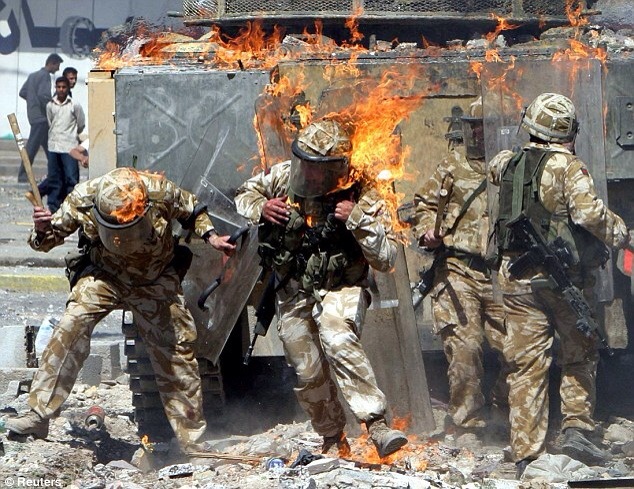
This simple world view is in contrast to the sophisticated society of today. Rather than the simple black and white world view, it a world view of greys, varying from the darkest of greys (bad) to the palest of greys (good) and between these two there are a whole series of different shades of grey. However bad is not totally excluded, but bad only applies to those people, the psychopaths who operate outside the normal range of behaviours. When morality is seen from the perspective of the political and dominant social classes there is an incredible fluidity to moral concepts, particularly when the politeriat who govern Britain is considered. This merging of good and bad can be seen in the concept of the just war. Killing is bad except when its undertaken as part of a just war. St. Augustine defined the concept when he cited the conditions under which a soldier could kill to defend his country. Others such as Thomas Aquinas further refined this concept. While there was justice in fighting the Second World War to remove Hitler the concept becomes stretched to breaking point with the Iraq war. Our leaders invented the threat of Saddam Hussein’s weapons of mass destruction and the threat they posed to the West to make the war just. One bad example does not made a moral principle bad, however the concept is open to misinterpretation or abuse, as political leaders are always tempted to give it a meaning that suits them. Government’s never fight bad wars only just wars.
Goodness takes on an incredible diversity of meanings when used by politicians. Good for them is the greater good, a good which only they understand. Only they can make the greater good a reality. The austerity programme the UK government imposed on society is for the good of all. It will like the medieval practice of bleeding purge society of ills. All very reminiscent of Stalin, who regularly sent thousands to the death camps, for the good of Russian society. Killing thousands of Ukrainian farmers led to starvation and the death of millions. Britain’s austerity programme has impoverished millions and the spread of poverty level wages has reduced demand and slowed the recovery from recession. When political leaders define good or the greater good it rapidly loses any moral content and all kind of evils can result from this. The Iraq war was intended to achieve two goods, the removal of weapons of mass destruction that threatened the West and the freeing of the Iraqi people from a cruel dictator. Instead of it being a being it good action the reverse happened. Thousands were killed in a bloody civil war consequent on the invasion and now the country is threatened with a new civil war, one against an extremist Sunni militia.
Perhaps if George Bush and Tony Blair had a sounder understanding of morality than they displayed at the time, they would not have committed themselves to the folly of the Iraq war. Politicians have long given up reading Christian moralists such as Erasmus, but if they had not, they might have come across his article entitled ‘War is sweet to those who have never tried it’. Nothing is new, ambitious princes have always through the folly of war damaged the health and welfare of their peoples.
There is a danger in our contemporary society of having leaders lacking any fixed moral reference points. If good is a flexible thing only given the meaning that the leaders and political class give it, there is nothing to stop them committing inhumane experiments of their people. Stalin, Mao and Pol Pot murdered millions in the name of their self proclaimed goods. On the same spectrum but at the other end our politician practice inhumane experiments on us. Austerity is perhaps the worse, although there are plenty of other examples. Children in Britain have had to endure endless experiments with their schooling experiments of varying degrees of cruelty. Education ministers impose diktat after diktat on our schools which seem destined to introduce the spirit of Gradgrind into our schools. Schools are becoming akin to Victorian factories with child labourers repeating a series of unending mundane tasks. Experimentation is not limited only to our children but also to the sick, the disabled and the young unemployed, all the major political parties seem to be engaged in a competition to produce the most inhumane policies towards these groups. When any real understanding of the good is lacking, cruel and inhumane policies will result not so much from a sense of cruelty but an inability to see people as other than things, just another resource. Possibly the bear pit that is Prime Minister’s Question Time is the best representation of the callous unfeeling nature of our politicians.
Not recognising or understanding good is only one part of the problem, the other is the failure to acknowledge the bad. Children understand that out there are bad people, be they evil fairies, step mothers, dwarves or trolls. Politicians having no conception of bad fail to recognise bad people. The evil financial wizards who managed to make billions disappear were never recognised for what they were, in fact many of them were rewarded with titles from the government. Similarly politicians never recognise the evil trolls, dwarves and queens that populate the market. There are many bad landlords who charge exorbitant rents for unfit housing, yet politicians don’t recognise that there can be bad landlords and that only government regulation can resolve this problem. When reforms of the private rental market are suggested, a chorus of ministers, politicians and journalist cry it is impossible. They claim that any regulation would make the market worse, claiming that regulation would force landlords to withdraw from the market. Conveniently ignoring that those self same landlords have borrowed vast sums to buy their rental properties and it would be suicidal not to let them. The free market for them is an unalloyed good in which their can be no bad or evil. Bad landlords are not a problem that the market can’t resolve.A child from their knowledge of fairy tales would recognise really do exist, while politicians with a moral free sensibility cannot.

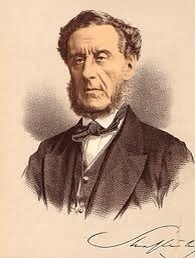
There has always been a clash between doing what is expedient in politics and what is principled. However what is unique in the present parliament is the lack of great principled individual politicians, our current parliament is a moral free zone. All the great reforms of the past have been driven by outstanding principled leaders. Lord Shaftesbury a Christian politician was the driving force behind the ending of child labour in the factories and Non-conformist Christian politicians such as Keir Hardie, Lloyd George and Aneurian Bevan were largely responsible for the creation of the welfare system, which their moral free successors are in the process of hastily dismantling.
It would be naive to claim that the politics practised in the past was much superior to today, but then unlike today there were moral giants who could drive through measures of social reform. One has to ask why is our parliament populated by a generation of moral pygmies? Perhaps an answer can be seen in the education of our predecessors. Not so much academic education as their education in values in the wider community. Wilberforce and Shaftesbury were evangelical Christians, Lloyd George and Aneurian Bevan were Non-Conformists and it was their Christian education that gave them a fierce attachment to a compassionate value system. Interestingly Lloyd George was as venal in many respects as our contemporary politicians, a womanising politician who willing sold political office; yet he was redeemed by a greater moral vision. What is lacking in contemporary society is the moral counterweight that the churches in the past provided to unbridled self interest. The great universities educate politicians in the practicalities of government, usually in PPE (Philosophy, Politics and Economics). Contemporary philosophy courses teach scepticism, politics courses the art of vote winning and economics the management of society, skills needed for the second rate political Machiavelli’s. As an economist I tend to single out economics for the greatest part of the blame, it is the great leveller, a subject in which everything is reduced to a material benefit or cost, much like Oscar Wilde’s cynic who knows the price of everything but is ignorant of the value of anything. Economics I believe has a tendency to shrink people’s moral vision. Particularly as current Neo-Liberal economics teaches that the economy is best left untouched by government intervention and that it is the unregulated free market that will deliver the goodies that people want, be it a home or high quality medical care.
What is moral in a government that values the interests of the drinks industry above that of the health of the community. Successive governments be they Labour or Conservative have facilitated the expansion of the drinks industry by easing the licensing laws. Our more principled ancestors (Non-Conformist politicians) recognised the evils of too free a consumption of alcohol and introduced licensing laws. Neo-Liberal economics teaches that the greatest freedom is the freedom of the individual to consume what they please. The costs to the health service of alcohol abuse, the increase of the number of babies damaged through alcohol fetal syndrome and alcohol induced violence count as nought against the individuals right to self abuse.
The present cannot be remodelled according to the ground rules of the past societies. It is not possible to reinstate the church as a powerful institution in society and it is probably not desirable. There are too many examples from the past of the church abusing its powerful position, not least with the burning of heretics. One answer is to demote the inhuman human sciences from their dominant position in the political and public dialogue. Plato does for me provide a way forward, he said that whoever knows good desires nothing else. What he meant by this was that the study of the nature of good has the potential transforms the human personality. (Such a brief statement does not do justice to the complexity of Plato’s thought, to do it justice would require a lengthy exposition.) Only Christians take the study of good seriously, university ethics courses teach students that good is an unknowable concept and at worst an emotion. I guess contemporary philosophers would be unsuitable to the teaching of good and probably only theologians could teach it without self mockery. What I desire is a reordering of the university syllabus particularly for the great and good in the elite universities. Obviously I am not naive enough to think this teaching would modify the behaviour of the great and the good that enjoy the ‘frat boy’ life style at university, but it might produce a new Lord Shaftesbury to be a moral counter weight to the moral free sheep that populate our politics.





 An Unusual Economist