Tag Archives: free market economics

The Economics of the School Playground or Free Market Economics

Recently I met a group of friends who like me are nearer to seventy than sixty. What surprised me was that the ethics of the school playground still prevailed amongst us. As we had not met for several years, there was an immediate struggle within the group for supremacy. One particularly made a determined effort. First through trying to put down what he saw as the weakest member of the group, by making a slighting references to his speech impediment. Once having demonstrated his superiority to over him in his mind, he went on to list his recent achievements to demonstrate his superiority over the others. This competitive behaviour is apparently typical behaviour of men in any social situation. Once he felt that he had achieved top dog status he calmed down and returned to a more normal conversational mode. This is little more than a grown version of the  playground behaviour we indulged in as children. In my primary school it  was superiority in the traditional sports of marbles, conkers or any athletic activity that counted.  There was inevitably one boy who excelled at all things and who had the admiration of all, the alpha boy (male). What struck me was that if the behaviour and the ethics of the playground still governed the behaviour of this group of near seventy old men, surely these playground behaviours must come to the fore in all spheres of activity in which men participate.

Obviously it is possible to overstate the influence of the learnt playground behaviours on adult males; however there do seem to be striking similarities between behaviours of boys in the playground and those of adult males.  Is this not demonstrated in the male obsession with competitive sport? Men are taught from their earliest age that life is a competition in which its necessary to win or at least do well. Losers are beneath contempt, I still remember with horror the way us boys treated the designated loser in the playground. The vital social skill of co-operation is placed well below that of competitive ability. Until very recently economists were men, the Cambridge economist Joan Robinson (1903-83) being one of the exceptions. Does the dominance of men in economics with their competitive behaviours influence there understanding of the economy? The answer is a probable yes. Economists see the competitive market as the infra structure upon which the economy is grounded. All sectors of the economy are nothing more than competitive markets in one guise or another. Economic theory is a theory of winners and losers. Losers play an essential role in the economy as through their failure they remove from the market those producers that are inefficient, those that produce the wrong products and those workers that are less efficient. Unfortunately the losers suffer the penalty of unemployment, but they have a function in that they provide an incentive to those in work to try harder to avoid the penalty of unemployment.

Co-operation rarely gets a mention in economic textbooks, except in negative terms;  trade associations and trade unions are seen as nothing than barriers to the efficient working of the market. However this ignores the fact that society as a whole is largely a co-operative enterprise,in which people co-operate for the greater good. Education and healthcare in this country are  examples of collaborative enterprises. Even in the commercial market the rival traders see the benefits of collaboration. When I worked for a London insurance broker, my employers and others collaborated in the financing of the Lloyds insurance market and its management. They co-operated because they knew a regulated and well organised market would attract more business as people with place their money with businesses they trusted. Unfortunately with the deregulation of the market in the 1908s there has been a falling away of standards and trust particularly in regard to the life assurance companies.

There is one example from the playground that male economists seem to have forgotten. Rules are needed to make the games boys play work. One game that we used to play at the Scout hut was British Bulldog. There would be two teams of boys, one trying to stop the other team from  reaching the other side of the room. The easiest way to stop the members of the team trying to cross the room would have been  through extreme violence, such as a punch. To prevent this game degenerating into a fight rules were imposed which prohibited any contact apart from the grabbing and tackling of opponents. Just as British Bulldog needed rules to make the game work, so does the economy needs rules as without them bad practice thrives.

Seemingly economists have voiced their approval of the actions of the playground bully, he who but for rules would have got his pleasure from hurting others. All influential economists are of the Neo-Liberal school which sees government regulation hampering the legitimate activities of business entrepreneur (bully).  Their mantra is that business knows what is best for business. The malign impact of this abandoning of all rules is demonstrated clearly in the food market. There successive governments have since the 1980s weakened or removed much of the legislation governing food hygiene, In tandem with this they have reduced to an almost insignificant number, the number public health and food inspectors. One consequence of this has been shown in the recurrent food scandals, most recently the beef scandal in which supermarkets were found to be selling horse meat instead of beef in many of their processed meat products.  Criminal gangs have also found that lax food and healthy regulation make it possible to relabel and process food that unfit meat to the supermarkets for sale to the public. Food writers write of a food mafia that is exploiting lax food and hygiene regulations to the detriment of public health.

There is hope for change as there are now many more women becoming economists. I don’t want to make the suggestion that women are any less competitive than men, having two daughters I can testify that women can be extremely competitive. However women value co-operative behaviours more highly, they learn from an early age the value of supportive groupings. One example of this co-operative behaviour is the support that mothers offer each other with childcare. All the pre-school child care groups in my locality were organised and run by local women with or more usually without government support (funding). What I am trying to suggest is that the different life experiences of women make them value collaborative behaviours more highly than men.

Many of these new economists reject the  social darwinism of the mainstream, one economist such economist is Ann Pettifor. She has warned of the dangers of the unregulated financial markets in her book ‘The Coming First World Debt Crisis’. These unregulated market she explains are in danger of bringing about an economic crash greater than that of 2008/9. In the UK private sector indebtedness amounts to 2000% of GDP, the highest in the developed world. This level of debt is a threat to the future viability of the economy, yet the government persistently ignores their problem. Lord Oakshot described the British Treasury as the bastion of free market fundamentalism. It almost goes without saying that the senior economists at the Treasury are male and are so wedded to the idea of competitive markets, that they refuse to consider any other than the most minimal of regulation in the financial markets.

This is not to deny that some of the new women economists are of the orthodox persuasion, as a number of them work for that centre of economic orthodoxy the British Treasury. What I suspect is that a greater percentage of female economists are of the non-mainstream variety, than is true of their male colleagues. If men tend to see the world as nothing more than a series of competitive interactions, they will have a preference for those economic practices that encourage competition and they will see any regulation of the competitive market as anathema.  Unfortunately despite its public statements to the contrary, the male dominated Treasury sees little reason to do other than minimally regulate the financial markets, despite the likelihood of an unregulated financial market repeating the experience of the crash of 2008/9.

Ugly economics an explanation of why we are in a mess

Plato developed the theory of forms which stated that all the virtues such as good and beauty were but mere copies of their ideal forms that existed beyond the sphere of life inhabited by humanity. In Plato’s creation myth the demigod who creates mankind makes mankind from the only material available, clay. A being made up of inferior materials unlike the Gods could never see the virtues in their true forms and would never able to appreciate true Good or Beauty. These inferior beings could only apprehend what were in effect rough and ready copies of the true virtues. Men could only know an approximation of the virtues. Although Plato was writing two thousand years ago his theory of the forms describes accurately the state of current economic knowledge, it is but a very imperfect copy of what might constitute true economics.

When I read economics what is striking is the lack of beauty in the subject, unlike for example physics there is no beauty in its formulations. Physics reveals the beauty of the universe, whereas all economics does is to reveal the ugliness of human society. The words of Gordon Gecko that ‘greed is good’ can be taken as the principle from which all current economic analysis derives. Our current Chancellor of the Exchequer believes that rewarding greed through  tax cuts for the wealthy is good, whereas helping the poor through welfare payments is bad, as it merely rewards a group of losers who are deprived of the incentive (compulsion) to work to provide for themselves and their families.

As a NeoPlatonist I recognise that although all the human sciences cannot be one or another form of moral philosophy; I do believe that a good social science should be informed by at least some of the virtues. Whenever I read an economic text it is very rare that I am grabbed by the beauty of the writing. All too often it is a struggle to get through some poorly written text.  A text that is peppered with difficult to understand economic terms, words that disguise the emptiness of the written text.  I believe that a text that is ugly in its construction can only create something that is ugly.

Good writing is that which contains understanding of beauty and as such moves the reader bad or ugly writing lacks any of the other virtues and as such has lost  touch with humanity. The government by constantly referencing ugly economics to justify all forms of unpleasant policy measures. One of the hidden scandals is the number of disabled and ill people who have succumbed to sudden death, as a consequence of sudden and unexpected benefit cuts. There are those ill and disabled who have resorted to suicide in consequence of the sudden loss of the income on which they depend.  Normally in such situations policy measures that have caused death would produce some contrition within political classes. The harsh welfare polices of the past few years have produced no such reaction. Instead ugly economics gives the justification to such measures, as what counts is the effectiveness of the whip that compels people to work. Government policy seems to a perverted inversion of Plato’s theory of forms. The supreme good is the balanced budget and subordinate policies such as welfare cuts are intended to make possible the attainment of this supreme goal. If this is the supreme good of human society it must be a very poor or mediocre society that sees this as its supreme good, a society which has rejected any sense of the grand vision that society’s of the past embodied. Athen’s with the construction of the Parthenon is one example of the grandeur of the human vision, contemporary Britain in which the only large constructions are shopping centres or malls sense to represent the very rejection of the grandeur that is humanity.

If Britain is to be judged by it’s leaders it is a nasty society bereft of any of the virtues that make a great society. A society which uses hunger as a scourge to make the poor work lacks any of the virtues that make a great society. All it’s leading politicians are like Socrate’s Alcibiades, a physically beautiful young man in appearance but in an inversion the Silenus dolls were ugly only on the inside he was ugly on the inside. Physical beauty concealed an ugly soul. It is not a true demonstration of the ugly society that politicians take great pains over their appearance, maintaining their youthful image through jogging or other forms of exercise and cosmetic surgery, What matters is their image, how they appear on the media. All our leaders tend to exhibit that fatal Alcibiades trait, beautiful on the outside ugly on the inside.

Perhaps it is being too unfair to blame the proponents of ugly economics for the mess that we are in. Could it not be equally possible that it is the ugly society which has created an ugly economics to match its essential ugliness. If economists are merely responding to the demand from the major power holders in society for a theory to justify their existence, they are culpable of devising a message that enables the ugly society to thrive. Their privileged role as the sanctioned intelligentsia serve to suppress any alternative voices. They are like the garden weed that denies those food plants we desire the space in which to grow and thrive.

The Economic Devil

There is one great flaw in economic analysis and that it that it has no theories that explain generalised wrong doing within the economy. Instead it recognises that there may be individual wrong doers but that wrong doing can be systemic throughout a particular sector the economy. Unlike Christianity it lacks a devil, Christians can account for wrong doing by referring to the malign influence of the devil, whereas in economics the assumption is that there are only occasional examples of wrong doing. There is on earth an economic Garden of Eden that is the free market system ensures no evil practices will prosper. Competition will force all businesses to adopt the highest standards of conduct through fear of losing sales to more ethical competitors.

Christians would have no difficultly in understanding that the greed of bankers was a key factor in precipitating the crash of 2008/9. It was their desire to accumulate larger and larger bonuses that encouraged them to undertake increasingly risky investments, investments that offered the possibility of greater and greater profits and bonuses. Self restraint was a characteristic absent from the traders and bankers money in the City of London. When it is phrased in these words the Christians seem to have a better explanation for the crash of 2008/9 than do economists. Fundamentalist Christians might suggest that the devil who had corrupted the behaviour of bankers and that this corruption directly led to the crash. Faust sold his soul to the devil in exchange for the love of Helen of Troy and as such was committed to a life of sin. It could be argued that the bankers sold their souls to the devil in exchange for untold wealth. Certainly there behaviour in that time suggested that they were little more than the servants of the devil.

Fortunately economists don’t have to re-invent the devil to explain the wrong doing that takes place within the economy. The corruption of the spirit comes from the belief that the main purpose of all human activity is the accumulation of wealth. It is the quest to maximise income and profit that will lead to the adoption of unethical behaviour. Adam Smith (The Wealth of Nations 1776) stated that when a group of businessmen are gathered together their purpose is not to promote the common good but to further their own selfish interests. He was familiar with the practices of 18th century merchants who would divide a market between themselves; where each would be guaranteed a local monopoly so they could charge the highest possible price for their goods without having to worry about being undercut by a low cost rival.

Today there is a report in the newspapers that house builders are restricting the supply of houses so as to force up the price of houses. The former Mayor of London Ken Livingstone produced a report that claimed that house builders in London made a profit of 26% on each house sold at a time when the average company profit was 10%.

While there is no devil in economics but there is the devil like ethos which is summed up in the words profit maximisation. Any behaviour is deemed acceptable if it results in increased profits for the business. A practice demonstrated when international firms operating in the developing countries hire mercenaries to eliminate local politicians and trade unionists that might campaign for better wages or environmental protections that would increase their operating costs.

Bad behaviour amongst business executives is not unknown to economists, its just that the current generation of economists assume that such behaviours have only a small impact on the economy and its host society. Yet a recent writer on the Italian mafia asserted that London was responsible for facilitating the activities of the various Italian drug cartels through money laundering, which gave the gangs clean money with which to finance their corrupt practices in Italy and other European countries. The very opaqueness of the banking system makes it impossible to know the extent to which such bad practices are common in the London financial markets, whether it is one or two bad apples or the whole barrel that is rotten.What evidence there is suggests the latter.
What I am arguing for is a recognition that there is a devil in the economy, there is an ethos that perverts its workings so as to favour the selfish interests of small groups at the expense of the majority. I would suggest that Gresham’s law needs updating, in its original form it states that bad money drives out good. Gresham was thinking of Henry VIII and his constant debasement of the currency. A contemporary Gresham’s law would state that bad economic practices drive out the good. I do have some experience of this as when I worked in the City of London in the 1960s, new sharp practices began to creep into the city. At first the old established city firms resisted employing these sharp practices, but when it was clear that these new practices were very profitable the old ethical behaviours were soon abandoned.

The old city insurance firms were very conservative in their practices they never employed aggressive selling techniques, such as cold calling. New comers to the market employed much more aggressive tactics and took an increasing share of the insurance market forcing the old established insurers had to follow suit. This had one unfortunate consequence as life insurers competed with each other by offering more and more generous end of term policy benefits. To finance these generous payouts the insurers had to raid their cash reserves. This had two effects the first was to reduce the viability of the company forcing a wave of mergers as these firms sort tried restore their viability through consolidating into a few large companies so building up their depleted reserves. The second was that the life insurance industry was unable to pay such large end of policy benefits and were guilty of overselling their products. This led to the pensions scandal when it was revealed that the many millions who had on exchanged their occupational pension for one provided by an insurance company believing that their promises of a much higher pension, discovered that their private sector pensions generated a pension far less than that offered by their former occupational pensions. What has happened is that the old conservative but financially sound companies of the past have been replaced by more aggressive but less viable businesses. The trusted figure of the man from the Pru is now a figure from the past as he has been replaced by the salesman eager to win your custom.

Christianity has another lesson for economics, according to Christianity mankind is tainted by original sin and only an outsider untainted by human corruption can save them, that is God. Similarly the market system is tainted by an original sin, greed or perhaps more accurately original greed. The economic devil an integral part of the free market, this devil is ever ready to corrupt the participants in the market with the promise of riches. The business ethic, that is the desire to maximise profits is all too often little more than a disguise for this primal greed. Personalising the faults of the market system in form of the devil (even if it’s a metaphor for greed) has one important role it will constantly reminds politicians that the free market is not the solution to all problems, but is yet another flawed human creation that is corrupted with all the sins of its makers. The unregulated free market is a threat to social order as all manner of unethical behaviours are made possible, if there are no laws or regulations to prohibit them. The behaviour of the bankers and traders in the financial markets in 2008 and since demonstrates the folly of leaving the market and its members to set their own rules. Once this is accepted the government will return to its former function of legislating to stop powerful players in the market from abusing their power at the expense of other members and outlaw the most undesirable of economic behaviours. What politicians fail to realise just are there are crimes against the person and property, there also the economic crimes, which are also a threat to the person and property.

Note. A more sophisticated version of the threat that an unregulated market poses to the social order is to be found in Michael Polanyi’s ‘The Great Transformation’.

The Philosopher and the Economist

Over the last twenty plus years their have been a series of financial crisis each inflicting damage worse than the previous on the world economy. Yet economists see no need to change there understanding of economics as they believe that in the years before 2008/9 they had discovered the ‘holy grail’ of economics, that is the free market economy. The two schools of British economics Neo-Liberalism and its free market cousin, New Keynesian have an enthusiasm for the largely unregulated market system, seeing it as the best possible of all possible economic models. Yet evidence suggests otherwise and as an avid student of philosophy I would say that all understandings of human behaviour and society are imperfect and that no one understanding of the nature of the economy is without significant flaws. 

 
Image taken from drury.edu

John Locke in his discussion of the nature of philosophy (Essay on Human Understanding) makes what I believe the most compelling case for the inclusion of philosophy in the economists tool box. He compares the role of the philosopher to that of the under labourer. The under labourer on the 17th century building site cleared the ground in preparation for the building work to come. Similarly the philosopher clears and tidies up the area of study for others, they clear the intellectual clutter from the site making clear to other, making clear the areas of study and highlighting the key questions to be answered. Their role is to dismiss all those questions that prompt research that hinders or obstructs the progress of research. In the science of the 17th century this would mean excluding astrology from the in study of astronomy, as the study of this distracted from the real science of the universe. While it might be argued by economists there is no equivalence of astrology studies in economics today, their still practise their subject in a way that prevents real solutions being found to the current economic malaise.

As a Lockean philosopher I would ask why do economists not recognise that the economy is an integral part of the wider social organisation that is society. What they should be asking is how does the wider society impact on the economy? What are the consequences for the economy in changes of human behaviours and attitudes, do these changes contribute to the current economic malaise? Why leave the builders out of the study, after all the economy is but a human construct?
Just as with the fashion in clothes it is at affected by changes in people’s tastes and attitudes.

Perhaps the most significant change in people’s attitudes and behaviour is the shared undertandin of the purpose of the legal system. Initially lawsand the legal system were seen as indispensable to the working of society, as they prevented those disruptive behaviours that would prevent a settled society from existing. These crimes when committed could attract severe sanctions, in the most extreme cases a life sentence. However there has developed in recent years a new understanding of the role of law. Law is now seen as a means of facilitating certain approved behaviours which are known by the generic term entrepreneurship. Laws aimed at eliminating bad behaviours by this group have been removed or emasculated, as it is believed that the free market is the best means of regulating such behaviours. The assumption is that competition in the market will drive out bad entrepreneurs and the law that by intervening in this Darwinian market will result in interventions that damage the economy. Consequently laws on employment protection and the governance of companies are either abolished or have their impact minimised. Now the legal profession is tending towards the belief that the free market and not law is the best guarantor of good behaviour in business and that their role is to stop groups such as environmental activists interfering in the market. In Britain there any many legal restrictions that can be imposed on such awkward groups.

One such consequence is that company law has been rendered largely ineffective. Originally the public company was developed as a means of enabling businesses to raise large sums of money from the public to finance large scale business investment. This organisation has now evolved primarily into a means of tax avoidance or for the owners a means of avoiding legal responsibilities and liabilities. When companies go bankrupt through mismanagement ,the directors are free to walk away from the company free from any legal sanction. No blame attaches to them. It is the legal entity the public company that has gone bankrupt, not the directors. The structure of the public company encourages irresponsible and reckless behaviour by company directors, as was demonstrated during the crash of 2008/9 when no senior banker was held to accountable for reckless or irresponsible behaviour.

This widespread practice of wrong doing throughout the corporate sector has had very negative consequences for the economy. Increasingly people come to distrust the large business corporations all they see is a group of greedy individuals exploiting their customers for their own benefit. Such people have achieved the impossible in making people yearn for a return of the once much derided nationalised industries. The directors of the privatised rail industry have been responsible for massive increases in rail fares making British railways the most expensive in Europe. Fares on British trains can be six times the price of their equivalent in Italy. This behaviour is producing a reaction in the community at large, in Western Europe groups such as Momentum in Britain or Podemos in Spain are campaigning to end this abuse of the system.

However my intention is to demonstrate how the tolerance of widespread mismanagement, corporate greed and wrong doing impacts on the economy as a whole.This is most clearly demonstrated in the finance industries. In the days of my childhood one of the most trusted figures was the ‘man from the Pru’. He called every month to collect a small payment from my parents for life insurance, savings and house insurance. My parents knew that a reputable firm such as the Prudential would always pay out whatever the circumstance, they had faith in the company. The first sign that all was not well in the finance industry was when England’s oldest insurance company ‘The Equitable Life’ went effectively bankrupt, as it lacked the funds to pay the pensions it had promised. There then followed a long series of scandals in this industry due largely to a combination of mismanagement, individual greed and irresponsible behaviour. The consequence was the development of a widespread distrust of the financial services industry.

This justified widespread distrust of the financial services sector has led to some unfortunate consequences. People began to look for alternatives to saving their money with these institutions; they looked for investments that would offer far better and safer returns than those promised by the financial institutions. The one alternative for most people was property, asset prices rose more rapidly in the housing market than in any other alternative market, so any investment in property appeared to be a win, win situation. There is no other market in which the value of the initial investment would increase so quickly. Many entered the rental market as the returns on rental properties were astronomic, it was a market in which it seemed nobody could lose, except they did. There is the now forgotten property crash of 1990 and the more recent one of 2008/9. The problem was that the increase in house prices was due to a speculative boom, caused by more and more money chasing an ever more slowly increasing supply of homes for sale. A market based on speculation will always be subject to booms and busts. The supply of money for this speculative investment will always slow at some stage, usually due to some downturn in the economy or the realisation that much of the property in which the money is invested is not worth the money paid for it, as in the sub prime market in the USA. Such as downturn is occurring now and there will be a crash in the property markets in either 2016 or 2017. What cannot be predicted is the scale of the crash.

Unfortunately this rise of the property market has coincided with the decline of the manufacturing sector. Manufacturing now only generates 10% of UK’s national income. In the housing market much of the investment is recycled money as the same properties are sold over and over again at ever increasing prices; whereas the manufacturing industry creates new products for sale, which generates ‘real’ extra’ income. With the decline of manufacturing people could look less and less to an increase in income, as most new jobs created were in the less productive service sector. As people could no longer rely on ever increasing incomes that looked to speculative returns to boost there spending. The market that offered huge speculative returns was the housing market.

There are two negative impacts on the economy from the growth of the housing market. Funds are attracted to the higher speculative returns in that market, rather than the lower returns from investment in manufacturing industry. At the time of the crash in 2008 over 80% of bank loans where made to the property market. A manufacturing industry starved of investment funding can only decline. The consequence is that Britain has become increasingly dependent on foreign manufacturers to supply the goods it needs. Britain now has the largest trade deficit as a percentage of national income for any developed industrial country.

This has resulted in a disastrous change in government economic policy. Now as so many people are dependent on speculative booms in the housing market for extra income (loans secured against the increase in property values), the main role of government economic policy is to support the speculative boom by adopting a series of policies that constantly increase house prices. What never occurs to the government is that this is a foolish policy that can only end in tears,as happens when the market crashes. No government minister or Treasury official seems to have noticed that each successive crash requires greater and greater sums of government money to bail out the losers in the crash. Figures for the money used to bail out the bank’s etc in 2009 are notoriously opaque. One figure I came across was that in 2009 the government pledged £1.2 billion to support the bank. This figure was about a 100% of national income, fortunately it was no called on, it remained just a pledge. If the bank creditors had demanded that the money be paid into the banks coffers, Britain would be in a far worst situation than is Greece.

What I am trying to say is that as a philosopher I look beyond the current economic toolkit to try to understand the nature of our current economic malaise. It is by asking different questions that I arrive at different conclusions to those proffered by orthodox economists. The main solution to our problem is to stop the speculative frenzy that is the property or more accurately the housing market. If the banks and other lends could not increase by astronomic sums the amount they lend to the property market, there would be no money to fuel this frenzy. This could be done quite simply by increasing the reserves the banks hold, one economist has suggested that the bank’s reserves should be increased to 10% of total assets (or loans). If this happened banks would have to go to the market to raise huge sums of money to increase their share capital. It would not happen and banks would be forced to withdraw funds from the housing market. There would be a painful crash in that market, but once that the effects of that crash had receded the economy could be rebalanced towards manufacturing. An increase in manufacturing activity would have many beneficial effects, one of which would be the reduction of our horrendous trade deficit, as people rather than buying imported goods bought domestically produced ones.

There would be a price for making this change, there would be a fall in the incomes of many people, as they could no longer rely on loans to boost they’re spending. It is quite likely that there are a number of senior politicians that are aware of this and for that reason they are afraid to end the speculative housing boom. Conventional knowledge states that any government that presides over falling house prices is committing electoral suicide. Instead they hope the great crash will happen on somebody else’s watch. To put it another way fear of electoral suicide makes cowards of all politicians.

What I am saying is that while economists fail to consider factors such as a change in the attitudes and behaviours in the population at large and in particular that of the political and cultural elites, they will never come up with solutions to the current economic malaise. This type of thinking that does take into account these cultural changes was known as political economy, yet this school of economics has long been abandoned by practising economists.

Returning to my initial thoughts on Locke and the under labourer, perhaps what really needs to be cleared away is the current economic orthodoxy, which acts as an intellectual road block to prevent the development of any new approaches to solving the current economic malaise.

A Surfeit of reform – the mess that is the British Education System

My understanding of economics is derived from scepticism, the philosophy of Sextus Empiricus and Nietzsche when at his most lucid. The sceptic knows that nothing is true that there is no certainty in human knowledge. What ever the answer posed to a problem at the best it is but a partial answer. Sextus Empiricus was sceptical of human knowledge that he thought it best society continue in the same old tested and proven ways, as given the limitations of human knowledge any reforms proposed by the philosophers would inevitably worsen the human condition. This is illustrated by the probable apophrical story about Plato. Dion the tyrant of Syracuse invited the philosopher Plato to advise on improving Syracuse  society. His reforms proved to be totally impractical and caused nothing but discontent among the people so much so  that an angry Dion ending up selling Plato into slavery. However I would not go as far in my scepticism as Sextus as society is constantly changing and keeping things in the time honoured way is impossible. However a sceptic such as myself knows that all the grand theories of economics are untrue, they only contain at the best only partial truths.

Siracusa-sicily-italy

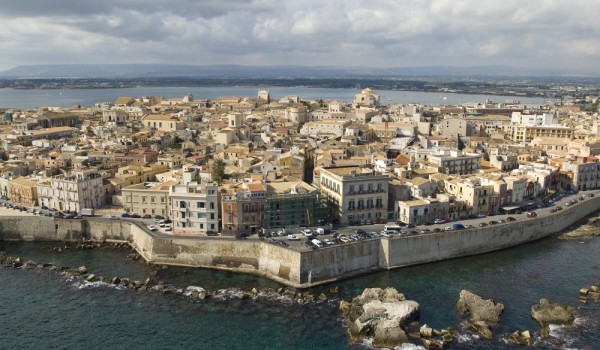
Syracuse, Sicily

Economists have observed that if a good is in short supply its price rises so encourages producers to produce more in the expectation of increasing their income. This is an indisputable truth but the free market theorists develop this further claiming that changes in price  will cause the market to move into an equilibrium where supply equals demand. It is this last statement that as a sceptic I would contest. There is no evidence that markets ever move into a state of equilibrium, as demonstrated by the housing market where demand has exceeded supply for decades. All that can be said is that market theory which states that price is the means through which supply and demand are brought into equilibrium is unproven.

There is one good example of the Plato school of economics in action and that is the mess that is the British education system. Concern was expressed in our governing circles about the poor quality of the British schooling system in the 1980s. A model for reform was found in public choice theory which is the application of market principles to public services. The local covered market in my city in which there are competing fruit and vegetable stall holders is a good example to explain the purposes of the reform. If one stall holder in the market sells produce that is of a poor quality or too high a price, they will lose sales to their rivals. Consequently competition between stallholders ensures that only good quality produce is sold at he lowest prices. Reforming politicians decided that the system that worked so well in the market would work well if introduced into the provision of public services. All that had to be done was to convert schools into the equivalent of competing fruit and vegetable store holders. Legislation was passed to achieve this and now there are a variety of competing state schools, academies, technical colleges and free schools to name but a few.

However this new market system of education has one huge flaw. There is no central co-ordinating authority to ensure that supply of school places matches the demand for school places. The problem that arises is that it is impossible to organise all these independent competing school to provide the number of school places needed. All the government can do is to encourage or cajole these competing schools into providing the required number of school places. However each school is responsible for its own finances and is not invest in providing the facilities for extra students unless they can be sure the places will be filled. They will respond after the event when there are a surplus of children unable to get into schools, once it is obvious that there is a need for places the school will respond. However there is one other caveat it takes time to create additional school places, it will require investment in buildings and new teaching staff and the consequence is that there will always be a time lag between demand for school places and the provision of those places. Leaving school provision to a market comprising several independent competing schools only ensures that demand will never match supply, so the provision of schooling for each child takes second place to preserving the integrity of the market, though a policy of non interference.

What I would say as a sceptical economist is that what is a proven truth in one sector of the economy cannot be easily or effectively transposed into another different sector, which may effectively run better on different principles. The free market principle of herding cats is not the best principle on which to organise the provision of school places and schooling in general.

Unfortunately the belief in the beneficial effects of the free market is so deeply imbedded in the political culture of the country that even the free market reforms produce some obviously dysfunctional results they are ignored.

The Corrupted Human Spirit

What economics lacks is the space to include other human sciences such as philosophy in the scope of its subject matter.  Philosophy has the grand vision that is usually lacking in economics, which is all too often a science of the minutiae of life. One concept outside the understanding of economists is Hegel’s zeitgeist or the spirit of the age. What Hegel means by this is that there is one overall idea that animates a period of human history. It is an idea which expresses the characteristics of an age, such as the ‘bélle époque’ of 19th century Paris. A Paris of the freeing of human spirit, painting was freed from the old conventions demonstrated in the art of the impressionists, the vitality of popular culture was epitomised by the exuberance of the ‘Can Can’ yet this was a freeing that also allowed the darker side of the human spirit, corruption and venality to thrive. French politics of this time was characterised by a series of corruption scandals. As a believer in the zeitgeist, I wondered what was the spirit of this age? What was the spirit that informed human behaviours in our contemporary world?

Usually this is seen as the age of Neo-Liberalism ,  yet that phrase needs explaining. According to its advocates the freeing of the markets will lead to a freeing of the human spirit. Yet the art of the age does not seem to embody the freedom of the human spirit, rather it embodies the spirit of reproduction or copying. One art work that epitomises this spirit of reproduction is an art work by Damien Hirst, it was a series of dots on a white background. These dots varied only in colour but not in any other way. They seemed to have been placed in lines on the screen only the colours of the dots seemed to be chosen at random. I as a viewer could see little creativity at work, it was a machine like picture, a picture that for me could only be produced by a machine. What it lacked was the spark of human imagination. Damien Hirst work demonstrative of an age that is lacking in originality and creativity.  A lack of originality that can be seen on any new housing estate, which consists of houses which are copies of those built for generations by the builder’s predecessors. They are inferior copies of the house of the past as they are being built of inferior materials and to much smaller dimensions. Houses that were built according to a least cost formula, a least cost that necessarily implies a lack of originality. Why go for the expense course of employing an architect to create a contemporary house incorporating new materials and bold design, when it is cheaper and easier to copy an old design?

What Neo-Liberalism has given to the age is a dominant mode of thought. Policy decisions are not to be made of according to values or any grand vision but according to a cost benefit calculation. A government project such as the High Speed Rail link from London to the North is made on this basis. Do the demonstrated costs outweigh the benefits in cash terms? This leads to all sorts of strange calculations to render values such the enjoyment of living in the undisturbed countryside in cash terms. Decisions can only be made on quantifiable or cash terms, this thinking leads to a diminution of the human spirit, as decision making is reduced to a process of calculation.  Human values have been reduced to a simple cash nexus, it is a corruption of the human spirit.

It is a world in which the heroes are the bankers and speculators, those who are the masters money. There heroic status derives from the fact that they handle vast quantities of money, money a product which is the holy grail of contemporary society, in that those who are greatest possess the most of this asset.  We know a footballer is a footballing genius as much through the income he commands as for his skill on the football pitch.

There is embodied in Neo-Liberal philosophy a realism of the most naive form. What is valued is what is tangible, what can be counted and weighed, not abstraction? There is the belief that abstract universal values have no place in contemporary society. What counts is the practicality of a belief or ideology. Neo-Liberalism is the most practicable of beliefs in that only those outcomes that can be quantified, the benefits be counted, are valued. Only those practices that have a quantifiable end result matter. The result is the target culture in the public sector, where performance is measured in terms of targets achieved. The emphasis is on ‘through put’ not on quality. In hospitals the target culture has damaged good practice. What matters is that the target is met, not the quality of service. This results in some bizarre practices, because there is a time limit set for treating patients in Accident and Emergency (A&E), patients will be deliberately kept waiting in ambulances, as by so doing the patient has not yet been admitted to A& and is not counted as an in patient. This means that the time they spent waiting in the ambulance does not count when it comes to measuring how successful the A&E department has been in meeting its  performance targets.

One of the most damaging aspects of the Neo-Liberal zeitgeist is to found in our schools. What is causing great excitement is the new stem subjects, the officially defined list of subjects in which students are expected to do well? These stem subjects are little more than a sophisticated version of the 3 r’s ‘reading, ‘riting and ‘rithmetatic’ that formed the curriculum of many state schools in the 19th century. Dickens’ Wackford Squeers would feel very much at home in the new academies. This change has happened because schools are now measured by output. The output that matters is in that of the skills that business wants. Businessman want employees that are competent in the 3 r’s, if they do want painters it is a painter who can paint a wall, not an artist. There is in our schools a deskilling and narrowing of the curriculum. A deskilling in all that matters is those skills that can be quantified and measured, so creativity achieves a zero score while the rote repetition of the agreed answer gets the highest score.The narrowing the curriculum is caused by the downgrading of the creative arts, that is art, music and drama get few marks in the current system, so headteachers that wish to do well, discourage their brightest students from doing anything but the stem subjects.  There cannot have been a curriculum more designed to create a dull, boring and miserable education for children than the current one.

When economists look for reasons for the poor performance of the economy, the look the reasons that do not relate to the human spirit. The reigning zeitgist is one that is unimaginative, it only values the measurable and is one of uninspiring dullness.A corruption of the human spirit, one that discourages all that is best in the human personality. Are not some of the failings of the British economy to be found in a zeitgeist that discourages innovation and creativity. If economists raised their eyes from their desks they might see that there are studies pointing them in this direction. A recent study of the booming computer software industry in East London showed that one of the reasons for its success was that it was perceived as a ‘cool’ place to work and live and as a consequence attracts some of the best computer software engineers in Europe. Rather than worrying about how to make workers more productive, perhaps economists should look more to creating a zeitgeist that encouraged creativity and innovation. A zeitgeist that would drag the society out of its current doldrums.

NONSENSE AND THE PRIVATE HOUSING RENTAL MARKET


While watching television last night I briefly caught an announcement  by a newscaster about the leader of the opposition’s policy towards the private rental market. Apparently he had announced that his party would if elected, would  impose some modest rent controls in the private rental market. This in the interests of balance was countered by the newscaster saying that this was contrary to the advice of an esteemed economist, who said that such a policy woukd be self defeating as would reduce the supply of rental property. Today on  a politics programme I saw the panel of politicians as a body denounce this policy as being contrary to economic common sense, as everybody knows that if rents are controlled landlords will withdraw from the property market.   Today every politician, journalist and most economists have come to believe that the only role for government is to remove those restrictions that impede the working of the free market, not add restrictions that do the reverse. What the opposition leader had stated was free market heresy, the free market is sacrosanct and nothing should be permitted to interfere with its workings no matter how well meaning. To parody the lines of an old song, it was like the man who turned up to a funeral in brown boots, showing a marked sign of disrespect as everybody knows that only black boots should be worn at a funeral, and he was showing disrespect to the free market.
What really puzzles me is the assumption made by economists that landlords will automatically leave the rental market if they are faced with rent controls.  At present landlords particularly in London because of the shortage of housing can almost charge whatever they want. If any restrictions reduced the present exorbitant rents to a lower but still profitable level, what incentive would landlords have to leave the market? Given the relatively modest levels of profit  in other sectors of the economy, it is unlikely that they would find any other sector of the economy that would offer anything similar in terms of profit.
Implicit in the thinking of the anti rent control politicians and economists is the notion of a landlord’s strike. The assumption is that on the announcement of a policy of rent controls thousands of landlords will exit the private rental market, leaving a shortage of such properties. All these landlords have outgoings, usually quite considerable, particular their mortgage payments. Quite often these payments particularly if the property was bought recently they have high mortgage repayments to finance. It strikes me as strange that these landlords would sacrifice the income they receive from their tenants and risk not being able to make their mortgage repayments in a fit of pique. It seems to make little sense that landlords would sacrifice a substantial income to make a point.
The defenders of the sanctity of the market do not seem to realise that they are portraying landlords as the most despicable of people. They suggest at the merest hint of rent controls they will protest by making thousands homeless by emptying their properties. I cannot think of a better argument against the free market, if landlords are really that cruel and callous they should not be owning that most precious of assets person’s home? How can the defenders of free markets claim moral superiority, when any threat to the possibility of profitability is meet the threat to make thousands homeless?

Gullibility and the economy of fools

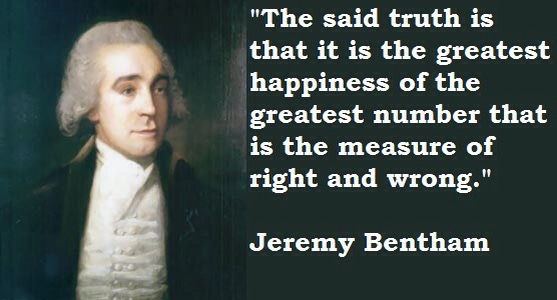
Jeremy Bentham is an almost forgotten philosopher today, yet of all the 19th century philosophers he was the most fascinating. He has an extremely logical turn of thought and it caused him to undertake actions that most would find peculiar.  One such action was his insistence on eating his meals back to front, he always had the desert or sweet dish first to be followed by the savoury dish. He argued that it was as logical to have the sweet first, as having it as the second dish, he could see no rational reason for always having the savoury dish first. Economists were influenced by his thinking and they adopted his ideas in their theories of market behaviour. Jeremy Bentham argued that good actions were those that gave the greatest pleasure to the greatest number. Similarly the free market gave the greatest satisfaction to the people as it was in the free market that people could satisfy their wants by determining what was made and sold. However there is one flaw at the heart of Jeremy Bentham’s utilitarianism and free market economics, both assume that the individual is capable of making a rational decision about being what is in their best interests. Our knowledge of human behaviour teaches us that in fact people often make important decisions for the most stupid of reasons. Economists and Jeremy Bentham cannot account for human gullibility and stupidity which undermines the whole accepted free market arguments. 


taken from aspirant forum.com

What fascinated me was the medieval obsession with collecting Christian relics. The relics would be held in veneration and became the site of pilgrimage. Pilgrimage was a very profitable business for churches and monasteries, where the relics were displayed, as pilgrims made large donations to these churches and monasteries. The more holy the relic, the more profitable a site of pilgrimage it became. In the spirit of money making pirates employed by the city of Calvi in Italy stole the bones of St. Nicholas from the Turkish town of Myrna, to display in the church in Calvi. This was such a profitable business that monks became involved in forgery to create more and more spectacular relics. One such relic was the Veil of St. Veronica. St. Veronica is supposed to have wiped the face of Christ clear of blood and perspiration on his way to crucifixion at Golgotha. The veil then bore the miraculous imprint of Christ’s face.  This obvious forgery was on display in Rome for hundreds of years. Even today the medieval forgery that is the Turin Shroud is still on display and venerated by pilgrims. This very profitable medieval industry founded largely on fraud and human gullibility stands in contrast to the so called rational consumer of economic theory.

Today human gullibility is the foundation for another large and profitable industry, the trade in the relics and artefacts of celebrity. These items are valued for their proximity to the person of the celebrity, much as were the relics of the medieval saints. Recently a wooden spoon signed by John  Lennon and Yoko Ono was sold for between £600 and £800 at auction. Graceland the last home of Elvis Presley is the object of pilgrimage. Visitors often leave speaking in awe of having experienced something of Elvis Presley’s life, an awestruck experience that would have been similar to that of the medieval pilgrims. 


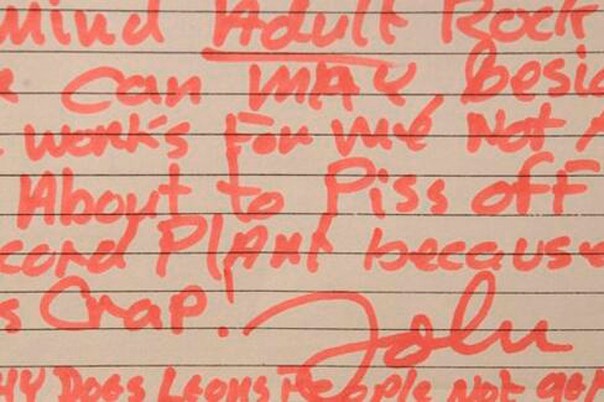
A letter from John Lennon to Phil Spector blaming The Who drummer Keith Moon and singer-songwriter Harry Nilsson for urinating on a console at an LA recording studio is up for auction, with an estimated value of £6,000.
(Read more at http://www.nme.com/photos/the-weirdest-most-expensive-beatles-artifacts-you-can-buy/)

If so many of our acts are a consequence of gullibility or stupidity, the arguments for the primacy of the free market are undermined. If people are capable of spending large sums of money illogically there needs to be a corrective to the free market. Rather than the wisdom of the crowd, it is better to speak of their ‘unwisdom’. Once  their existed that corrective, the government, it was thought that this body had the overview and long term wisdom to make certain decisions better than the individual. Now that belief has disappeared and wherever possible government services are put out to tender in the free market. There is no leading politician that believes that energy supply because of its importance is best supplied by the government. One consequence is that while the former nationalised energy industry was one of the leaders in nuclear energy engineering, the now privatised industry has lost that expertise. The new nuclear power stations will be built by a combination of expertise from French and Chinese engineering firms.

Perhaps it is in public health that the consequences of human gullibility are the most obvious.  The smoking of tobacco was popular when I was a teenager was seen as cool, as exemplified by the advertising phrase the ‘cool taste of menthol tipped cigarettes’.There was complete ignorance of the health risk of smoking, it was only after many years of government action to inform people of the dangers of smoking, that that cigarette consumption dropped. The reverse has happened with alcohol consumption, a market in which all restrictions on its sale and consumption have been dropped. Consumption as a consequence has risen, along with the incidence of cirrhosis of the liver and throat cancers. What is perhaps most distressing is the fact that gullibility has prevented what would have been the elimination of that disease of childhood measles. Many such as myself thought measles as being a minor rate of passage of childhood, not realising that this was an illness that could cause blindness, brain damage and disability. One maverick researcher claimed that he had evidence that the vaccine that prevented measles could  cause autism in children. This research having been published in ‘The Lancet’ caused a moral panic, chiefly through the writings of journalists in nationally read newspapers. Inevitably vaccination rates dropped and measles became yet again a scourge of childhood. Fortunately this panic is largely restricted to the Anglo Saxon world. There have been outbreaks of measles in several British cities bringing disability to an unfortunate minority of children. The same has happened in California, where measles is a threat to the children of the best educated classes, proving gullibility is not the prerogative  of the poor and ill informed. Despite the original research being discredited, the fear of the MMR vaccine remains and children are again threatened by this dangerous illness.

Nietzsche would have enjoyed exposing the naivety of economists and politicians who trust the wisdom of markets. Neither understand the nature of humanity and why their policies for the economy and society are flawed. While this essay may appear misanthropic, that’s not really my aim. What I want is a return to the old belief that there is such a thing as human wisdom and that it should be a guide to public policy making. Instead we have a democracy of fools, one in which only those policies that can be understood by the simplest and most unreasoning of men are adopted. 

Possibly it’s unfair to suggest our politicians are gullible fools, it’s more correct to say that they act as if they are such. The popular press provides an example of this, if you read a tabloid newspaper the impression it gives is that it’s been written by people who left school at the earliest opportunity and with a minimal education. In fact the vast majority of journalists writing in such papers are graduates, often from the elite universities it just that they write as if they were uneducated, as they believe what their readers want are simple uniformed opinions. A training at a tabloid newspaper is highly valued as trainee journalists believe that it teaches them the skills needed to be a good journalist. What is teaches them is how to write a column that appears to have been written by an uneducated person, as that type of column is believed to appeal to the widest readership. Similarly our politics is peopled by graduates from the elite universities who believe that the same patronising approach is required in politics. As one famous film making said money is never lost through underestimating the public taste.


Why are we are where we are today. Some answers from Alfred Marshall, David Ricardo and Charles Dickens

Philosophers define our contemporary society as post modern, but economics remains apart as it belongs to what those philosophers disparaging call the modernist tradition. A science of humanity that believes its analysis and truths are true for all societies and their economies, whereas post modernists believe the truths of economics are only relative, rooted in a particular society at a particular time. Philosophy and other post modern sciences seem to have passed economics by, left it in some historical lay-by. Unlike other human sciences the truths enunciated by Alfred Marshall are held to be valid today as when he first enunciated them in the 19th century. Teachers of economics such as myself taught generations of students Marshall’s theory of the market. They copied us in replicating Marshall scissors diagram of demand and supply not realising that they were doing the same as their 19th century peers. Today after many minor modifications Alfred Marshall’s theory of the market forms the central core of contemporary economics. It is this theory that I shall take as my starting point for my new perspective on economics.

Economists believe that in the free market they have discovered the fairest way of allocating resources, one that can be rivalled nowhere in the efficiency of its distribution mechanism. According to economists this how the market works. All goods and services are sold by price and if consumers want them they are free to buy them. There are no restrictions to the freedom to buy and sell, it’s the key economic freedom. This is the only economic system that maximises consumer satisfaction and gives sovereignty to the consumer. Price is the key factor that enables consumers and suppliers to get the best deal in the market. The market is incredibly flexible as both consumers and suppliers constantly responding and responding again and again to the signals given off by changing prices in the market. The market for smart phones illustrates how the free market works.

20140721-012047-4847500.jpg

Initially all mobile (or cell phones) were relatively simple devices that allowed users to make phone calls, store a list of contacts and enable the user to send text messages. Further improvements were made to the phones and a revolution occurred in the phone market when Blackberry and Apple introduced their smart phones. Now people wanted smart phones because of all the extra facilities they offered, emailing services, instant messaging (BBM), cameras and the millions of apps on Apple’s and Samsung’s phones. Consumers saw these phones as being so desirable that they were willing to pay up to £400 for them, whereas the best of the old models Blackberry phones had sold for les than £200. The bottom dropped out of the market and simple mobile phones can now be bought for less than £20. Producers reacted by cutting down on their manufacture of these simple phones as there was little profit in making them and increasing their manufacture of up market phones as they were so profitable. Firms such as Apple and Samsung are constantly innovating and improving their phones so they retain their position of market leaders and earn a premium price for their products. This strategy has been so successful that Apple has an income greater than that of many countries. Those companies that can read the market correctly and anticipate consumer demand can make fortune. This is a win win situation as these profitable companies are those companies making what people want.

Nokia the firm that originally dominated the mobile phone market saw sales plummet as consumers did not want its old fashioned phones. It had to cut back on phone set production to match its shrinking share of the market. Declining sales and loss of income would probably forced it to close, if it had not been purchased by Microsoft. The market is a harsh master towards those companies that don’t read the signals correctly. Those signals are simple to read if Nokia was having to cut the prices of its phones it failed to understand the message which was nobody wanted their phones now. Another term for this is consumer sovereignty, the market is the only mechanism which enables manufactures are other producers to keep up with the ever changing needs of the consumer. There are in history many examples of economies that are not run on the free market model collapsing because of the discontent of their people. East Germans living in a communist society were discontented with the limited variety of goods available in their country and once they had the chance they opted to join free market economy of West Germany.

Having demonstrated the superiority of the free market I must now point out the flaws in what seems to be the perfect economy. In fact economists frequently refer to perfect competition, which demonstrates all the perfections of a competitive market, an ideal to which all economies should strive. Unfortunately in real economies there are imperfections in the market which can result in the minimising of consumer satisfaction and sovereignty.

One of the best ways of explaining the fault line that runs through the market is to look back at the work of another nineteenth century economist, David Ricardo, on the price of labour. He distinguishes between two prices paid for labour, the first is the natural price and the second is the exchange or market price. Natural price is that price which is sufficient to cover all the necessities of life, while the exchange price is that paid for labour in the market. Throughout most of the latter part of the twentieth century the exchange price of labour was higher than its natural price. This was an era associated with rising living standards. However increasingly since the early 21st century for many people the exchange price of labour has fallen below its natural price. Increasing numbers of people are classified as the working poor, relying on food banks and social security payments to feed, clothe and house their families. The current debate about the living wage is about the failure of the market to pay increasing numbers of people an income that is equal to their natural wage. Britain as with many other developed European countries is reverting to an older historical pattern in which increasing numbers of people experience poverty and want.

This can be clearly demonstrated by one example. When I was teaching in London in the 1970’s the exchange price paid for my labour exceeded my natural price; I could if I had wished bought a house as did many of my colleagues. Today the exchange price of a teachers salary is so far below its natural price, that it only yields enough income to pay for one room in a shared house.

There is another fault line running through the market and that is that for many the much valued economic freedom does not exist. Free market economists when they use the term effective demand acknowledge this. We may all want to live in an idyllic country cottage in rural Berkshire but only those who have sufficiently large income may do so. However it is not just about pointing out the impossibility of achieving our dreams. There are obstacles in the market that prevent many even making the most minimal of choices. Dominant market players such as landlords abuse their market power. They charge such exorbitant rents that many are only able to afford the poorest of accommodation and the cost of that accommodation may be so high that other choices are denied to the individual. Stories frequently appear in the media about tenants having to choose between a whole variety of necessaries, paying rent, buying food or clothes or paying heating bills. Economists will never admit it but for many the so called freedoms of the market are illusory, in reality the necessity of survival means they have no choice.

What economists and our political leaders educated in the Neo-Liberal tradition need to recognise is that the free market that they worship does not work. What is needed instead is a MODIFIED MARKET a market that delivers all the benefits of the free market but one from which intervention by the state has removed the most pernicious of abuses associated with the free market. If only everybody who participated in the market could earn the natural price for their labour those abuses would disappear. There is no reason why a country as rich as Britain could not achieve this end. After the much poorer Britain of the 1950’s achieved that end.

Readers such as myself of 19th century novelists will realise that destitution was an ever present fear. Charles Dickens due to his father’s mismanagement of the families finances ended up working in a shoe blacking factory, while his father sent to debtors prison. The memory of which haunted the adult Dickens. Unfortunately the circle of history is turning and a run of bad luck could result in many a contemporary Dickens suffering a similar fate.

The New Paganism

20140101-154419.jpg

My early education was in a Church of England primary school, in which we the pupils were taught the superiority of everything that was English. Our Head Teacher always spoke of regret of the passing of the empire and its replacement by its much inferior substitute the Commonwealth. Although I’m sure that she called it the British Commonwealth. Religious education as should be expected formed a significant part of the curriculum. However our religious education was infused with a strong sense of Britishness. We learnt about David Livingstone who took Christianity to the primitive idol worshipping tribes of Africa. Of Gladys Aylward who took Christianity to the barbarous Chinese. What we were taught was the superiority of the British religion to that of the barbarous foreigners. The religion of England was surely the culmination of religious development over the past two thousand years, it was the physical embodiment of Christ’s promised earthly paradise. Heaven was very much an incidental feature of this religion. It was an unspoken assumption was that a heavenly paradise was hardly necessary if you were fortunate to be born an Englishman.

A phrase was much used then in the description of the non white commonwealth as ‘idol worshipping’, a phrase used to insinuate the superiority of English culture. It was a strange education, as my only knowledge of Hinduism was the practice of suttee or widow burning, a practice stopped by enlightened Englishmen. I am being a little unfair as I also learnt about the practices of a cult of Kali called the thuggee, who murdered people as a sacrifice to Kali. Another devilish practice stopped by enlightened Englishmen. We also learnt about the paganism of classical Greece and Rome, which was brought to an end by St. Paul and the Christian fathers. It was a curriculum I imagine that had remained largely unchanged since the height of Empire in Victorian times.

The purpose of this digression into the nature of primary education is to suggest that this superiority is unjustified. There is in Britain a new paganism in which the idols worshipped are as barbaric and cruel as those of classical Greece, Rome and the non-white British Empire. However it is not recognised as such.

At the risk of over simplification the Greeks and Roman’s made deities out of natural phenomena. Vesuvius was the workshop of the blacksmith God Vulcan, night was the work of the Goddess Nocturna and Aeolus was the God of wind. Natural phenomena were given human like personalities, which made communication with these formidable powers of nature possible. While control of these phenomenon was impossible, through sacrifice and prayer they could be persuaded to look favourably on mankind and not release their destructive powers on them. Romans of the late empire even took to the practice of chaining up statutes of their Gods in their temples in an effort to control them. Mars the destructive God of war was one of those most frequently chained up, as if he ever left the temple devastation would follow in his wake.

Contemporary practice is very different instead of deifying natural phenomena, human practices of a certain kind are deified. The purpose of giving certain human practices and institutions the status of Gods, is to give them power over us. Once they are defied the rules and practices of these institutions cannot be questioned. Any questioning or disobedience of the rules and injunctions will bring about human suffering. The human institution that has been given this God like status is the market. Belief in it is so complete amongst the political, financial, commercial and industrial elites that no action contrary to its mores can be contemplated. This belief leads to practices as nonsensical as chaining up the statute of Mars to prevent wars.

One such bizarre practice is the payment by results inflicted on the probation, employment and welfare services. Worshippers (politicians) of the God Free Market, believe that probation will be made more effective if the service is incentivised by a payment by results system. Probation officers will be incentivised to work hard and use the best methods of reforming former criminals if they know that the income of their business and ultimately theirs depends on their success at reforming former criminals. While this practice betrays a poor understanding of human nature (one motivated primarily by fear and greed), it is as unworkable as chaining up the God, Mars. The only real measure of the success of this scheme will be at the end of the life of this former convict. If they had after probation lead a relatively blameless life, then the payment should be made. However no business could wait thirty or forty years for payment, so instead a series of arbitrary and meaningless targets are imposed. I am not sure of the targets but if an ex offender has not offended say within six months payment is made. This says little about the effectiveness of the scheme as they may go on to offend at a later period. In the profit driven companies since profits depend on results, all types of statistical manipulation to massage the figures to suggest that they are more successful than they are in practice. The short time span of the memory that is that of the average government minister is remarkable, as the manipulation of the statistics for the tagging of offenders by G4S and Serco has already been forgotten.

What can be expected is that violent offenders who have been declared reformed as they have not offended within a given time span, will inevitably offend again. There appears to be no scope the reclaim payments made for such ‘apparent successes’. If cash payments motivates people to do their job well, the fear of losing that payment should make them even more eager to work well. Its a scheme that does not seem to have any consistent logic. However for true believers in the free market, there can be no flaws in the market driven schemes they propose.

Blindness to reality is suggested by the fact that the most difficult of cases will be left in the hands of the rump of the old public service motivated probation service. If the scheme works for one group of offenders it should work for all.

There can be objections to my use of the word religion to describe the actions of advocates of market economics. However if religion is seen as set of non rational beliefs (not open to rational debate) or first principles that guide human practice, belief in the superiority of the free market is a religion. Men have created a new idol to worship, the free market. The principles of the free market should guide and inform any human action. It is not a philosophy a coherent set of rational principles which can be subjected to debate. If in doubt listen to the words of any government minister, as their speech is full of unquestioned assumptions about the superiority of the free market.

It was Varro who coined the term popular religion, by which he meant the stories and festivals that captured the popular imagination. The market is the new popular religion, it has subverted religious festivals into festivals of consumer over indulgence. Easter the time in which Christ’s sacrifice and rebirth is commemorated has been replaced by a celebration of pleasure, chocolate Easter eggs are eaten, it is the time of spring holidays, the benign Mediterranean spring climate making it a popular holiday destination.

There are also a set of new stories of the popular imagination that explain the world in which we live. Stories that can only be called consumer morality tales. On such is rooted in the housing market, stories of wonder about house buying and selling. Morality tales about the successful home buyer, the one who brought and sold at the right time and who now is a millionaire abound in the popular culture. Boris Johnson is one of the prophets of the new popular consumerist religion. In his speech as Mayor of London, he extolled the virtues of greed and envy to the assembled dignitaries. Self servicing virtues that justify the activities of London.

Given the lack of any counter ideology or religion within the governing classes, change can only come from outside of them. Is Occupy the precursor of future popular movements that will be needed to reclaim Western society for the people from the plutocrats? However any resistance movements will need to be motivated by a greater vision, a religion of optimism. Is Pope Francis with his reforms of the corrupt Roman Curia, a sign that the time of the old religion of the market is finally in decline?

One final thought the Roman Catholic Church is dying within Europe through lack of recruits to the priesthood, as was the Church of England. They have both sort solutions in different ways, the Roman Catholic Church is importing priests and nuns into Europe from the developing but Christian Third world and the Anglican Church is replacing the missing male priests with women. Is this the solution that Western societies salvation as the churches must come from former marginalised groups. Groups who through their very exclusion from power were not tainted with the religion of pessimism, that permeates the dominant white male culture. Do they only have the vitality and enthusiasm necessary to transform society?