Bad economics, bad politics – Britain’s policy towards Syrian refugees

There has been an ongoing public debate in Britain about what the country’s policy should be towards the refugees arriving in Europe from Syria and other war torn countries. The consensus is that our Prime Minister’s response has been determined by the hatred expressed for refugees in the popular media and fear of losing votes to the anti immigration party (UKIP). However there is another compelling reason as to why our Prime Minister is so opposed to Britain taking its fair share of the immigrant population now arriving in Europe and that is bad economics. This government has claimed the mantle of fiscal probity and as such is committed to keeping public spending to minimal levels. If the government admitted large numbers of refugees to the country it would be committed to increasing it’s spending. Much of that increase would go to local authorities (to house the refugees) just at a time when the government is committed to reducing their budgets. It is fear of breaking its fiscal rules that prevents it from admitting these refugees.

The government has as a consequence made a pig’s ear of its policy and produced a immigration policy that will please no one. It has made a commitment to admit 20,000 refugees over five years or 4000 a year on average. This will be financed from the foreign aid budget, money that would otherwise be spent in developing countries will instead be used to finance the accommodation needs a modest number of refugees for one year. After that the councils will have to fund from their much reduced budget all the extra services that these new arrivals will require.

What the government fails to understand is that economics is unsuited to providing policy goals at what can be called the ‘summum bonum’ policy level. Economics is a servant subject a subject that when used correctly determines the feasibility of government policy proposals, it cannot provide the grand objectives that determine all policy decisions. The object of economic policy making is to set intermediate goals whose attainment will make possible the attainment of the greater goals of universal policy making. This government has reversed this process, the grand overall objective is to attain a budget surplus, whereas good economics would demonstrate how to or whether an open door policy to refugees is economically feasible. If this government is trying to disguise its greater policy goal of keeping Britain a predominantly white non-muslim country through rejecting these immigrants, this would count as a greater policy goal.

What I am trying to state is that economics is a terrible subject for providing the greater goals that should be at the heart of any government policy making, that is the role of ethics or political philosophy and economics should not intrude areas into which it is unfitted. Formerly the conservative party was a practitioner of “One Nation Toryism”, a philosophy that stated while the aristocracy, financial and industrial elites were best fitted and entitled to rule, they owed an obligation of care to the lower orders of society. This is why the Conservative party of the 1950’s was able to embrace the National Heath Service and full employment. Now the vision of the Conservative party has shrunk to accommodate the goals and principals of Neo-Liberal economics, which can offer nothing more than series of lower order objectives. The philosophy of Ayn Rand dominates this government, a government that like her sees the lower orders of society as nothing more than a drain on the nation’s resources. While the only people it see’s as demanding of respect are the giants of business and finance. These people it rewards with generous tax allowances and government grants. Hume, Oakshott and all the great conservative philosophers of the past would despair of a government that only had good housekeeping as the only summum bonus of its policy making. Minimal government of the sort practised by this government makes for ineffective and bad government.

The folly of an economics first policy is demonstrated by the government’s policy towards Syria. It is now proposing armed intervention to end the current conflict so as to halt the flow of refugees from that country, yet its policy of budget cuts have denied it the means to make any effective intervention. The cuts have reduced the fighter bomb force to a total of six planes and its cuts to the army budget have made it impossible for the army to make any effective contribution to any overseas conflict through lack of resources. Realism demands that the policy becomes not one of intervention but one of appealing to other countries to fight the battle on Britain’s behalf, not the most effective of policies.

Les Miserables and the economics of revolution

  
http://www.dailytelegragh.co
Towards the end of the film ‘Les Miserables’ there is a very moving scene in which the young radical students who rose in revolt against the government are shot by the police. The revolt is doomed to failure as they fail to gain the support of the wider Parisian population and the authorities are easily able to suppress this uprising. This is the popular perception of revolution, that is a futile uprising by the young against the tyranny of the old order one that is easily put down by the authorities. Any history of the 19th century consists of a long list of failed uprising, the Poles in particular participated in number of uprisings against their Russian overlords, all of which ended in its participants being imprisoned or going into exile. However this is a misunderstanding of the nature of revolution, the successful ones usually don’t involve violence and generally take place over a number of years. What I mean by revolution is the shift in people’s attitudes that can be best described as a sea change in their behaviour and attitudes. 
Revolution of the Right
Often this type of revolution is initiated by the right, as instanced by the successful revolution by the right against the welfare state. If Britain is taken as an example when the welfare state was introduced it was seen as a bulwark against the twin evils of sickness and unemployment. It was seen as an individual right that the state should provide an income for those unemployed through sickness or bad luck. The political right in Britain never really concealed their dislike of the welfare state principally because they saw it as an injustice, that the rich were expected to pay more tax than the poor to fund welfare programmes. They ceaselessly campaigned against the iniquities of the welfare state. Now they have practically succeeded, welfare payments are now seem as benefits to a group of undesirables the work shy. The emphasis now is on reducing benefits and targeting the claimants with sanctions to force them into work. Only last week the welfare minister announced to general a claim that he would target the disabled forcing more of them to take work, through making it harder to claim benefits and by reducing individual welfare payments. The assumption is that by making life progressively more difficult for them, they will take up employment to avoid the unpleasantness of life on benefit. As one who has worked with disabled people, I can only see this minister as an uncaring monster largely lacking the human traits of empathy and compassion.
Now the philosophies of such as Ayn Rand are the guides to life for the decision makers in society. While it may seem harsh to suggest that a writer who would welcome the death by starvation of hundreds of the useless poor provides the distorting ideological glass through which these people view the world, evidence suggests otherwise. Recently our rulers withdrew the Royal Navy from the task of rescuing refugees adrift in the Mediterranean, on the grounds that by making the journey across the sea safe it would encourage migrants to attempt the crossing. The unspoken assumption was that if some refugees drowned at sea it would discourage the rest from trying to enter Europe. This policy was not questioned by any of the opposition leaders, so demonstrating that the spirit of Ayn Rand flows through our the veins of all our political leaders. Now it is ‘cool’ to be uncaring, as this is regarded as hard nosed realism, as distinct from the naive sensitivity of the political left. 

Revolutions of the Left

Unlike revolutions of the right which are initiated at the top of society, revolutions of the left are initiated by those in the middle and lower orders of society. This means that they are inevitably doomed to failure as the top orders of society command the instruments of power. The legal system can be directed against the insurgents. Imprisonment being but one of the means of suppressing such people. Yet such revolutions are not futile even if they end in defeat. They can despite their repeated failures change the nature of society and ultimately achieve their desired ends. This can be demonstrated through a metaphor, these revolutionary movements are as a wave from the sea smashing against a rock, the rock at first repulses the wave leaving it to fall back into the sea, yet the constant pounding sea will eventually destroy the rock. Similarly while the revolutionary movements of the left are initially doomed to failure, they can through insurgencies change society. By revolutionary surges I don’t mean violent revolution, so much as oppositional social movements which constantly rise and fall, but which eventually undermine the existing social structure, which leads to change.

The sea metaphor has further applications. British society at present resembles a placid sea but which under the surface there are currents swirling which can change the nature of the sea. One such current which has surfaced in the insurgency which threatens the Labour party. In the current elections to find a new leader it is the outsider Jeremy Corbyn who seems to have an unassailable lead in the contest. He represents a very different politics to that of the main stream party, a politics well to the left of the current parliamentary consensus. It is quite likely if elected his term as leader will be brief, as the parliamentary party will find means of rejecting a leader they don’t want. However he is representative of a much larger social movement, a left insurgency that rejects the harsh austerity programmes endorsed by the parliamentary party. This current which is sweeping through the party will change it whatever happens in the leadership contest. There are other similar examples of insurgency in Europe such Podemos in Spain and Syriza in Greece. Whether these individual insurgencies succeed or fail, what matters is that the initial process of undermining the unequal social order has begun.  
Then there is in the USA the ‘Fast Food Forward’ campaign whose aim is to secure a national minimum wage of $15 an hour, if it succeeds it will transform US society and economy, it is yet another insurgent movement. What these movements have in common is that they form outside the political system, as that system is constructed so as to prevent change, rather than facilitate it. Change of this significance will only take place in response to change from outside the political process. The established political process is dominated by the dogmatists who believe that the existing social and economic order is the the best possible one as it is founded on the universal truth of the free market. Politicians believe their only role is to implement changes to make the market system work more effectively, keep things as they are and if necessary repress those movements campaigning for change.

The economics of change and revolution

Society comprises of competing social groups with conflicting claims on its wealth. Rather than stable social order organised around one universal organising principle  that of the free market, it is a kaleidoscope of competing different groups all wanting very different orderings of the social system and its wealth. Society at best is the ring in which these groups compete, but according to rules of the competition.  Violence for example as a means of effecting change is ruled out. However if the dominant group refuses to recognise the legitimacy of the competing groups and tries to suppress them, violence will be resorted to as the social order or the rules of co-existence have been destroyed by the dominant social group.

Economics to have any relevance must be a dynamic subject one that can accept change, not a subject that believes that it has found the holy grail of social existence in the free market. It must recognise that the society of today can be very different from that of yesterday and so should accommodate that change. Economics cannot be a subject of universal truths, but one of partial truths, it must establish which of those truths in its current content list can be used in the study of different societies. A modest subject that seeks to find truths in very different economic and social systems, rather than have a universal blue print to which all societies and economic systems must conform. 

The Flawed Belief in TINA (there is no alternative)

Today there was yet another article in my daily newspaper by a prominent politicians disparaging those on the political left that fail to recognise the realities of life and want to make impossible changes in society. This disparaged group who are abused as fantasists, protest voters but never by terms that suggest that their choices are made on the basis of rational judgement. The only surprise is that he did not suggest taking the vote away from these ‘childish’ voters. Actually one former leading politician did suggest that by suggesting that the vote for the new leader of the Labour Party should be sabotaged by the other candidates withdrawing so making the contest invalid. If this had happened the same politician would have advised on how to rig the voting mechanism to ensure the right person was elected.

costume-french-nobles-2

18th Century Aristocrats (counter-factual.net)
What is barely understood is that we are governed by an elite comparable to the landed aristocratic elite that dominated politics in the eighteenth century. This elite is composed of politicians, media persons, technocrats and financiers educated at the elite universities. (There are other groups that could be included but for brevity I have excluded them, what they all have in common is an education at one of the elite universities. It is this education that sets them apart from the rest of society.) What they practice is a policy of exclusion, only the dialogue between the members of this selected group is considered valid. They only listen to themselves, the rest of society is to be a childish rabble whose views and opinions are not worthy of consideration.

What I want to attack is the shared understanding of this group, an understanding which ‘things must be as they are’ or as it is more familiarly known TINA that is the society in which we live is the product of economic, social and technical forces that are beyond the control of individuals. What the politician must do is understand those forces making for change and work within the constraints imposed by them. Social democratic politicians recognise the pain of people working on zero hours contracts and that caused by job insecurity, but their role is not to change the cruel inequalities in society. Their task is to explain that low wages and job insecurity are a feature of modern society and must be accepted and that it is only through individual efforts at self improvement can circumstances change. The only amelioration they offer is the most modest of reforms, which will have little impact on there working lives. The social democratic party refuses to accept policies that would reduce or end job security by insisting that it is not the role of government to ensure that employers treat their employers well, what they instead offer is a way out of this appalling way of life through self improvement via education.

This new elite remains isolated by its adherence to things must be as there are ideology from the wider discontent in society. They believe that they are the ‘grown-ups’ in the words of Christine Lagarde (Managing Director of the International Monetary Fund). The new left in Greece (Syriza), Spain (Podemos) and Britain are childish fantasists trying to ignore the reality of the grown up world.

As a sceptical economist I must doubt such understanding of society I would ask why is it society is as it is? The reasons given are irreversible technological and social changes. Yet on examination they are only partial truths. Technological change has taken place but the distribution of incomes is determined by the social order. The company director in Britain earns a hundred times the salary of the average of the incomes of the employees in his business. In the 1960s the director’s salary was only 30 times greater than the average. Why the change, if the answer is that company directors have become more productive, that is open to objection. The profitability of companies as a return on capital invested in very similar to that of companies in the 1960s. The falsity of this view is demonstrated by the fact that in many failing businesses the directors are paid excessive salaries, how can huge salaries be justified for such corporate dimwits?

What as the sceptical economist I would say that there are different reasons for gross income inequality. While it cannot be doubted that some income differentials are due to technical change in that information technology has made many former skilled occupations redundant, the growing prevalence of the low wage culture has origins elsewhere. One is custom and tradition which decrees that unskilled occupations only deserving of low incomes.There is one interesting example which demonstrates this fact. When at university I read a book on applied economics by a Professor Brown and one example from that book sticks in my mind. He stated that the evidence suggested that wage differential between craftsmen and unskilled labourers had remained the same since Roman times. This suggests to me that much the justification of current income differentials comes from custom and tradition and does not reflect the real contribution each employee makes to the business. Why should the cleaner or the sales assistant be paid so little?

The other factor is power, the financial and industrial elites have cited custom and tradition as the reasons for low pay. Their mantra is unskilled staff make such a small individual contribution to the businesses profitability that they are only deserving of low pay. Yet I have never read of any study which has successfully identified the contribution to the firms productivity of say the cleaner and the financial director, yet the salary of the latter is more than that of the former. Businesses are a collaborative venture in which it is impossible to identify the contribution that each individual makes to the success of the business. Is the cleaner really that unproductive? It is the cleaner that maintains the workplace as a clean and healthy environment in which to work. Dirty toilets and uncleaned washrooms would lead to outbreaks of illnesses associated with unhygienic environments. How productive would the company director or IT specialist be if struck down by dysentery? There is good reason to suggest that cleaners are vastly underpaid, yet employers continue to pay the minimal wages.

Governments have enabled this power grab by the business elite by passing legislation to weaken or destroy those organisations that are the only means of equalising power in unequal labour market. Ever since the Neo-Liberal revolution politicians have constantly weakened the power of those groups that threaten the power of the over mighty employer. In Britain it has meant the emasculation of the one powerful trade union movement, changes in the law now make it very difficult for the unions to effectively organise industrial action. Therefore there is little restraint on the employer who wishes to pay as little as possible to his staff. It is no coincidence that some of the most profitable businesses with the highest paid directors in Britain have been the supermarkets an industry where low pay and job insecurity are endemic.

Scepticism as a philosophy is misunderstood, sceptics don’t believe are no truths, in that all philosophies or ideologies are fallacious. Instead it is the belief that in subjecting an ideology, philosophy or belief system to sceptical enquiry the truths it contains can be discovered it is the stripping away of error.

Being a sceptic is not contrary to a belief that society can be improved through reform, it is just a scepticism about the nature of such much contemporary reform, reforms whose fundamental truths are based on custom, tradition and exploitation of market power. I am a left of centre sceptic who believes in the superiority of left of centre ideology because it contains less wrongs than the alternatives and that with its emphasis on fairness those wrongs are likely to be less damaging to humanity than the wrongs of alternatives that exclude any notion of fairness. A sceptic also favours democracy as in a democracy there are always contending philosophies and ideologies as the proponents of each that will be subjecting each to scrutiny and through that many of the errors of policy associated with the mono-thought of the Neo Liberal world view can be avoided.

Unlike the interchangeable Neo-Liberals and New Keynesians who dominate the political process with their uniformity of view, I want a political culture that recognises many ideologies and philosophies as valid and that a recognition the aim of politics is not to destroy the opposition but to create a political culture in which many views can thrive. Contemporary politicians are so assured of the rightness of their beliefs that they cannot concede that they may wrong. They are as in Christine Lagarde’s word the grown ups who understand reality and who don’t indulge in childish fantasies. What a sceptic would say is that any believers in any ideology that denies it contains any errors or wrongs are the childish and naive ones.

Words of advice from a sceptical economist to any aspiring politician

No politician has requested my advice but as so many people particularly journalists proffer uninvited advice, I feel free to offer my own. Sceptics have a special duty to offer advice as they stand apart from the common run of intellectuals who are always promoting their own ideologies and schemes, as we offer a warning as to the traps into which a politician can fall.

Any politician when entering the great Houses of Parliament or the chambers of the other legislatures will be in awe of the senior practitioners of the craft of politics who display a mastery of the chamber. This mastery only extends as far as the boundaries of the legislature. In Britain it is acknowledged that George Osborne (Chancellor of the Exchequer) is the master of the house, he dominates debates and sets the agenda for policy making. However this does not mean that this mastery is any more than a dominance of the members of the house,he like many masters of the politic art achieves his dominance through his avoidance of any of the intractable problems that face the country. The palace politics of Westminster and other chambers is dominated by series Ozymandias who pretend to a control of events that they in reality lack.

Ozymandias image taken from blogspot

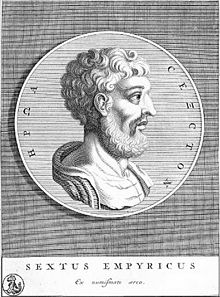
The sceptic’s duty is to remind the politician that they don’t know and not to be taken in by the many Ozymandias that dominate parliament, who show their ignorance. Greek sceptics such as Sextus Empiricus were the philosophers who claimed that the philosophies of Plato, Aristotle and Zeno were unsound and did not embody the universal truths their adherents claimed. Rather than trust to a new unproven truth of a philosopher they recommended that the people stick to the tried and tested ways of their ancestors. A contemporary sceptic such as myself would amend the original sceptic philosophy to say that all philosophies and ideologies while not containing within themselves the ‘big answer’ to life and society’s problems, do contain many partial and useful truths. It is the task of the sceptic to suggest methods by which the few partial small truths can be disinterred from the big lies contained within political ideologies and philosophies.

Sextus Empiricus Greek philosopher of scepticism a source of inspiration to the author

If the Neo-Liberal or free market philosophy that dominates political discourse really contained the big truth and not the big lie, Neo-Liberal Britain would be a prosperous and happy nation. Instead it is a nation in which there is much social division, great income inequality and much poverty. One ill is the dysfunctional housing market, a market which is making London uninhabitable for middle and low income families. Yet even within this malign philosophy there are valuable truths, which can guide good policy making. One truth is that the government cannot fine tune a complex mechanism such as the market to achieve such ends as full employment without there being adverse consequences, such as increasing inflation pressures in the economy. The big lie of Neo-Liberalism is that because the markets are so complex and incapable of being fully understood by politicians they are best left unregulated, which can result in powerful market players abusing their power to the detriment of others. Powerful players such as the landlord who can exploit their monopoly of the housing stock to force tenants to pay exorbitant rents that can equal half of the tenants income. It is the role of the politician to choose a middle position between over intervention and non-intervention to deliver legislation and policy changes that benefit the community as whole.

In today reform obsessed society it is easier to identity problems with any existing government policy or public service organisation and even easier to suggest reforms. However these reforms are unproven and are usually rushed into operation without any real consideration of their impact on society. What appears to be broken and dysfunctional may be less broken than the reformers suggest and often delivers a better service than the organisation that exists after their reforms.

Perhaps the example of the private finance market most clearly demonstrates this point. The banks and members of the financial services complained that the restrictions under which they operated in the 1950s and 60s hampered them when competing with their international rivals. What the banks complained of bitterly was the way in which the government restricted their ability to create credit (money) , the government would compel banks to limit their mortgage lending to avoid an inflationary increase in house prices. They complained that their foreign rivals were not subject to such restrictions and were able to take business that would have otherwise been that of the British banks, although there was little evidence of this happening then. A more telling example could be found in the Stock Exchange, there was an individual called ‘the government broker’,who dealt exclusively in the buying and selling of government stocks. In the morning he dealt with customers on the phone and in the afternoon he donned a top hat and morning suit and went to the stock exchange were he would conduct government business from his stand. Bankers and other financiers looked at the American financial market with its corporate giants and wanted the same freedom to practise free of regulation. In 1986 the government obliged and removed all restrictions on the financial markets in the so called ‘big bang’. Businesses merged and grew and new mega giants came to dominate the financial world. However this legislative free-for-all had a down side, with no restraints on bad behaviour either legislative or cultural the worst happened. One consequence was one financial crash after another. Lloyds Insurance market which was once the byword in financial probity crashed because of the reckless and sometimes fraudulent behaviour it’s the underwriters. Seemingly sound banks got into trouble over reckless speculation, one of the first to go was National Westminster which lost billions on foolish American purchases. It was only saved by being purchased by the Royal Bank of Scotland. Then there were the series of bank failures in the crash of 2008/9, in which the banks were only saved from collapse by government money and guarantees totalling about 10% of GDP.

What appeared in 1986 to be a cosy gentleman’s club was in fact an efficient financial system that worked, it only fault was that it did not enable its members to earn the mega bucks of the American investment bankers. This market had evolved since the 18th century from coffee houses and financial exchanges and developed a series of working practices that protected and benefitted the customers of the financial sector. The relatively small size of the members of the market meant that the collapse of one did not equate to a financial catastrophe, as it did not as today bring down with it with it the other over indebted giants of the market. When a series of fringe banks crashed in 1973, they were easily absorbed by the larger banks and their customers suffered no real loss. The separation in the Stock Exchange of the role of broker and stock jobber had prevented the manipulation of shares to the detriment of the customer. Now with the merger of the two roles there is frequent evidence of insider trading and share manipulation by the banks which are to the detriment of the customer. There was the infamous Goldman Sachs case in which company emails revealed that the bank had sold ‘crap’ shares to their customers, whose sale benefitted only the Goldman Sachs traders. The overnight scrapping of the old established practices in 1986 which ensured the probity and soundness of the financial markets, created a market in which the reverse is true and which is prone to sudden and catastrophic breakdowns. A market which is so dysfunctional that it can only continue to exist through the continued explicit and implicit guarantees of government support which will compensate all in the event of a crash.

As a sceptic I am tempted to say that all reform is misguided, but that is wrong as society is constantly changing as governments have to adapt policy to changed circumstances. What I as a sceptic say is wrong is the belief that only ‘big bang’ reforms or those starting from ‘ground zero’ assumptions are wrong, it is the nature of reform that is wrong not reform or change itself.

Only if a politician understands the character of the reformer will they be able to judge the value of any proposed reform. All reformers are either ‘missionaries’ or ‘salesmen’ which is why such bad judges of the reforms they suggest. Once that is understood many proposed reforms can be seen as unsound, as they self interested proposals that only benefit the ‘missionary’ who have their sense of being the prophet that saves society from itself confirmed or the salesman who gets a cash benefit from the successful promotion of a reform.

The reforming Neo-Liberal economists are missionaries, they are on a mission to save society. These missionaries will always claim adopting their methods will result in some desired end. In the 1960s they were campaigning for an end to government policies that ensured full employment, they argued that allowing unemployment to increase to its natural level would reduce inflation. In the 1970s they argued for an end to the managed exchange rate system which they claimed would lead to an ending of international financial crises (history soon demonstrated the fallacy of this claim). Then in the 1980s that introducing the free market into the public services would reduce their cost and improve their effectiveness (as a rail user I and many others would dispute this claim). I compare them to the Jehovah’s Witnesses, who claim that only by adopting your religion will you get to heaven, the Jehovah Witnesses among the political reformers claim that only by adopting their practice and method will the best of all possible societies be attained. What they also have in common is that both their claims are faith and not evidence based.

The best example of the salesman type of reformer are the financiers of the City of London who argued successfully for the removal of all restrictions from the financial services. They as with the successful salesman gained an increase in income from the sale of their ideas. Obviously salesman are most frequent type amongst the financiers who recommend the privatisation of various government services. These financiers will gain from the consultancy fees from advising on the sale of a public service or as in the case of Royal Mail from handling the resale of its assets. (The financial advisors were guaranteed a proportion of shares in the newly privatised Royal Mail at a price they suggested. They were then able to sell the shares they had acquired at a much higher price making a large profit.)

From the viewpoint of this sceptical economist all proposers of reform should be regarded with extreme scepticism. Those reforms proposed by the missionary or the salesman are particularly suspect.The motives of any reformer should be treated with scepticism as it is more than likely the proposed reform includes a strong element of self interest.

One final word of advice the reforms that a politician proposes to introduce will inevitably be wrong, in that it will disadvantage one group in society. The role of the politician is to choose the least wrong of all possible options, the one that will wreak the least damage on society. Hopefully the reform may even produce more benefits than injuries, although recent policy measures in Britain have tended to damage rather than mend the social fabric.

A Surfeit of reform – the mess that is the British Education System

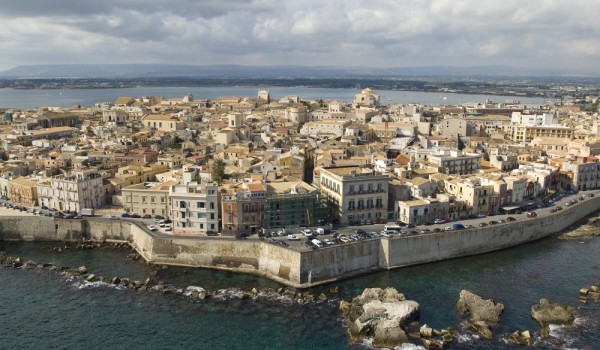
My understanding of economics is derived from scepticism, the philosophy of Sextus Empiricus and Nietzsche when at his most lucid. The sceptic knows that nothing is true that there is no certainty in human knowledge. What ever the answer posed to a problem at the best it is but a partial answer. Sextus Empiricus was sceptical of human knowledge that he thought it best society continue in the same old tested and proven ways, as given the limitations of human knowledge any reforms proposed by the philosophers would inevitably worsen the human condition. This is illustrated by the probable apophrical story about Plato. Dion the tyrant of Syracuse invited the philosopher Plato to advise on improving Syracuse  society. His reforms proved to be totally impractical and caused nothing but discontent among the people so much so  that an angry Dion ending up selling Plato into slavery. However I would not go as far in my scepticism as Sextus as society is constantly changing and keeping things in the time honoured way is impossible. However a sceptic such as myself knows that all the grand theories of economics are untrue, they only contain at the best only partial truths.

Siracusa-sicily-italy

Syracuse, Sicily

Economists have observed that if a good is in short supply its price rises so encourages producers to produce more in the expectation of increasing their income. This is an indisputable truth but the free market theorists develop this further claiming that changes in price  will cause the market to move into an equilibrium where supply equals demand. It is this last statement that as a sceptic I would contest. There is no evidence that markets ever move into a state of equilibrium, as demonstrated by the housing market where demand has exceeded supply for decades. All that can be said is that market theory which states that price is the means through which supply and demand are brought into equilibrium is unproven.

There is one good example of the Plato school of economics in action and that is the mess that is the British education system. Concern was expressed in our governing circles about the poor quality of the British schooling system in the 1980s. A model for reform was found in public choice theory which is the application of market principles to public services. The local covered market in my city in which there are competing fruit and vegetable stall holders is a good example to explain the purposes of the reform. If one stall holder in the market sells produce that is of a poor quality or too high a price, they will lose sales to their rivals. Consequently competition between stallholders ensures that only good quality produce is sold at he lowest prices. Reforming politicians decided that the system that worked so well in the market would work well if introduced into the provision of public services. All that had to be done was to convert schools into the equivalent of competing fruit and vegetable store holders. Legislation was passed to achieve this and now there are a variety of competing state schools, academies, technical colleges and free schools to name but a few.

However this new market system of education has one huge flaw. There is no central co-ordinating authority to ensure that supply of school places matches the demand for school places. The problem that arises is that it is impossible to organise all these independent competing school to provide the number of school places needed. All the government can do is to encourage or cajole these competing schools into providing the required number of school places. However each school is responsible for its own finances and is not invest in providing the facilities for extra students unless they can be sure the places will be filled. They will respond after the event when there are a surplus of children unable to get into schools, once it is obvious that there is a need for places the school will respond. However there is one other caveat it takes time to create additional school places, it will require investment in buildings and new teaching staff and the consequence is that there will always be a time lag between demand for school places and the provision of those places. Leaving school provision to a market comprising several independent competing schools only ensures that demand will never match supply, so the provision of schooling for each child takes second place to preserving the integrity of the market, though a policy of non interference.

What I would say as a sceptical economist is that what is a proven truth in one sector of the economy cannot be easily or effectively transposed into another different sector, which may effectively run better on different principles. The free market principle of herding cats is not the best principle on which to organise the provision of school places and schooling in general.

Unfortunately the belief in the beneficial effects of the free market is so deeply imbedded in the political culture of the country that even the free market reforms produce some obviously dysfunctional results they are ignored.

Public servants and their inefficient ways

Society has always needed scape goats for its many failures, it makes it easier if one can identify a person or group responsible for these failures, it avoids any difficult soul searching into the real cause of the problem. Usually these scapegoats are from an ethnic minority, it was only 50 years ago that boarding houses would have notices stating that the Irish were not welcome. Since that time new scapegoats have appeared usually from the new immigrants at one time is was Afro Caribbean’s who were blamed for the increase in crime in the 1980s, a role they have now vacated, which is filled by Eastern Europeans. However what is unusual is the addition of an occupational group to this list of scapegoats, that is the public servant. We are blamed for the lack of dynamism in society or as it is more usually termed economic growth. Public servants either through their adherence to bureaucrat practices make change so or impossible or they just syphon off tax revenues to little productive purpose.  
The outing of this parasitic group that feeds off the life blood of the economy was the work of the American public choice theorists. They highlighted our bad work practices, in the words of Charles Murray the public servants solution to a problem was always the same, to ask for more money to create a new department to deal with the solution and promote themselves to run this department. All that motivates us is the opportunity to increase our own status and incomes. Job security means that we don’t have to respond to public demand. Our customers the public lack any sanction to compel us to perform better. The solution is to break up these public sector monopolies into competing businesses that are forced to compete for the public’s custom if they are to survive. 
These theorists confirmed what society had always thought that we were a group of jobsworths who were only interested in feathering our own nests who provided the public with an abysmal service in return for our inflated incomes and job security. This is such an obvious truth that journalists such as Simon Jenkins can state with certainty that the education, health, legal and defence systems waste public money on a vast scale and that profligacy with public money produces little of value. It is such an obvious truth that he does not have to produce any facts or figures to prove his assertion, everybody knows that he is right.
Governments have long been persuaded of the truths of public choice theory, so much so that they have contracted out, wherever possible services to the private sector. Where services have remained in the public sector, they have created large external costly bureaucracies, whose only task is to ensure that public sector workers do their job, according to the principles of the free market. These inspectorates have names such as, the Care Quality Commission and their sole role is to police public sector workers. Neither the government or the advocates of public choice theory see the irony of having to introduce a large and costly bureaucracy to ensure that the public sector now works according to the principles of the free market. Public servants instead of experiencing the freedoms of the so called free market are in fact part of a new ‘Big Brother’ society. Winston Smith’s world is that of the new public sector.
Given that public choice theory teaches that public servants are only self interested of individuals who have little interest in serving the people the new inspectorate and public sector managers have to be vigilant to root out any of the bad practices and habits that are associated with bureaucracies. The only way they can achieve this is to monitor every minute of the public servants working day. However even the new bloated management teams and inspectorates cannot be physically present at every minute of the working day of each staff member. Consequently they have devised a system of targets which is constantly growing as inspectors are constantly thinking of new ones and workers are expected to provide evidence that they have been working to achieve these targets. This involves members of the staff team completing paperwork to demonstrate how they have achieved these targets.The demands on staff time for record keeping have reached such level that in teaching for instance the time spend on record keeping is creeping up towards 50% of time spent in work. The priority in the public sector has become not service delivery but record keeping which enables the manager to demonstrate the ‘appearance’ of staff adopting good working practices which is thought to be indicative of the quality of service provided. 
These new managers and inspectors have a fear of staff having free time on their hands, teachers provide perhaps the worst example in their minds. They have breaks when the children are going out to play or having lunch. Unfortunately for these new ‘public choice’ theorist children cannot be keep working without a break. This gives the teachers an opportunity to get together and talk, this give rise to the greatest fear of the public sector reformer, which is ‘canteen culture’. Given free time the teachers have the opportunity to discuss their teaching with their colleagues and what this enables is the dissemination of ‘worst practice’,the so called canteen culture or what others might call the ‘work ethic’. These reformers are terrified of the older staff passing on bad practice to new teachers. The only solution is to turn free or non teaching time into work time, this time can be used to complete some of the many records required of teachers to demonstrate good practice.
I can confirm the worst fears of the public choice theorists, we did not spend non teaching time discussing good teaching practice, but we gossiped about television programmes, who was having an affair with who, argued about politics. In other words we never used this precious time to discuss how to improve our teaching practice, we were of target or whatever the management speak is for wasting time. I can remember that is one school a group of staff had set up in one of the staff rooms the board game ‘Risk’ and spent all their lunch times playing this fiendish game. This surely demonstrates best the horrors of allowing staff to do what they wish with non teaching time.
Fortunately reformers were able to see the horrors of the old well established service practices and were able to sweep them away. Now in schools staff are constantly on target and the obstructive ‘canteen culture’ of the past is fast disappearing. As an example of the latter I can remember receiving a survey from the education ministry asking to complete and return so they could work on the results to improve teaching practice in all schools. I with all my senior male colleagues threw the survey in the bin. Today no teacher would contemplate treating with such contempt a directive from the education ministry.
What I going to suggest is that when we consider the fruits of these reforms the question to be asked is have the expensive reforms achieved what was intended or could improvements have been better managed at a much smaller cost. As a sceptical economist I tend to the latter view, perhaps an example from teaching will demonstrate my view better. The governments of today and the recent past keep trumpeting the success of their reforms as demonstrated by the improvement in school exam results. What these politicians fail to understand is that there is a different between coaching students to pass an exam and educating them. Educationalists will admit what makes a good education is open to debate, as is how students actually learn, yet our education ministers claim they know, in fact they have very little understanding of what makes a good education. It may be elitist to say so but throwing out a few spurious statistics will impress a gullible press and media but that all it is the appearance of an improvement in the education system.
Unlike most critics of the recent reforms I am not going to argue that the previous education system in which the public service ethos was seen as the main motivator was perfect but that the reforms introduced at great cost have failed to achieve their purpose. There were much better ways to improve a system that actually worked quite well, methods better than adopting a ground zero approach to reform. What reformers believe is only by destroying the old system and practices will they will be able to change the system. 
What Simon Jenkins the journalist and all the denizens of Fleet St., Westminster and Whitehall fail to understand is that public sector work is undertaken by people for other people, it’s a personal relationship. People are different and have different needs they cannot all be fitted into one schema developed some Whitehall bureaucrats under the direction of a politician. Policy is directed in way that will win favourable headlines. The teaching of reading demonstrates this, any educationalist or teacher will say that children learn to read in a variety of different ways.Yet the education ministry has declared in all ignorance that only one method is acceptable and that is phonics. Good practice or reality matters little to the Whitehall bureaucrat or politician, why matters is conformity to what is seen as good practice.
What politicians and the media are good at doing is seeing perceived failures or inefficiencies and acting in a way that is often counter productive to good practice. Certainly it is frustrating when you are queuing at the Post Office when the counter clerk takes what seems to be an inexplicable break, when there are huge queues in the office. Yet this may be the only way the stressed staff can cope with the myriad list of rules, understaffing and the sheer monotony of the work. However it is on this perception of the service that our political masters decide policy. When I was in the teachers staffroom myself and my colleagues would often express in disrespectful attitudes our attitude to our managers and the latest government initiative. Our disrespect was often a way of coping with the stress of the job, can I suggest it was no more than skin deep moaning. Today that would be considered as heresy and such negativity would be discouraged quite actively in the staff room, denying the staff the opportunity to let go, now everybody has to be on message. 
When prejudice becomes policy it makes for bad policy, the fact that every body knows that public sector works abuse the system to their own advantage, is the poorest basis on which to form a policy. The evidence for the poor performance of public service has never been more than anecdotal, yet it is on the basis of this anecdotal evidence that the reforms of the past twenty or so years have been based. While there may be some evidence for improvements in quality of service the evidence is not overwhelming. Policy based on an obsession with the minutiae of the workers daily routine it is obviously going to miss the ‘wood for the trees’. Success is now measured in small percentage increases in statistics, the sight of the bigger picture has been completely lost. The old British civil service had the skills and resources to focus the whole nation’s productive effort towards fighting the war, the new British civil service was unable to organise the competitive tendering by rail companies for right to operate the West Coast railway line. It was so poorly organised that the losing bidder Virgin Rail was easily able to get the decision reversed at a court hearing. If mistrust is the abiding characteristic of the relationship between ministers and civil servants the quality service provided is going to be poor.
To this sceptical economist it appears that the politicians having identified faults in the public sector have devised reforms that instead of improving the service have on the whole made it much worse public service.  

The Demise of the Liberal Democratic State and the rise of the Corporate State

Francis Fukuyama was wrong the 1990s did not herald the triumph of liberal democracy, but its showy demise. George Bush’s attempt to impose democracy on Iraq by force demonstrated the folly of this premise. Even the democratic programme that he sketched out gave a dominant role to the business corporations that would effectively control the new Iraq. Giving lie the all the claims about remaking Iraq on democratic lines. Prior to the invasion there was a quarrel between two of the main participants in the invasion over the distribution of the spoils  between the victors. British oil companies believed that the post invasion constitution gave too much to American and too little to British oil companies. The chaos of the post invasion Iraq denied the business corporations the influence and income they expected. Although the part of the profitable oil industry that is not under the control of Isis, is run by American oil corporations.
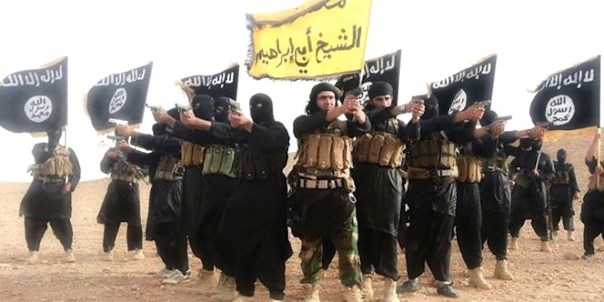
  
Perhaps it is in Europe that the evidence of the new nation state is best demonstrated. What is developing in Europe is a new corporate state, a state which functions primarily for the benefit of the business corporations? The financial crisis of 2008/9 illustrates this all too clearly. Due to irresponsible lending practices the banks failed, even if only a few crashed all threatened by the crash. Rather than let the banks fail the governments of Europe injected cash into the banks to prevent them failing. In Britain the bailout was equivalent to 10% of GDP, although given the huge size of the banking deficit the government was effectively mortgaging the countries assets and wealth to save the banks. It was not the banks that had to pay the price of their failure but the peoples of Europe. Europe wide austerity was regarded as necessary to reassure the banks creditors of the financial worthiness of the nations that were the guarantors  of their debts. A government with small debts would be regarded as a better guarantor of the banks credit than one with large debts. Surprisingly the banks got of almost scot free apart from a demand that they increase their cash reserves to 3% of total liabilities and ring fence retail banking, on which the banks are stalling. The Banks are now asking for the government eforms of an increasingly dysfunctional financial sector. In response to the pleas of the banks the demand to increase their cash reserves to their required total has been constantly put back, nowhere more so than in continental Europe. Despite claiming a government of financial prudence Germany has been one of the worst offenders. Only the other week the government in Britain refused to renew the contract of the chief executive of the Financial Conduct Authority as the banks had accused him of being to hard on them. In Britain as in Europe, what the banks want the banks get.

There are many serious problems that the government in Britain needs to tackle but one of them is not the reform of the state funded broadcaster the BBC. The agreement under which the BBC is funded is up for renewal soon and the government has used this as an opportunity for root and branch reform of the broadcaster. One of the main backers of the winning Conservative party was News International, the largest shareholder in Sky TV. The directors of this company has long argued for a change in the nature of the BBC, a change that would make it less of a competitor to Sky News. Its former Chief Executive James Murdoch argued for a change that would benefit Sky TV. He said in a lecture that the BBC  had a role as an innovative producer of TV programmes but it was not its role to exploit those innovative programmes. Once those programmes had been developed they should be given to the commercial broadcasters as the role of the BBC was to experiment not create popular TV. Unsurprisingly the main conservative spokesman on the media has echoed these views. He wants to end the BBC’s role of producer of popular programmes that compete with those of Sky TV. There is little doubt that one of the priorities of this government is to repay its corporate sponsors with favours.

Rather than continue with list of items that illustrate the increasing corporatisation of Britain, I want to compare the British governmental system to that of Russia. The Russian system of governance is often referred to as a mafia run oligarchy. All these commentators that do so fail to recognise the similarities between the Russian and British system of governance. Probably the only difference is in the level of criminality of the oligarchs in each country.

When the Soviet Union collapsed in 1990 the reformers in charge of the country wanted to adopt the free market of the West, so as to enjoy a similar level of prosperity. However they rushed into privatising their stated owned industries, without realising that the free market economies of the West were only successful because the market operated within a strong legal system that prevented the many abuses that occur in an unregulated market. Given what was literally a ground zero, the oligarchs were able to remake the Soviet economy to their own liking. They bought up the businesses at bargain prices and controlled the various sectors of economy, however for complete control they required control of the governmental system. This they achieved through bribery, intimidation and violence. Now President Putin runs a collective oligarchy, an oligarchy that exploits Russia wealth largely for its own ends. Opposition to the oligarchy is suppressed in ways similar to the former communist system, critics are subject to intimidation, often including violent assaults, and if that fails they are sent either to a mental asylum or camp where the mistreatment continues.

The oligarchs in Britain and Russia believe in a similar free market system, that is a free market in any obstacle to the free operation of business enterprise is removed. Obstacles such as trade unions, labour protection legislation and government interference. In Russia there was little too prevent the rise of the oligarch as in a ground zero economy (one in from which the state was largely absent) there could be no effective opposition and by controlling the government they can ensure that none arises. The task for the British oligarchs was much harder they had to create a society that was favourable to the free market (as they saw it). This meant they had to capture government and ensure that it introduced measures to remove all the obstacles to the smooth running of the market. Chief of these is the trade union movement and not surprisingly one of the first measures of this new corporate friendly government is legislation to further emasculate the trade union movement, so as to ensure that it cannot interfere with the smooth running of the market. The proposed legislation will effectively prevent trade unions from striking, so removing the  threat they pose to employers.

There is however one significant difference between Russia and Britain. Elections in the former are largely controlled by the state and there is never any likelihood that the opposition can come to power. In Britain elections are open and fair and the opposition can become the government. However the two main political parties are coming to resemble each other, when the opposition criticises a government policy, it is not so likely that they disagree with the policy as believing that they could implement it better. Increasingly the two main parties are becoming the mirror image of each other, but are committed to the philosophy of Neo-Liberalism. Unfortunately elections are increasingly becoming a competition between the groups  competing to be the representative of corporate Britain. One of the main concerns voiced by competitors for the leadership of the opposition party is that the previous leader was too distant from the corporate interest. Unfortunately too many politicians now see politics means to win a seat on the board.

The recent history of the Greek crisis shows how dominant is the corporate interest in Europe. When the Greek crisis caused by the nations over indebtedness occurred, the European policy makers could have agreed to a restricting of the Greek debt. This restructuring would have either involved pushing debt repayments in some time in the distant future or forcing the nation’s creditor to take a ‘hair cut,’ that is force them to accept a downsizing of the Greek debt. Either of these policies would have hurt the corporate interest, that is the banks would have lost billions of Euros in the ‘write down’ of the loans that they had made to Greece.  Instead the European politicians forced on to the Greek government a programme Neo-Liberal market reforms. These policies were intended to make the Greek economy more competitive and boost exports. The surplus earned on the export trade could be used to pay of the Greek debts. Unfortunately this Neo-Liberal experiment failed and after five years of austerity, economic growth has stalled and GDP is down 25% making it increasingly unlikely the debt will be paid.The International Monetary Fund states that payments on Greek debts should be deferred for thirty years, as only then will the economy have grown sufficiently to enable the Greeks to begin to pay off their debt.  Despite the urging of the USA the European politicians stubbornly support the banks cause and refuse to allow the Greek nation any debt relief.

Quite possibly the triumph of the corporate state is best demonstrated by the proposed Trans-Atlantic Trade and Investment Programme (TTIP). When this treaty comes into force any business corporation that believes government policies have caused it a loss, can refer their case to an international arbitration panel. This means that if government legislation aimed at limiting the harmful effects of tobacco restricts the sale of this product, the tobacco company can go to the panel asking for compensation or a revoking of the act. There is one such dispute between a South American company and an American Tobacco giant. Soon such actions will become common place  and the sovereignty of European governments will be undermined. In Britain at least too many politicians are in favour of this policy, as they believe their support for TTIP will earn that a well paid position with one of the business corporations, they will willing surrender power for cash.

There is one failing of the corporate state and that it is remarkably incompetent, in that it lacks the competence to deal with a major crisis. The banks only survived the crisis of 2008/9 because they were supported by the government. There will be other such financial crisis in which business corporations will only survive with the support of government. There is in Europe the unresolved debt crisis, not the one of popular imagination but the combined private sector banking debt. A debt that in Britain exceeds 400% of GDP and in Germany 324% of GDP.

These business corporations have only a narrow minded view of the world a view one that is focused on their own self interest. The banks in Britain have been campaigning successfully for an end to restrictions on their less desirabale activities and the government has complied. It has largely passed unnoticed but at a recent City of London banquet the governor of ‘The Bank of England,’ said he saw no reason why banks should not be allowed to increase their assets to 900% of GDP.  The majority of a banks assets are loans which are funded by borrowing from others, so if Mark Carney has his way the debts of British banks will rise to astronomic levels. There will at some time be a crash that in scope will exceed that of 2008/9. A crash of these dimensions would force  a collapse of the corporate state as the government will be no only body with the authority and power to avert the collapse and rebuild the damaged society. One economist Anne Pettifor has written a book called ‘The First Word Debt’ crisis, a book which is ignored by all European politicians. Rather than act on the basis of the precautionary principle, the European politicians seem to act on t’he eyes firmly shut’ principle.

All political systems contain within themselves the seeds of destruction, in the social democratic society of the past it was the conflict between the major business corporations and society. A conflict that the former won. The corporate state is more unstable than other political systems as there is no great vision or commonality of view that unites the community of business corporations. The only commonality is their hostility to any regulation of the free market and in reality they are a number of social units all pursuing their own self interest. This means that the corporate society lacks the strong mechanism for directing society to towards a greater end other than mere self interest, lacking this overarching powerful body, society can only fall apart in the event of being struck by an economic or social tsunami.

The great floods that devastated New Orleans demonstrate how the new corporate state fails to cope with  crisis. Cuts made to the emergency and environmental services made at the behest of a business dominated tax cutting government had left these services unable to respond adequately to the floods and their inaction prior to the flooding worsened the devastation. The levies that protected the town were in a state of disrepair and unable to resist the tidal surge and broke. All the world could do was watch in horror as the American government failed to halt the destruction of New Orleans.

The failure to resolve the Greek crisis points to a future crisis in Europe. Greece is but a small country accounting for but 3% of the European Union’s GDP, yet the European Union struggles to find a solution to its problems. It’s only success is in replacing the various democratically elected governments that are hostile to its austerity programme. Greece only rid itself of the military junta popularly known as the Greek colonels in 1974. The Greek army is the one institution that has not been devastated by the Neo-Liberal reforms imposed by the EU  and it may be the only body that is capable of eventually restoring social order after the havoc caused by the latest austerity and reform programme. Possibly this is the future for us all as the failures of the Neo-Liberal or corporatist state can only result in its replacement by authoritarian state supported by the military. The pro business agenda so having hollowed out the democratic state its institutions lack the resources to respond to a major crisis. This is demonstrated by the financial crash of 2008, the Chancellor of the time commented in a newspaper article that the crash was imminent. Yet despite this knowledge the government and Treasury were incapable of taking any action to avoid the crash, much like a rabbit that is frozen by fear when faced with the headlights of an oncoming car.

Machiavelli and the Madness of Politicians

What puzzles me is why when we have the best educated politicians in history, the governments that they lead are so abysmal. At least one European leader has a doctorate and most were educated at the elite universities in their own countries. Why are these so well educated leaders so awful at the business of government? The only plausible answer that I can find plausible is that they are affected with a degree of madness in that they consistently mistake the world of their fanciful imaginings for reality.

Perhaps this is best demonstrated with the current crisis in Greece. The  leaders of Europe insist on repeating the  changes they have forced on the Greek economy which rather than solve Greece’s debt crisis has worsened it. The programme of imposed austerity and so called structural reforms pushed Greece into a situation which resembles the Great Depression of 1929 to 1939. Obviously a country in suffering an economic recession is less able to pay its debts than one that is booming. Yet the so called Troika (the European Commission, the International Monetary Fund [IMF]) and the European Central Bank) insist that the Greeks must accept even greater levels of austerity if they are to receive the bailout funds necessary to keep their banks open. It is obvious to all that this a policy that won’t work, yet our European rulers insist that it must continue.

20140214-160204.jpg

Reading this it seems that there is a hint of madness in the decisions of the European policy makers. They were all the time confusing the world of their imaginings with the Europe of today. Anybody can misunderstand the reality they face yet to consistently do so suggests madness. The IMF has twice produced reports saying that Greece is incapable of repaying its debts, the latest report suggests that Greece should be granted a moratorium of 30 years before it has to repay any of it debts. Yet despite the evidence from the Greek economy demonstrating that the policy forced on it by the Troika has put it into long term decline making it less likely to the economy will ever achieve a level of growth that will enable it to repay its debts, they continue to insist that the policy must not change. While it is possible that the European leaders directing the policy of the European Commission can be deluded as to the effectiveness of their policy, what is most surprising is that Christine Lagarde as managing director of the IMF is supportive of this failed policy when her own organisation is writing the reports stating that the policy is wrong headed. Why this level of delusion, why do these politicians fail to see what is in front of their eyes? Why are so self evidently mad?

The best explanation for the behaviour of our contemporary leaders comes from the writings of Machiavelli. In ‘The Prince” there is a chapter in which the following scene is described. The son of one of the Greek tyrants is accompanying his father on a walk. Then as they are walking past a field of wheat, and the son he asks how is it possible to remain in power when their are so many potential enemies in society. Rather than answering his son directly this man picks up a stick and knocks of the heads of the tallest stalks of wheat. European leaders in their dealings with Greece have adopted a similar policy. Whenever a Greek leader appears who might threaten their policy of austerity, they destroy them. The greatest threat the European leaders have faced is Tsiparas  so they had set about undermining him and destroying his power base. In denying the Greek banks access to much needed Euros they have reminded him that they possess the power to close the banks and with that wreak havoc on the Greek economy and society. Rather than risk chaos, Tsiparas has capitulated. The leaders have calculated that the terms that they have forced him to accept will force his eventual resignation and destruction of his radical Syriza party. Not only these politicians cut down the tallest wheat stalk in Greek society, they have made it clear that they will do the same to any other wheat stalks in any other European country that might threaten their authority.

This leadership style that Machiavelli demonstrated is not a style of leadership appropriate for a democratic society, which depends on political dialogue and consensus to function effectively. If the opposition is destroyed or emasculated the political dialogue becomes extremely limited, as all the potential leaders realise that only by following the accepted script can their careers advance. Consequently there is a political echo as what leaders hear from the political dialogue is but an echo of their own views. ‘Yes’ men and women become the vogue in politics, individual thinkers self exclude, as they must pursue careers outside politics as the system penalises individual thinkers.  They  realise if they entered  politics would be marginalised in the political set up or more likely as in the Greek example have their political reputation and  career destroyed by a hostile elite of non thinking conformists, who hate any threat to their authority. This gives leaders a sense of omnipotence as all they ever hear is their words repeated back to them. Political difference is viewed in the words of Christine Lagarde, as not being ‘adult’ and not worth consideration. The views of Tsiparas and the Greek leaders were not worth considering as they were not spoken in the language of the elite. They were children who failed to understand the grown up world of the political elite.

Never having to engage in serious dialogue with your rivals and their alternative views, leads to an arrogance of power. By never facing contradiction these leaders cannot but believe in the rightness of their views. These leaders have been driven mad by power, they believe the acquisition of power sanctities the rightness of their views. What they say is true, anything else is heresy. They are like so many  Kim Jong-uns who don’t have to pay regard to any view but their own. Kim Jong-uns that will resort to any tactic to destroy the reputation and career of rivals.

There is one great failing in Machiavelli’s book ‘The Prince’ he failed  warned leaders that acquisition of power does not equate with greatness of mind. What we have in the West is a series of mediocre leaders who have attained power by Machiavellian means, but who lack the greatness of mind to govern effectively. In Britain and Europe the means to power is also the means by which great individuals are excluded from power.  Mediocre thinkers who have attained power by manipulating the political system overestimate the significance of their success, playing the system well does not equate with greatness. The technocrat governments appointed in many southern European countries are not experts in economic management but timeservers willing to do the bidding of their political masters. The technocrats that Europe will put in charge of the running of the Greek economy, will be no more successful than their predecessors. The misery and damage they inflict on Greek society will be hidden behind a serious of dubious statistics that appear to shw success. Britain and Europe are ruled by a number of petty Napoleons who are blinded by power and in the madness, they believe that their insane visions represent what is best vision for humanity. We are ruled by the self deluding inhabitants of a political madhouse.

Greece and the Sceptical Economist

Three kinds of economics

http://www.neuerope.eu

From a glance at the media it would seem that there is only one economics, usually what is now termed free market or Neo-Liberal economics. People are familiar with the mantras of these economists whether it spoken by them or a politician. Mantras such as a country must live within its means and it must reduce its debts to a sustainable level as is constantly repeated in the debate on Greece. However economics can be divided into three separate schools, Neo-Liberal economics being but the most dominant strand in but one school of economics. What ever school economists belong to will determine their approach to the crisis such as that in the Eurozone and Greece?

Neo-Liberal economics derives from the school of economics that sees the economy as an integrated system that when working well maximises the welfare of all. Economists from this school will see their role as to explain how the system works and how to make it work better. Changes such as removing restrictions or impediments that prevent the free market from working at its optimum. This has lead to the emasculation of trade unions and worker protections,as each are seen as an impediment to the smooth working of the free labour market. A loss it is believed that will be offset by higher incomes the now more efficient workforce. Ideally there should be no restrictions on how and where individuals choose to work and how employers choose to use them.

There are other schools of economics within this school that sees the economy as an integrated social system that can be made to work for the benefit of all. Although disregarded by policy makers today, they are the Keynesian economists who believe that through intelligent government intervention the economy can be made to work for the benefit of all. Their concern is ameliorating the damaging effects of the trade cycle, that is the economy goes through a repeated series of bans and busts. In the upswing period they are determined to stop the worst effects of the boom,  which is inflation, by regulating credit; similarly they wish to avoid the worst effects of a recession which is unemployment by using various measures such as increasing public spending to stimulate economic recovery. This school is anathema to the Neo-Liberals who believe that any government intervention in the economy can only have a malign effect.

Next there are a group of economists who see the economy as working for only one privileged group and merely providing the majority with the means of survival. These are the Marxist economists of whom there are few today. At the core of Marxist economics is the labour theory of value. This theory at its simplest states that it is labour that in the production process that adds value to the product, but that added value is skimmed off by their employers the bourgeoise. This group take a disproportionate share of the added value (profit) leaving the worker with only the minimal means of income. Marxist economists advocate measures to reduce or eliminate the power of the bourgeoise to take a disproportionate share of national income to achieve a more equitable sharing of that income.

There is a third school of economics of which I am a member, we are probably the smallest of all the economic schools. These are the sceptical economists who believe that seeing the economy as an integrated social system that works as fallacious. (I use the term sceptic after the sceptical school of philosophy, whose most prominent recent exponent of whom was Nietzsche, from whom I take my understanding of scepticism.) This is not to deny that the economy does not produce goods and services that add to the sum of human welfare, but to see it as working mechanism or a well functioning social system is wrong. There was a film realised  in the 1965 about an air race from London to Paris that took place in 1910.  In it there was song about ‘Those Magnificent Men in their Flying Machines’ which included the words if my memory is correct, that these machines fly but I do not know how they stay up in the air. A sceptical economist has this view of the economy, we know that somehow the economy works but not exactly how. Parts of the system we do understand but not the whole, we even doubt if it correct to describe the economy as a system, we only use the term system to imply a something. What we deplore is seeing the economy as a mechanism that is capable of being perfected, that can be made the best of all possible economic systems, as is the claim of Neo-Liberal economists. Not that we don’t believe that changes cannot be made to improve the working of the economy but those changes will have only a limited impact. The revolutionary economics of the Marxists or Neo-Liberals who claim to have the ability to transform society and its human members we see as misguided. Economics is the science of small changes that have been proved to work not the messianic social science promising a better future for all.

Greece and the sceptical economist

Greece provides the perfect example of the fallacious nature of much of economics. When the financial crisis of 2008/9 came it exposed the frail nature of the Greek economy without its over dependence on foreign loans. The European Union (EU), the International Monetary Fund (IMF) and the European Central Bank (ECB) provided the loans Greece needed on the condition that it adopted a programme of austerity and embarked on a series of Neo-Liberal reforms. These reforms were to cut welfare spending, remove labour protections and embark on a large scale privatisation of state owned assets. After five years debts have increased to 177% of GDP, youth unemployment has reached 50% and many individuals especially pensioners have been forced into poverty. Despite the disaster that is now the Greek economy the EU insists that Greece most continue to follow the programme of austerity and Neo-Liberal reform. Even the election of a government opposed to austerity and the issuing of an IMF report saying that the continuation of the current policy will make it increasingly unlikely that Greece will ever repay its debts,has failed to make the EU change its policies. The Neo-Liberal politicians and economists that control policy making at the EU believe that in spite of the evidence to the contrary that the Neo-Liberal reforms imposed on Greece will eventually deliver. It is a matter of holy writ for these people that only the truly free market can deliver the best of all possible worlds.

A sceptical economist such as myself might point out to the failure of a similar radical Neo-Liberal programme in the former USSR. This programme of radical reform had such disastrous effects that some Russian nationalists believed that it was a programme implemented to deliberately weaken the Russian economy and nation. There was in the 1990s after the collapse of the communist system, the wholesale privatisation of state run businesses. The least efficient were closed for lack of buyers so creating large scale unemployment and poverty.  Those businesses that were bought were purchased at knock down prices from the state by the oligarchs (often former officers of the KGB), with the result that control of the economy was transferred from the state to the oligarchs to the detriment of the Russian people. Economic reform was introduced by a government that had no real understanding of Western society and economy and into a society that lacked the social institutions to make the reforms work. Instead of the free market reforms creating a new Russian liberal democracy, they created a new authoritarian state. All the old methods of repression are returning, political dissidents are confined to mental institutions or imprisoned. Poverty is still persists and it is no coincidence that Russian men have the lowest life expectancy in Europe.

Perhaps a phrase for describing the policy towards Greece would be Iraqi economics. When George Bush successfully conquered Iraq he ordered the destruction of the existing governmental system. He intended to create a liberal democracy out of the ruins of the old Baathist political system. Instead this overly optimistic programme created a political wasteland which has lead to a decade long period of internecine warfare, as the authoritarian government that existed was replace with nothing more than misplaced optimism that once freed the Iraqis would by themselves create a democratic state. The radical Neo-Liberal economic policies that have introduced to the former USSR and Greece have created an equivalent economic and social wasteland.

At some subconscious level of thought it does seem that the European politicians do seem realise that radical Neo-Liberalism can only be imposed by an authoritarian government. They have been trying to remove the democratically elected Syria government and replace it with one of technocrats that will do their bidding.

What the sceptical economist would have done is to work within the existing political system and with its leaders to adopt a gradual reform programme, consisting of those measures that would bring some amelioration to suffering of the Greek people.  The obvious one is some measure of debt relief, this would mean that the European banks that made irresponsible loans to the Greek government would suffer financial loss as their would the Greeks would be defaulting on their loans. However they would be paying their price for their irresponsible lending, which is what should happen in a free market economy. There would be no ‘big bang’ reform of the economy but a series of negotiated and sensible reforms. Reforms that would be made with the consent of the Greek political leadership and people. There would be sufficient incentive to reform as the downgrading of Greece’s credit status, would make raising international loans difficult and costly until the Greek economy showed signs of recovery. The reforms would be modest in scope, there would be attempt to destroy Greek ‘clientelism’ as it is one of the key elements of the existing society. Reform certainly of its worst features but recognition that it is part of the unique nature of Greek society. No attempt would be made to make it a southern European equivalent of Germany or free market Britain.

What I am trying to say is the politicians and economists of the EU should recognise the limits of their knowledge. They are the last people that should claim to have a knowledge of the ideal society and economy, as people in glass houses should not throw stones. One of the criticisms is that the Greek tax collection system was ineffective, as one writer stated it was as if the state was putting out a collection plate. Yet these European critics are in their own countries encouraging rich individuals and business corporations to avoid tax. Many business corporations locate their head quarters in Luxembourg, Ireland and the Netherlands to avoid tax. Soon the UK will be added to their number as our government is developing new tax avoidance schemes to encourage business to locate in the UK.

The sceptical economist has no one big answer to the problems of managing an economy, instead they have a series of small answers. These small answers are to be tried and if fail to be replaced by alternate measures that might work. What the sceptical economist recognises is the uniqueness of different societies, which come up with different solutions to solve common problems. Is the Greek system of ‘clientelism’ really much worse than the employment practices of the United Kingdom? If clientelism produces over employment, the Anglo Saxon free market produces under employment. Government departments in Greece may have been over staffed with political place men, but British business corporations such as supermarkets are staffed with the under employed, that is workers working on split shifts on low incomes, who desperate for extra hours of work  to boost their incomes. The Greek practice of clientism is far from perfect but so are the practices of the Anglo Saxon free market. What I want but don’t see is a recognition of the fallibility of social institutions and that what might work in one society does not necessarily work in another.

The Real Significance of Contemporary or Modern Art

There is always a sense of outrage associated with modern art, the most outrageous exhibition  being when Duchamp unveiled his display of urinals as art. However while contemporary art has never lost its ability to shock and outrage, the shock has diminished with repetition. Recently a representative of an artist group called the ‘stuckists’ presented the winner of the Tate prize  with  a cheque for £50,000 as the winner of the alternative bad art award ward. The winner had exhibited a concrete mould made from the interior of a demolished house as her exhibit. However the award was for bad art, not for outrage. I think that much to the dislike of contemporary artists the reaction now to their art is not outrage but boredom. This was certainly my feeling when I saw a sculpture consisting of torn cloth on ropes in the Serpentine gallery,  I skipped through the gallery merely glancing at the items on display eager to get back out into the summer sun.

What prompted my writing was my visit to view a display of the art of Carol Bove at one of the local art galleries. One of the exhibits was a piece of drift wood, a piece of wood that the artist visualised as representative of a something  that was beyond my understanding. The same applied to her installations of glass containers on trolleys. While I understand that the art lies in the conception or construction of the image, I failed to appreciate this in the art I viewed. The overwhelming feeling I had after viewing the art was bafflement. All the installations on view had been borrowed from various galleries, which meant that they were highly valued within the artistic community, yet I could get no pleasure from viewing them. This feeling of bafflement soon left me when I realised that the art on display was not intended for such as me, but for the cognoscenti. It was an exclusive art form that excluded the uneducated or uninitiated.

My nephew is part of this cognoscenti as an artist, while he can go to an exhibition of contemporary art and appreciate it, the art he produces is not intended for him and his artist friends. What they all desire is the sale of their art which they  price in hundreds or thousands of pounds. Prices which put their work out of the reach of most the population, it is art for the well off. This is not to decry the price they charge for their work and even the simplest art installation is the product of several hours work in the studio. They are merely charging a fair price for their work. However it is the very priciness of their work that changes its nature. They are producing exclusive artefacts for the rich. Anyone could buy a porcelain urinal but only the very richest amongst us could buy Duchamp’s urinal.

Some of the super rich who buy these contemporary works of art don’t understand them either but there is a whole army of experts willing to explain the art to them. In the case of my nephew the buyer will have either the artist or the gallery owner on hand to explain his art work to them. They are enabled thereby to experience the beauty that the artist sees in their creation, while the uninformed such as me remain in ignorance. This is an experience that only the rich can enjoy the artist can transform an everyday object into something beyond the comprehension and understanding of the majority. Although my nephew would deny it he and his friends are creators of artefacts for the very rich, artefacts that enable them to emphasise their exclusivity, an exclusivity that makes them different from the rest of us.

I should add that many of the super rich purchasers of art do not appreciate the works they purchase but they do have the knowledge that the common mass has even less understanding of the works they own than them. However more usually the collector is a Maurice Saatchi a wealthy individual with an acute appreciation of contemporary art, who owns the world’s largest collection of Damien Hirsts.

The irony of Duchamp’s work is that he and others intended to bring art down from its pedestal to make it accessible to all. Instead he and others have rendered it even more inaccessible, people such as myself will always be denied the education that enables the minority to see everyday objects as items of beauty.