Category Archives: Uncategorized

The next crash is closer than you think, probably before 2015. The problems of a gambler’s economy.

20131121-160708.jpg

Can I make a confession, I used to believe that Gordon Brown was the supreme poker player. When he was Chancellor everybody credited him with the virtue of prudence,yet he was a reckless gambler. To give the illusion of prosperity he ruthlessly stoked up the housing price bubble, enabling people to cash in on their rising house prices by borrowing against this increase in the price of their houses. It was a gamblers boom built on the insubstantial shifting sands of cheap money. When the inevitable crash came, it was a surprise to me when it turned out that he was not a gambler but somebody who naively believed that he had achieved a new economic paradigm that is an ever growing economy without the inflationary tendencies of the past.

There is nothing to be gained anymore by going over the details of the 2009 crash, other than to say that the same economists who advised Gordon Brown on his reckless dash for growth are still there at the Treasury. Lord Oakshot the former Lib. Dem. economic spokesperson said the Treasury was staffed by free market fundamentalists. These same people seemed to have persuaded that arch Machiavellian George Osborne to adopt the same strategy as his predecessor. He is rumoured to have said that his help to buy policy will stoke up house prices. He is hoping to create the same illusionary feeling of well being as generated by Gordon Brown.

While there have been some voices of dissent, the same cheer leaders are there in the media, only too willing to cheer on the Chancellor.

However the situation is very different to the one that existed in 2008/9. Then government debt was at its lowest recorded level of just over 40% of GDP, whereas the now it is expected to rise to 97% of GDP. George Osborne will not be the beneficiary of the benign economic circumstances that existed prior to 2008. Rather than history repeating itself as farce, it will repeat itself as tragedy.

There are a number of icebergs that can easily wreck this recovery. Personal debt in the UK totals £1.4 trillion (The Guardian, 20th Nov. 2013), which in is about equal in size to the national economy. Britain has not recovered from its addiction to debt. This leaves the recovery likely to be derailed by any increase in interest rates. For such a debt addicted nation any increase in interest rates from its current low levels will be disastrous. There will be a crash in consumer spending and the economy will be forced back into recession.

Economists in the City and elsewhere believe an increase in interest rates from their current low levels is inevitable in the near future.

Britain’s trading account with the rest of the world is dangerously unbalanced. There has been no hoped for boom in the export trade to drive recovery. Instead for a fragile economy such as the UK it is the most dangerous type of recovery, a debt laden consumer boom which will only suck in more imports worsening our balance of trade. In a report made by the European Commission (The Daily Telegraph, 20th November, 2013) the U.K.’s current account deficit will rise to 4.4% by the end of 2014, the highest for any industrialised country. The only weapon in the government’s armoury to reduce the trade deficit, is to cut demand by raising interest rates. Obviously that won’t happen immediately, the Chancellor instead is closing his eyes to the problem and hoping for a miracle, which won’t happen. The only question outstanding is when the rates will rise and that is out of the hands of the Chancellor.

The IMF called Britain the world’s largest tax haven. Britain has always been the repository of the world’s hot money, that is footloose money deposited for short periods of time, wherever it can earn the best returns. London is at the centre of a web of tax havens located in former British colonies or dependencies. Part of these vast sums banked in London are recycled to pay our debts. While the world is willing to use London as its banker, the trade deficit is no problem. However it is an extremely unstable situation, as Britain borrows short and lends long, which is very profitable while it lasts, but is liable to upset if the foreign depositors develop doubts about the stability of the British economy. Such doubts might occur if interest rates rise or if Britain continues on its path to exit from the EU. With Britain borrowing short and lending long there will be difficulties in meeting the demands for repayment. Given all the billions that reside in the City of London it will require the biggest ever IMF loan to cover our debts. A loan that will only be given if Britain embarks on a Greek or Irish style austerity programme.

In the Middle Ages there was a popular topic for for painters ‘The Ship of Fools’, this ship was populated by the dignitaries of the time, bishops, popes and crowned heads of state. Today that ship would be populated by economists, treasury officials and government ministers.

CAUTION. Whenever an economist makes a prediction about future events , what they are predicting is either a possibility or a probability. I fear my predictions are a probability rather than a possibility. I hope that a fit of caution overtakes the British establishment and that they call a halt to this potentially dangerous property boom. Caution may take the form of George Carney the newly appointed Governor of the Bank of England, who has promised to take action to rein in any property boom. However he will be fighting against the ingrained instincts of the political establishment who prioritise wining an election over any other policy considerations.


The Destruction of Democracy and the emasculation of the people’s voice in the 21st century

20131121-103015.jpg

We as a civilisation always pride ourselves on our superiority to previous civilisations, yet this superiority is often more apparent than real. What cannot be denied is our technological progress, even in the depths of the longest post war depression, none were reduced to the extremities experienced in the depression of the 1930’s. The material wealth of the majority is greater than that of the well off middle classes in the inter war period. However what has changed little is civilisations tendency to barbarity. The brutal civil wars in the former Yugoslavia should have ended any assumption about the superiority of European civilisation. In case we forget it was the same civilisation that gave rise to the death camps in Nazi Germany and the Soviet Union. What tends to go unremarked is the casual reversion to barbarism in our governing classes, whenever their social position is threatened. Surely the reaction of the European governing classes to the great financial crisis of 2009 has revealed the essential inhumanity of this group, which continues to be the constant characteristic of this group, whether it takes the form of violence against their peoples or a sustained camping of suppression and impoverishment against their subject peoples.

In any financial crisis the first and over riding instinct of the governing classes is to protect their wealth. The instinct of the Greek governing classes was to deny the bankruptcy of their banks as that would have meant them accepting large financial losses, instead they transferred the blame to hard working masses of the group population claiming it was their fecklessness that caused the country’s bankruptcy. Early retirement, the bloated welfare budget and over staffed public services became the accepted cause of the Greek crisis. The distraction from the real cause with generous EU bank bailouts enabled the Greek governing classes to carry on as before. In fact they collective behaviour worsened, there looting of the country’s wealth increased, they spirited there assets out of Greek banks to safer bank havens within the EU, undermining further the solvency of Greek banks. If these banks had been declared bankrupt at the beginning of the crisis it would have been impossible for the super rich to spirit their wealth out of the country. By transferring the blame for the crisis to the majority they could transfer the costs of the bail out to them. This was achieved by impoverishing the majority through wage cuts, job losses in the public sector, cuts in public sector pensions and these savings financed the reduction in the national debt necessary to secure EU loans and the banks bailout. One consequence is that Greece now has the highest level of youth employment in the EU in which 1 in 2 of all young people remain unemployed.

This is not to deny that there were problems with the great economy and that some changes would have had to be made to put it on a sounder financial footing. What has happened is that the guilty party has escaped with their wealth intact. In a society as unequal as Greece in which the super rich hold a disproportionate share of the nations wealth, when that group as a whole refuses to pay tax, government finances become unsound. The government has rely to a disproportionate extent on borrowing to finance its activities. Add to that the property and asset speculation indulged in by these groups a crash was inevitable in Greece, even without the crash of 2009.

While Greece is an extreme example of a malfunctioning modern capitalist economy, the UK is also trapped within the same malfunctioning economic spectrum. The UK’s problems are not as severe as those of Greece, it is a difference of quantity not kind. When David Cameron (as reported in The Guardian) announced that austerity was here to stay, he announcing the that his government would do its utmost to perpetuate the malfunctioning economic system of the recent past. Britain’s governing classes make their income from speculative trading activities whether in property, equities or commodities. All of which result in a transfer of income from the wealth poor majority upwards to the wealth rich minority. Generation rent illustrates this process well. It is estimated that only 2% of the population are landlords and although the figures are not available given Britain’s unequal distribution of wealth it’s reasonable to assume a small proportion of that 2% own the majority of property. I don’t think it would be wrong to assume that 10% of that 2% own the majority of properties. With increasing numbers of young people trapped within generation rent these landlords are able to take an increasing share of the income of young people through increasing rents.
Much speculative activity is only profitable if interest rates are low. If it costs next to nothing to borrow money the most speculative of speculative punts become possible. Cheap money is secured by reducing the demand for money. Austerity and the relative or actual impoverishment of the majority frees up a greater proportion of the banks assets for speculation. It also by reducing the demand for money keeps interest rates low. Britain financial markets have become the world’s speculator’s playground. Any punt in the speculative London housing market will lead to a profit on resale in a few month’s time.

A socially unequal society need not be unstable, as is demonstrated by the survival of aristocratic agrarian societies which persist for hundreds of years. What are unstable are societies in which the wealth of the super rich is founded on speculation, as in the UK. They are liable to volatile swings in business confidence as speculation is based on the feelings of traders about the future. Such violent swings in the wealth of the nations assets means much public spending becomes unsustainable. Much of the financing of public sector expansion in Gordon Brown’s Chancellorship was dependent on taxes on speculative activities. In the property boom stamp duty and capital gains tax on speculative property trading financed much government activity and when the property boom ended much funding of government activity ceased.

Forget the headlines about much of the world’s wealth being secreted in tax havens, much of that money is secreted in Britain, in offshore accounts. The immense amounts of money stored in Bermuda and the Cayman Isles can earn no profit in such impoverished economies, it is instead recycled to the high profit financial centres such as London. An account in a tax haven is merely a fictions recycling of money to hide it from national governments. In the example of the UK it is true that this tax haven money never leaves the UK shores. It was the IMF that labelled the City of London as the world’s largest tax haven.

In unequal and volatile society the government can only maintain itself in power by resorting to increasingly brutal and repressive measures. One of the most effective ways of doing so is to deny the representatives of the people power, in the Republic of classical Rome it was done by murdering the representatives of the people, the tribunes. One such unfortunate tribune one of the Gracchi had his skull split in half and the top half of his skull was used a cup by one of his enemies. David Cameron’s government in following on a long succession of governments that have emasculated the Trade Union movement, so effectively removing the voice of the people from the political process. There political representatives in parliament have been seamlessly absorbed into the new ruling classes. One of the selling points of new Labour was its ability to mange the trade unions better than its rivals in the interest of big business.

However even this is insufficient, if denied a voice in the political process dissent will take other forms of expression. Letters in today’s Guardian (21st Nov. 2013) write of extreme repressive measures taken against the most mild of opposition movements, the student protestors. What threat do the children of the middle class pose to the system? The answer is very little, but nevertheless the student protestors are subject to constant police harassment. If a blue print is needed for a repressive British government, it comes from the government of Lord Liverpool (1812-27). Whether consciously or not the government seems to be following the Liverpool rule book. It has even introduced its own gagging law, not too dissimilar to the measures taken by Lord Liverpool to suppress the radical publishers.

A New Economics – the economics of trivia

20131113-170549.jpg

Economists I feel have been missing the point for far too long, they always study the grand, society as a collective never the individual components that go to make up society. They will claim that they do so in the study of micro economics, the theory of the firm etc., however the study is so abstract that it has no connection to reality. Perhaps this is a fault I also share in with my fellow economists. Here I am sitting in my favourite coffee house, drinking coffee and quite self absorbed in my task of writing this abstract analysis. Sharing this space with me are two women, they are having a lively discussion about the events of the weekend. There is a gaiety and liveliness in their conversation that compares favourably with my brooding intensity. They live life in a different way to me. Am I as with all economists detached from the gay daily round that others enjoy. I am a poor and reluctant dancer, yet my brother in law (who is an English teacher) is a good dancer and a master of the ballroom. Is it possible that the aversion to the daily round makes economists bad dancers or do bad dancers and the most unsociable of men gravitate to the dull subjects such as economics as they mirror our personalities?

This diversion into the personality of economists does have some relevance as I think our relative social isolation inclines us to think of society and the economy in abstract. What we need to do is reorient ourselves, study the reality in which we are immersed. I want to invent a new concept for this study, an ‘economics of the trivial’. Not that I think the majority of human behaviour is trivial but I want to distance myself from the grandiose theories of the economic masters. Economics lacks humanity, I want to bring that humanity into the centre of the subject. It is in those behaviours that economists consider trivial that can give us the best insight into the nature of the economy. Can I suggest that from the behaviours of young people dancing, celebrating their break from work as much can be learned about the working and nature of the economy as from the actions of a trader in the foreign exchange market. Unfortunately economists would only regard the latter of any economic significance, so failing in their analysis because a whole set of economic behaviours are considered too insignificant to be worthy of study.

20131113-170709.jpg
Does the hedonist lifestyle of so many young not reveal something about the nature of the economy? I know that young people has always attracted the ire of the old because of their seemingly irresponsible lifestyle, but has there not been a change within youth culture. Sociologists now speak of adolescence extending into the 30’s. Seemingly self destructive behaviours seem to be on the increase, binge drinking and drug taking seem to be on the increase. The authorities are struggling to keep pace with the consumption of the new legal highs. The drugs culture hosts an innovative and enterprising industry whose entrepreneurs show an enterprise lacking in so much of the mainstream industrial sector. However this exuberant youth culture is a symbol of significant changes in the wider society and economy.

Youth culture was formerly limited in its nature and impact on the wider society. It was a culture adopted by young people in their formative teenage years, a transitional phrase before the emerged as fully formed adults. What youth culture represented to the wider society was a marketing opportunity for the clothing and leisure industry. The revolutionary rhetoric of the flower people and the hippies was no more than a protest against the young’s exclusion from the power and privilege of adulthood. Hippie culture with its rejection of the existing society was not a realistic alternative, it was but a magical solution to the problems of youth. No more realistic that the magic in children’s stories. Now I would suggest youth culture is representative of something more significant, it is the most visible of examples of the change in society and the economy that have occurred in recent years.

This seemingly frenetic activity is but the new economy writ small. A greater part of the new economy mirrors this frenetic social life of the young, it is an economy in which there is rapid change in turnover, so many of the new products have a limited shelf life, manufacturing industry becomes increasingly like the fashion industry, highly volatile with those being behind the trend rapidly being left behind. Market giants such as Nokia, Blackberry, Microsoft (?) merely have to miss but one change in the market and they get swiftly left behind by market rivals. While the dominance of the new market leaders is measured in years, the dominance of market leaders in the old industries is measured in decades. Exxon, Shell and BP have been dominant players in the oil industry since the late decades of the 19th century. Companies have always risen to dominance in a market only to decline and disappear, what is different today is the speed at which this happens and the much larger segment of the economy which is dominated by these ephemeral companies. In part is it explained by the rise of the service sector which includes the IT sector in which companies have a notoriously short shelf life.

Britain is the one economy in which this effervescent economy predominates. The economic and social climate from the night time economy to the ‘City of London’ is sympathetic to this frenetic economy. The trading floors of the City epitomise this new economy. Millions of rapid deals involving vast sums of money made during a day, but which at the end of the day leave the stock of physical assets that make up the economy unchanged. A monetary froth which leaves the real value of the nations wealth unaltered. Financiers have a preference for the effervescent economy, as the companies in which they invest rise quickly within the market earning the initial investors good returns but companies which have such a limited shelf life they have to be disposed of before the market turns sour. Examples are companies such as Friends Reunited and My Space which were sold when their market valuation was at its peak. A market which suits the new world of financial speculators, the private equity companies and the hedge funds. Such a market is hostile to the long term investments that advanced manufacturing industries require, which in part explains the long term decline of British manufacturing industry.

A better understanding of the financial markets can be gained from understanding the society that gave rise to them. What informs behaviour in these markets is it the culture of the social group from which they originate or the mainstream culture. Traders to use the popular term are ‘chancers’, they make bets on currency movements, what is it informs this trader culture? They come predominantly from those upper middle class groups that affected to dispose trade. Certainly there is no chance of these traders dirtying their hands in trade. Are these traders the lineal descendants of the great 18th century aristocrats who gambled fortunes at the gaming tables? The mainstream culture expresses an effervescence, things bubble to the surface in great excitement only to later burst and disappear. The night time economy best expresses this effervescence, clubs open and become the place to go, only to be surpassed by a newer club and so the process continues. Clubs rapidly change hands, the new owners giving them the frisson that pushes them to the top of the popularity stakes. Traders express the same excitement as clubbers, they get an adrenaline surge from their activities. Currency trading is a young person’s activity as with clubbing, the youthful surge of energy that makes both possible is soon lost. Currency speculation has always existed but I don’t think it would have gained its predominance in the financial services sector, if it did not reflect social reality.

Going back to my first example, the forms that the social interactions take in wider society change that plasticity that is the human society. Human personality and it’s associated behaviours are infinitely malleable. What matters most to people is their friendship groups, their out of work activities, their extended families, all of which affect and change people’s behaviour. It is wrong to assume these learnt behaviours are not carried into the workplace. Observing people in the small scale social interactions, that make up the rituals and routines of daily life can give an insight into that human construct, the economy. I shall keep observing the regulars, staff and customers in my coffee shop to give me an understanding of human behaviour and the insight which it gives me into the economy.

The Great Pensions Con

20131030-151742.jpg

Daily Express was lauding the government’s action to reduce the charges companies can levy on pensions as a great a great deal for pensioners. Taking the government’s figures at face value, The Daily Express seems right, if a fee of 1% reduces a savers’ pension pot by £130,000, capping that fee at 0.75% will greatly increase the value of their pension. However while action to tackle the high fees levied on pensions is very desirable it is ignoring the real problem with British private sector pensions. What matters is not the money value of the pension in 40 years time, buts it real value, can that pension sustain the pensioner in their desired standard of living in forty years time? Unfortunately given the way the pension industry is run run at present for most people it is very unlikely that will happen.

What the government fails to understand is that pensions that are paid in forty year’s time are paid out of the national income in forty years time. If the economy has undergone a period of sustained and real growth pensions can be quite generous, if however the growth is largely illusory, that is an inflationary expansion in national income, even the most generous of incomes will be quite miserly in terms of their purchasing power. Pension fund managers unfortunately aim for the rapid illusory short term monetary increase in the fund as it is this that determines their bonuses and income.

Rather than being put into investments that will increase real economic growth, pension funds are invested in a whole host of short term speculative ventures. Whenever there is a takeover mooted, one large source of funds is always the pension funds. Evidence shows that takeovers yield little real growth but a instead a source of funds for the buyer. One example is the former electrical giant GEC that squandered its cash on buying over priced technology companies that proved worthless when the dot com bubble burst, leaving GEC bankrupt. More usually the profitable assets in the taken over company are sold off which increases the money value of the pension fund but it is not matched by any increase in real income. There is another illusory source of pension fund growth. Fund managers lend to private equity firms, who are brilliant at maximising income for themselves but not there clients. They operate a ‘2 and 20’ rule. A fee of 2% is levied on the money handled and of the venture is profitable they take 20% of the profit made. Pension funds being a convenient cash cow for everybody but pensioners. There is not one speculative venture that is not funded without pension fund money. Consequently these funds can show rapid growth in their monetary values, but which is not matched by any real growth in national income.

Perhaps the most pernicious of fund managers practices, is their habit of lending their shares, for a fee of course, to speculators these speculators can then sell these borrowed shares to force down the price of the shares in the company they borrowed. They then buy shares at the new lower price to sell on in place of those they borrowed. Their profit is the difference between the price at which they sold and that at which they bought. Why fund managers do what is obviously an action detrimental to the fund is a mystery. Obviously they hope in some way to make a profit from this speculative venture. Do they mimic the actions of the ‘naked short seller’? This speculative activity does not represent a responsible investment policy to maximise future returns for the fund. Playing silly games with money is not a sensible investment strategy.

Lending the funds shares to financial traders for speculation, does not suggest that pension funds are in the best of hands.

A responsibly managed pension fund would be an asset to the British saver, whereas an irresponsibly managed one is not. There are examples of well managed pension funds but few are British. Although it not called such the responsibly managed Norwegian sovereign wealth fund is an example. In Norway the government has invested the proceeds from oil into a fund which invests in real as opposed to money assets around the world. Some of this money is invested in the British infra structure, investments that will continue to earn money for the Norwegians into the indefinite future, money that will finance Norwegian spending on welfare. Dubai has invested its money into buying real assets the British ports and the P&O shipping line. Assets that will continue to earn money when their oil incomes diminish. There is very little such foresight shown in the British pension industry.

One of the main reasons for both the Labour and Coalition governments promoting these new workplace pensions, is the prospect of being able to reduce the cost of the state pension. What they hope is that an increased workplace pension will increasingly supplement an ever diminishing state pension. There is nobody so naive or foolish as the British politician who believes in the promises of the finance industry. Despite all the scandals and failures within this industry they continue to believe that they will deliver on private pensions, when evidence demonstrates the contrary.

20131030-151742.jpg

Why London so resembles 18th Versailles. The danger of an over large and over powerful courtier class.

20131029-170004.jpg

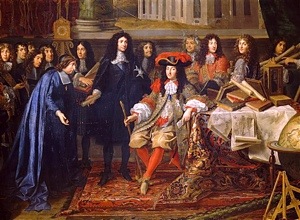
When I think of courtiers I always think of the court at Versailles of Louis XIV, a glittering assembly of notables that led 18th century France into ruin and revolution. The courtier in the medieval kingdoms had a role, they were the intermediary between the absolute monarch and the people. They were the conduit between the king and people. If you wanted to access the king it would be through one of the notables at court. These notables would keen the king informed of events in the country so enabling him to effectively react to unfavourable events in the country, forestalling foreign invasion threats. The same notables, as trusted confidents of the king, could be employed in key administrative posts to ensure the effective governance of the country. Under kings such as Richard I, Edward III and Henry V the system worked well. It was the notables who made the personal governance of one man effective. The one flaw in the system was the dependence on personality of the king, a king such as Edward II who chose his courtiers badly could bring the country into chaos. Rule by courtier was perhaps the only effective means of governance in the largely illiterate and divided countries of the medieval era, but in the modern complex society of countries such as late 18th century France, it had become dysfunctional.

The noble courtiers of late 18th century France who demanded and got a monopoly of governance prevented effective governance of that country. Despite their vast wealth they resisted any tax on their wealth, which would have solved the chronic budgetary crisis’s, resulting from a century’s long warfare with most countries in Europe. Not unlike the super wealthy in today’s Britain they demanded exemption from tax on themselves, instead preferring to shift the burden of taxation on to the less well off majority. Courtier governance inevitably failed and the revolution of 1789 initiated a new era of governance. It is to this class of dysfunctional courtier class that the current class of consultants compare.

What they both share in common is the belief in their right to direct government policy and the right to exact a large fee for the privilege of employing them. Possibly the best example of the new courtier class in action can be taken from the privatisation of Royal Mail. Numerous investment banks advised on the privatisation of Royal Mail, luminaries of the financial world such as Goldman Sachs and Lazards. Estimates for the charges made by these banks are £30 million. Not only did the banks profit from the charges made for their financial advice but they also benefitted from being awarded 30% of the initial share offer. Since the banks that advised on the price for the sale of the Royal Mail were also those entitled to the right to buy a significant part of the shares in the newly privatised Royal Mail they were not going to set a share price that would involve them in a loss. One estimate in The Guardian newspaper suggested that these companies made a gain of £28 million on the shares they purchased, in the initial days after the sale. While Lazard’s advised the government that a valuation of £3.3 billion was the right price at which to privatise the Royal Mail another bank J.P. Morgan had suggested a valuation of £10 billion. All that can be said that at a valuation of £3.3 billion the advising banks made a substantial profit.

It is not unfair to suggest that the class of consultants as with the courtiers at Versailles are an expensive hinderance to good governance. Governments have acquiesced in the demands of the various classes of consultants to have an increasingly large say in government policy making. It is impossible to think of a single policy that does not bear the imprint of the various members of the class of financial and political consultants. The construction of HS2 has not started but already millions has been paid to financial consultants on the project. In a written reply to the MP Cheryl Gillan, the Minister for Transport admitted that £253.23 million has already been spent on the project. While no figure is given for the cost of consultant’s fees, it is right to assume that they accounted for a substantial part of the £1/4 billion costs. This is on a project that may never even be started. The 19th ‘railway king’ and fraudster George Hudson, who was responsible for constructing much of the railway system in the middle nineteenth century, at least in return for his thievery left behind at least a 1000 miles of railway. He would if alive today would be admiring of the inventiveness of the way in which the class of consultants can legitimately make rip off the state and yet give so little in exchange for their services.
The aristocrats of the Court of Versailles effectively obstructed any policy measures that were not in their interest so obstructing the effective governance of the country. What happened was bloody revolution in which some members of this class lost their lives and most all their wealth. A dysfunctional group such as the consultant class which acts as an increasing expensive barrier to good governance should not be able to continue to dominate the process of government policy making. However this is to ignore the nature of financial consultancy. Although they are courtiers who dance attendance on the courts of Westminster and Whitehall, unlike the notables at the court of Louis XIV they have real power as they are the financial ‘shakers and movers’ who dominate the contemporary political scene.

The influence of these financial ‘courtiers’ is best seen in the government’s policy towards tax avoidance. Governments have constantly called on the investment bankers for financial advice, including revenue collection. It is hard to avoid the view that much of this advice is self interested. George Osborne recently had a statute put into law which made it much easier to avoid tax. If the business claimed that the money earned in the UK was really revenue earned by a subsidiary company in a tax haven, they could avoid tax on those earnings. What can never be known is when does advise giving slip over into policy making. The relaxed attitude that HMRC has towards tax avoidance by powerful business corporations, suggests that these financial advisers do more than just advise.

Effective governance can only be restored as in 18th France with a political revolution. Such a revolution need not be bloody, it could be a constitutional revolution. A start could be made in the insistence of transparency in government policy making. All these policy decisions that seemingly are designed to be of benefit only to the class of consultants would be open to scrutiny and as such likely to be less damaging to the public interest. This should only be a start what is further needed is a reform of the system of choosing government so independent minded politicians are chosen as our leaders. What is needed is an end to the love affair between Westminster and the City of London.

20131029-170004.jpg

The Cart Tracks of History or why Social Democracy in Europe was so short lived

20131025-111454.jpg

Hannah Arendt when writing about the Russian revolution, stated that societies were doomed to follow in the cart tracks of history. What she was trying to do was explain why Russia that despite the other throw of an oppressive authoritarian government in 1917, had only a brief interlude of parliamentary democracy before Russia reverted to an authoritarian government. Her answer was that Russian society had been schooled in authoritarian instincts throughout the long period of Tsarist rule. All institutions in society were structured along authoritarian lines, people instinctively looked for direction from above and these habits were not easily thrown off. It was the democratic revolution that was alien to Russian society. The seamless evolution of the Tsarist police into the communist secret police, the Cheka, demonstrates how hard it was for a reforming government to throw of the ingrained instincts of centuries.

Since reading Arendt, I have puzzled as to what are the cart tracks of history that UK society is trapped within. Our cart tracks are inequality, social inequality is hard wired into UK society. There was a brief period of Social Democracy in the middle of the twentieth century, but I fear that it will appear as fleeting as the brief period as that of Russian Social Democracy in 1917. What I mean by inequality is a society in which a small privileged group maintains it extreme wealth through impoverishing the rest of society. This group realises that only by denying the majority a fair share of national income can they reserve a disproportionate of national income for themselves.

Economists talk of scarcity when they discuss the means by which society can distribute its wealth to maximise welfare. They believe that only market economy allocate scarce resources in the way that maximises the welfare of all. In the market economy the individual can choose to spend their income as they wish and as only they know their individual wants and desires, they are best placed to maximise their own welfare. If the state interferes by providing say a national health service, it is denying the individual that freedom of choice. They may wish as in the USA to choose what part of their income they devote to health care.

However this analysis is flawed, as it ignores the unequal distribution of income which denies many people the opportunity to exercise their freedom of choice.

Inequality of incomes means more than that some people are richer than others; it means an economy that structured to meet the needs of the well off minority, not those of the less well off majority. The mechanism through which this achieved is choice or in the terms of the economist, effective demand. It is through exercising their extra or excessive purchasing power that they can ensure that the productive capacity of the country is skewed towards serving their interests. An increasingly disproportionate share of this country’s resources are being diverted into producing goods for the super rich. Rolls Royce, Jaguar businesses that supply the super rich are expanding their production, while mass market car manufacturers such as Ford are cutting theirs. It’s the zero sum game, by ensuring that a decreasing share of the national wealth goes to the majority (through falling real wages), they can ensure an ever increasing share of national wealth for themselves.

The housing market exemplifies this trend. Recently a spokesman for a country houses association, spoke about the revival of market in grand country homes. It is no coincidence that this has coincided with a marked decline in the provision of housing for the majority. In England a total 117,190 houses were built in the 12 months prior to September 2012, this compares to the high of 1968 when 425,830 public sector housing units were completed and in which the number of private sector housing units completed were 226,100. The 1960’s were a period of the decline of the grand country house. Many were sold by their owners for commercial use, some converted into flats and the best transferred to National Trust. Evidence suggests that in the UK that housing is the ultimate zero sum game, grand houses for the rich or houses for the majority, but not both.

As an increasingly larger share of national income is going to the well off minority, their refusal to pay taxes has a catastrophic effect on government finances. There are hundreds of tax avoidance schemes available to enable wealthy individuals and business corporations to avoid tax. One accountant estimated that it is possible for a business corporation to pay as little as 2% of its income as tax. Consequently the central government is facing a funding crisis, the proportion of national income that it receives as income from taxation is going down. This is worsened by there being a growing population (particularly of the elderly) which exerts even greater demands on the public sector for services. Given this funding crisis the only solution is to cut services and it is these services that are used by the less well off majority. The wealthy are unaffected by this crisis as they have chosen to opt out of public service provision. In fact it is in their interest to cut spending on health and education services, as it will make possible further tax cuts. Galbraith had a phrase which summed up the current situation, ‘public squalor’ and ‘private affluence’.

This robbery of the private and public purse has to be disguised by an ideology, an ideology that turns a series of squalid ignoble actions into the opposite. The ideology that justifies this robbery is that of celebrity and entrepreneurship, an ideology of achievement. Celebrity is first and foremost an ideology of achievement, the story of the young man from an impoverished background who achieves riches as a famous footballer or the young woman from a similar background who achieves success as a singer. Nobody can deny that they have made their success through there own efforts. However the ideology conflates these stories of individual achievement into a story of achievement which justifies the extreme incomes of the super rich The talent of these individual cannot be denied but what can be denied is their claims to excessive wealth. No individual in entertainment or sport earns the wealth they attain. Society is instead so structured to pay excessively high rewards to certain high achieving individuals. Celebrity has diminished the achievement element for high reward incomes, now it’s sufficient to be a celebrity. Entrepreneurship trades in on the achievement effort, they are meant to be the great movers and shakers who have changed society. Unfortunately all the change many of these movers and shakers achieve is to damage the host society in which they operate. Hedge funds and private equity funds often do little more than loot the company they own and manage. No matter the achievement myth justifies such excessive wealth taking.

Nothing can change without an ideology to counter the achievement myth used to justify the unparalleled wealth of these elites. Religion is one possible counter ideology, an ideology of fairness and charity. There was liberation theology of South America, which however was crushed by the Catholic Church. The social and financial elites retain their control of the Catholic Church. What is not needed so much is not a counter ideology as there are plenty circulating within society, as a social crisis which robs the dominant ideology of its legitimacy and causes a crisis of confidence in the ruling elites. One such past crisis was the Great Depression and the Second World War, which robbed the dominant elite groups of their legitimacy. Having presided over a series of disasters they were powerless to prevent the rise of social democracy. Already the current financial crisis has given rise to new political groupings that threaten the legitimacy of the ruling groups. Usually they are groups of the Far Right, but there are some of the Far Left, both of which threaten the existing order. In Greece there is ‘The Golden Dawn’ and on the left Syriza both new parties representing those excluded from the old elites. It is forgotten that in the end Hitler turned on his aristocratic allies, murdering a number of the officer corp and creating a new army the SS to replace the old aristocratic dominated Germany army.

Unfortunately the ruling elite groups in Europe have the same level of competence as those pre war politicians who were unable to prevent the Great Depression or the war. Catastrophic as both events were, they cleaned the Augean stables of power and a new generation of politicians created a better world. The crisis that is likely to overwhelm the European political leaders is the next financial crisis. Little has been done to remove the flaws in the economy that created the last crisis. London is leading the European Titanic towards the financial iceberg. Although there have been some reforms of the banking system, nothing has been done to change to the financial markets to prevent them from yet again turning a crisis into a catastrophe. New technology systems in fact make it far likelier a greater crash than that of 2008 will occur in the near future, as recent developments in computerised equity trading have the potential to turn small downturns in equity prices to catastrophic downturns.

Is it wrong to characterise the European political leadership as a group of lemmings leading their societies towards the precipice of financial disaster.

The Banality of Evil

Hannah Arendt was great at devising pithy phrases that explained in a sentence or two, what others could not articulate in a whole book. When observing Eichmann in the dock what struck her was his lack of physical presence and his modest book keeping like demeanour. This insignificant figure was the monster responsible for the slaughter of millions of Jews. There was no charisma of evil, just a mediocrity of evil, hence she coined the phrase the ‘banality of evil’. This contrasts with the public perception of evil, which invests serial killers such as Hannibal Lecter with the charisma of fear. Even the feared leader of the SS, Heinrich Himmler was nothing more than a former butcher. The Nazi’s charismatic leader Hitler, was a disregarded nobody before his rapid ascent to power. His wartime heroics were a fiction. He worked as a messenger in the trenches a safe position which can explain why he could enjoy that war. Was his charisma only a product of the machinations of his propaganda chief Goebbels?

Blandness is never associated with evil in the popular imagination, yet as Hannah Arendt writes there is no glamour in evil. Would anybody associate the bland mediocrities who run Europe with evil. What is most notable is their projection of themselves as the family man or woman, a person just like you or me who happened to be elevated by chance to power. Yet it should be noted that all the prominent Nazi’s were able to distance themselves from their crimes and were good family men. These ordinary family men you would pass in the street without notice, there was nothing about that indicated that they were monsters. I would go further than Hannah Arendt, and say that it is the bland who are most likely to do evil. They are not distinguished by any commitment to a higher cause, they have no understanding of the great moral virtues, instead they are motivated by self promotion and material comfort. They have no problem with doing evil, if it means self advancement, as they having no understanding of public virtue or to use an older phrase the common good. It is my contention that the bland mediocrities who run Europe are the people most likely to do harm to their fellow Europeans. Their crime is the impoverishment of millions of their fellow Europeans through austerity policies designed to protect the bank balances of the rich and powerful.

This is the first time in history that the rich and powerful have not been affected by economic depression. In the great crash of 1929, millionaires were reduced to poverty, in the crash of 1990 rich property dealers became poor overnight. Only the careless few millionaires have been impoverished by the latest crash. What is more usual is the Greek situation, where the government has moved heaven and earth to protect the fortunes of the rich and powerful. What the government did by imposing a harsh austerity programme was to prevent the collapse of the banks. This gave the rich time to shift their money out of over indebted Greek banks to safe havens abroad. Keeping Greece in the Euro by not defaulting on their debts made this money transfer possible. Inevitably making a bad situation worse. A Greek debt default would have hurt the rich most because their vast fortunes locked up in Greek bank deposits and would become practically worthless overnight. For the vast majority a default would be no worse than their current situation, as losing their savings would have been preferable to being thrown out of work and losing their incomes and homes.

Why are the bland and mediocre so more likely to do evil? Lacking any well defined moral instincts, they do not recognise any wrong doing in their actions. Therefore they recognise no wrong in their actions which impoverish the many and make the lives of many others a misery. Politicians have always been motivated by self advancement, so why do today’s politicians not link their self promotion with the advancement of the interests of the people?. Post war Europe was dominated by the ideologies of Social and Christian Democracy. These two similar ideologies saw the goal of political activity as the maximisation of the welfare of the people. It was a British conservative politician, Harold Macmillan in the 1950’s who promised to build 300,000 homes a year, it was Konrad Adenauer’s Christian Democrat government which introduced Germany’s generous welfare system. A system incidentally which the party he founded is now dismantling. With the collapse of these ideologies, politicians increasingly identified their self advancement with allying themselves to powerful corporate interests. A political system in which politicians are increasingly front men for powerful business interests will not attract the best and brightest. One businessman recently remarked that it would be hard to staff the board of a mediums sized public company from the limited talents assembled in the House of Commons. Therefore it should not be a surprise that the mediocrities who occupy Europe’s elected assemblies, should not venture to undertake any policies that would promote the common good but which could be seen harm the interests of the rich and powerful.

Possibly it’s too harsh to identify the the mediocrities that run Europe with the ‘banality of evil’, but they are on that spectrum, they have impoverished not killed millions. Instead should they not be called the ‘banality of lesser evils’?

Housing: an example of the misuse of government policy

I realised that on reading my essay through there was a repetition of themes in my writing. It is not the bad behaviour of the banks that drive me to write, but the attempt to explain why, in spite of the economy growing have we all become poorer, that is apart from a tiny elite. When I started work in the 1960’s there was full employment and everybody had the benefit of being housed well. Now that world has disappeared and neither of the last two statements are true. Why? I think an analysis of the housing market explains how this change occurred. When what was once seen as a necessity of the good life housing, is now seen as a commodity to be exchanged on the money markets. There has been a devaluation of human life.

After years of housing booms and busts it is impossible to believe that governments once took action to suppress house price bubbles. Their intention was to keep house prices at affordable levels. All these controls on the price of houses were scrapped by the Conservative governments of 1970 and 1979. Now the governor of the Bank of England is talking again of reintroducing such regulations to rein in future housing price bubbles.

The ending of any controls was in part a consequence of a long campaign by the banks and the rest of the financial community that chafed at any controls that limited their ability to make money. They could guarantee negative press headlines about credit squeezes, so making their cessation much easier. one phrase coined at the time of controls, was mortgage famine. The public were easily persuaded to that credit controls only had a negative impact. At the same time Social Democracy was going out of fashion in the political classes. This meant that controls and regulations that were an integral part of social democracy had to go. It was easy to claim that al the crisis’s of the 1970’s were consequent on having a Social Democratic system and the system that was the source of all our problems should be replaced by something better.

Why did the banks so hate directives and all the other controls that limited price inflation in the housing market? These self same banks at the same time campaigning for a control of inflation in the wider economy. The reason is quite simple, money was the asset in which bank’s traded and they wanted some stability in that commodity. Also inflation in the wider economy added to their costs, unlike house price inflation from which they could directly benefit.

What the banks wanted was the freedom to manipulate the housing market to benefit themselves. They wanted a rapid turnover of the housing stock at ever increasing prices. It was the activity of the usurer, buying and selling the same product over and over again at higher and higher prices. More houses were built each year but the number built fell far short of the ever increasing demand for them, so in it seemed as if same house was sold over and over again. The demand for houses was constantly pushed ever upward by the banks providing more and more money for ever higher mortgages. If this seems to be an over statement consider this example. I lived as a teenager in a small Sussex village and I can remember being told by an awestruck fellow villager in the mid 1960’s that certain new build houses were now selling for prices in excess of £3,500. Now such houses are selling for prices in excess of £250,000. The house in which I lived as a game keeper’s son was sold recently for a £1 million. I do not know how many times the houses on the village green changed hands.

Unfortunately the bankers greed led them to taking a series of foolish actions that led to the crash. In what were now the outdated building societies it was the savers money that was lent to out borrowers, but unfortunately relying upon savers meant that the money for loans was limited, much more was needed to finance the house price bubble. The banks had the solution which was to borrow on the wholesale money markets. If it had not been taken to extremes it would not have been a sound policy. The money borrowed had to be at a lower rate of interest than that lent out for mortgages to be profitable. Cheap money is that lent for short periods of time, sometimes for as short as overnight. To finance the ever expanding mortgage market the banks borrowed increasing large amounts of money from the short term money markets, while the banks lent out the same money for periods of up to 25 years. The banks were reliant on the short term money market to constantly replace the loans they repaid to finance their mortgage lending. Surprisingly this is not as irresponsible as it sounds, what was irresponsible was borrowing such disproportionate amounts in this way. The problem with financing mortgages in this way was that the profitability of such transactions is dependent on the price differential between money borrowed and money lent. The narrower the differential the less profitable was the mortgage business. At the height of the housing boom I was told by a banker that the banks did not make much money from the mortgage business. At first I was baffled, but I realised that the banks profit margins were being squeezed in two ways; first the huge demand for short term loans were forcing up the price (interest rates) of these loans and that competition in the mortgage market meant the banks could not increase their mortgage rates to compensate for higher loan charges for fear of losing customers to other lenders. Banks such as HBOS were having their profit margins squeezed and were at the same time over dependent on borrowed money. They were a catastrophe waiting to happen.

Banks such as HBOS depended for their survival on their ability to borrow billions on the short term finance markets to finance their mortgage trade. If they were denied those funds the bank would collapse. This happened in the period 2008 to 2009. The housing bubble burst and banks were suddenly unwilling to lend to each other, as they did not know which banks were financially viable. In the event no British bank was viable, but none were so indebted as HBOS. The rest of the story is well known, the government rescued the banks by giving them billions to keep them viable.

For the millions already impoverished by the banks playing the housing market it was a double whammy. Now not only did the ‘excluded’ have to pay exorbitant private high rents but they were further impoverished by the government’s austerity programme that reduced their incomes.

Having a nominally Social Democratic Party in power made no difference as Neo-Liberalism was so firmly entrenched as the governing political philosophy. Any action to regulate the banks to put them on a sound financial footing was deemed much worse than almost bankrupting the nation to bail them out. Without any justification the latter was deemed the better option as the default assumption is that the government is incompetent in economic matters and management of them such be best left to those ‘who know’, the bankers. It was no surprise when Gordon Brown appointed a banker, Lord Myner to clear up the mess left by other bankers.

Given that the financial sector seems to have effectively bought up Parliament; E.P. Thompson’s words are very prescient. He thought contemporary politicians are as corrupt and self interested as those of the eighteenth century. Parliament then was was part of the ‘old corruption’ in which the landed interest purchased control of government and he thought current parliaments should be viewed as part of the ‘new corruption’, as control of Parliament has been purchased by the financial interest, ‘the City of London’.

Unlike the majority of my fellow economists I believe than the solutions to economic problems lies with politics not economics. What is needed is political reform that removes the hands of ‘the City of London’ from around the throat of government.

Osborne-oenomics explained

Nietzsche’s dictum is that philosophers are in error because while they write about man they never study real man, only their idealised construction of him. They construct ethical systems but never look at the source of those ethical systems, man. He demonstrates how the concepts free will and moral responsibility are of little use in explaining human behaviour. His psychology demonstrates that much of human behaviour is pre-determined, it is their physiological makeup that determines people’s actions not rational thought. Criminal behaviour is more likely to derive from an individual’s biological drives which they cannot control than from conscious decision making. Commentators would do well when commenting on George Osborne’s economic policy to observe Nietzsche’s dictum. Most would see his policy being derived from his reading of the Neo-Liberal commentators of whom they assume he is familiar with. This ignores two key facts, one is that he studied history and probably had but a nodding acquaintance with Hayek etc. and that he is a son of a baronet and it is this latter fact which provides a key to understanding George Osborne.

The baronet is at the lowest level in the aristocratic pecking order and being aware of their nearness to the masses, they have always been the most zealous in defending their privileges of social rank. They are all too aware of what a fall from social grace means. It is these people who have provided the backbone of the Conservative party. The defence of their position often led them to developing the most reactionary of principles. Any improvement in the lot of the servile classes is a threat. A guest at the dining tables of the baronetcy would be aware of the servant problem. The insolence of the lower orders making them such poor servants and the difficulty of recruiting servants as most of the lower orders rejected a life of servitude.

The greatest threat was progressive taxation, particularly taxes on capital. The latter threatened their holdings of wealth and they saw around them the break up and disappearance of many large estates. The social order of which they were part seemed to be disappearing. Since social democracy is dependent on progressive taxation to fund its activities; they hated social democracy as it was that progressive tax system that threatened their existence. They also hated the public services which made such taxation necessary. One service that attracted their ire was the National Health Service. Why should they make such a large and disproportionate contribution to a service that they use but only occasionally. As they would resort to private health care so as to avoid contact with the masses. Is it at wonder that coming from such a background the guiding principle of all George Osborne’s policy is the destruction of what remains of the social democracy of former years? The privatisation and destruction the NHS being the iconic government policy that by which it will be known in history.

Self interest lies behind the desire for a small state, rather than the desire to free enterprise from the the burdens and regulations of the nanny state. A small state does not require large tax revenues to fund its activities. Any policy which shrinks the tax burden on the better off will meet the approval of a baronet’s son. Is not likely a man from his cultural back ground would want to cut taxes? It is no coincidence that one of the first acts of this government was to let Vodaphone of it’s £6 billion tax bill and it is now letting the self same company avoid tax on the multi billion profit from the sale of its shares in Verizon. Tax avoidance is no longer an activity to be discouraged by government but one to be encouraged by the Chancellor. He has decided that multi-nationals that have off shore subsidiaries can channel any profits they make in the UK through these subsidiaries to avoid tax.

One cannot underestimate the impact of the culture of the baronetcy on George Osborne’s thinking. Some members of this social grouping in the heyday of the Social Democracy feared their extinction through a loss of their wealth and position because of what they saw as a penal tax system. Growing up in the sixties on a country estate with family friends in service; I could not but be aware of how this group saw the state as the author of their misfortunes. Any society will suffer periodic crises and the UK society suffered from an economic crisis in the 1970’s culminating in the extraordinary high annual inflation rate of 1974 which topped 27% . It was the OPEC inspired rise in petrol prices which largely caused this spike in commodity prices which caused the high level of inflation. Taking advantage of the weakness of the state in this crisis, the political right forced/persuaded the government to adopt Neo-Liberal policies that would ultimately lead to the demise of the social democratic state.

It is probably no coincidence that the doyen of Neo-Liberals Joseph Schumpeter was an aristocrat. Neo-Liberalism as espoused by George Osborne is the guise through which the baronetcy and others wreaked their vengeance on social democratic state.

Why Ed Milliband will continue to disappoint

Why Ed Milliband will continue to disappoint

This week at theTUC conference Ed Milliband promised to take action to end the blight of zero hours contracts which cruelly impact so many people’s lives. It was a speech of good intent which revealed little of specifics of any future policy. How did Ed propose who was going to end this problem? No specific details, just another promise left floating in the air not anchored in the firm ground of policy detail. The problem being for Ed is that he is part of that broad Parliamentary consensus that seeks to combine right of centre economic policy with a left of centre social policy, a tendency that can be identified as starting with John Major.

These politicians believed supply side economics, or what is more popularly called Neo-Liberalism, was necessary if Britain’s moribund economy was to be revived. He recognised that by adopting such a brutal free market economy there would be losers, but in order to create a flexible labour market the protections that secured fair wages and security of employment would have to be removed. This would mean that there would be a large part of the work force that would experience a combination of job insecurity and low wages, combined with a future of low wage employment punctuated by periods of unemployment. Essentially low cost workers who would be willing to work for whatever wages the employer was willing to offer. However he did recognise that there must be a social policy in place to pick up the pieces, that is a welfare state. A state that would offer unemployment and housing benefit for the losers in the labour market. It is this policy that made zero hours contracts possible.

A policy of ‘tough love’ was adopted to ensure that the low paid or unemployed would be willing to take whatever work was available. Benefits were to be so low as to make any work attractive and sanctions were introduced to make people work. This policy has been adopted with enthusiasm by Ian Duncan’s Smith Department of Work and Pensions. Recently it has been suggested by them, that the low paid will be penalised by further benefits cuts if they don’t make sufficient effort to secure a higher wage.

As if to add insult to injury, when elected New Labour promised to continue the policies of the consolidators but with more efficiency and fairness. One of the first acts of the Labour government was to introduce working tax credits, to top up the wages of the low paid. This wage subsidy enabled companies to keep costs low by continuing to pay wages that were so low as would otherwise have left workers in poverty. They also believed in the ‘stick’, they introduced welfare reform by setting up an assessment scheme run by Atos whose main purpose was to reduce the numbers on benefit by defining many of the formerly disabled as fit for work.

This unforgiving social policy is Ed Milliband’s heritage, the inheritance of an inhumane economic and social policy whose sole aim was to keep large numbers of people in poverty and living lives of misery. While he seems genuinely appalled at the misery and despair government policy creates, he realises that there is little he can do about it. He has inherited the belief that the British economy needs to be regenerated through free market reforms which will create millions of losers and few winners; so there is little he can do about ending the misery of zero hour contracts. While Andy Burnham has said that he will end the use of zero hour contracts in the NHS. There has been no such promise from Ed Milliband, he remains trapped within the cruel brutal Neo-Liberal ideology that allows him to make no more than gestures to improving the lot of the great mass of the British population. Yesterday’s debate in Parliament demonstrates this when he failed at Prime Minister’s Question Time to quiz David Cameron on the very critical report made by the UN Rapporteur on the impact of the ‘bedroom tax’, as Observers commented because he did not want to make a commitment to repealing it. While Ed Milliband remains committed to supply side economics and all the indifference to human suffering that implies, he will do little more than offer some amelioration of zero hours contracts. Whatever he might say, little will change.