
Category Archives: society

The New Paganism

20140101-154419.jpg

My early education was in a Church of England primary school, in which we the pupils were taught the superiority of everything that was English. Our Head Teacher always spoke of regret of the passing of the empire and its replacement by its much inferior substitute the Commonwealth. Although I’m sure that she called it the British Commonwealth. Religious education as should be expected formed a significant part of the curriculum. However our religious education was infused with a strong sense of Britishness. We learnt about David Livingstone who took Christianity to the primitive idol worshipping tribes of Africa. Of Gladys Aylward who took Christianity to the barbarous Chinese. What we were taught was the superiority of the British religion to that of the barbarous foreigners. The religion of England was surely the culmination of religious development over the past two thousand years, it was the physical embodiment of Christ’s promised earthly paradise. Heaven was very much an incidental feature of this religion. It was an unspoken assumption was that a heavenly paradise was hardly necessary if you were fortunate to be born an Englishman.

A phrase was much used then in the description of the non white commonwealth as ‘idol worshipping’, a phrase used to insinuate the superiority of English culture. It was a strange education, as my only knowledge of Hinduism was the practice of suttee or widow burning, a practice stopped by enlightened Englishmen. I am being a little unfair as I also learnt about the practices of a cult of Kali called the thuggee, who murdered people as a sacrifice to Kali. Another devilish practice stopped by enlightened Englishmen. We also learnt about the paganism of classical Greece and Rome, which was brought to an end by St. Paul and the Christian fathers. It was a curriculum I imagine that had remained largely unchanged since the height of Empire in Victorian times.

The purpose of this digression into the nature of primary education is to suggest that this superiority is unjustified. There is in Britain a new paganism in which the idols worshipped are as barbaric and cruel as those of classical Greece, Rome and the non-white British Empire. However it is not recognised as such.

At the risk of over simplification the Greeks and Roman’s made deities out of natural phenomena. Vesuvius was the workshop of the blacksmith God Vulcan, night was the work of the Goddess Nocturna and Aeolus was the God of wind. Natural phenomena were given human like personalities, which made communication with these formidable powers of nature possible. While control of these phenomenon was impossible, through sacrifice and prayer they could be persuaded to look favourably on mankind and not release their destructive powers on them. Romans of the late empire even took to the practice of chaining up statutes of their Gods in their temples in an effort to control them. Mars the destructive God of war was one of those most frequently chained up, as if he ever left the temple devastation would follow in his wake.

Contemporary practice is very different instead of deifying natural phenomena, human practices of a certain kind are deified. The purpose of giving certain human practices and institutions the status of Gods, is to give them power over us. Once they are defied the rules and practices of these institutions cannot be questioned. Any questioning or disobedience of the rules and injunctions will bring about human suffering. The human institution that has been given this God like status is the market. Belief in it is so complete amongst the political, financial, commercial and industrial elites that no action contrary to its mores can be contemplated. This belief leads to practices as nonsensical as chaining up the statute of Mars to prevent wars.

One such bizarre practice is the payment by results inflicted on the probation, employment and welfare services. Worshippers (politicians) of the God Free Market, believe that probation will be made more effective if the service is incentivised by a payment by results system. Probation officers will be incentivised to work hard and use the best methods of reforming former criminals if they know that the income of their business and ultimately theirs depends on their success at reforming former criminals. While this practice betrays a poor understanding of human nature (one motivated primarily by fear and greed), it is as unworkable as chaining up the God, Mars. The only real measure of the success of this scheme will be at the end of the life of this former convict. If they had after probation lead a relatively blameless life, then the payment should be made. However no business could wait thirty or forty years for payment, so instead a series of arbitrary and meaningless targets are imposed. I am not sure of the targets but if an ex offender has not offended say within six months payment is made. This says little about the effectiveness of the scheme as they may go on to offend at a later period. In the profit driven companies since profits depend on results, all types of statistical manipulation to massage the figures to suggest that they are more successful than they are in practice. The short time span of the memory that is that of the average government minister is remarkable, as the manipulation of the statistics for the tagging of offenders by G4S and Serco has already been forgotten.

What can be expected is that violent offenders who have been declared reformed as they have not offended within a given time span, will inevitably offend again. There appears to be no scope the reclaim payments made for such ‘apparent successes’. If cash payments motivates people to do their job well, the fear of losing that payment should make them even more eager to work well. Its a scheme that does not seem to have any consistent logic. However for true believers in the free market, there can be no flaws in the market driven schemes they propose.

Blindness to reality is suggested by the fact that the most difficult of cases will be left in the hands of the rump of the old public service motivated probation service. If the scheme works for one group of offenders it should work for all.

There can be objections to my use of the word religion to describe the actions of advocates of market economics. However if religion is seen as set of non rational beliefs (not open to rational debate) or first principles that guide human practice, belief in the superiority of the free market is a religion. Men have created a new idol to worship, the free market. The principles of the free market should guide and inform any human action. It is not a philosophy a coherent set of rational principles which can be subjected to debate. If in doubt listen to the words of any government minister, as their speech is full of unquestioned assumptions about the superiority of the free market.

It was Varro who coined the term popular religion, by which he meant the stories and festivals that captured the popular imagination. The market is the new popular religion, it has subverted religious festivals into festivals of consumer over indulgence. Easter the time in which Christ’s sacrifice and rebirth is commemorated has been replaced by a celebration of pleasure, chocolate Easter eggs are eaten, it is the time of spring holidays, the benign Mediterranean spring climate making it a popular holiday destination.

There are also a set of new stories of the popular imagination that explain the world in which we live. Stories that can only be called consumer morality tales. On such is rooted in the housing market, stories of wonder about house buying and selling. Morality tales about the successful home buyer, the one who brought and sold at the right time and who now is a millionaire abound in the popular culture. Boris Johnson is one of the prophets of the new popular consumerist religion. In his speech as Mayor of London, he extolled the virtues of greed and envy to the assembled dignitaries. Self servicing virtues that justify the activities of London.

Given the lack of any counter ideology or religion within the governing classes, change can only come from outside of them. Is Occupy the precursor of future popular movements that will be needed to reclaim Western society for the people from the plutocrats? However any resistance movements will need to be motivated by a greater vision, a religion of optimism. Is Pope Francis with his reforms of the corrupt Roman Curia, a sign that the time of the old religion of the market is finally in decline?

One final thought the Roman Catholic Church is dying within Europe through lack of recruits to the priesthood, as was the Church of England. They have both sort solutions in different ways, the Roman Catholic Church is importing priests and nuns into Europe from the developing but Christian Third world and the Anglican Church is replacing the missing male priests with women. Is this the solution that Western societies salvation as the churches must come from former marginalised groups. Groups who through their very exclusion from power were not tainted with the religion of pessimism, that permeates the dominant white male culture. Do they only have the vitality and enthusiasm necessary to transform society?
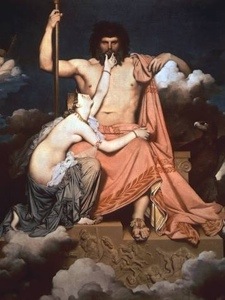
Dark Religion the Return of the Old Gods

20131211-131103.jpg

20131211-115525.jpg

There seem to be two competing strands that make up contemporary religion. There is the compassionate Salvationist strand and the much older harsh dark religion which sees mankind as but a minor player in a cruel world, that is largely indifferent to man’s needs. The first began the flourish in the last centuries BCE beginning as early was the 5CE with the teaching of Buddha. As Christian I would see this trend culminating in Christ’s life in 1BCE. Others would see this compassionate religion of hope triumphing in the other Abrahamic religions of Judaism and Islam. However this religion of hope has always been in an unequal struggle with the older dark religion. From 1CE societies were dominated by religions in which these two strands intertwined to make up the common religion. Unfortunately the older dark religion has tended to prevail in this relationship, as that religion best suited the interests of the most powerful groups in society.

One of the oldest best known examples of the clash of the two religions is demonstrated in the trial of Socrates in 399 BCE. Historians have tended to dismiss the validity of the charge of impiety, as as a trumped up charge used as a means of silencing the foremost critic of Athenian democracy. However I would argue that the charge of impiety was justified. Socrates defence was that he did worship Apollo, but his Apollo was a different Apollo to the Apollo of the Athenian City State. There was the Apollo of the city of Athens, a God that celebrated the triumphs of Athens and protected her against her enemies. Opposing this was Socrate’s Apollo a moral God, the source of all that was good. These two Gods would have had very different attitudes to the Athenian attack on the island of Aegina and the subsequent enslavement of its population. The God of the Athenians would have celebrated the triumph of the city, but the God of Socrates would have regarded it as unjust. Socrates had to die as he was an enemy of the city. He was corrupting the youth, by teaching that the moral code than governed Athens was unjust. He was proposing an alternative morality. When it came to an exercise of power the old cruel religion must triumph.

There was a revolution in religious thinking in the latter centuries BCE. Siddhartha Gautama the founder of Buddhism taught his religious philosophy in the 5th century BCE and in the 2CE to 3CE, Hinduism was reformed, Krishna becomes the Supreme God in the Bhagavad Gita. Moral philosophy flourishes in Classical and Hellenistic Greece in this period. The imprint of Greek moral philosophy is found throughout Christianity from St John’s Gospel to the writings of the Christian Fathers such as Tertullian and Augustine. There were the numerous reform movements within Judaism, such as the Pharisees and Essenes at the same time. There must be some commonality to this religious flourishing in this period. That commonality must be the rise of an educated class that developed in the great trading cities. Cephas or St Peter is said to relocated to trading City of Tarsus from Jerusalem. What better place to preach a new religion. Is it no coincidence that both St. Paul and Mohammed the creators of two of the great Abrahamic religions were both traders, members of the new wealthy educated merchant class? This wealthy educated merchant class were the groups from which the prophets of the new religions sprang.

This new trading class that developed in the great cities of the Mediterranean and of the Middle East would not be satisfied with the crude simplistic religions of the past. They were educated and would not be satisfied with stories such as those which explained the seasons, in which Demeter (Goddess of Agriculture and the Harvest) who by returning to Hades every Autumn to be with her daughter in Hades caused the onset of winter and plants to cease their growth. Members of this class had through astronomy discovered the earth revolved round the sun and this caused the change in the seasons. They knew the earth was circular, so all mythical stories about Atlas holding up the earth they knew to be untrue. Old religions were the religion of the collective, the city or the state. Performing the rites of the old religion protected the state, but ignored the interests of the individual. These religions were devoid of any morality, Zeus demands Agamemnon (leader of the Greek army attacking Troy) that he sacrifice his daughter to him, before he will change the winds so the Greeks can sail on to Troy. Needless cruelty to mankind is inflicted on them by the Gods in all the stories of the Olympian Gods. This newly confident educated class demanded a better religion, one that met their aspirations, one that recognised the value of the individual life, not one that did not suggested that the supreme good was to sacrifice their lives for the collective.

Christianity was that religion it valued individual life, a virtuous life was rewarded with a heavenly after life. It was the religion of achievement, one that rewarded the good life. A religion that promised redemption from earthly suffering, the hope of a better life offered more to the individual than the old religions of the collective. It was the religion of change not social stasis. ‘The last would be first and the first last’. Inherited status and position meant little to this new religion, the aristocrat was no better than the slave.

It is forgotten that the barbarians who sacked Rome and conquered the Western Roman Empire were Christians. The Goths were no dark age people, but believers in the new religion of optimism. Within a brief time Christianity, the religion of hope had become the religion of the Mediterranean and the Middle East. A few centuries later a new religion of hope (Islam) replaced Christianity in much of the Middle East. A society dominated by a newly confident trading class needed a religion that expressed hope for the future, not the pessimistic religion of the old ruling classes. Who opposed change as it threatened their dominance of society.

II

What I find hard to understand is the disappearance of the religions of hope from the public consciousness in the present century. Ours is a scared age, the confidence of the past is lacking in our commercial and governing classes. Construction projects that our Victorian predecessors would have tackled with gusto are indefinitely postponed or passed on to more capable others. Our governing classes are like a beggar appealing for crumbs from the table of the international finance asking for their help to complete projects they lack the confidence to undertake. The Chinese are constructing new docks in the Thames basin, Dubai runs our ports and now David Cameron is begging the Chinese for their help in constructing HS2. A cynical view could be taken of the constant abasement of our leaders before significant others, notably the Chinese; when in fact it is their belief system that compels them to do so. They practise a religion of pessimism, which minimises the role of human agency. The world cannot be changed for the better, that for them is naive social engineering. The best that they can do is to appease the powerful market forces that shape our world, forces beyond their control. If to reduce unemployment means requiring workers to work for poverty level wages, that is better than going against the market by imposing high minimum wages, which they believe would only increase unemployment and poverty.

The newly acquired religion of pessimism suits a scared ruling class, who are fearful of any change that could threaten their wealth. Technological innovation can provide new sources of wealth and finance a new class who would replace them in the social pecking order. What they want is a policy of social stasis, an acceptance that things will remain as they are. If they can poison the public discourse with the religion of pessimism, they can indefinitely delay any threatening changes. This religion of pessimism dominates thinking within the governing and thinking classes. There is not one politician that promises more than a small amelioration of the cruelties of the current social system.

The belief in a malevolent world in which human beings are the mere plaything of market forces, is merely an updating of dark religions of pre-modern times in which humanity was the plaything of the Gods. Human sacrifice was seen as necessary to appease the Gods in Iron Age Britain. Now the market requires the sacrifice of the welfare state, and those social artefacts that make for the good life, for some imaginary better future. As imaginary as the Iron Age visions of the after life. There is a persistence in the practice of the dark religion by our rulers, they always resort to it in time of difficulty.

I realise that my understanding of religion is not the conventional one. I do not believe a religion requires a belief in supernatural beings. It is possible that there can be a secular religion that lacks belief in such beings. A religion can be defined as a non rational belief system that informs a person’s conduct. It is non rational in that its truths are self evident and not open to question.It is the unquestioned source of all truths. The secular religion of our governing classes is a curious mixture of Neo-Liberalism and Social Darwinism. Inconsistencies and contradictions within this belief system don’t matter, it’s an article of faith that is never questioned. Envy is both a virtue and a vice, a virtue when it motivates members of the right class to emulate their betters, but a vice if its the class envy of the lower orders.

Secular religion has as with other religions has a meta narrative which explains the world and the individual’s position in that world. People are both suppliers and consumers and it it their position in the seller consumer nexus that gives them their identity. A material cosmology in which individuals are understood in their relation to the market, as buyer or sellers. No other identity is of any consequence.

While lacking a supreme being who is the source of all truths; the secular religion does have the market which is the source of all truth. Believers in the market don’t have to demonstrate the superiority of free enterprise over state enterprise. Even if the East Coast Railway is making a profit (unlike the former private enterprise owners of this railway), believers know it will be better off in private hands. Evidence to the contrary is ignored, without being unfair it can be said that the free enterprise fantasy is preferred to hard truths of economic reality. It is at the opposite end of the continuum of fantasy beliefs that culminates in mass suicide cults such as ‘The Heaven’s Gate’. Both religions are destructive of the well being of humanity.

Perhaps one of the factors in the decline of the religion of hope, is that is it no longer fulfils a need for the governing political and commercial classes. They see a hostile world that is constantly threatening to deprive them of their status and wealth. What they cannot see is a bright future for them. In domestic society all the discriminations that helped assure them of their status are being swept away. Women and openly gay people now hold positions of power, the power of rich white hero-sexual men is under threat. Why else do Tory MPs resort to crude sexual gestures when female Labour MPs are speaking? Its a rear guard attempt to drive out women from the last remaining bastion of male power, the House of Commons. A failing economy and rapidly weakening military deny them influence abroad. The jibe about David Cameron’s failed sales trip to China; resulting in only an order for pigs semen has the echo of truth about it. This is why they cling so desperately to icons of past glory such as the Trident weapons system.

What this group needs is a religion of reassurance. This is why the rediscovery of the old dark religion is so important to them. It pictures a malevolent world that constantly threatens them and to meet these threats they need to be as brutal as the world that threatens them. As Boris Johnson so eloquently puts it, the intellectually defective 16% and the ‘socially ineffective’ have no place in this world. They should consider themselves lucky that they are allowed the means to survive. These people are no asset in the competitive struggle which the powerful titans of commerce and business wage against each other. Their poverty level wages are the price of their non success. When Nietzsche spoke of the superiority of the Teutonic ‘blond beast’ he was merely predating the stories Rand and Hayek tell of their capitalist successors. A religion of pessimism gives a failing but predatory capitalist caste their myth of superiority. It justifies any action they might take to cling on to their power.

20131211-131329.jpg

The New Secular God, the Market. (The abuses associated with state religions)

20131128-163747.jpg

Contrary to what is popularly supposed, the UK is still religious society. There has been a decline in the religion of hope, the Christian religion, but this has been offset by the rise of a new secular religion. Mistakenly religious belief is confused with a belief in a message of salvation, what Hick calls the universal salvic, ignoring the fact that for most of human history religious belief has encompassed the most inhuman of beliefs. The Gods of classical Greece and Rome had little concern for the welfare of mankind. They even provoked wars, one example being the Trojan war, which was a war by human proxies for the Gods. Central American religions prior to the Conquistadors were barbaric, involving mass human sacrifice. Even the religion of compassion, Christianity has its dark side. Thousands were killed in the wars to suppress heresy. There is persisting in our society a much darker religion, a religion of state. Varro an observer of classical Rome describes this religion most eloquently. He described how the aristocratic Senate manipulated the people’s belief in the Gods to protect their interests. Rome was riven by social conflict driven by the rise of the slave economy which impoverished the plebeian classes. Whenever discontent threatened to take on a threatening aspect the Senators would manufacture threatening supernatural happenings, stories of storms damaging temples, pigs being born with two heads etc. This cowed a superstitious populace and made it easier to manage and suppress this discontent.

What has changed in Britain is not state religion, but it’s it form. It has lost its supernatural guise and has been reborn as a secular religion, Neo-Liberalism. In its essential nature it remains unchanged, whereas once the church sanctified the social hierarchy, no it is a belief in the free market with its philosophy of winners and losers. Ayn Rand prophet of Neo-Liberalism describes the billionaires as the saviours of mankind and writes lovingly of the famine that kills thousands of the useless poor. Unfortunately the governing classes has always used this brutal religion of state to maintain their position. All too often in the past this dark religion of state surfaced within the Christian religion of compassion and distorted its meaning and used the church as an accessory in its brutal hold on power.

Neo-Liberalism I believe but the latest in the long line of state religions, which I intend to demonstrate by showing the similarities between our new state religion and those of the past. One characteristic of our inherited Abrahamic religions, is that they centre on an all powerful supreme deity. It is from this supreme deity that all existence stems. Similarly Neo-Liberalism centres on a powerful deity, that is the ‘market’ which determines the nature of the existence of all that live in society by shaping their social world. Perhaps a minor deity in comparison to the all powerful God; but our secular God has some God like characteristics. Power over the the lives of humankind for example, not the power of life and death, but the power to determine life style and life chances. To deny the existence and power of the market is futile, as is the denial of God’s existence is too any Christian. Those societies that denied the power of the market are doomed to failure, as the market will inevitably triumph over any alternative social forms. This is demonstrated by the collapse of the communist societies of Eastern Europe. Neo-Liberalism even has an eschatology, but it is not an end of days eschatology that turns earth into a heavenly paradise, but one in which market forces ultimately create the materialistic earthly paradise. A paradise that maximises people’s welfare by maximising wealth creation through the process of the free market. People in this new earthly paradise will have wealth undreamt of by their predecessors, it will be the land of plenty.

To the true believer the market is the fount of all truth and the truths are those of the market. For the Christian their life’s goal is to live a life in imitation of Jesus for the free marketer, it is to remake society in the image of the free market. Over the past thirty year’s governments have tried to remake the public sector in the image of the free market. There is not one sector of government that has been unaffected by out sourcing to the private sector. Even the most technologically advanced and critical sectors of government have been hived off to the private sector. Weapon’s development to Quintec, nuclear power to French and Chinese contractors and increasingly health care to Spire and other private sector suppliers. What ever may have been the consequences outsourcing of government services, the true believers in free enterprise (our political leaders and their followers) are blind to its failings. Quintec produced an infantry rifle that constantly jammed when used in action, threatening the lives of our soldiers. Chinese construction companies have a very mixed reputation, threatening a disastrous leak of radio activity; yet the government is content to see such a dangerous technology in the hands of companies with poor safety records. Again the American health providers have a mixed record, one of the largest is fighting fraud accusations in its homeland. Perhaps the best comparison is with the American religious fundamentalists who have created a theme part in which mankind is showing peaceably interacting with the dinosaurs, despite all the scientific evidence that shows that mankind lived millions of years after the dinosaurs. Free market fundamentalists believe in the virtues of the free market despite mounting evidence that demonstrates the contrary.

When the Christian Roman Empire and Church centred on Constantinople were establishing themselves it was recognised that there would be resistance to its rule. Persecution was the only way to establish unity of practice and belief. Not only pagans but Christian’s with non conformist views were persecuted. One of the great Saints of the Orthodox Church had his tongue pulled out of his mouth by the church authorities, as it was the best way to silence his critical voice. Free marketers in the contemporary society recognised that dissenting voices had to be silenced. The weapon’s of choice have been unemployment and impoverishment. In the universities alternatives to free market have been removed from the curriculum, economists had a choice either lose their job or cease to teach the alternatives to free market market economics and keep their job.

Some of the darkest days of the church have been mirrored in the changes that have taken place in the public sector. In 16th century Italy the Inquisition was unleashed on Italy by the Pope to ensure compliance with the official truths. Even great churchmen such as Cardinal Pole were not safe from the Inquisition. He had to constantly keep on the move to keep one step ahead of the church’s inquisitors. The story of Galileo Galilee being forced to recant his views on to be nature of the universe is all too well known. Today the government employs a variety of inspection services to ensure compliance with the official doctrines. Rather than the stake, non compliance can now result in unemployment and impoverishment. Whistle blowers in the public sector inevitably lose their jobs and their income. Government has learnt that fear is the best means of ensuring compliance with its doctrines.

Turning around the ship of state was surprisingly easy as preferment in the public sector went to true believers only. From the Heads of the Civil Service to the senior managers in the Health and Education Services all have been exponents of the true religion. How much of the publicised failures in the health service have been due to over eager exponents of the free market forcing changes inimical to patient care under the guise of market efficiencies.

Usually Neo-Liberalism is described as an ideology of capitalism, but that is to misunderstand the nature of the beast. The fervour and unshakeable belief of the true believers makes it a religion. It’s a faith not subject to rational argument, no matter how many times the intended free market reforms fail. Neo-Liberal philosophers and prophets have converted the governing classes of the West to this philosophy. The conversion has been so complete that it is now ingrained as the accepted truth within Britain’s political, economic and social elites. There is no brutality that Neo-Liberalism cannot justify, whether it’s the mass unemployment and impoverishment of Europe’s youth or the cruel tortures of Pinochet’s death camps. Tinkering with the social and economic structures imposed by Neo-Liberalism to ameliorate the abuses of the system, will have little effect. What is needed the expunging of this ‘bad faith’ from the public soul, anything less is pointless.

20131129-123542.jpg

20131129-123646.jpg

A New Economics – the economics of trivia

20131113-170549.jpg

Economists I feel have been missing the point for far too long, they always study the grand, society as a collective never the individual components that go to make up society. They will claim that they do so in the study of micro economics, the theory of the firm etc., however the study is so abstract that it has no connection to reality. Perhaps this is a fault I also share in with my fellow economists. Here I am sitting in my favourite coffee house, drinking coffee and quite self absorbed in my task of writing this abstract analysis. Sharing this space with me are two women, they are having a lively discussion about the events of the weekend. There is a gaiety and liveliness in their conversation that compares favourably with my brooding intensity. They live life in a different way to me. Am I as with all economists detached from the gay daily round that others enjoy. I am a poor and reluctant dancer, yet my brother in law (who is an English teacher) is a good dancer and a master of the ballroom. Is it possible that the aversion to the daily round makes economists bad dancers or do bad dancers and the most unsociable of men gravitate to the dull subjects such as economics as they mirror our personalities?

This diversion into the personality of economists does have some relevance as I think our relative social isolation inclines us to think of society and the economy in abstract. What we need to do is reorient ourselves, study the reality in which we are immersed. I want to invent a new concept for this study, an ‘economics of the trivial’. Not that I think the majority of human behaviour is trivial but I want to distance myself from the grandiose theories of the economic masters. Economics lacks humanity, I want to bring that humanity into the centre of the subject. It is in those behaviours that economists consider trivial that can give us the best insight into the nature of the economy. Can I suggest that from the behaviours of young people dancing, celebrating their break from work as much can be learned about the working and nature of the economy as from the actions of a trader in the foreign exchange market. Unfortunately economists would only regard the latter of any economic significance, so failing in their analysis because a whole set of economic behaviours are considered too insignificant to be worthy of study.

20131113-170709.jpg
Does the hedonist lifestyle of so many young not reveal something about the nature of the economy? I know that young people has always attracted the ire of the old because of their seemingly irresponsible lifestyle, but has there not been a change within youth culture. Sociologists now speak of adolescence extending into the 30’s. Seemingly self destructive behaviours seem to be on the increase, binge drinking and drug taking seem to be on the increase. The authorities are struggling to keep pace with the consumption of the new legal highs. The drugs culture hosts an innovative and enterprising industry whose entrepreneurs show an enterprise lacking in so much of the mainstream industrial sector. However this exuberant youth culture is a symbol of significant changes in the wider society and economy.

Youth culture was formerly limited in its nature and impact on the wider society. It was a culture adopted by young people in their formative teenage years, a transitional phrase before the emerged as fully formed adults. What youth culture represented to the wider society was a marketing opportunity for the clothing and leisure industry. The revolutionary rhetoric of the flower people and the hippies was no more than a protest against the young’s exclusion from the power and privilege of adulthood. Hippie culture with its rejection of the existing society was not a realistic alternative, it was but a magical solution to the problems of youth. No more realistic that the magic in children’s stories. Now I would suggest youth culture is representative of something more significant, it is the most visible of examples of the change in society and the economy that have occurred in recent years.

This seemingly frenetic activity is but the new economy writ small. A greater part of the new economy mirrors this frenetic social life of the young, it is an economy in which there is rapid change in turnover, so many of the new products have a limited shelf life, manufacturing industry becomes increasingly like the fashion industry, highly volatile with those being behind the trend rapidly being left behind. Market giants such as Nokia, Blackberry, Microsoft (?) merely have to miss but one change in the market and they get swiftly left behind by market rivals. While the dominance of the new market leaders is measured in years, the dominance of market leaders in the old industries is measured in decades. Exxon, Shell and BP have been dominant players in the oil industry since the late decades of the 19th century. Companies have always risen to dominance in a market only to decline and disappear, what is different today is the speed at which this happens and the much larger segment of the economy which is dominated by these ephemeral companies. In part is it explained by the rise of the service sector which includes the IT sector in which companies have a notoriously short shelf life.

Britain is the one economy in which this effervescent economy predominates. The economic and social climate from the night time economy to the ‘City of London’ is sympathetic to this frenetic economy. The trading floors of the City epitomise this new economy. Millions of rapid deals involving vast sums of money made during a day, but which at the end of the day leave the stock of physical assets that make up the economy unchanged. A monetary froth which leaves the real value of the nations wealth unaltered. Financiers have a preference for the effervescent economy, as the companies in which they invest rise quickly within the market earning the initial investors good returns but companies which have such a limited shelf life they have to be disposed of before the market turns sour. Examples are companies such as Friends Reunited and My Space which were sold when their market valuation was at its peak. A market which suits the new world of financial speculators, the private equity companies and the hedge funds. Such a market is hostile to the long term investments that advanced manufacturing industries require, which in part explains the long term decline of British manufacturing industry.

A better understanding of the financial markets can be gained from understanding the society that gave rise to them. What informs behaviour in these markets is it the culture of the social group from which they originate or the mainstream culture. Traders to use the popular term are ‘chancers’, they make bets on currency movements, what is it informs this trader culture? They come predominantly from those upper middle class groups that affected to dispose trade. Certainly there is no chance of these traders dirtying their hands in trade. Are these traders the lineal descendants of the great 18th century aristocrats who gambled fortunes at the gaming tables? The mainstream culture expresses an effervescence, things bubble to the surface in great excitement only to later burst and disappear. The night time economy best expresses this effervescence, clubs open and become the place to go, only to be surpassed by a newer club and so the process continues. Clubs rapidly change hands, the new owners giving them the frisson that pushes them to the top of the popularity stakes. Traders express the same excitement as clubbers, they get an adrenaline surge from their activities. Currency trading is a young person’s activity as with clubbing, the youthful surge of energy that makes both possible is soon lost. Currency speculation has always existed but I don’t think it would have gained its predominance in the financial services sector, if it did not reflect social reality.

Going back to my first example, the forms that the social interactions take in wider society change that plasticity that is the human society. Human personality and it’s associated behaviours are infinitely malleable. What matters most to people is their friendship groups, their out of work activities, their extended families, all of which affect and change people’s behaviour. It is wrong to assume these learnt behaviours are not carried into the workplace. Observing people in the small scale social interactions, that make up the rituals and routines of daily life can give an insight into that human construct, the economy. I shall keep observing the regulars, staff and customers in my coffee shop to give me an understanding of human behaviour and the insight which it gives me into the economy.

The Cart Tracks of History or why Social Democracy in Europe was so short lived

20131025-111454.jpg

Hannah Arendt when writing about the Russian revolution, stated that societies were doomed to follow in the cart tracks of history. What she was trying to do was explain why Russia that despite the other throw of an oppressive authoritarian government in 1917, had only a brief interlude of parliamentary democracy before Russia reverted to an authoritarian government. Her answer was that Russian society had been schooled in authoritarian instincts throughout the long period of Tsarist rule. All institutions in society were structured along authoritarian lines, people instinctively looked for direction from above and these habits were not easily thrown off. It was the democratic revolution that was alien to Russian society. The seamless evolution of the Tsarist police into the communist secret police, the Cheka, demonstrates how hard it was for a reforming government to throw of the ingrained instincts of centuries.

Since reading Arendt, I have puzzled as to what are the cart tracks of history that UK society is trapped within. Our cart tracks are inequality, social inequality is hard wired into UK society. There was a brief period of Social Democracy in the middle of the twentieth century, but I fear that it will appear as fleeting as the brief period as that of Russian Social Democracy in 1917. What I mean by inequality is a society in which a small privileged group maintains it extreme wealth through impoverishing the rest of society. This group realises that only by denying the majority a fair share of national income can they reserve a disproportionate of national income for themselves.

Economists talk of scarcity when they discuss the means by which society can distribute its wealth to maximise welfare. They believe that only market economy allocate scarce resources in the way that maximises the welfare of all. In the market economy the individual can choose to spend their income as they wish and as only they know their individual wants and desires, they are best placed to maximise their own welfare. If the state interferes by providing say a national health service, it is denying the individual that freedom of choice. They may wish as in the USA to choose what part of their income they devote to health care.

However this analysis is flawed, as it ignores the unequal distribution of income which denies many people the opportunity to exercise their freedom of choice.

Inequality of incomes means more than that some people are richer than others; it means an economy that structured to meet the needs of the well off minority, not those of the less well off majority. The mechanism through which this achieved is choice or in the terms of the economist, effective demand. It is through exercising their extra or excessive purchasing power that they can ensure that the productive capacity of the country is skewed towards serving their interests. An increasingly disproportionate share of this country’s resources are being diverted into producing goods for the super rich. Rolls Royce, Jaguar businesses that supply the super rich are expanding their production, while mass market car manufacturers such as Ford are cutting theirs. It’s the zero sum game, by ensuring that a decreasing share of the national wealth goes to the majority (through falling real wages), they can ensure an ever increasing share of national wealth for themselves.

The housing market exemplifies this trend. Recently a spokesman for a country houses association, spoke about the revival of market in grand country homes. It is no coincidence that this has coincided with a marked decline in the provision of housing for the majority. In England a total 117,190 houses were built in the 12 months prior to September 2012, this compares to the high of 1968 when 425,830 public sector housing units were completed and in which the number of private sector housing units completed were 226,100. The 1960’s were a period of the decline of the grand country house. Many were sold by their owners for commercial use, some converted into flats and the best transferred to National Trust. Evidence suggests that in the UK that housing is the ultimate zero sum game, grand houses for the rich or houses for the majority, but not both.

As an increasingly larger share of national income is going to the well off minority, their refusal to pay taxes has a catastrophic effect on government finances. There are hundreds of tax avoidance schemes available to enable wealthy individuals and business corporations to avoid tax. One accountant estimated that it is possible for a business corporation to pay as little as 2% of its income as tax. Consequently the central government is facing a funding crisis, the proportion of national income that it receives as income from taxation is going down. This is worsened by there being a growing population (particularly of the elderly) which exerts even greater demands on the public sector for services. Given this funding crisis the only solution is to cut services and it is these services that are used by the less well off majority. The wealthy are unaffected by this crisis as they have chosen to opt out of public service provision. In fact it is in their interest to cut spending on health and education services, as it will make possible further tax cuts. Galbraith had a phrase which summed up the current situation, ‘public squalor’ and ‘private affluence’.

This robbery of the private and public purse has to be disguised by an ideology, an ideology that turns a series of squalid ignoble actions into the opposite. The ideology that justifies this robbery is that of celebrity and entrepreneurship, an ideology of achievement. Celebrity is first and foremost an ideology of achievement, the story of the young man from an impoverished background who achieves riches as a famous footballer or the young woman from a similar background who achieves success as a singer. Nobody can deny that they have made their success through there own efforts. However the ideology conflates these stories of individual achievement into a story of achievement which justifies the extreme incomes of the super rich The talent of these individual cannot be denied but what can be denied is their claims to excessive wealth. No individual in entertainment or sport earns the wealth they attain. Society is instead so structured to pay excessively high rewards to certain high achieving individuals. Celebrity has diminished the achievement element for high reward incomes, now it’s sufficient to be a celebrity. Entrepreneurship trades in on the achievement effort, they are meant to be the great movers and shakers who have changed society. Unfortunately all the change many of these movers and shakers achieve is to damage the host society in which they operate. Hedge funds and private equity funds often do little more than loot the company they own and manage. No matter the achievement myth justifies such excessive wealth taking.

Nothing can change without an ideology to counter the achievement myth used to justify the unparalleled wealth of these elites. Religion is one possible counter ideology, an ideology of fairness and charity. There was liberation theology of South America, which however was crushed by the Catholic Church. The social and financial elites retain their control of the Catholic Church. What is not needed so much is not a counter ideology as there are plenty circulating within society, as a social crisis which robs the dominant ideology of its legitimacy and causes a crisis of confidence in the ruling elites. One such past crisis was the Great Depression and the Second World War, which robbed the dominant elite groups of their legitimacy. Having presided over a series of disasters they were powerless to prevent the rise of social democracy. Already the current financial crisis has given rise to new political groupings that threaten the legitimacy of the ruling groups. Usually they are groups of the Far Right, but there are some of the Far Left, both of which threaten the existing order. In Greece there is ‘The Golden Dawn’ and on the left Syriza both new parties representing those excluded from the old elites. It is forgotten that in the end Hitler turned on his aristocratic allies, murdering a number of the officer corp and creating a new army the SS to replace the old aristocratic dominated Germany army.

Unfortunately the ruling elite groups in Europe have the same level of competence as those pre war politicians who were unable to prevent the Great Depression or the war. Catastrophic as both events were, they cleaned the Augean stables of power and a new generation of politicians created a better world. The crisis that is likely to overwhelm the European political leaders is the next financial crisis. Little has been done to remove the flaws in the economy that created the last crisis. London is leading the European Titanic towards the financial iceberg. Although there have been some reforms of the banking system, nothing has been done to change to the financial markets to prevent them from yet again turning a crisis into a catastrophe. New technology systems in fact make it far likelier a greater crash than that of 2008 will occur in the near future, as recent developments in computerised equity trading have the potential to turn small downturns in equity prices to catastrophic downturns.

Is it wrong to characterise the European political leadership as a group of lemmings leading their societies towards the precipice of financial disaster.

Housing: an example of the misuse of government policy

I realised that on reading my essay through there was a repetition of themes in my writing. It is not the bad behaviour of the banks that drive me to write, but the attempt to explain why, in spite of the economy growing have we all become poorer, that is apart from a tiny elite. When I started work in the 1960’s there was full employment and everybody had the benefit of being housed well. Now that world has disappeared and neither of the last two statements are true. Why? I think an analysis of the housing market explains how this change occurred. When what was once seen as a necessity of the good life housing, is now seen as a commodity to be exchanged on the money markets. There has been a devaluation of human life.

After years of housing booms and busts it is impossible to believe that governments once took action to suppress house price bubbles. Their intention was to keep house prices at affordable levels. All these controls on the price of houses were scrapped by the Conservative governments of 1970 and 1979. Now the governor of the Bank of England is talking again of reintroducing such regulations to rein in future housing price bubbles.

The ending of any controls was in part a consequence of a long campaign by the banks and the rest of the financial community that chafed at any controls that limited their ability to make money. They could guarantee negative press headlines about credit squeezes, so making their cessation much easier. one phrase coined at the time of controls, was mortgage famine. The public were easily persuaded to that credit controls only had a negative impact. At the same time Social Democracy was going out of fashion in the political classes. This meant that controls and regulations that were an integral part of social democracy had to go. It was easy to claim that al the crisis’s of the 1970’s were consequent on having a Social Democratic system and the system that was the source of all our problems should be replaced by something better.

Why did the banks so hate directives and all the other controls that limited price inflation in the housing market? These self same banks at the same time campaigning for a control of inflation in the wider economy. The reason is quite simple, money was the asset in which bank’s traded and they wanted some stability in that commodity. Also inflation in the wider economy added to their costs, unlike house price inflation from which they could directly benefit.

What the banks wanted was the freedom to manipulate the housing market to benefit themselves. They wanted a rapid turnover of the housing stock at ever increasing prices. It was the activity of the usurer, buying and selling the same product over and over again at higher and higher prices. More houses were built each year but the number built fell far short of the ever increasing demand for them, so in it seemed as if same house was sold over and over again. The demand for houses was constantly pushed ever upward by the banks providing more and more money for ever higher mortgages. If this seems to be an over statement consider this example. I lived as a teenager in a small Sussex village and I can remember being told by an awestruck fellow villager in the mid 1960’s that certain new build houses were now selling for prices in excess of £3,500. Now such houses are selling for prices in excess of £250,000. The house in which I lived as a game keeper’s son was sold recently for a £1 million. I do not know how many times the houses on the village green changed hands.

Unfortunately the bankers greed led them to taking a series of foolish actions that led to the crash. In what were now the outdated building societies it was the savers money that was lent to out borrowers, but unfortunately relying upon savers meant that the money for loans was limited, much more was needed to finance the house price bubble. The banks had the solution which was to borrow on the wholesale money markets. If it had not been taken to extremes it would not have been a sound policy. The money borrowed had to be at a lower rate of interest than that lent out for mortgages to be profitable. Cheap money is that lent for short periods of time, sometimes for as short as overnight. To finance the ever expanding mortgage market the banks borrowed increasing large amounts of money from the short term money markets, while the banks lent out the same money for periods of up to 25 years. The banks were reliant on the short term money market to constantly replace the loans they repaid to finance their mortgage lending. Surprisingly this is not as irresponsible as it sounds, what was irresponsible was borrowing such disproportionate amounts in this way. The problem with financing mortgages in this way was that the profitability of such transactions is dependent on the price differential between money borrowed and money lent. The narrower the differential the less profitable was the mortgage business. At the height of the housing boom I was told by a banker that the banks did not make much money from the mortgage business. At first I was baffled, but I realised that the banks profit margins were being squeezed in two ways; first the huge demand for short term loans were forcing up the price (interest rates) of these loans and that competition in the mortgage market meant the banks could not increase their mortgage rates to compensate for higher loan charges for fear of losing customers to other lenders. Banks such as HBOS were having their profit margins squeezed and were at the same time over dependent on borrowed money. They were a catastrophe waiting to happen.

Banks such as HBOS depended for their survival on their ability to borrow billions on the short term finance markets to finance their mortgage trade. If they were denied those funds the bank would collapse. This happened in the period 2008 to 2009. The housing bubble burst and banks were suddenly unwilling to lend to each other, as they did not know which banks were financially viable. In the event no British bank was viable, but none were so indebted as HBOS. The rest of the story is well known, the government rescued the banks by giving them billions to keep them viable.

For the millions already impoverished by the banks playing the housing market it was a double whammy. Now not only did the ‘excluded’ have to pay exorbitant private high rents but they were further impoverished by the government’s austerity programme that reduced their incomes.

Having a nominally Social Democratic Party in power made no difference as Neo-Liberalism was so firmly entrenched as the governing political philosophy. Any action to regulate the banks to put them on a sound financial footing was deemed much worse than almost bankrupting the nation to bail them out. Without any justification the latter was deemed the better option as the default assumption is that the government is incompetent in economic matters and management of them such be best left to those ‘who know’, the bankers. It was no surprise when Gordon Brown appointed a banker, Lord Myner to clear up the mess left by other bankers.

Given that the financial sector seems to have effectively bought up Parliament; E.P. Thompson’s words are very prescient. He thought contemporary politicians are as corrupt and self interested as those of the eighteenth century. Parliament then was was part of the ‘old corruption’ in which the landed interest purchased control of government and he thought current parliaments should be viewed as part of the ‘new corruption’, as control of Parliament has been purchased by the financial interest, ‘the City of London’.

Unlike the majority of my fellow economists I believe than the solutions to economic problems lies with politics not economics. What is needed is political reform that removes the hands of ‘the City of London’ from around the throat of government.

Osborne-oenomics explained

Nietzsche’s dictum is that philosophers are in error because while they write about man they never study real man, only their idealised construction of him. They construct ethical systems but never look at the source of those ethical systems, man. He demonstrates how the concepts free will and moral responsibility are of little use in explaining human behaviour. His psychology demonstrates that much of human behaviour is pre-determined, it is their physiological makeup that determines people’s actions not rational thought. Criminal behaviour is more likely to derive from an individual’s biological drives which they cannot control than from conscious decision making. Commentators would do well when commenting on George Osborne’s economic policy to observe Nietzsche’s dictum. Most would see his policy being derived from his reading of the Neo-Liberal commentators of whom they assume he is familiar with. This ignores two key facts, one is that he studied history and probably had but a nodding acquaintance with Hayek etc. and that he is a son of a baronet and it is this latter fact which provides a key to understanding George Osborne.

The baronet is at the lowest level in the aristocratic pecking order and being aware of their nearness to the masses, they have always been the most zealous in defending their privileges of social rank. They are all too aware of what a fall from social grace means. It is these people who have provided the backbone of the Conservative party. The defence of their position often led them to developing the most reactionary of principles. Any improvement in the lot of the servile classes is a threat. A guest at the dining tables of the baronetcy would be aware of the servant problem. The insolence of the lower orders making them such poor servants and the difficulty of recruiting servants as most of the lower orders rejected a life of servitude.

The greatest threat was progressive taxation, particularly taxes on capital. The latter threatened their holdings of wealth and they saw around them the break up and disappearance of many large estates. The social order of which they were part seemed to be disappearing. Since social democracy is dependent on progressive taxation to fund its activities; they hated social democracy as it was that progressive tax system that threatened their existence. They also hated the public services which made such taxation necessary. One service that attracted their ire was the National Health Service. Why should they make such a large and disproportionate contribution to a service that they use but only occasionally. As they would resort to private health care so as to avoid contact with the masses. Is it at wonder that coming from such a background the guiding principle of all George Osborne’s policy is the destruction of what remains of the social democracy of former years? The privatisation and destruction the NHS being the iconic government policy that by which it will be known in history.

Self interest lies behind the desire for a small state, rather than the desire to free enterprise from the the burdens and regulations of the nanny state. A small state does not require large tax revenues to fund its activities. Any policy which shrinks the tax burden on the better off will meet the approval of a baronet’s son. Is not likely a man from his cultural back ground would want to cut taxes? It is no coincidence that one of the first acts of this government was to let Vodaphone of it’s £6 billion tax bill and it is now letting the self same company avoid tax on the multi billion profit from the sale of its shares in Verizon. Tax avoidance is no longer an activity to be discouraged by government but one to be encouraged by the Chancellor. He has decided that multi-nationals that have off shore subsidiaries can channel any profits they make in the UK through these subsidiaries to avoid tax.

One cannot underestimate the impact of the culture of the baronetcy on George Osborne’s thinking. Some members of this social grouping in the heyday of the Social Democracy feared their extinction through a loss of their wealth and position because of what they saw as a penal tax system. Growing up in the sixties on a country estate with family friends in service; I could not but be aware of how this group saw the state as the author of their misfortunes. Any society will suffer periodic crises and the UK society suffered from an economic crisis in the 1970’s culminating in the extraordinary high annual inflation rate of 1974 which topped 27% . It was the OPEC inspired rise in petrol prices which largely caused this spike in commodity prices which caused the high level of inflation. Taking advantage of the weakness of the state in this crisis, the political right forced/persuaded the government to adopt Neo-Liberal policies that would ultimately lead to the demise of the social democratic state.

It is probably no coincidence that the doyen of Neo-Liberals Joseph Schumpeter was an aristocrat. Neo-Liberalism as espoused by George Osborne is the guise through which the baronetcy and others wreaked their vengeance on social democratic state.

Why Ed Milliband will continue to disappoint

Why Ed Milliband will continue to disappoint

This week at theTUC conference Ed Milliband promised to take action to end the blight of zero hours contracts which cruelly impact so many people’s lives. It was a speech of good intent which revealed little of specifics of any future policy. How did Ed propose who was going to end this problem? No specific details, just another promise left floating in the air not anchored in the firm ground of policy detail. The problem being for Ed is that he is part of that broad Parliamentary consensus that seeks to combine right of centre economic policy with a left of centre social policy, a tendency that can be identified as starting with John Major.

These politicians believed supply side economics, or what is more popularly called Neo-Liberalism, was necessary if Britain’s moribund economy was to be revived. He recognised that by adopting such a brutal free market economy there would be losers, but in order to create a flexible labour market the protections that secured fair wages and security of employment would have to be removed. This would mean that there would be a large part of the work force that would experience a combination of job insecurity and low wages, combined with a future of low wage employment punctuated by periods of unemployment. Essentially low cost workers who would be willing to work for whatever wages the employer was willing to offer. However he did recognise that there must be a social policy in place to pick up the pieces, that is a welfare state. A state that would offer unemployment and housing benefit for the losers in the labour market. It is this policy that made zero hours contracts possible.

A policy of ‘tough love’ was adopted to ensure that the low paid or unemployed would be willing to take whatever work was available. Benefits were to be so low as to make any work attractive and sanctions were introduced to make people work. This policy has been adopted with enthusiasm by Ian Duncan’s Smith Department of Work and Pensions. Recently it has been suggested by them, that the low paid will be penalised by further benefits cuts if they don’t make sufficient effort to secure a higher wage.

As if to add insult to injury, when elected New Labour promised to continue the policies of the consolidators but with more efficiency and fairness. One of the first acts of the Labour government was to introduce working tax credits, to top up the wages of the low paid. This wage subsidy enabled companies to keep costs low by continuing to pay wages that were so low as would otherwise have left workers in poverty. They also believed in the ‘stick’, they introduced welfare reform by setting up an assessment scheme run by Atos whose main purpose was to reduce the numbers on benefit by defining many of the formerly disabled as fit for work.

This unforgiving social policy is Ed Milliband’s heritage, the inheritance of an inhumane economic and social policy whose sole aim was to keep large numbers of people in poverty and living lives of misery. While he seems genuinely appalled at the misery and despair government policy creates, he realises that there is little he can do about it. He has inherited the belief that the British economy needs to be regenerated through free market reforms which will create millions of losers and few winners; so there is little he can do about ending the misery of zero hour contracts. While Andy Burnham has said that he will end the use of zero hour contracts in the NHS. There has been no such promise from Ed Milliband, he remains trapped within the cruel brutal Neo-Liberal ideology that allows him to make no more than gestures to improving the lot of the great mass of the British population. Yesterday’s debate in Parliament demonstrates this when he failed at Prime Minister’s Question Time to quiz David Cameron on the very critical report made by the UN Rapporteur on the impact of the ‘bedroom tax’, as Observers commented because he did not want to make a commitment to repealing it. While Ed Milliband remains committed to supply side economics and all the indifference to human suffering that implies, he will do little more than offer some amelioration of zero hours contracts. Whatever he might say, little will change.