Category Archives: religion

Why you can never understand what economists are saying

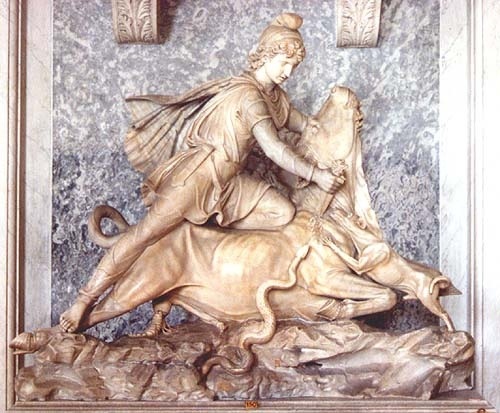
Being a theologian as well as an economist gives me an insight into the subject of economics that is denied to my non theological colleagues. When puzzling over the the current mundane level of thinking that passes for economic analysis, I came to the realisation that economics is not one of the analytical human sciences so much as a new mystery religion. A cult of economics that can be compared with the cult of Mithras in classical Rome or the Eleusinian Mysteries of dark ages Greece. Initiates in the latter achieved enlightenment by using psychedelic drugs, economists through years of confinement in economics departments. By a mystery religion I mean that religion whose truths are only known to its initiates, its truths are concealed from outsiders. While economists practise their craft in the full view of society their arcane truths are known to them alone. The language in which they conduct their dialogues and debates is incomprehensible to the uninitiated, that is non economists. Rather than it being a language of clarity that informs it is that of the obscurantist, a language that hides and conceals and deceives, a language almost totally devoid of common sense meanings. Gordon Brown was mocked for using the phrase ‘endogenous growth’ in one of his speeches, when what he meant was he wanted an economy that was characterised by self generated growth without the need of any external intervention. Economists never, but never speak in a language that people understand for that would take away from the mystique that attaches to the profession. It would also reveal the insignificance of much of their thinking and threaten their high status as experts.
20140803-182816-66496391.jpg

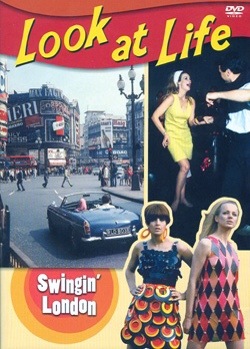
There is a better example of this from British economic history. All economists would agree that the free market economy of today is superior to the state managed economy of the 1960’s. Yet in the 1960’s unemployment averaged about 2% of the workforce, while today it is 7% of the workforce. Today the deficit on foreign trade is nearing 5% of GDP, it is the highest deficit of any developed country. In fact a trade deficit of these proportions more nearly resembles that of a developing country,that is that of a country insufficiently productive to pay for it’s much needed imports. Economic growth for the past five years has been below the trend rate of 2% per annum, whereas in the 1960’s it for many years it was over 4%. Only naive economists such as myself can fail to recognise the superiority of the dynamic free market economy of today, compared to the sluggish corporate economy of the 1960’s, we let statistics blind us to the truth. Economists judge the performance by other standards, standards which non economists are ignorant. Any apparent failures are but the consequence of the slowness of transforming the economy, unemployment is but a function of the existing remnants of the old dysfunctional economy persisting in their dysfunctional manner in the new age. Economists don’t need statistics they ‘know’ that their reforms will initiate a new golden age for the British economy.
20140803-183234-66754382.jpg

Economists who practice the cult of economics have created a new God, that in many ways is as barbaric as the Gods of classical Greece and Rome, a God that is the economy. This new God demands the sacrifice of the hopes and aspirations of youth to satisfy its demands. Youth unemployment averages over 20% in much of mainland Europe. Unemployment caused by the implementation of one of history’s most savage programmes of austerity. Economists believe Europe suffered a catastrophic financial crisis in 2008/9 caused by overspending, a problem that can only be put right by a savage programme of cuts to ‘balance the books’. A programme of savage cuts made mainly by denying employment to the young. The young ‘indignacios’ of Spain who rage against the austerity programme lack the understanding of economists who know that there suffering is necessary for the well being of the economy and that this is but the first stage in creating a better world for them. Is it unfair to compare the cult of economics to that of some primitive religion, whose practitioners believe it is necessary to sacrifice their young to appease their savage God?

What economists see is not the world as others see it, but one constructed according to their imaginings. They see in every society that the free market God is frustrated in its desire to create the good society. Frustrated by such as the devils of state intervention, trade unions and all the other enemies of free enterprise. Their beliefs blind them to reality, they don’t see a world in which young workers who lack employment rights are exploited by greedy and cruel employers. Instead they see a Britain in which labour is infinitely flexible, an economy whose labour force can adapt rapidly to change demanded of them. One of the boasts of coalition politicians is that Britain’s flexible labour force (easy to dismiss and paid near third world level wages) attracts foreign firms to invest in Britain.

How in a democracy have economists been able to persuade politicians to accept and implement the most inhuman of economic strategies? It is in a large part because economics is in a large part similar to the old mystery religions. Outsiders fail to understand the truths of the economists because the difficult language in which they are phrased makes understanding only possible to insiders, that is other economists. Politicians have long been persuaded of the desirability of supply side economics, without understanding what it really means. They believe it means increasing the productivity by policies such as improving schools and universities to give the young the skills to make them more productive. This is the nice but incorrect understanding of supply side economics. Below the surface of this public debate on supply side economics, lurks the very different understanding of what supply side economics means. It means changing the character and nature of the labour force to make it more suitable for employment in a contemporary society. Those ‘realist’ supply side economists lurk beneath the surface in institutions such as the UK Treasury and political consultancies and who seek to make politicians to adopt whatever inhuman policy is necessary to make labour fit for work in a people unfriendly economy.

One of the great concerns of the UK Treasury was the immobility of labour. Workers were not willing to move to find work. They saw labour shortages caused by labour’s unwillingness to move, as causing production bottle necks as firms lacked the workers to needed if they were to operate at full capacity. What they as saw causing this immobility was security of tenure, tenants in secure social housing or in owner occupied homes, were unwilling to give up their homes to move to find work elsewhere. Treasury officials saw the ending of security of tenure as the means to achieve this end.

They (the experts) could always sell this policy to the politicians who never really understood what the Treasury officials were saying as the technical language employed by these these economists hid its inhumane policy implications. One such technical term was the inefficient use of housing stock, what they by which they meant too many houses were under or unoccupied or under occupied for long periods of time. If tenancy agreements were changed to favour the landlord, more landlords would come forward to offer accommodation in areas of greatest need, such as London. This was made possible with the assured short term rental system. More important was the destruction of the system of social housing (council housing) which these officials believed discouraged tenants from moving from areas of high unemployment to those of low unemployment. Rather than go into the details of the policy changes, it is sufficient to say that the majority of social housing has been transferred from state to private ownership. What economists knew was that by changing the nature of the housing stock they would replace security of tenure with insecurity of tenure, with all its unpleasant consequences such as market abuse by unscrupulous landlords. What economists had persuaded the political classes was that PEOPLE HAD TO BE MADE TO WORK THE BENEFIT ECONOMY, NOT THAT THE ECONOMY SHOULD BE MADE TO WORK FOR THE BENEFIT OF THE PEOPLE. They could sell the new economics to politicians as making the economy more productive which inevitably would benefit all. However they knew that their actions would do the reverse as to benefit the economy one group in society would be impoverished, that those dependent on social housing. The reforms would create a new group in society the house and home poor.

The new economics can only be understood by using concepts borrowed from the study of religion. Those who had undergone a rigorous schooling in economics would have revealed to them the truths known only to economists, as in many cultist religions. It is this learned language that prevents the layman from participating in the cult of economics. Their only role is that of bemused bystander.

A similar criticism could be made of the study of physics or cosmology, but the difference is that these subjects seek to understand the world, not remake it according to the revealed truths of their subject. There is a religious like fervour to the study of economics; economists like the religious missionaries of the Jehovah’s Witnesses or the Church of the Latter Day Saints wish to remake the world according to the revealed truths of their belief system. Just because the revealed truths of economics come from a profane rather than a scared source does not exclude the cult of economics from being a contemporary religious belief system.

One final remark, the free market economy that economists believe in is as unreal as the God Mithras worshipped by Roman soldiers. The other night on the television I saw one cultist who stated that our current high level of standing was due to a combination of technological advance and the market economy. Only when such beliefs are recognised as just another cult belief on a par with that of Jehovah’s Witnesses will society be able to look to real solutions to its problems. Cultists are the only people that believe society is perfectible and that is why their beliefs are so unreal. Society is an organised mess and muddle, which can be improved but never perfected. Economics can help find the answers to problems as it does contain some very real insights into the nature of society, but not while it remains a cult belief system.


Why politicians would benefit from reading fairy tales

20140625-112126-40886122.jpg

Folk tales and fairy stories with their black and white characterisation for example the evil step mother and the virtuous, noble and abused step daughter are characterised as stories only for children. Their tales of good and evil are seen as being far too simplistic for adult reading. This is a misreading as the fairy tales we tell our children are but sanitised versions of the original folk tales. In the original story the step sisters cut off parts of their feet so as to fit their feet into the glass slipper. What is not understood is that folk tales are but attempts to explain the malevolent world in which our peasant ancestors lived. Fairies were not seen as good but as spirits that had to appeased as angering them could result in misadventure. When the Church insisted this was a good world created by God, how could the misfortune that people suffered be understood except by understanding there must be a lower level of supernatural beings who were responsible for the evil men suffered. What our peasant ancestors saw was that they lived in a world in which good and evil co-existed, not so simple but realistic.

This simple world view is in contrast to the sophisticated society of today. Rather than the simple black and white world view, it a world view of greys, varying from the darkest of greys (bad) to the palest of greys (good) and between these two there are a whole series of different shades of grey. However bad is not totally excluded, but bad only applies to those people, the psychopaths who operate outside the normal range of behaviours. When morality is seen from the perspective of the political and dominant social classes there is an incredible fluidity to moral concepts, particularly when the politeriat who govern Britain is considered. This merging of good and bad can be seen in the concept of the just war. Killing is bad except when its undertaken as part of a just war. St. Augustine defined the concept when he cited the conditions under which a soldier could kill to defend his country. Others such as Thomas Aquinas further refined this concept. While there was justice in fighting the Second World War to remove Hitler the concept becomes stretched to breaking point with the Iraq war. Our leaders invented the threat of Saddam Hussein’s weapons of mass destruction and the threat they posed to the West to make the war just. One bad example does not made a moral principle bad, however the concept is open to misinterpretation or abuse, as political leaders are always tempted to give it a meaning that suits them. Government’s never fight bad wars only just wars.

Goodness takes on an incredible diversity of meanings when used by politicians. Good for them is the greater good, a good which only they understand. Only they can make the greater good a reality. The austerity programme the UK government imposed on society is for the good of all. It will like the medieval practice of bleeding purge society of ills. All very reminiscent of Stalin, who regularly sent thousands to the death camps, for the good of Russian society. Killing thousands of Ukrainian farmers led to starvation and the death of millions. Britain’s austerity programme has impoverished millions and the spread of poverty level wages has reduced demand and slowed the recovery from recession. When political leaders define good or the greater good it rapidly loses any moral content and all kind of evils can result from this. The Iraq war was intended to achieve two goods, the removal of weapons of mass destruction that threatened the West and the freeing of the Iraqi people from a cruel dictator. Instead of it being a being it good action the reverse happened. Thousands were killed in a bloody civil war consequent on the invasion and now the country is threatened with a new civil war, one against an extremist Sunni militia.

Perhaps if George Bush and Tony Blair had a sounder understanding of morality than they displayed at the time, they would not have committed themselves to the folly of the Iraq war. Politicians have long given up reading Christian moralists such as Erasmus, but if they had not, they might have come across his article entitled ‘War is sweet to those who have never tried it’. Nothing is new, ambitious princes have always through the folly of war damaged the health and welfare of their peoples.

There is a danger in our contemporary society of having leaders lacking any fixed moral reference points. If good is a flexible thing only given the meaning that the leaders and political class give it, there is nothing to stop them committing inhumane experiments of their people. Stalin, Mao and Pol Pot murdered millions in the name of their self proclaimed goods. On the same spectrum but at the other end our politician practice inhumane experiments on us. Austerity is perhaps the worse, although there are plenty of other examples. Children in Britain have had to endure endless experiments with their schooling experiments of varying degrees of cruelty. Education ministers impose diktat after diktat on our schools which seem destined to introduce the spirit of Gradgrind into our schools. Schools are becoming akin to Victorian factories with child labourers repeating a series of unending mundane tasks. Experimentation is not limited only to our children but also to the sick, the disabled and the young unemployed, all the major political parties seem to be engaged in a competition to produce the most inhumane policies towards these groups. When any real understanding of the good is lacking, cruel and inhumane policies will result not so much from a sense of cruelty but an inability to see people as other than things, just another resource. Possibly the bear pit that is Prime Minister’s Question Time is the best representation of the callous unfeeling nature of our politicians.

Not recognising or understanding good is only one part of the problem, the other is the failure to acknowledge the bad. Children understand that out there are bad people, be they evil fairies, step mothers, dwarves or trolls. Politicians having no conception of bad fail to recognise bad people. The evil financial wizards who managed to make billions disappear were never recognised for what they were, in fact many of them were rewarded with titles from the government. Similarly politicians never recognise the evil trolls, dwarves and queens that populate the market. There are many bad landlords who charge exorbitant rents for unfit housing, yet politicians don’t recognise that there can be bad landlords and that only government regulation can resolve this problem. When reforms of the private rental market are suggested, a chorus of ministers, politicians and journalist cry it is impossible. They claim that any regulation would make the market worse, claiming that regulation would force landlords to withdraw from the market. Conveniently ignoring that those self same landlords have borrowed vast sums to buy their rental properties and it would be suicidal not to let them. The free market for them is an unalloyed good in which their can be no bad or evil. Bad landlords are not a problem that the market can’t resolve.A child from their knowledge of fairy tales would recognise really do exist, while politicians with a moral free sensibility cannot.

20140625-112736-41256464.jpg

There has always been a clash between doing what is expedient in politics and what is principled. However what is unique in the present parliament is the lack of great principled individual politicians, our current parliament is a moral free zone. All the great reforms of the past have been driven by outstanding principled leaders. Lord Shaftesbury a Christian politician was the driving force behind the ending of child labour in the factories and Non-conformist Christian politicians such as Keir Hardie, Lloyd George and Aneurian Bevan were largely responsible for the creation of the welfare system, which their moral free successors are in the process of hastily dismantling.

It would be naive to claim that the politics practised in the past was much superior to today, but then unlike today there were moral giants who could drive through measures of social reform. One has to ask why is our parliament populated by a generation of moral pygmies? Perhaps an answer can be seen in the education of our predecessors. Not so much academic education as their education in values in the wider community. Wilberforce and Shaftesbury were evangelical Christians, Lloyd George and Aneurian Bevan were Non-Conformists and it was their Christian education that gave them a fierce attachment to a compassionate value system. Interestingly Lloyd George was as venal in many respects as our contemporary politicians, a womanising politician who willing sold political office; yet he was redeemed by a greater moral vision. What is lacking in contemporary society is the moral counterweight that the churches in the past provided to unbridled self interest. The great universities educate politicians in the practicalities of government, usually in PPE (Philosophy, Politics and Economics). Contemporary philosophy courses teach scepticism, politics courses the art of vote winning and economics the management of society, skills needed for the second rate political Machiavelli’s. As an economist I tend to single out economics for the greatest part of the blame, it is the great leveller, a subject in which everything is reduced to a material benefit or cost, much like Oscar Wilde’s cynic who knows the price of everything but is ignorant of the value of anything. Economics I believe has a tendency to shrink people’s moral vision. Particularly as current Neo-Liberal economics teaches that the economy is best left untouched by government intervention and that it is the unregulated free market that will deliver the goodies that people want, be it a home or high quality medical care.

20140625-113058-41458715.jpg

What is moral in a government that values the interests of the drinks industry above that of the health of the community. Successive governments be they Labour or Conservative have facilitated the expansion of the drinks industry by easing the licensing laws. Our more principled ancestors (Non-Conformist politicians) recognised the evils of too free a consumption of alcohol and introduced licensing laws. Neo-Liberal economics teaches that the greatest freedom is the freedom of the individual to consume what they please. The costs to the health service of alcohol abuse, the increase of the number of babies damaged through alcohol fetal syndrome and alcohol induced violence count as nought against the individuals right to self abuse.

The present cannot be remodelled according to the ground rules of the past societies. It is not possible to reinstate the church as a powerful institution in society and it is probably not desirable. There are too many examples from the past of the church abusing its powerful position, not least with the burning of heretics. One answer is to demote the inhuman human sciences from their dominant position in the political and public dialogue. Plato does for me provide a way forward, he said that whoever knows good desires nothing else. What he meant by this was that the study of the nature of good has the potential transforms the human personality. (Such a brief statement does not do justice to the complexity of Plato’s thought, to do it justice would require a lengthy exposition.) Only Christians take the study of good seriously, university ethics courses teach students that good is an unknowable concept and at worst an emotion. I guess contemporary philosophers would be unsuitable to the teaching of good and probably only theologians could teach it without self mockery. What I desire is a reordering of the university syllabus particularly for the great and good in the elite universities. Obviously I am not naive enough to think this teaching would modify the behaviour of the great and the good that enjoy the ‘frat boy’ life style at university, but it might produce a new Lord Shaftesbury to be a moral counter weight to the moral free sheep that populate our politics.

Demonic or Nietzschian Economics

20140604-131852-47932324.jpg

Nietzsche is perhaps the most misunderstood of philosophers, he is remembered for the praise of the ‘blood beast’ of his declining years, not the insights of his philosophy in his early years. As a skeptic philosopher he criticised his fellow philosophers for failing to understand the subject the nature of the subject they studied, man. His most potent criticism that all grand philosophies were fallible as they went contrary to the nature of man. One of his most trenchant attacks was on the notion of free will, he demonstrated that so many acts of criminals were predetermined so to punish them as if they had freely committed a criminal act was wrong. Similarly I want to conduct a skeptical or Nietzschian analysis of economics

What I want to contribute to the study is ‘satanic or demonic economics’, a new reading or interpretation of economics. The devil or Satan offers a wonderful tool for explaining the true nature of economic analysis. While I prefer to believe that we as individuals have sufficient potential for evil within ourselves; I cannot deny the value of having a demonic figure to explain the evils committed by men. Previously I have written of economists adopting a devil substitute to explain the failure of the perfect economic system, the free market. What I have realised since then is that it is the economist’s failure to recognise the existence of evil that has lead them to blunder into creating the most inhumane of human sciences.

There is a novel which demonstrates all too clearly the problem with contemporary economics. That novel is James Hogg’s ‘The Private Memoirs and Confessions of a Justified Sinner’. Robert Colwan the anti hero of the novel fails to see that his companion and friend Gil-Martin is the devil. He is so blinded by his sense of self righteousness, that is his own sense of goodness, that he fails to see that Gil-Martin is leading him into committing acts that become progressively more and more evil, culminating in the murder of his brother. While James Hogg is poking fun at the intolerant lowland Scot’s Calvinists who would abolish fun if they had the power, his book contains a fundamental truth. Those who don’t acknowledge the existence of evil usually go on to commit evil, because they are blind to the existence of evil. The German bureaucrats who sent millions to the gas chambers could do so because their only concern was to make the German railway system run efficiently. The fate that awaited millions of Jews was irrelevant. What Bauman discovered about the behaviour of German railway officials could not unfairly be applied to the current generation of economists. They as with the German bureaucrats only want to make the system run efficiently, they have no concern about the consequences of their actions for their fellow men.

20140604-132238-48158020.jpg

Economists have always argued that their subject is a social science not a moral science. They claim that by excluding value judgements from their analysis they can offer the objective analysis which delivers the answers to the problems that bedevil mankind. What they fail to recognise by committing themselves to a self declared moral blindness they cannot recognise the inhumanity and evil of their language and practice. The only fair comparison I can make is the psychopath who is unable to develop human empathy because they have been damaged so severely by their dysfunctional upbringing that they are incapable of moral empathy. Economists similarly have so damaged by their study and practice of economics that they are also incapable of moral empathy.

The model that economists wished to emulate was that of the natural sciences. Its success had been due to the adoption of the scientific method and the exclusion of any value judgements that predetermined the answer. Scientific study had progressed little until religion stopped determining the answers to any scientific investigation. Bishop Usher had calculated that the earth was created in 4004 BC from his study of chronology of events listed in the bible. This effectively prevented the development of earth sciences until non-Christian scientists such as Darwin and Huxley demonstrated this was untrue as the earth evolved over millions of years. Economists wished to achieve the same standard of impartial enquiry that prevailed in the natural sciences. What they ignored was that economics is a human science and that if considerations humanity are removed from the study all that is left is a science of inhumanity. The consequences of which can be appalling.

One subject that has been a constant topic for study by British economists has been the low productivity of the British economy. By excluding any considerations of human welfare, they were able to come up with a number of ‘objective’ solutions. They identified the cause of low productivity as an under performing and dysfunctional labour market. There were too many restrictions on the use of labour which limited its efficiency. Employment protection legislation, health and safety legislation together with over powerful trade unions prevented its efficient use. What they saw was not a people who had legitimate rights as regards fair wages and a safe working environment, but a multitude of dysfunctional workers who needed to be subject to the harsh realities of the market to turn them into productive human resources. People are not people, they are the labour and they only right they should have is to be used productively. Fortunately for economists all governments since 1979 have seen the benefit of a utilitarian approach to labour. Employment protection and health and safety legislation have been so effectively emasculated that employers need have little concern about them impeding their exploitation of their workers. Trade unions have been so weakened that with a few exceptions they are of no concern to employers.

What has been created in Britain since 1979 is a low cost flexible labour force that is attractive to business. Consequently Britain has recorded one of the sharpest rises in employment in Europe during the economic recovery that has occurred since the crash of 2009. Labour is cheap to hire and easy to dispose of, so employers are willing to take on staff, knowing that they cost little and can be disposed of easily if the market takes a downturn. All this increase in employment has been at the expensive of productivity as its has lead to the growth of low cost industries, warehousing, call centres that require little investment as plentiful cheap labour is available. Cheap people rather than expensive investment. The misery of zero hours contracts, split shifts or low wages is of no consequence to the economist, as they are merely signs that the market is working efficiently in making good use of unemployed labour. What is most matters for them is that the employer able to use labour as cheaply or efficiently as possible.

Economists never speak of the need for fair wages, security of employment, good housing or free health care. As the value of the sense of well being from a fair income etc. cannot be priced so the
Its ignored. The economic calculus that is calculating the benefit derived from human activity can only calculate benefit in quantitive not qualitative terms. The economist has an opt out from moral judgements, it the market can make decisions about what people want and need, so such decisions about health care provision should be left to the market. However this ignores the dysfunctional nature of the market, as billionaires can pay more for their health care than can the poor, the market will provide excellent health care for the rich and minimal health care for the poor as the latter will make little money. Yet as economics is a subject devoid of morality economists would never be concerned with the poor being deprived of health care, as with the German railway officials human misery caused by their actions are not their concern.

20140604-132553-48353968.jpg

Lacking any understanding of morality economists are prey to a diverse number of Gil-Martins. that economists have no conception of morality, I mean public morality, they lack any conception of the common good. They are not lacking any conception of private morality,I’m sure many economists are good fathers and mothers.) These Gil-Martins are the wealthy businessmen and large corporations that endow university professorships or fund think tanks. As economists lack any moral sensibility they are easy to corrupt, promoting schemes that will benefit their benefactors. While there are numerous economists advocating the benefits of free enterprise, that is a lack of regulation which benefits the large corporations, as treating people well costs money, there are few that argue the benefits of a strong regulatory state.

Perhaps it would be wrong to call economists the ‘devil’s spawn’, such harsh language is not suitable for these civilised times. Yet economics is the ‘demonic science’ as the policy recommendations of its practitioners always increase human misery. Can anybody recall any economist ever speaking out for fair wages or security of tenure for private rental tenants. In fact the latter is anathema to economists as they believe that security of tenure impedes the mobility of labour as people are reluctant to give up the security of their existing tenancy for uncertain accommodation prospects in an area were there is work. If secure social housing tenancies are destroyed in Newcastle, there will be nothing to prevent the unemployed in Newcastle moving to jobs in the prosperous Thames valley, as they will be swapping one insecure tenancy for another. Ever since its inception economists have been campaigning against the National Health Service (NHS) as its providing of free care care at the point of use, which is contrary to the fundamentals of good economics. Free service encourages over use they claim,* if a service is priced people will only use it if they really want it, that way the correct distribution of resources is achieved as only those willing to pay for a service will use it. Services free of price are used wastefully, therefore the NHS must go. Economists are like so many Robert Colwans plotting the demise of a much loved health service, rather than a much loved brother. From the point of view of this theologian any human science that lacks any conception of the good can only practice evil. This is why using the concept of the devil as an explanatory tool is so useful in understanding contemporary economics, as evil infects all its economic analysis, medieval Christians were wiser than use in seeing the devil constantly at work in society.

*It is intriguing that economists tend to view ill health as a product of free service revision at not a risk that occurs naturally to human beings.
.

How a knowledge of the devil can aid in the understanding of economics and government policies.

20140508-151239.jpg

Manchester University economics students are campaigning for a change in the teaching of economics at their university. They are discontented with a curriculum whose content is limited to Neo-classical economics and mathematical modelling, a curriculum that fails to adequately address the issues of the day. They have called for a broadening of the curriculum to include other subjects such as psychology and economic history so as to develop a more reality based subject. One subject not included in their list was theology, so as a theologian I am going to demonstrate how theology can contribute to economic analysis. I want to show how using what many consider an out dated concept ‘the devil’ aids our understanding of economics.

Satan or the devil does not really figure in religious iconography until the last century BCE. In the Old Testament Satan is but one of the angels. He is one of the angels that are involved in inflicting pain and suffering on Job. With the rise of the new religious beliefs and practices of the last century BCE, the new religious world view was increasingly at odds with reality. There was the problem of how to reconcile a good God, who created a good world with the cruelties and suffering of the contemporary world. A problem that became more acute with the Roman persecution of Christians in the 1BCE. How could a world ruled by cruel Roman governors who used crucifixion as the punishment for dissent be part of a world created by a good God? The answer they found was in the devil a fallen angel, a malevolent being who introduced sin into creation and worked unceasingly to corrupt God’s good world. The old Olympian Gods who were cruel, licentious and deceitful were redefined as demons. St. Augustine portrays a world in which these demons (whose bodies were made of air) circle around the earth in the atmosphere looking for opportunities to lead men astray. One of the most ruthless persecutors of Christians in the Roman Empire, the Roman a Emperor Diocletian is shown in medieval pictures in companionship with demons. The actions malevolent spirit explained why the world did not fit with the Christian world view.

Perhaps the most compelling picture of the world as imagined by the Christians of the early centuries CE, is the picture of St. Anthony in the desert being tortured and tempted by devils. Frequently a subject for medieval and renaissance artists. Despite its apparent dissimilarity the Christian obsession with the devil and contemporary economic thinking, it does provide the perfect analytical tool for understanding the latter.

20140508-152311.jpg

Economists have created through ‘thought experiments’ the perfect economy. Yet whenever they put their precepts into practice it inevitably fails. Why does the free market economics as practised in the developed West so frequently fail? Why in this perfect world did the financial crash of 2008 happen? Their mathematical modelling of the economy showed that the free markets economic systems were those ideally best suited to maximise human welfare. If there models were correct what was going wrong in this perfectly manufactured economic system? There had to be some extraneous malevolent force interfering which made the system malfunction. Economists needed their own devil to explain the failures of their policies. Fortunately it was not hard to find this new devil, it had to be government. Neo-Liberal economists set about rewriting history to prove their case. There were sufficient horror stories from the Social Democratic era to demonstrate why the government should be excluded any management role in the economy. Perhaps the most striking of these stories of failure is that of DeLorean sports cars. DeLorean persuaded the government to fund the construction of a factory to make futuristic stainless steel sports cars in Belfast. Unfortunately there was no market for these cars and the business collapsed, losing the government millions of pounds. Now not only had economists found their devil they could demonstrate the horrors of his work to unbelievers.

There is a parallel between the preaching of early Christian missionaries and that of modern Neo-Liberal economists. Both could demonstrate the horrors of a life lived in thrall to the devil. For the first it was a life which ended in eternal torment in the fires of hell, for the second it was a life lived in the hell of social democracy as witnessed through the winter of discontent in 1979. Who would not want a life free from the horrors of the winter of discontent 1979 or the Great Society and LA riots associated with Lyndon Johnson’s occupancy of the White Hose.

Once the devil had been discovered a whole host of minor devils could be found to be working to frustrate the free market. NGO’s by campaigning for aid to help the most troubled of developing countries, were through the provision of aid undermining local economies and preventing the development of a local agricultural market that would feed the people. A profitable and thriving farming sector could only develop if they were not undermined by the distribution of free food. Saving lives now was misguided as it only laid up troubles for the future.

Just like the evangelical Christians who have to co-exist with the devil as he is part of God’s creation and economists have the accept the existence of government as it part of society, without which there could be no social order. Evangelicals rely on prayer, missionary work and political campaigns to profit abortion etc, to minimise the influence the devil has over people’s lives. Economists endlessly proselytise on the benefits of the small state on the assumption that the smaller the state the less damage it can do. Consequently there has been the constant privatisations and out sourcing of government activities to make this happen.

Free market economists are similar to fundamentalist or evangelical Christians in the horror in which they regard their own devil. One prominent Christian Republican politician advocated the killing of those who had claimed to have encountered aliens. His reasoning was that as aliens don’t exist they must have encountered devils and the only way to prevent these dupes of the devil spreading corruption in society would be to eliminate them. Grant Shapps the Conservative Party Chairman reacted with horror when the Labour Party suggested some modest regulation of the housing market. The most vile term he could come up with to describe it was ‘Venezuelan’ . For him their could be no greatest horror than living in the socialist state of Venezuela. Similarly in the US Congress a similar revulsion attaches to the word socialist.

Obviously it can be no surprise that there is an overlapping between membership of fundamentalist evangelical Christian organisations and the right wing political parties which are populated by believers in the free market. In the USA the Southern Baptists are Republicans and in the UK those Christians who oppose contemporary mores such as gay marriage are to be found disproportionately in the Conservative Party. What cannot be denied is the popularity of the belief in the devil, perhaps because its offers reassurance. In a world that seems alien or hostile too them it is easy believe that the cause is an external malevolent force, it explains everything.

What I can conclude by saying is that contemporary economists and first century CE Christians share a similar dilemma, how to explain a world that does not accord with their world view. For the Christian it was the Roman government dominated by the Satanic ethos and for the economist it is a malign government dominated by a similarly destructive ethos.

The New Paganism

20140101-154419.jpg

My early education was in a Church of England primary school, in which we the pupils were taught the superiority of everything that was English. Our Head Teacher always spoke of regret of the passing of the empire and its replacement by its much inferior substitute the Commonwealth. Although I’m sure that she called it the British Commonwealth. Religious education as should be expected formed a significant part of the curriculum. However our religious education was infused with a strong sense of Britishness. We learnt about David Livingstone who took Christianity to the primitive idol worshipping tribes of Africa. Of Gladys Aylward who took Christianity to the barbarous Chinese. What we were taught was the superiority of the British religion to that of the barbarous foreigners. The religion of England was surely the culmination of religious development over the past two thousand years, it was the physical embodiment of Christ’s promised earthly paradise. Heaven was very much an incidental feature of this religion. It was an unspoken assumption was that a heavenly paradise was hardly necessary if you were fortunate to be born an Englishman.

A phrase was much used then in the description of the non white commonwealth as ‘idol worshipping’, a phrase used to insinuate the superiority of English culture. It was a strange education, as my only knowledge of Hinduism was the practice of suttee or widow burning, a practice stopped by enlightened Englishmen. I am being a little unfair as I also learnt about the practices of a cult of Kali called the thuggee, who murdered people as a sacrifice to Kali. Another devilish practice stopped by enlightened Englishmen. We also learnt about the paganism of classical Greece and Rome, which was brought to an end by St. Paul and the Christian fathers. It was a curriculum I imagine that had remained largely unchanged since the height of Empire in Victorian times.

The purpose of this digression into the nature of primary education is to suggest that this superiority is unjustified. There is in Britain a new paganism in which the idols worshipped are as barbaric and cruel as those of classical Greece, Rome and the non-white British Empire. However it is not recognised as such.

At the risk of over simplification the Greeks and Roman’s made deities out of natural phenomena. Vesuvius was the workshop of the blacksmith God Vulcan, night was the work of the Goddess Nocturna and Aeolus was the God of wind. Natural phenomena were given human like personalities, which made communication with these formidable powers of nature possible. While control of these phenomenon was impossible, through sacrifice and prayer they could be persuaded to look favourably on mankind and not release their destructive powers on them. Romans of the late empire even took to the practice of chaining up statutes of their Gods in their temples in an effort to control them. Mars the destructive God of war was one of those most frequently chained up, as if he ever left the temple devastation would follow in his wake.

Contemporary practice is very different instead of deifying natural phenomena, human practices of a certain kind are deified. The purpose of giving certain human practices and institutions the status of Gods, is to give them power over us. Once they are defied the rules and practices of these institutions cannot be questioned. Any questioning or disobedience of the rules and injunctions will bring about human suffering. The human institution that has been given this God like status is the market. Belief in it is so complete amongst the political, financial, commercial and industrial elites that no action contrary to its mores can be contemplated. This belief leads to practices as nonsensical as chaining up the statute of Mars to prevent wars.

One such bizarre practice is the payment by results inflicted on the probation, employment and welfare services. Worshippers (politicians) of the God Free Market, believe that probation will be made more effective if the service is incentivised by a payment by results system. Probation officers will be incentivised to work hard and use the best methods of reforming former criminals if they know that the income of their business and ultimately theirs depends on their success at reforming former criminals. While this practice betrays a poor understanding of human nature (one motivated primarily by fear and greed), it is as unworkable as chaining up the God, Mars. The only real measure of the success of this scheme will be at the end of the life of this former convict. If they had after probation lead a relatively blameless life, then the payment should be made. However no business could wait thirty or forty years for payment, so instead a series of arbitrary and meaningless targets are imposed. I am not sure of the targets but if an ex offender has not offended say within six months payment is made. This says little about the effectiveness of the scheme as they may go on to offend at a later period. In the profit driven companies since profits depend on results, all types of statistical manipulation to massage the figures to suggest that they are more successful than they are in practice. The short time span of the memory that is that of the average government minister is remarkable, as the manipulation of the statistics for the tagging of offenders by G4S and Serco has already been forgotten.

What can be expected is that violent offenders who have been declared reformed as they have not offended within a given time span, will inevitably offend again. There appears to be no scope the reclaim payments made for such ‘apparent successes’. If cash payments motivates people to do their job well, the fear of losing that payment should make them even more eager to work well. Its a scheme that does not seem to have any consistent logic. However for true believers in the free market, there can be no flaws in the market driven schemes they propose.

Blindness to reality is suggested by the fact that the most difficult of cases will be left in the hands of the rump of the old public service motivated probation service. If the scheme works for one group of offenders it should work for all.

There can be objections to my use of the word religion to describe the actions of advocates of market economics. However if religion is seen as set of non rational beliefs (not open to rational debate) or first principles that guide human practice, belief in the superiority of the free market is a religion. Men have created a new idol to worship, the free market. The principles of the free market should guide and inform any human action. It is not a philosophy a coherent set of rational principles which can be subjected to debate. If in doubt listen to the words of any government minister, as their speech is full of unquestioned assumptions about the superiority of the free market.

It was Varro who coined the term popular religion, by which he meant the stories and festivals that captured the popular imagination. The market is the new popular religion, it has subverted religious festivals into festivals of consumer over indulgence. Easter the time in which Christ’s sacrifice and rebirth is commemorated has been replaced by a celebration of pleasure, chocolate Easter eggs are eaten, it is the time of spring holidays, the benign Mediterranean spring climate making it a popular holiday destination.

There are also a set of new stories of the popular imagination that explain the world in which we live. Stories that can only be called consumer morality tales. On such is rooted in the housing market, stories of wonder about house buying and selling. Morality tales about the successful home buyer, the one who brought and sold at the right time and who now is a millionaire abound in the popular culture. Boris Johnson is one of the prophets of the new popular consumerist religion. In his speech as Mayor of London, he extolled the virtues of greed and envy to the assembled dignitaries. Self servicing virtues that justify the activities of London.

Given the lack of any counter ideology or religion within the governing classes, change can only come from outside of them. Is Occupy the precursor of future popular movements that will be needed to reclaim Western society for the people from the plutocrats? However any resistance movements will need to be motivated by a greater vision, a religion of optimism. Is Pope Francis with his reforms of the corrupt Roman Curia, a sign that the time of the old religion of the market is finally in decline?

One final thought the Roman Catholic Church is dying within Europe through lack of recruits to the priesthood, as was the Church of England. They have both sort solutions in different ways, the Roman Catholic Church is importing priests and nuns into Europe from the developing but Christian Third world and the Anglican Church is replacing the missing male priests with women. Is this the solution that Western societies salvation as the churches must come from former marginalised groups. Groups who through their very exclusion from power were not tainted with the religion of pessimism, that permeates the dominant white male culture. Do they only have the vitality and enthusiasm necessary to transform society?

The Poverty of the Political Imagination

20131231-182237.jpg

What concerns me is the smallness of the thinking of the current generation of political leaders. British politicians have never been noted for their intellect. John Major best typified the thinking of British politicians when he spoke of the need for the ‘vision thing’. This smallness of thought is an accelerating trend amongst the political classes. We have a prime minister who was regarded by his tutor a one of the brightest in his class yet all he has given us is a vague vision of the ‘Big Society’, which turned out to be little more than an election slogan. However it is in the so called ‘nudge unit’ that his true vision is exemplified. There is to be no challenging of the political or social consensus or any powerful interest group. Instead there are to be small changes in policy, so small as to be unnoticeable that will persuade people to improve their behaviour.

I guess for a conservative it is comforting to know that the current society is ‘the best possible’ of all of societies. For an extremely wealthy man and his circle of friends there is no need for any change that might diminish or threaten their wealth. The homeless and hungry are so because of their idleness. Any attempt to improve their circumstances is wasted because they any attempt at improvement would be self defeating. They share the attitudes of their predecessors who opposed putting bathrooms in the houses of the working classes, as they would only use them to store coal.

This time of year we are all constantly treated to showings of the Dicken’s fable ‘Scrooge’. At the beginning of the story Scrooge is visited by people collecting money for the poor. Scrooge’s reply is that are there no workhouses? He refuses to give any money as he believes that idle poor deserve no better than the cruel workhouse. In the course of the story he learns the error of his ways and repents his meanness. The story is always seen as a story from our cruel past, rather than seen as an accurate depiction of the cruel present. Can anything be more contemptible than the well feed rich who are our rulers condemning the poor to a lifetime of suffering for their assumed idleness.

Both our Prime Minister and his deputy relied on family connections to find well paid work in the world of commerce and media. How can they condemn those that lack those advantages to advance their career?

II

When analysing the causes of our current social malaise, economists are all too ill equipped to suggest solutions. One of the best analysis of our current malaise was put forward by the columnist Simon Jenkins, who said that our political decision makers suffer from the curse of indecision. This is not only a UK phenomenon, the current crisis has brought out the worst in political classes of the West, they cower before the dysfunctional all powerful market proclaiming their own powerlessness. Rather than a Roosevelt we have an Obama, or a Merkel rather than a Kohl, all who in unison proclaim their powerlessness before the all powerful market. The religion of pessimism has them firmly in its grasp, as all they can suggest is a minor amelioration of people’s misery by appeasing the all powerful market.

Appeasement always takes the same form, cut government expenditure, reduce taxes to release the energies of the powerful giants of industry to rejuvenate the the economy. Failing to notice that our leaders of industry are as frail and impotent as our politicians. They are like so many Wizard of Oz’s, small men who when viewed through the distorting lens of the business corporation appear as giants. Such men are reassured by the fairy tales of such as Rand, Friedman and Hayek who portray them as the movers and shakers of our society, when in reality they are diminished human beings interested only I n increasing their ‘take’ from the business. Others such as politicians believe in this myth and like some pre-historic priest make gifts to these new Gods of the market in the hope that they will smile benignly on them; gifts such as generous tax breaks, indulgence the worst of tax avoidance schemes.

Our legislatures engage in endless rounds of meaningless activity to disguise their inability to tackle the real problems of society. In the face of the worst housing crisis in history all the government can do is offer some funding for new house buyers. A policy that won’t upset the supposed giants of the construction industry, as it does no more than provide a few more new homes at great profit to that industry. Facing a much worst crisis the post war governments of the 1950’s and 60’s embarked on the largest house building project in British history. A project way beyond the imaginations of our current rulers. The great industrial power house that is the USA is scarcely any better at decisive and imaginative policy making. How would the former giants (Fulbright etc.) of Congress view a Congress than can only unite on such trivia as agreeing to classify the tomato sauce that goes on pizzas as one of the five vegetables/fruit that Americans should eat everyday? Its irrelevant that food scientists would regard this decision as a nonsense. What matters is that the powerful food processing industry should be appeased, it must be protected from legislation that might be harmful to its profits.

What has happened? In the 1940’s and 50’s the House of Commons would fill when there was an expectation of a debate between the two titans of right and left, Churchill and Bevan. Who today would willing rush to the Chamber to hear a debate between Cameron and Miliband? In the USA former Presidents such as the two Roosevelt’s and Kennedy bestrode the globe like colossus, now their like has disappeared from the American political scene. Eisenhower the much under rated President warned of the power of the ‘industrial military complex’, while today President’s Bush and Obama seem only to willing to do their bidding.

What has been lost is the vision of a better world that inspired these men to achieve great heights. Certainly they were flawed individuals, yet their vision enabled them to over come their flaws and offer real leadership to their nations. Our current society would disqualify Roosevelt from high office because of his womanising and Churchill because of his excessive drinking, preferring modesty in behaviours and thinking. What is required is a new religion of optimism, which would inspire a new generation of leaders to create a better society. Not a religion of pessimism that forces politicians to view themselves as flawed weak individuals who can best serve their society by doing nothing, believing that their meddling would only make things worst. All that is allowed in policy making is measures to appease the Gods of the market.

III

It is dispiriting to look to our political classes for leadership. They all proclaim their helplessness in face of the current crisis. One suspects that they find comfort in this shared sense of helplessness, if their rivals espouse helplessness, there is no pressure to come up with solutions. In the UK the coalition government have the good luck to have their understanding of the current crisis shared by the opposition. The opposition share the belief that their priority should be cutting the size of the government deficit. Given that neither have an effective policy for achieving that, any future government will waste its energies on cutting the deficit to the exclusion of everything else. Policies that one would expect of a Social Democratic Party such as reversing the privatisation of the health and education services will be excluded on the grounds that they would cost money and do nothing to reduce the deficit. A mean shabby policy that suits our mean spirited times.

If we consider the raw material of our leadership classes, they appear no worse and possibly even better than those of the past. Charles Kennedy was forced out of the leadership because of his alcoholism. Yet by common consent one of our greatest leaders Winston Churchill was a depressive and heavy drinker. Given such unpromising raw material why did Churchill achieve a greatness, that is impossible for the current generation of politicians? Churchill was moved by a religion of optimism, he believed that the English had a unique heritage and future and it was his destiny to help the English attain this greatness. He believed in the genius of the a English speaking peoples. A contrast to the preference of the current generation for small minded and modest thoughts. Ed Miliband epitomises this trend, he believes in ‘under promising’ and ‘over achieving’, such philosophy has no place for the grand vision that motivated Churchill and his political rivals.

I see a solution to the current impasse in the writings of Georges Sorel. He concluded that what mattered was not the embedded truths of an ideology, but the myths that inspired people to action. He used the history of socialism to demonstrate the truths of his proposal. What changed society was not the superiority of socialist thinking, but the willingness of socialist activists to endure untold pain and suffering to attain their ends. A socialist could die happy in prison knowing that his sacrifice was merely part of the struggle that would lead to the success of the working classes. Such activism was responsible for the introduction of cheap social housing and a health service free at the point of use. Greed the main motive of the capitalist classes could never produce martyrs willing to die for the cause, which is why for much of the twentieth society they were on the defensive. They had rely upon the organised church to provide a spiritual vanguard for capitalism. Bishops were always able to distort the Christian message into one of support for a capitalist ideology by sanctifying the political and social leadership of society, as being God given.

What our current political classes need is a new religion of optimism to enable them to overcome their inertia. Flawed individuals can achieve greatness, our greatest leaders have been depressives, alcoholics and womanisers. Unlike the current political class they did not believe that their frailties disqualified them from greatness. Our current leaders having such a pessimistic view of themselves and humanity, that they believe they have no moral right to prevent the nastiest and most anti social of behaviours. Behaviours that in more enlightened times which were discouraged by government action are now encouraged. Restrictions on gambling despite the misery it can cause have been removed. The same applies to excessive alcohol consumption. In the recent past
our legislators debated banning boxing because of the damage it inflicted on its participants, now our government is encouraging the spread of the most violent of sports, cage fighting. The philosophy of our politicians is that anything can be permitted for which there is a demand, now matter how demeaning, damaging or barbaric. With such a philosophy they are unable to turn their their gaze upwards and encompass a different vision of mankind. A new religion of optimism is needed to drag them out of the mire.

Dark Religion the Return of the Old Gods

20131211-131103.jpg

20131211-115525.jpg

There seem to be two competing strands that make up contemporary religion. There is the compassionate Salvationist strand and the much older harsh dark religion which sees mankind as but a minor player in a cruel world, that is largely indifferent to man’s needs. The first began the flourish in the last centuries BCE beginning as early was the 5CE with the teaching of Buddha. As Christian I would see this trend culminating in Christ’s life in 1BCE. Others would see this compassionate religion of hope triumphing in the other Abrahamic religions of Judaism and Islam. However this religion of hope has always been in an unequal struggle with the older dark religion. From 1CE societies were dominated by religions in which these two strands intertwined to make up the common religion. Unfortunately the older dark religion has tended to prevail in this relationship, as that religion best suited the interests of the most powerful groups in society.

One of the oldest best known examples of the clash of the two religions is demonstrated in the trial of Socrates in 399 BCE. Historians have tended to dismiss the validity of the charge of impiety, as as a trumped up charge used as a means of silencing the foremost critic of Athenian democracy. However I would argue that the charge of impiety was justified. Socrates defence was that he did worship Apollo, but his Apollo was a different Apollo to the Apollo of the Athenian City State. There was the Apollo of the city of Athens, a God that celebrated the triumphs of Athens and protected her against her enemies. Opposing this was Socrate’s Apollo a moral God, the source of all that was good. These two Gods would have had very different attitudes to the Athenian attack on the island of Aegina and the subsequent enslavement of its population. The God of the Athenians would have celebrated the triumph of the city, but the God of Socrates would have regarded it as unjust. Socrates had to die as he was an enemy of the city. He was corrupting the youth, by teaching that the moral code than governed Athens was unjust. He was proposing an alternative morality. When it came to an exercise of power the old cruel religion must triumph.

There was a revolution in religious thinking in the latter centuries BCE. Siddhartha Gautama the founder of Buddhism taught his religious philosophy in the 5th century BCE and in the 2CE to 3CE, Hinduism was reformed, Krishna becomes the Supreme God in the Bhagavad Gita. Moral philosophy flourishes in Classical and Hellenistic Greece in this period. The imprint of Greek moral philosophy is found throughout Christianity from St John’s Gospel to the writings of the Christian Fathers such as Tertullian and Augustine. There were the numerous reform movements within Judaism, such as the Pharisees and Essenes at the same time. There must be some commonality to this religious flourishing in this period. That commonality must be the rise of an educated class that developed in the great trading cities. Cephas or St Peter is said to relocated to trading City of Tarsus from Jerusalem. What better place to preach a new religion. Is it no coincidence that both St. Paul and Mohammed the creators of two of the great Abrahamic religions were both traders, members of the new wealthy educated merchant class? This wealthy educated merchant class were the groups from which the prophets of the new religions sprang.

This new trading class that developed in the great cities of the Mediterranean and of the Middle East would not be satisfied with the crude simplistic religions of the past. They were educated and would not be satisfied with stories such as those which explained the seasons, in which Demeter (Goddess of Agriculture and the Harvest) who by returning to Hades every Autumn to be with her daughter in Hades caused the onset of winter and plants to cease their growth. Members of this class had through astronomy discovered the earth revolved round the sun and this caused the change in the seasons. They knew the earth was circular, so all mythical stories about Atlas holding up the earth they knew to be untrue. Old religions were the religion of the collective, the city or the state. Performing the rites of the old religion protected the state, but ignored the interests of the individual. These religions were devoid of any morality, Zeus demands Agamemnon (leader of the Greek army attacking Troy) that he sacrifice his daughter to him, before he will change the winds so the Greeks can sail on to Troy. Needless cruelty to mankind is inflicted on them by the Gods in all the stories of the Olympian Gods. This newly confident educated class demanded a better religion, one that met their aspirations, one that recognised the value of the individual life, not one that did not suggested that the supreme good was to sacrifice their lives for the collective.

Christianity was that religion it valued individual life, a virtuous life was rewarded with a heavenly after life. It was the religion of achievement, one that rewarded the good life. A religion that promised redemption from earthly suffering, the hope of a better life offered more to the individual than the old religions of the collective. It was the religion of change not social stasis. ‘The last would be first and the first last’. Inherited status and position meant little to this new religion, the aristocrat was no better than the slave.

It is forgotten that the barbarians who sacked Rome and conquered the Western Roman Empire were Christians. The Goths were no dark age people, but believers in the new religion of optimism. Within a brief time Christianity, the religion of hope had become the religion of the Mediterranean and the Middle East. A few centuries later a new religion of hope (Islam) replaced Christianity in much of the Middle East. A society dominated by a newly confident trading class needed a religion that expressed hope for the future, not the pessimistic religion of the old ruling classes. Who opposed change as it threatened their dominance of society.

II

What I find hard to understand is the disappearance of the religions of hope from the public consciousness in the present century. Ours is a scared age, the confidence of the past is lacking in our commercial and governing classes. Construction projects that our Victorian predecessors would have tackled with gusto are indefinitely postponed or passed on to more capable others. Our governing classes are like a beggar appealing for crumbs from the table of the international finance asking for their help to complete projects they lack the confidence to undertake. The Chinese are constructing new docks in the Thames basin, Dubai runs our ports and now David Cameron is begging the Chinese for their help in constructing HS2. A cynical view could be taken of the constant abasement of our leaders before significant others, notably the Chinese; when in fact it is their belief system that compels them to do so. They practise a religion of pessimism, which minimises the role of human agency. The world cannot be changed for the better, that for them is naive social engineering. The best that they can do is to appease the powerful market forces that shape our world, forces beyond their control. If to reduce unemployment means requiring workers to work for poverty level wages, that is better than going against the market by imposing high minimum wages, which they believe would only increase unemployment and poverty.

The newly acquired religion of pessimism suits a scared ruling class, who are fearful of any change that could threaten their wealth. Technological innovation can provide new sources of wealth and finance a new class who would replace them in the social pecking order. What they want is a policy of social stasis, an acceptance that things will remain as they are. If they can poison the public discourse with the religion of pessimism, they can indefinitely delay any threatening changes. This religion of pessimism dominates thinking within the governing and thinking classes. There is not one politician that promises more than a small amelioration of the cruelties of the current social system.

The belief in a malevolent world in which human beings are the mere plaything of market forces, is merely an updating of dark religions of pre-modern times in which humanity was the plaything of the Gods. Human sacrifice was seen as necessary to appease the Gods in Iron Age Britain. Now the market requires the sacrifice of the welfare state, and those social artefacts that make for the good life, for some imaginary better future. As imaginary as the Iron Age visions of the after life. There is a persistence in the practice of the dark religion by our rulers, they always resort to it in time of difficulty.

I realise that my understanding of religion is not the conventional one. I do not believe a religion requires a belief in supernatural beings. It is possible that there can be a secular religion that lacks belief in such beings. A religion can be defined as a non rational belief system that informs a person’s conduct. It is non rational in that its truths are self evident and not open to question.It is the unquestioned source of all truths. The secular religion of our governing classes is a curious mixture of Neo-Liberalism and Social Darwinism. Inconsistencies and contradictions within this belief system don’t matter, it’s an article of faith that is never questioned. Envy is both a virtue and a vice, a virtue when it motivates members of the right class to emulate their betters, but a vice if its the class envy of the lower orders.

Secular religion has as with other religions has a meta narrative which explains the world and the individual’s position in that world. People are both suppliers and consumers and it it their position in the seller consumer nexus that gives them their identity. A material cosmology in which individuals are understood in their relation to the market, as buyer or sellers. No other identity is of any consequence.

While lacking a supreme being who is the source of all truths; the secular religion does have the market which is the source of all truth. Believers in the market don’t have to demonstrate the superiority of free enterprise over state enterprise. Even if the East Coast Railway is making a profit (unlike the former private enterprise owners of this railway), believers know it will be better off in private hands. Evidence to the contrary is ignored, without being unfair it can be said that the free enterprise fantasy is preferred to hard truths of economic reality. It is at the opposite end of the continuum of fantasy beliefs that culminates in mass suicide cults such as ‘The Heaven’s Gate’. Both religions are destructive of the well being of humanity.

Perhaps one of the factors in the decline of the religion of hope, is that is it no longer fulfils a need for the governing political and commercial classes. They see a hostile world that is constantly threatening to deprive them of their status and wealth. What they cannot see is a bright future for them. In domestic society all the discriminations that helped assure them of their status are being swept away. Women and openly gay people now hold positions of power, the power of rich white hero-sexual men is under threat. Why else do Tory MPs resort to crude sexual gestures when female Labour MPs are speaking? Its a rear guard attempt to drive out women from the last remaining bastion of male power, the House of Commons. A failing economy and rapidly weakening military deny them influence abroad. The jibe about David Cameron’s failed sales trip to China; resulting in only an order for pigs semen has the echo of truth about it. This is why they cling so desperately to icons of past glory such as the Trident weapons system.

What this group needs is a religion of reassurance. This is why the rediscovery of the old dark religion is so important to them. It pictures a malevolent world that constantly threatens them and to meet these threats they need to be as brutal as the world that threatens them. As Boris Johnson so eloquently puts it, the intellectually defective 16% and the ‘socially ineffective’ have no place in this world. They should consider themselves lucky that they are allowed the means to survive. These people are no asset in the competitive struggle which the powerful titans of commerce and business wage against each other. Their poverty level wages are the price of their non success. When Nietzsche spoke of the superiority of the Teutonic ‘blond beast’ he was merely predating the stories Rand and Hayek tell of their capitalist successors. A religion of pessimism gives a failing but predatory capitalist caste their myth of superiority. It justifies any action they might take to cling on to their power.

20131211-131329.jpg

The New Secular God, the Market. (The abuses associated with state religions)

20131128-163747.jpg

Contrary to what is popularly supposed, the UK is still religious society. There has been a decline in the religion of hope, the Christian religion, but this has been offset by the rise of a new secular religion. Mistakenly religious belief is confused with a belief in a message of salvation, what Hick calls the universal salvic, ignoring the fact that for most of human history religious belief has encompassed the most inhuman of beliefs. The Gods of classical Greece and Rome had little concern for the welfare of mankind. They even provoked wars, one example being the Trojan war, which was a war by human proxies for the Gods. Central American religions prior to the Conquistadors were barbaric, involving mass human sacrifice. Even the religion of compassion, Christianity has its dark side. Thousands were killed in the wars to suppress heresy. There is persisting in our society a much darker religion, a religion of state. Varro an observer of classical Rome describes this religion most eloquently. He described how the aristocratic Senate manipulated the people’s belief in the Gods to protect their interests. Rome was riven by social conflict driven by the rise of the slave economy which impoverished the plebeian classes. Whenever discontent threatened to take on a threatening aspect the Senators would manufacture threatening supernatural happenings, stories of storms damaging temples, pigs being born with two heads etc. This cowed a superstitious populace and made it easier to manage and suppress this discontent.

What has changed in Britain is not state religion, but it’s it form. It has lost its supernatural guise and has been reborn as a secular religion, Neo-Liberalism. In its essential nature it remains unchanged, whereas once the church sanctified the social hierarchy, no it is a belief in the free market with its philosophy of winners and losers. Ayn Rand prophet of Neo-Liberalism describes the billionaires as the saviours of mankind and writes lovingly of the famine that kills thousands of the useless poor. Unfortunately the governing classes has always used this brutal religion of state to maintain their position. All too often in the past this dark religion of state surfaced within the Christian religion of compassion and distorted its meaning and used the church as an accessory in its brutal hold on power.

Neo-Liberalism I believe but the latest in the long line of state religions, which I intend to demonstrate by showing the similarities between our new state religion and those of the past. One characteristic of our inherited Abrahamic religions, is that they centre on an all powerful supreme deity. It is from this supreme deity that all existence stems. Similarly Neo-Liberalism centres on a powerful deity, that is the ‘market’ which determines the nature of the existence of all that live in society by shaping their social world. Perhaps a minor deity in comparison to the all powerful God; but our secular God has some God like characteristics. Power over the the lives of humankind for example, not the power of life and death, but the power to determine life style and life chances. To deny the existence and power of the market is futile, as is the denial of God’s existence is too any Christian. Those societies that denied the power of the market are doomed to failure, as the market will inevitably triumph over any alternative social forms. This is demonstrated by the collapse of the communist societies of Eastern Europe. Neo-Liberalism even has an eschatology, but it is not an end of days eschatology that turns earth into a heavenly paradise, but one in which market forces ultimately create the materialistic earthly paradise. A paradise that maximises people’s welfare by maximising wealth creation through the process of the free market. People in this new earthly paradise will have wealth undreamt of by their predecessors, it will be the land of plenty.

To the true believer the market is the fount of all truth and the truths are those of the market. For the Christian their life’s goal is to live a life in imitation of Jesus for the free marketer, it is to remake society in the image of the free market. Over the past thirty year’s governments have tried to remake the public sector in the image of the free market. There is not one sector of government that has been unaffected by out sourcing to the private sector. Even the most technologically advanced and critical sectors of government have been hived off to the private sector. Weapon’s development to Quintec, nuclear power to French and Chinese contractors and increasingly health care to Spire and other private sector suppliers. What ever may have been the consequences outsourcing of government services, the true believers in free enterprise (our political leaders and their followers) are blind to its failings. Quintec produced an infantry rifle that constantly jammed when used in action, threatening the lives of our soldiers. Chinese construction companies have a very mixed reputation, threatening a disastrous leak of radio activity; yet the government is content to see such a dangerous technology in the hands of companies with poor safety records. Again the American health providers have a mixed record, one of the largest is fighting fraud accusations in its homeland. Perhaps the best comparison is with the American religious fundamentalists who have created a theme part in which mankind is showing peaceably interacting with the dinosaurs, despite all the scientific evidence that shows that mankind lived millions of years after the dinosaurs. Free market fundamentalists believe in the virtues of the free market despite mounting evidence that demonstrates the contrary.

When the Christian Roman Empire and Church centred on Constantinople were establishing themselves it was recognised that there would be resistance to its rule. Persecution was the only way to establish unity of practice and belief. Not only pagans but Christian’s with non conformist views were persecuted. One of the great Saints of the Orthodox Church had his tongue pulled out of his mouth by the church authorities, as it was the best way to silence his critical voice. Free marketers in the contemporary society recognised that dissenting voices had to be silenced. The weapon’s of choice have been unemployment and impoverishment. In the universities alternatives to free market have been removed from the curriculum, economists had a choice either lose their job or cease to teach the alternatives to free market market economics and keep their job.

Some of the darkest days of the church have been mirrored in the changes that have taken place in the public sector. In 16th century Italy the Inquisition was unleashed on Italy by the Pope to ensure compliance with the official truths. Even great churchmen such as Cardinal Pole were not safe from the Inquisition. He had to constantly keep on the move to keep one step ahead of the church’s inquisitors. The story of Galileo Galilee being forced to recant his views on to be nature of the universe is all too well known. Today the government employs a variety of inspection services to ensure compliance with the official doctrines. Rather than the stake, non compliance can now result in unemployment and impoverishment. Whistle blowers in the public sector inevitably lose their jobs and their income. Government has learnt that fear is the best means of ensuring compliance with its doctrines.

Turning around the ship of state was surprisingly easy as preferment in the public sector went to true believers only. From the Heads of the Civil Service to the senior managers in the Health and Education Services all have been exponents of the true religion. How much of the publicised failures in the health service have been due to over eager exponents of the free market forcing changes inimical to patient care under the guise of market efficiencies.

Usually Neo-Liberalism is described as an ideology of capitalism, but that is to misunderstand the nature of the beast. The fervour and unshakeable belief of the true believers makes it a religion. It’s a faith not subject to rational argument, no matter how many times the intended free market reforms fail. Neo-Liberal philosophers and prophets have converted the governing classes of the West to this philosophy. The conversion has been so complete that it is now ingrained as the accepted truth within Britain’s political, economic and social elites. There is no brutality that Neo-Liberalism cannot justify, whether it’s the mass unemployment and impoverishment of Europe’s youth or the cruel tortures of Pinochet’s death camps. Tinkering with the social and economic structures imposed by Neo-Liberalism to ameliorate the abuses of the system, will have little effect. What is needed the expunging of this ‘bad faith’ from the public soul, anything less is pointless.

20131129-123542.jpg

20131129-123646.jpg